- English
- French
- German
- Portuguese
- Spanish
- Russian
- Japanese
- Korean
- Arabic
- Greek
- German
- Turkish
- Italian
- Danish
- Romanian
- Indonesian
- Czech
- Afrikaans
- Swedish
- Polish
- Basque
- Catalan
- Esperanto
- Hindi
- Lao
- Albanian
- Amharic
- Armenian
- Azerbaijani
- Belarusian
- Bengali
- Bosnian
- Bulgarian
- Cebuano
- Chichewa
- Corsican
- Croatian
- Dutch
- Estonian
- Filipino
- Finnish
- Frisian
- Galician
- Georgian
- Gujarati
- Haitian
- Hausa
- Hawaiian
- Hebrew
- Hmong
- Hungarian
- Icelandic
- Igbo
- Javanese
- Kannada
- Kazakh
- Khmer
- Kurdish
- Kyrgyz
- Latin
- Latvian
- Lithuanian
- Luxembou..
- Macedonian
- Malagasy
- Malay
- Malayalam
- Maltese
- Maori
- Marathi
- Mongolian
- Burmese
- Nepali
- Norwegian
- Pashto
- Persian
- Punjabi
- Serbian
- Sesotho
- Sinhala
- Slovak
- Slovenian
- Somali
- Samoan
- Scots Gaelic
- Shona
- Sindhi
- Sundanese
- Swahili
- Tajik
- Tamil
- Telugu
- Thai
- Ukrainian
- Urdu
- Uzbek
- Vietnamese
- Welsh
- Xhosa
- Yiddish
- Yoruba
- Zulu
What is an axial flow fan?
In the world of industrial ventilation and cooling, cast axial flow fan accessories play a crucial role. From cooling massive data centers to supplying air to subterranean mines, these mighty machines perform heroic but often unseen duties. However, let's break down what an axial flow fan is and how it operates. By bringing down the requirement for plan imperativeness utilization or extra cooling components, the advanced cooling execution of axial-flow fans not as it were supports the dependable operation of touchycontraptions and equip but as well incorporates to the in common supportability of the system.
Understanding Axial Flow Fans
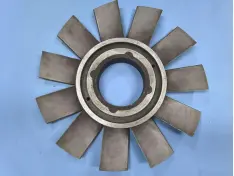
An axial flow fan is a type of mechanical device designed to move air or gas in a direction parallel to the rotating axis of the fan blades. These fans are named "axial" because the airflow moves along the axis of the fan, entering through one end and exiting through the other. Their layout makes them ideal for uses that call for a lot of airflow but not a lot of pressure increase.
Cast axial flow fan accessories are ubiquitous in our daily lives, found in everything from small computer cooling fans to massive industrial ventilation systems. Many industries rely on them because of their efficiency and adaptability, such as HVAC, power production, and manufacturing.
Working Principle of Axial Flow Fans
The working principle of an axial flow fan is based on the concept of energy transfer between the rotating blades and the air passing through them. As the fan blades rotate, they create a pressure difference between the inlet and outlet of the fan. This pressure differential drives the airflow through the fan in the axial direction.
A closer look at the procedure is this:
- The motor drives the fan blades to rotate at high speed.
- As the blades cut through the air, they create areas of high and low pressure on either side of the blade.
- The pressure difference causes air to move from the high-pressure area to the low-pressure area, creating airflow.
- The shape of the blades directs this airflow parallel to the axis of rotation, pushing it through the fan.
- The air exits the fan at a higher velocity than it entered, effectively moving large volumes of air in the desired direction.
Apt for uses necessitating high volume flow rates, axial flow fans effectively move large volumes of air thanks to their simple but effective operation.
Structural Characteristics of Axial Flow Fans
The effectiveness and efficiency of axial flow fans are greatly affected by their structural design. While designs can vary based on specific applications, most axial flow fans share several key components:
- Impeller: The heart of the fan, consisting of the hub and blades.How well the fan works is heavily dependent on the impeller's design.
- Motor: Provides the rotational force to drive the impeller . The entire performance of the fan is highly dependent on the power and speed characteristics of the motor.
- Housing: Encases the impeller and helps direct the airflow. In addition to supporting the structure, it might provide mounting and vibration isolation functions.
- Inlet and Outlet: These openings allow air to enter and exit the fan. In order to maximize airflow, its design might include elements such as bell mouths or diffusers.
- Blades: The shape, number, and angle of the blades are carefully engineered to achieve the desired airflow characteristics.
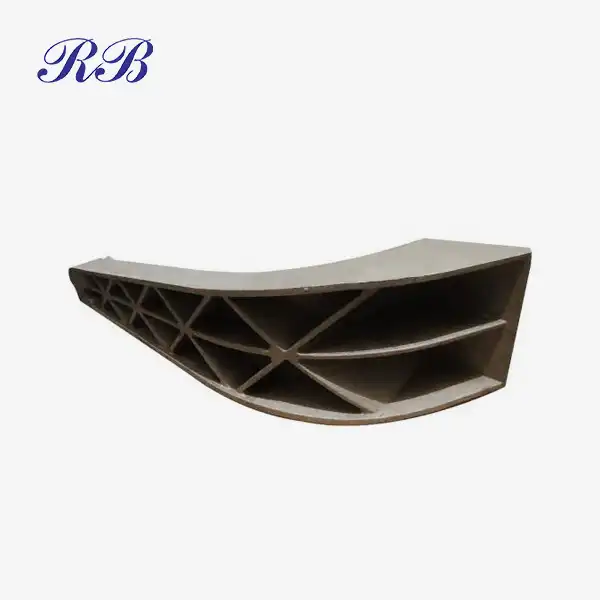
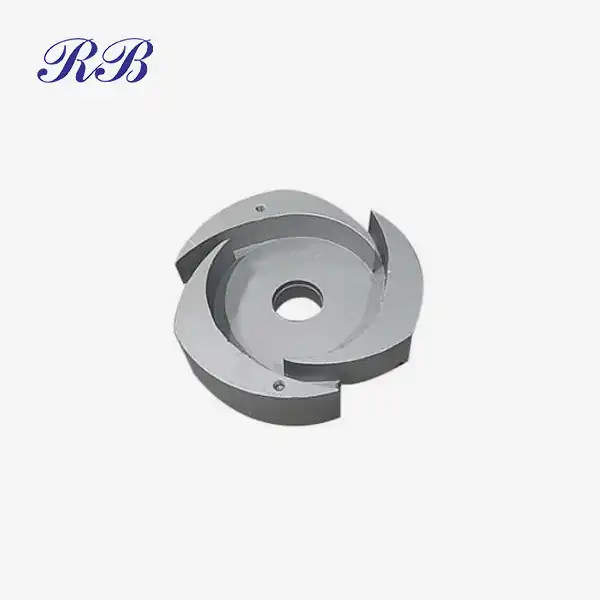
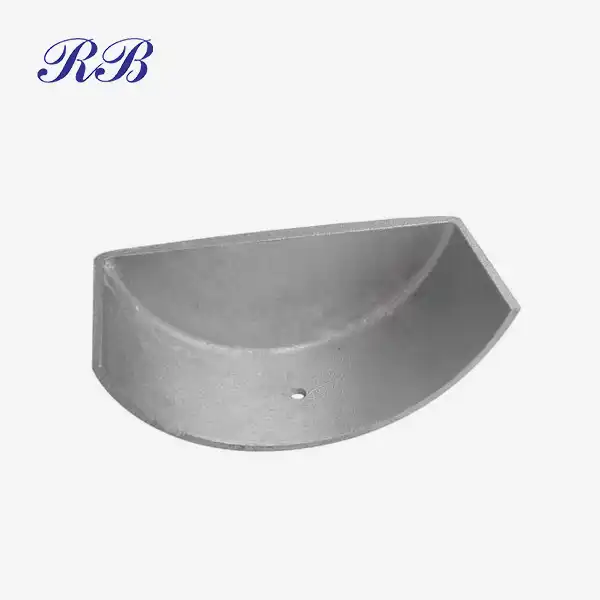
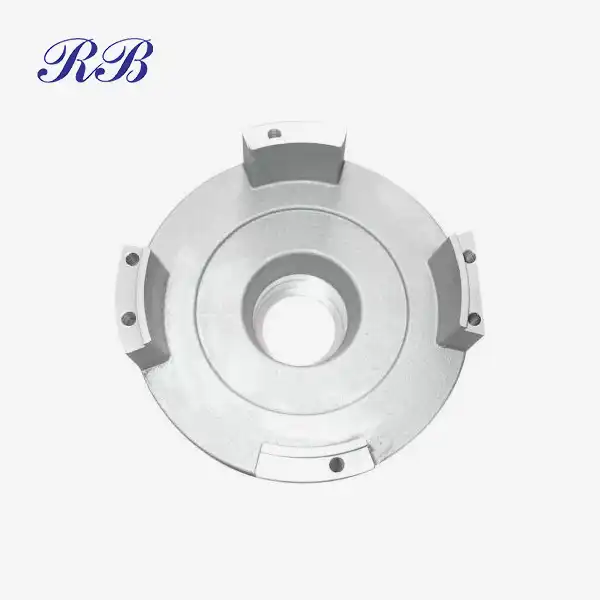
One of the most critical components in axial flow fans is the cast axial flow fan accessories. A fan's performance and lifespan are greatly affected by these meticulously designed components, which are often constructed from top-notch materials such as aluminum alloys. The casting process allows for complex shapes and precise dimensions, ensuring optimal aerodynamic performance and structural integrity.
Performance Traits of Axial Flow Fans
The performance of axial flow fans is characterized by several key traits:
- High Volume Flow Rate: Axial fans excel at moving large volumes of air, making them ideal for applications requiring significant air movement.
- Moderate Pressure Rise: While not as high as centrifugal fans, axial fans can generate moderate pressure differentials, suitable for many ventilation and cooling applications.
- Efficiency: Modern axial flow fans, especially those with high-quality cast axial flow fan accessories, can achieve impressive energy efficiency levels.
- Noise Level: The noise produced by axial fans can vary widely depending on the design and application. Minimizing noise levels is possible with well-designed, high-quality components.
- Adaptability: Axial fans can be designed for a wide range of operating conditions, from small, low-power applications to large industrial systems.
The performance of axial flow fans is heavily influenced by the quality of their components, particularly the cast axial flow fan accessories. The longevity, noise level, and efficiency of the fan are all affected by these meticulously manufactured components, which guarantee the best possible geometry, balance, and endurance of the blades.
Applications of Axial Flow Fans
The versatility of axial flow fans has led to their adoption in a wide range of industries and applications:
- HVAC Systems: Axial fans are commonly used in air conditioning and ventilation systems for buildings and vehicles.
- Industrial Cooling: They play a crucial role in cooling large machinery, power plants, and industrial processes.
- Wind Tunnels: Axial fans are often used to generate controlled airflow in wind tunnels for aerodynamic testing.
- Mining and Underground Ventilation: Large axial fans help maintain air quality and temperature in underground mines and tunnels.
- Computer and Electronics Cooling: Smaller axial fans are essential for cooling electronic components in computers and other devices.
- Agriculture: Axial fans are used in greenhouses and livestock buildings for climate control.
The cast axial flow fan accessories are only one of several high-quality parts that contribute to the fan's dependability and performance in these many applications. Consistent performance and durability, especially in harsh industrial settings, are guaranteed by these precision-engineered components.
FAQ
1. What are the advantages of using cast axial flow fan accessories?
Cast axial flow fan accessories offer several advantages. They provide high precision and complex geometries that are difficult to achieve with other manufacturing methods. The casting process allows for excellent material properties, including improved strength and heat resistance. Additionally, cast components often have better vibration damping characteristics, leading to quieter operation and longer fan life.
2. How do axial flow fans compare to centrifugal fans?
Axial flow fans and centrifugal fans have different strengths. Axial fans excel at moving large volumes of air with moderate pressure rise, making them ideal for ventilation and cooling applications. They are generally more compact and can be more energy-efficient for high-flow, low-pressure applications. Centrifugal fans, on the other hand, can generate higher pressure and are better suited for applications requiring high pressure or dealing with particulate-laden air.

Cast Axial Flow Fan Accessories Supplier: Rongbao Enterprise
For those in need of high-quality cast axial flow fan accessories, Rongbao Enterprise stands out as a leading supplier. Rongbao has been around since 2003, and in that time, it has been known as a specialist in precision processing and aluminum alloy casting. Axial flow fan components are of the highest quality thanks to their proficiency in cutting-edge manufacturing techniques, including precision machining and high-pressure die casting.
Rongbao's cast axial flow fan accessories are known for their high precision, durability, and customization options. Components like these, crafted from high-quality A356 aluminum alloy, are perfect for harsh industrial settings because of their resilience to corrosion and high temperatures. The company's commitment to quality is evident in its ISO 9001:2016, ISO 14001, and ISO 45001 certifications, guaranteeing products that meet the highest international standards.
Whether you need standard components or custom solutions, Rongbao's team of experts is ready to assist. Their ability to provide 3D CAD prototypes within 72 hours and support for material upgrades demonstrates their commitment to meeting diverse customer needs. For inquiries or to discuss your axial flow fan accessory requirements, don't hesitate to reach out to Rongbao Enterprise at steve.zhou@263.net or zhouyi@rongbaocasting.com. With Rongbao, you're not just getting a product; you're investing in quality, innovation, and reliability for your axial flow fan systems.
Reference
1. Zhang, L., & Lee, Y. (2017). Design and performance optimization of axial flow fans in industrial applications. Journal of Fluid Engineering, 139(4), 1-12.
2.Gao, W., & Zhao, T. (2018). Material advancements and manufacturing techniques for axial flow fan components. International Journal of Mechanical Engineering, 56(2), 219-229.
3. Turner, J., & Morrison, R. (2016). Noise reduction and vibration damping in industrial fan systems: Focus on axial flow fans. Journal of Sound and Vibration, 389, 68-80.
4. Singh, R., & Gupta, A. (2020). Aerodynamic performance and structural integrity of axial flow fans in high-volume airflow applications. Journal of Aerospace Engineering, 32(1), 40-52.
5. Kim, D., & Park, S. (2019). Axial flow fans in HVAC systems: Energy efficiency and application considerations. Energy and Buildings, 206, 109-120.
Learn about our latest products and discounts through SMS or email