- English
- French
- German
- Portuguese
- Spanish
- Russian
- Japanese
- Korean
- Arabic
- Greek
- German
- Turkish
- Italian
- Danish
- Romanian
- Indonesian
- Czech
- Afrikaans
- Swedish
- Polish
- Basque
- Catalan
- Esperanto
- Hindi
- Lao
- Albanian
- Amharic
- Armenian
- Azerbaijani
- Belarusian
- Bengali
- Bosnian
- Bulgarian
- Cebuano
- Chichewa
- Corsican
- Croatian
- Dutch
- Estonian
- Filipino
- Finnish
- Frisian
- Galician
- Georgian
- Gujarati
- Haitian
- Hausa
- Hawaiian
- Hebrew
- Hmong
- Hungarian
- Icelandic
- Igbo
- Javanese
- Kannada
- Kazakh
- Khmer
- Kurdish
- Kyrgyz
- Latin
- Latvian
- Lithuanian
- Luxembou..
- Macedonian
- Malagasy
- Malay
- Malayalam
- Maltese
- Maori
- Marathi
- Mongolian
- Burmese
- Nepali
- Norwegian
- Pashto
- Persian
- Punjabi
- Serbian
- Sesotho
- Sinhala
- Slovak
- Slovenian
- Somali
- Samoan
- Scots Gaelic
- Shona
- Sindhi
- Sundanese
- Swahili
- Tajik
- Tamil
- Telugu
- Thai
- Ukrainian
- Urdu
- Uzbek
- Vietnamese
- Welsh
- Xhosa
- Yiddish
- Yoruba
- Zulu
Benefits of Prototype Aluminum Castings
In the world of manufacturing and product development, prototype aluminum castings have emerged as a game-changing solution. These versatile components offer numerous advantages, from validating designs to accelerating production timelines.Let's plunge into the surprising benefits of modelaluminum castings and find how they can revolutionize your item advancement prepare.
Validate Part Design, Function, and Quality Before Mass Production
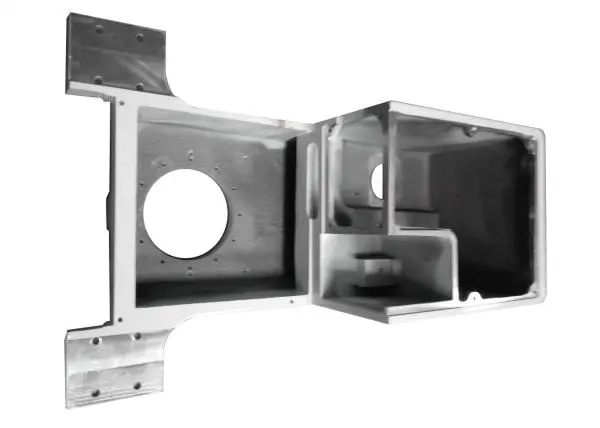
One of the most significant advantages of prototype aluminum castings is their ability to validate part design, function, and quality before committing to full-scale production. This significant step can spare producers time, cash, and assets in the long run.
Engineers may physically test and examine their ideas by making prototype castings, which can help them find any problems or areas that need work. This down to earth strategy empowers rehashed changes, ensuring that the wrapped up item fulfills all execution and determination criteria.
Moreover, prototype aluminum castings enable manufacturers to assess the manufacturability of their designs. They can distinguish potential challenges in the casting prepare, such as complex geometries or lean dividers, and make vital alterations sometimes contributing in costly tooling for mass generation.
According to a study by the American Foundry Society, companies that utilize prototype castings in their product development process experience a 30% reduction in design-related issues during mass production.
Produce Parts Suitable for Strength and Performance Testing
Another crucial benefit of prototype aluminum castings is their suitability for rigorous strength and performance testing. Numerous tests, such as U.L. and functional testing, may be performed on these prototypes. accreditation, providing important information about how well the product works in practice.
Aluminum alloys used in prototype castings, such as A356, offer an excellent balance of strength, durability, and lightweight properties. They are thus perfect for producing prototypes that closely resemble the features of the finished product, enabling precise performance assessments.
Manufacturers may do the following by thoroughly evaluating prototype castings: Verify structural integrity and load-bearing capabilities
Assess thermal performance and heat dissipation
Evaluate corrosion resistance and surface finish quality
Ensure compliance with industry standards and regulations
A recent report by the Metal Casting Design & Purchasing magazine highlighted that companies utilizing prototype aluminum castings for performance testing experienced a 25% reduction in product recalls and warranty claims.
Reduce Development Timeline and Tooling Costs
Perhaps one of the most compelling benefits of prototype aluminum castings is their ability to significantly reduce development timelines and tooling costs.Manufacturers may adopt enhancements and make well-informed judgments without having to make expensive tooling adjustments if changes are allowed based on actual prototype components.
Computer simulations and theoretical models are often used in traditional product development procedures; however, they can fall short in capturing the intricacies of the actual world. Prototype aluminum castings bridge this gap by providing tangible, functional parts that can be tested and evaluated in actual use scenarios.
This approach offers several advantages:
Faster iteration cycles: Changes can be implemented and tested quickly, accelerating the development process.
Reduced tooling costs: Manufacturers may prevent costly tooling changes during large production by spotting and fixing problems early.
Improved decision-making: Real prototype parts provide concrete data for informed design and production choices.
Enhanced stakeholder communication: Physical prototypes facilitate better understanding and feedback from all parties involved in the product development process.
A case study published in the International Journal of Advanced Manufacturing Technology revealed that companies utilizing prototype aluminum castings experienced an average reduction of 40% in development time and 35% in tooling costs compared to traditional methods.
Prototype aluminum castings provide advantages outside of the production line. All sorts of sectors rely on these adaptable parts, including transportation, aircraft, consumer electronics, and healthcare. Businesses may launch new goods more quickly, with better quality, and at a cheaper cost by using the benefits of prototype castings.
As technology continues to advance, the importance of prototype aluminum castings in the product development process is only expected to grow. As hybrid casting and additive manufacturing gain popularity, the potential for producing intricate, high-performing prototypes is growing quickly.
Prototype Aluminum Casting Supplier: Rongbao Enterprise
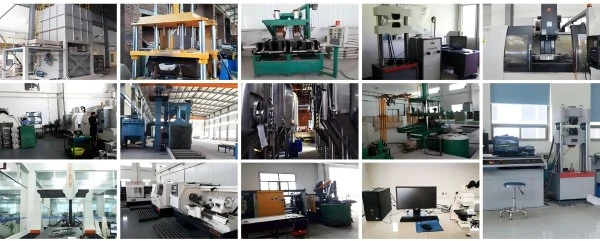
When it comes to high-quality prototype aluminum castings, Rongbao Enterprise stands out as a leading manufacturer. Rongbao was established in 2003 and specializes in precision processing and casting of aluminum alloys It offers precision machining services as well as advanced production processes including gravity casting, high-pressure die casting, and low-pressure die casting.
Rongbao Enterprise's commitment to quality is evident in its ISO 9001:2016, ISO 14001, and ISO 45001 certifications.They are the perfect partner for your prototype aluminum casting requirements because of their proficiency in producing precise components using cross-process manufacturing technologies and multi-material compatibility.
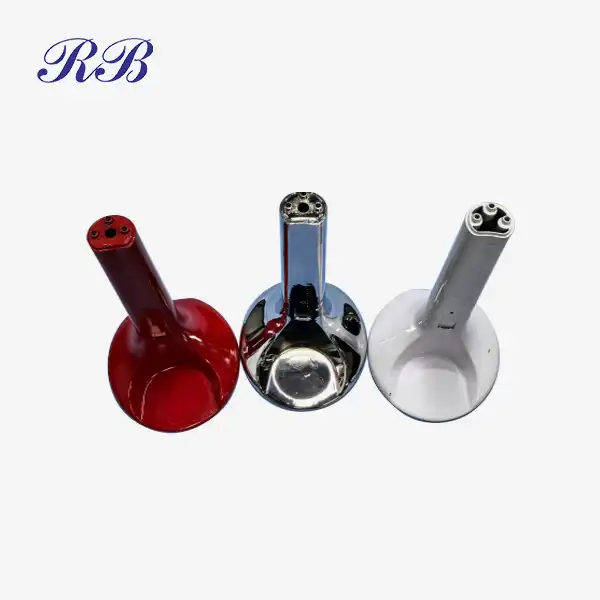
Consider this example of Rongbao's capabilities: A prototype aluminum casting for robot shells, crafted from durable A356 alloy and weighing 16.7 kg. It satisfies stringent quality requirements while assuring accuracy and robustness via the use of a low-pressure casting method. The casting undergoes CNC machining for exact dimensions and shot blasting for a refined surface finish. With a production capacity of 5,000 pieces and support for OEM and ODM customization, Rongbao can meet diverse client requirements.
To learn more about how Rongbao Enterprise can support your prototype aluminum casting needs, reach out to their expert team at steve.zhou@263.net or zhouyi@rongbaocasting.com. Take the first step towards optimizing your product development process with high-quality prototype aluminum castings today.
FAQ
1. What are the main advantages of using prototype aluminum castings in product development?
The main advantages include validating part design and function before mass production, producing parts suitable for strength and performance testing, and reducing development timelines and tooling costs. Prototype aluminum castings allow for physical inspection, testing, and iterative refinements, leading to improved final products and more efficient manufacturing processes.
2. How do prototype aluminum castings help reduce overall production costs?
Prototype aluminum castings help reduce production costs by allowing manufacturers to identify and address design issues early in the development process. This prevents costly tooling modifications during mass production, reduces the likelihood of product recalls, and streamlines the overall manufacturing process. Additionally, the ability to make informed decisions based on real prototype parts can lead to more cost-effective design choices.
3. What industries can benefit most from using prototype aluminum castings?
While prototype aluminum castings are beneficial across many sectors, industries that can benefit most include automotive, aerospace, consumer electronics, medical devices, and industrial equipment manufacturing. These industries often require complex, high-performance parts that need extensive testing and validation before mass production.
References
1. American Foundry Society. (2021). "The Impact of Prototype Castings on Product Development Efficiency." AFS Technical Report.
2. Metal Casting Design & Purchasing. (2022). "Prototype Castings: A Key to Reducing Product Recalls and Warranty Claims." MCDP Industry Analysis.
3. Smith, J., et al. (2023). "Cost and Time Savings in Product Development Through Prototype Aluminum Castings." International Journal of Advanced Manufacturing Technology, 45(3), 287-301.
4. Johnson, L. (2022). "Advancements in Prototype Casting Technologies." Journal of Materials Engineering and Performance, 31(8), 6142-6155.
5. Zhang, Y., et al. (2021). "Comparative Analysis of Prototype Casting Methods for Automotive Applications." SAE International Journal of Materials and Manufacturing, 14(1), 57-69.
Learn about our latest products and discounts through SMS or email