- English
- French
- German
- Portuguese
- Spanish
- Russian
- Japanese
- Korean
- Arabic
- Greek
- German
- Turkish
- Italian
- Danish
- Romanian
- Indonesian
- Czech
- Afrikaans
- Swedish
- Polish
- Basque
- Catalan
- Esperanto
- Hindi
- Lao
- Albanian
- Amharic
- Armenian
- Azerbaijani
- Belarusian
- Bengali
- Bosnian
- Bulgarian
- Cebuano
- Chichewa
- Corsican
- Croatian
- Dutch
- Estonian
- Filipino
- Finnish
- Frisian
- Galician
- Georgian
- Gujarati
- Haitian
- Hausa
- Hawaiian
- Hebrew
- Hmong
- Hungarian
- Icelandic
- Igbo
- Javanese
- Kannada
- Kazakh
- Khmer
- Kurdish
- Kyrgyz
- Latin
- Latvian
- Lithuanian
- Luxembou..
- Macedonian
- Malagasy
- Malay
- Malayalam
- Maltese
- Maori
- Marathi
- Mongolian
- Burmese
- Nepali
- Norwegian
- Pashto
- Persian
- Punjabi
- Serbian
- Sesotho
- Sinhala
- Slovak
- Slovenian
- Somali
- Samoan
- Scots Gaelic
- Shona
- Sindhi
- Sundanese
- Swahili
- Tajik
- Tamil
- Telugu
- Thai
- Ukrainian
- Urdu
- Uzbek
- Vietnamese
- Welsh
- Xhosa
- Yiddish
- Yoruba
- Zulu
What is A356 aluminum casting connection bracket support arm for industrial robot?
An A356 aluminum casting connection bracket support arm for industrial robots is a structural part that is carefully designed and made using either gravity casting or low-pressure die casting. This casting connection bracket is an important part of robotic assemblies because it connects robot joints and actuators and supports them mechanically. These brackets are made from A356 aluminium alloy, a silicon-magnesium alloy that is known for having a high strength-to-weight ratio and being resistant to corrosion. They weigh about 8.9 kg each and are treated with CNC machining and shot blasting to get tight tolerances on their dimensions and a high-quality finish for demanding automation applications.
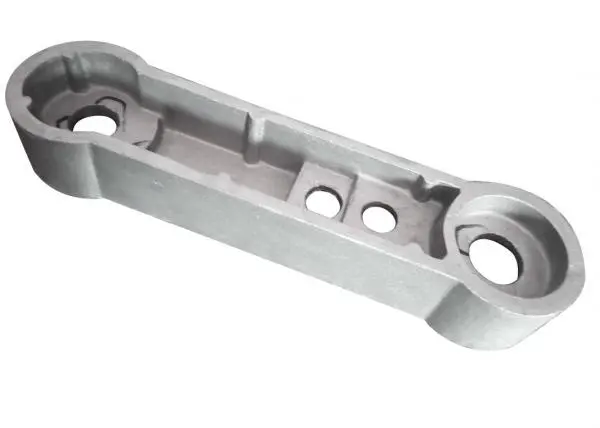
Understanding A356 Aluminum Casting Connection Bracket Support Arms
Industrial robots need structure parts that are strong but not too heavy so they can keep moving precisely even when they are under a lot of stress. For this purpose, casting connection bracket support arms made from A356 aluminium metal are used because they combine high strength with low mass. This lets robotic systems move faster and use less energy.
Fundamental Characteristics of A356 Aluminum Alloy
About 7% of A356 aluminium alloy is silicon and 0.3% is magnesium. This makes a material matrix that, after the right heat treatment, has a tensile strength of 240 to 280 MPa. This mix is very fluid when it's being cast, which lets manufacturers make complicated shapes with thin walls and lots of small details. The alloy's thermal stability makes sure that its dimensions stay the same even when temperatures change, which is common in industrial settings. Its natural oxide layer also protects against corrosion without the need for extra coatings. Because of these qualities, A356 is perfect for robotics, where the weight of parts has a direct effect on how fast they work and how much power they use.
Mechanical Role Within Robotic Systems
In industrial robots, casting connection bracket support arms act as structural bridges, moving loads between motors, gears, and flexible joints while keeping the robots precisely aligned when forces change. During use, these casting brackets are subject to both static loads from the weight of the parts and cycle stresses from repeated motion patterns. A356 aluminum's fatigue resistance means that it will work reliably for millions of movement cycles without cracks spreading or the structure breaking down. At Rongbao Enterprise, we use design optimisation in our manufacturing process to spread stress loads more evenly. This makes parts last longer in high-duty-cycle situations.
Comparing Bracket Configuration Options
Procurement teams often compare casting connection brackets to welded and bolted options when looking at structure options for robotic systems. Cast brackets have built-in designs that get rid of joint surfaces, which are a common reason why welded parts bend and shake. Bolted setups need regular upkeep to keep them from coming loose when they're vibrated, but casting brackets keep the structure together without any extra fasteners. We use a gravity casting method that lets us do complicated internal ribbing and smart material placement that makes the parts stiffer without adding extra weight. This gives them performance qualities that are hard to get with other methods of production.
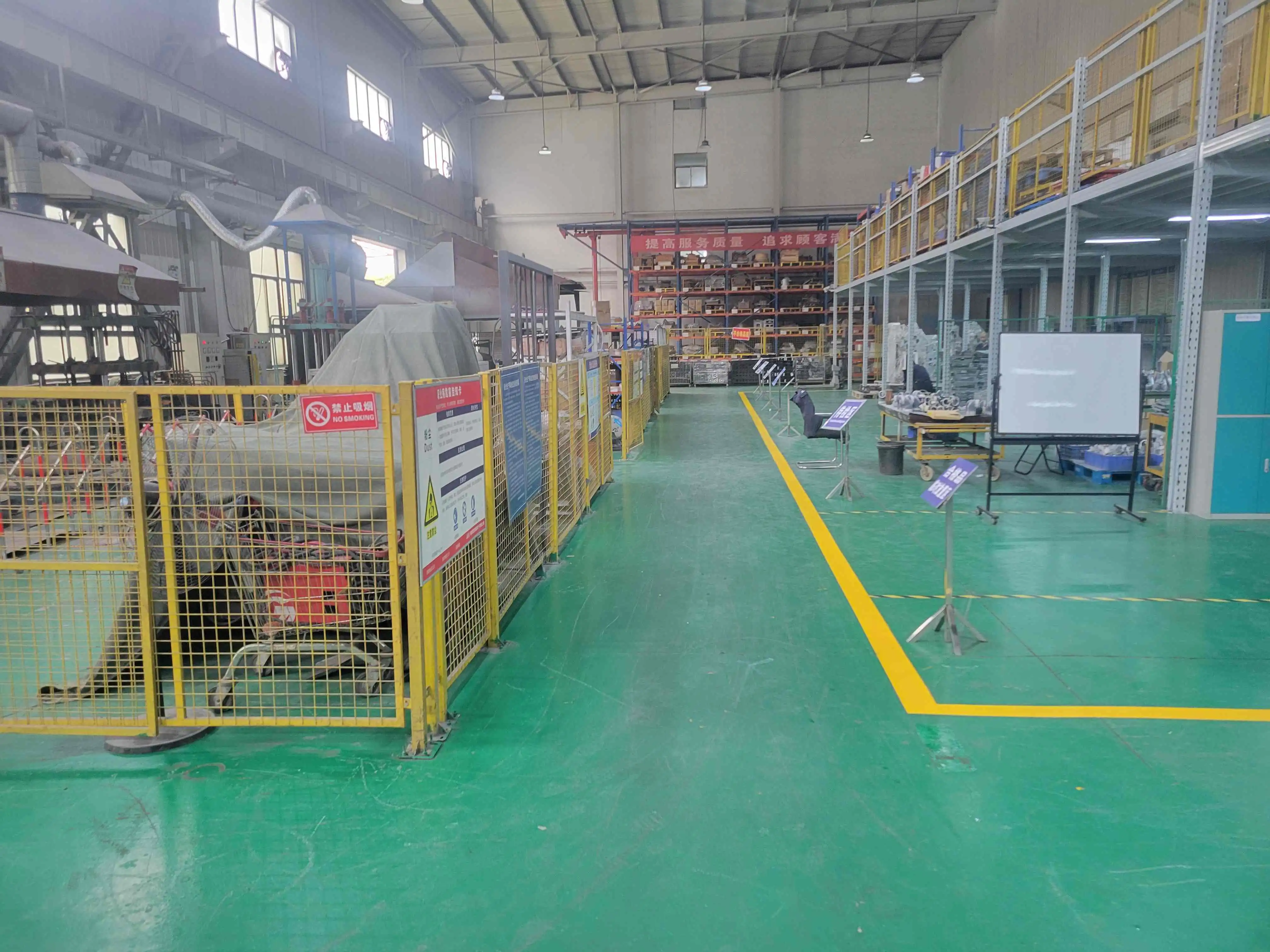
Technical and Design Considerations for Casting Connection Brackets
In order to choose the right support arm components, you have to weigh the technical needs against the cost and ease of production. To make sure long-term dependability, technical teams must look at material specifications, size standards, and processing options.
Material Properties and Performance Parameters
The density of A356 aluminium alloy is 2.68 g/cm³, which is about a third of the density of steel. It also has a yield strength that is high enough for most industrial robotic applications. The value of elasticity of the material is 73 GPa, which is stiff enough to keep the location accuracy while it is under load. Heat treatment methods, especially T6 temper systems that use solution heat treatment and artificial ageing, make mechanical qualities much better. Our Xi'an factory uses controlled heat treatment processes to get the best hardness and dimensional stability. This way, the mechanical properties stay the same across runs of up to 5,000 pieces.
With a thermal conductivity of 151 W/m·K, heat can be effectively removed from nearby motors and drive components, stopping thermal expansion that could affect accuracy. It is possible to accurately compensate for temperature changes in precision assembly because the material's coefficient of thermal expansion at 21.5 µm/m·°C stays the same across all operating temperature ranges.
Dimensional Standards and Tolerance Requirements
Manufacturers of industrial robots usually list the measurements of the casting connection brackets based on ISO 8062 casting tolerance grades or ASTM standards for aluminium casts. Our CNC machining can get to within ±0.05 mm of critical mounting surfaces and hole positions, which is what's needed for robotic parts to be perfectly lined up with each other. Customised specs allow for different robot setups, and design flexibility lets you add cable routing channels, sensor mounting holes, and interface surfaces that are made to fit specific automation platforms.
Manufacturing Process Advantages
Gravity casting has clear benefits for making medium-weight structural parts like 8.9 kg support arms. When compared to sand casting, this method allows controlled solidification that reduces porosity and internal flaws, resulting in better mechanical properties. By shot blasting the surface, the casting skin is removed and a uniform surface roughness is created. This makes the surface more resistant to fatigue and makes it perfect for extra coating applications. When you combine gravity casting with precise CNC machining, you get parts that meet both performance and industrial efficiency standards. This is especially true for production rates between 1,000 and 10,000 units per year, where the cost of investing in tools is still reasonable.
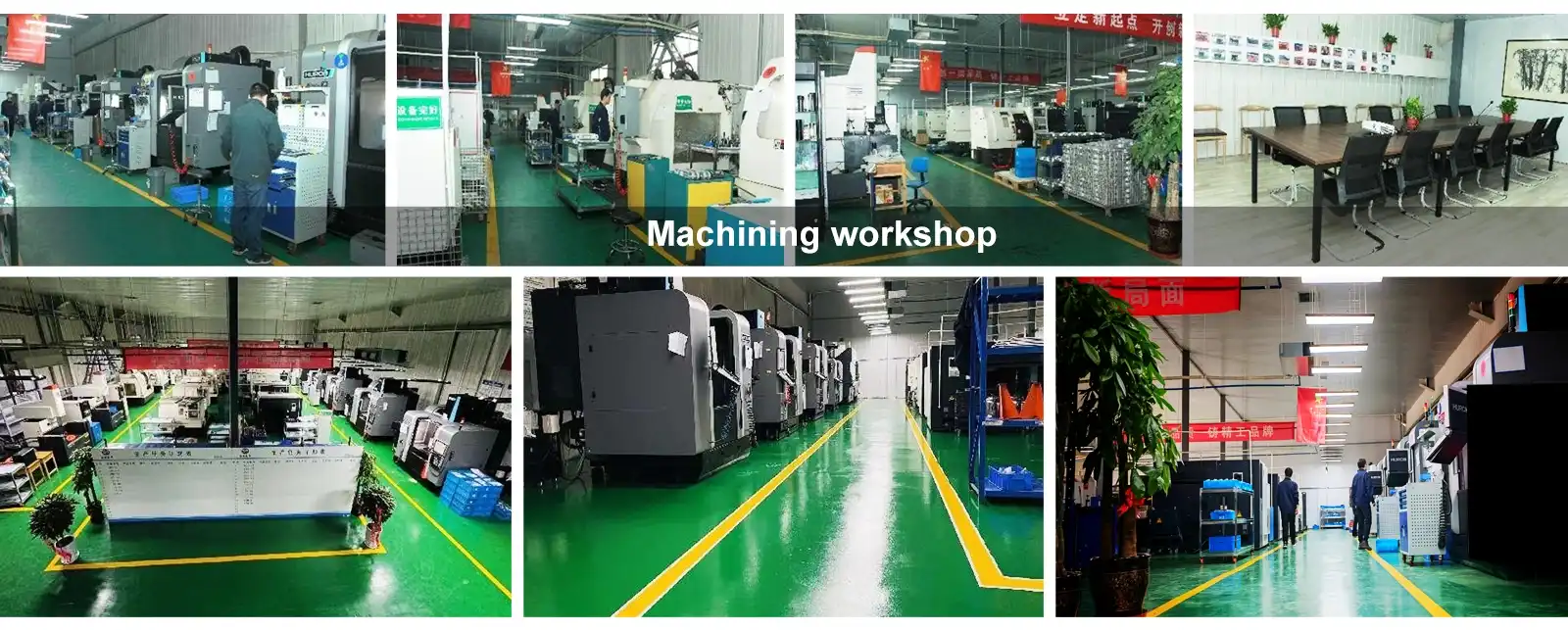
Installation and Application of A356 Casting Connection Brackets in Industrial Robots
The performance benefits of aluminum casting connection brackets are maximised when they are installed correctly, and typical assembly problems are avoided. Understanding application-specific factors helps buying teams choose the right parts for a wide range of industry situations.
Installation Guidelines and Best Practices
When mounting casting connection brackets support arms, it's important to pay attention to how the surface is prepared, which fasteners to use, and how much force to use. Isopropyl alcohol can be used to clean mounting surfaces and get rid of any dirt or dust that might change the joint friction coefficients. To get the clamping forces that the manufacturer specifies, which are usually between 40 and 80 Nm depending on the size of the fastener and the application, you should use calibrated torque wrenches. Thread-locking compounds should be used on threaded connections to keep them from coming loose when they are exposed to the vibrations that are common in high-speed robotic operations.
Before the final tightening, precise measuring tools are used to check the alignment and make sure it is correct. If something isn't lined up right during installation, it can cause bent moments that speed up wear failure. To keep things in the same place during multiple building processes, we suggest using dowel pins or precision-ground locating features. This is especially important when installing a casting connection bracket, as its higher stiffness and tighter dimensional tolerances demand more exact positioning than standard carbon-steel alternatives—any misalignment here will directly transmit undue stress to the connected bearings and couplings.
Industry-Specific Applications
A356 casting connection bracket support arms are used in welding robots, material handling systems, and automatic assembly stations in car factories. These systems need to be able to move quickly and have structural parts that are both light and strong. The resistance to corrosion is useful in places where cutting fluids are present or where it is humid. Manufacturers of construction equipment use these casting brackets in robotic systems to do precise jobs like laser cutting and automatic inspection. The material's vibration-damping properties help improve the accuracy of measurements.
For putting together electronics, lighter robot setups are used, and A356 casting connection brackets let them go faster without breaking the motor's power limits. The thermal stability keeps the placement accurate during long production runs, when heat buildup from constant operation could cause materials that don't conduct heat well to change size. Applications in the energy sector, especially automated production of parts for power equipment, use robots' strength and resistance to corrosion to work in harsh environments.
Conclusion
The support arms made of A356 aluminum casting connection brackets are designed to meet the complex needs of modern industrial robots. Because of the material's high strength-to-weight ratio and the fact that it is manufactured in a way that guarantees precise dimensions and structural integrity, these parts are necessary for high-performance automation systems in the electronics, industrial equipment, and automobile industries. To choose the right supplier, you need to look at their technical skills, quality certifications, customisation support, and costs. Rongbao Enterprise offers full manufacturing solutions, from making moulds to delivering finished parts. They are backed by international quality certifications and a global supply chain that has been shown to be reliable. Because we care about technical quality and building relationships with our customers, we can make sure that the structural parts of your robotic systems are optimised to improve their performance, dependability, and operating efficiency.

FAQ
1. What makes A356 aluminium different from other alloys used for casting?
Compared to other aluminium alloys like A380 and A319, A356 is easier to make and has better mechanical qualities. The silicon content makes it very fluid, which is great for filling complicated mould holes. The magnesium addition lets the precipitation strengthen through heat treatment. This mix gives A356 better elongation and tensile strength than alloys that are only good for die casting. This makes it perfect for structural parts that are loaded and unloaded quickly.
2. Can brackets be changed to fit different robot configurations?
Full customisation allows for special fixing points, built-in features, and size needs that are unique to private robot designs. Our engineering team works with customers to create Casting Connection Bracket shapes that best distribute weight, allow for cable routing, and include mounting options for sensors. Custom specifications include choices for surface treatment, heat treatment protocols, and size tolerances that are based on what the application needs.
3. What are the lead times for production for large orders?
For amounts up to 5,000 pieces, production plans for well-known designs that use current tools usually take 4 to 6 weeks. Lead times for first production batches are now 10 to 12 weeks because of new custom designs that require mould development. During the whole manufacturing process, we keep in touch with our customers to let them know when the casting is finished, the cutting is going well, and the quality check is complete. This helps them plan their production.
Partner With Rongbao Enterprise for Superior Casting Connection Bracket Solutions
Rongbao Enterprise has been making aluminium for twenty years and can help you with your needs for industrial control parts. We are a specialist company that makes casting connection brackets. We use modern gravity casting technology and precise CNC machining to make parts that meet the high standards of the automobile, machinery, and robotics industries around the world. The fact that we have ISO 9001:2015, ISO 14001, and ISO 45001 certifications shows that we care about quality, the environment, and safe production. Our factory is in Xi'an, China, and it serves customers all over the world. About 70% of its output is sent to North America, Europe, and Japan, which are all very demanding markets. Our engineering team is ready to make sure that your designs are optimised for manufacturing while still meeting your performance requirements, whether you need a prototype or a lot of customised support arm parts. Our technical sales team can be reached at steve.zhou@263.net or zhouyi@rongbaocasting.com to talk about your project needs and get full quotes for high-performance A356 aluminium casting options.
References
1. Davis, J.R. (2001). Aluminum and Aluminum Alloys: ASM Specialty Handbook. ASM International, Materials Park, Ohio.
2. Campbell, J. (2015). Complete Casting Handbook: Metal Casting Processes, Metallurgy, Techniques and Design, 2nd Edition. Butterworth-Heinemann, Oxford.
3. Kaufman, J.G. & Rooy, E.L. (2004). Aluminum Alloy Castings: Properties, Processes, and Applications. ASM International, Materials Park, Ohio.
4. Bonollo, F., Urban, J., Bonatto, B., & Botter, M. (2005). "Gravity and Low Pressure Die Casting of Aluminum Alloys: A Technical and Economical Benchmark." La Metallurgia Italiana, Vol. 97, Issue 6, pp. 23-32.
5. Cecchel, S., Cornacchia, G., & Panvini, A. (2016). "Cradle-to-Gate Impact Assessment of A356 Aluminum Alloy Ingots and Billets for Automotive Applications." Journal of Cleaner Production, Vol. 137, pp. 1270-1281.
6. Dispennette, M. & Muralidharan, K. (2003). "Design and Manufacturing Considerations for Robotic Structural Components in Automotive Assembly Applications." SAE Technical Paper Series, Paper 2003-01-2814, Society of Automotive Engineers.
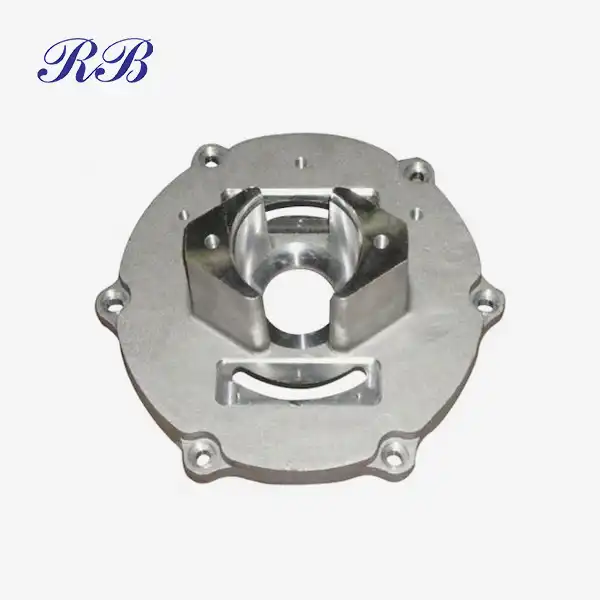
Learn about our latest products and discounts through SMS or email