- English
- French
- German
- Portuguese
- Spanish
- Russian
- Japanese
- Korean
- Arabic
- Greek
- German
- Turkish
- Italian
- Danish
- Romanian
- Indonesian
- Czech
- Afrikaans
- Swedish
- Polish
- Basque
- Catalan
- Esperanto
- Hindi
- Lao
- Albanian
- Amharic
- Armenian
- Azerbaijani
- Belarusian
- Bengali
- Bosnian
- Bulgarian
- Cebuano
- Chichewa
- Corsican
- Croatian
- Dutch
- Estonian
- Filipino
- Finnish
- Frisian
- Galician
- Georgian
- Gujarati
- Haitian
- Hausa
- Hawaiian
- Hebrew
- Hmong
- Hungarian
- Icelandic
- Igbo
- Javanese
- Kannada
- Kazakh
- Khmer
- Kurdish
- Kyrgyz
- Latin
- Latvian
- Lithuanian
- Luxembou..
- Macedonian
- Malagasy
- Malay
- Malayalam
- Maltese
- Maori
- Marathi
- Mongolian
- Burmese
- Nepali
- Norwegian
- Pashto
- Persian
- Punjabi
- Serbian
- Sesotho
- Sinhala
- Slovak
- Slovenian
- Somali
- Samoan
- Scots Gaelic
- Shona
- Sindhi
- Sundanese
- Swahili
- Tajik
- Tamil
- Telugu
- Thai
- Ukrainian
- Urdu
- Uzbek
- Vietnamese
- Welsh
- Xhosa
- Yiddish
- Yoruba
- Zulu
What is a stainless steel shaft?
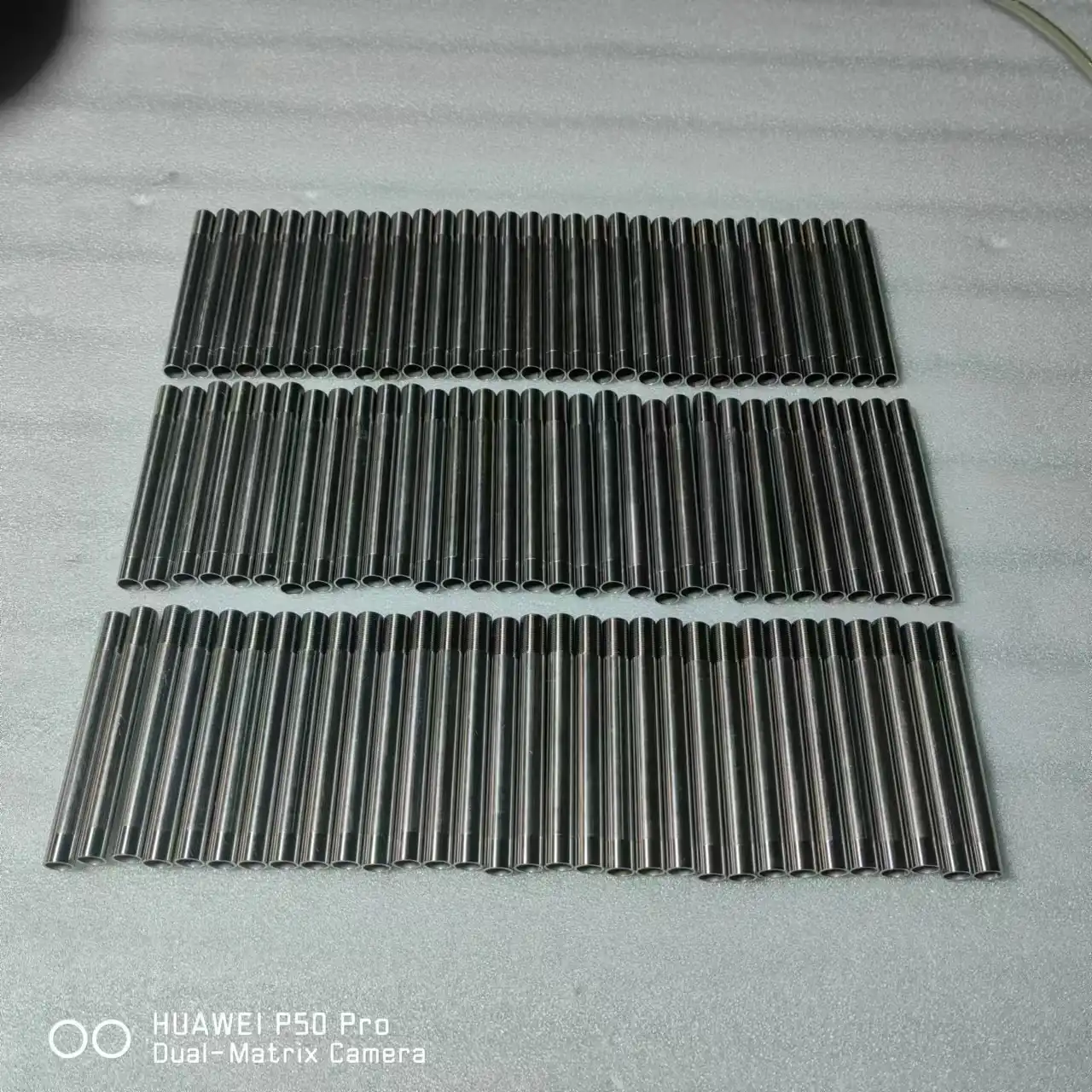
A stainless steel shaft is a cylinder-shaped piece of machinery designed to transfer rotational motion and force between systems that are linked in industrial machinery. When we talk about a stainless steel drive shaft, we're specifically talking about precision-machined rotating parts made from chromium-nickel metals that don't rust. These parts are made to give power smoothly while working in harsh conditions. Unlike regular carbon steel shafts, which break down quickly when exposed to water or chemicals, stainless steel variants last a very long time. This makes them essential in industries like aerospace, heavy equipment, and cars, where reliability directly affects production continuity and total ownership cost.
Understanding Stainless Steel Drive Shafts
Primary Function in Power Transmission
Mechanical power delivery systems depend on rotating gear parts to connect motors to pumps, transmissions to wheels, or engines to generators. The main job is to keep the line straight while turning engine power into useful mechanical work. In car chassis systems, these parts take in vibrations and adjust for misaligned angles between suspension parts and differential sections. This has a direct effect on the ride quality and how well the engine works.
Material Grades and Their Performance Profiles
In tough settings, operating success depends on choosing the right grades of stainless steel. Grade 304 stainless steel, which has 18% chromium and 8% nickel, is very resistant to rust and can be used in heat control systems and mildly corrosive environments. This austenitic metal stays strong at temperatures ranging from -196°C to 800°C, which makes it useful for a wide range of industrial equipment uses.
Grade 316 has molybdenum added to it, which makes it more resistant to salt attack and pitting rust. When exposed to saltwater or acidic solutions, this improved composition helps marine motion systems and tools used in chemical processing. Compared to 304 versions, this material has better creep resistance at high temperatures.
Through heat treatment methods, precipitation-hardening 17-4 PH stainless steel has great strength-to-weight ratios. Parts of aerospace hydraulic systems use this material's ability to reach yield pressures above 1,100 MPa while still being tough enough. The martensitic microstructure can handle high-stress cycle loading without breaking down too soon due to wear.
Manufacturing Processes Ensuring Precision
CNC cutting turns raw bars of stainless steel into finished transmission stainless steel drive shafts that are accurate to within ±0.02mm. Multi-axis turning centers can handle complicated shapes like spline profiles, journal surfaces, and threaded connections all at once, which gets rid of the need for multiple setups and placement mistakes. Shot blasting and other surface treatment methods create uniform compressive residue stresses that make surfaces 30–40% more resistant to wear than untreated surfaces.
Quality validation methods include coordinate measuring machine checks to make sure measurements are correct and ultrasonic testing to find cracks below the surface. These factory rigor standards make sure that all production runs are the same. They also meet the IATF16949 requirements for car tier-one suppliers, which say that defect rates must stay below 50 parts per million.
Benefits and Performance Comparison
Corrosion Resistance Translating to Operational Savings
The chromium oxide inactive layer in a stainless steel drive shaft heals itself when it gets scratched, which is not possible with coated carbon steel options. Compared to zinc-plated carbon steel shafts, equipment that works in chemical plants or sites near the coast has a service life that is three to five times longer. Getting rid of rust is very important in medicine and food processing equipment where the purity of the product can't be affected.
Maintenance costs go down because parts don't need to be replaced as often and there is no downtime for emergency fixes. A pharmacy mixer shaft made of 316L stainless steel can work nonstop for 15,000 hours before it needs to be inspected again. Carbon steel shafts, on the other hand, need to be replaced every 4,000 hours because they wear down faster due to rust.
Material Performance Trade-Offs
When you compare shaft materials, you can see how to make smart choices based on application priorities:
Carbon Steel: Has the lowest starting cost and is very easy to work with, but it needs to be coated with protective materials and replaced often in places that are corrosive. It works for transmissions that are contained and have controlled lubrication, but it shouldn't be used on frame parts that are visible.
Aluminum Alloys: Are 65% lighter than steel, which makes them useful in aircraft uses where saving mass justifies paying more for materials. Because it's not very strong, it can only be used in low-torque situations, and when it's combined with metals that are not the same, it can cause galvanic rust.
Composite Materials: Carbon fiber driveshafts have better rotational stiffness-to-weight ratios, making them perfect for high-performance cars. Adoption is limited to specialized racing uses rather than industrial machines because it is hard to make and fix.
Titanium Alloys: Have extremely high strength-to-weight ratios and excellent protection to rust, but they cost 8–10 times more than stainless steel. Set aside for flight propulsion systems that need to work well enough to justify the cost.
For most industrial uses, stainless steel is the best mix of corrosion protection without the high cost of titanium, strength without the fragility of composites, and dependability that has been shown to work in a wide range of situations.
Applications and Industry Use Cases
Automotive Manufacturing Integration
In thermal management systems for cars, where coolant is exposed to air and temperature changes, stainless steel drive shafts are used because they don't rust. Electric car battery cooling pumps use 316 stainless steel impeller shafts that work constantly in glycol solutions. These shafts can go 150,000 miles without breaking down. Getting rid of rust particles saves sensitive coolant flow monitors and keeps micro-channel heat exchangers from getting clogged.
Tier-1 suppliers that make parts for steering systems require rack shafts to be made of precipitation-hardened stainless steel that can handle contact pressures of 1,200 MPa. Because the material is both strong and resistant to rust, it can be used to make designs that are lighter than chrome-plated carbon steel options. This helps meet goals for reducing vehicle weight without sacrificing safety.
Heavy Machinery and Industrial Equipment
In building tools, hydraulic pump systems work in rough conditions where regular shafts wear out quickly. Shot-blasted stainless steel pump shafts keep their shape even after being exposed to hydraulic fluids that are contaminated with silica particles for a long time. This means that upkeep needs to be done every 8,000 hours instead of every 3,000 hours for normal materials.
In reactor tanks that handle corrosive slurries, chemical processing plants use stirrer shafts made of stainless steel. Because the material is resistant to sulfuric acid and chloride solutions, there is no chance that the coating will fail and contaminate the product. Over the course of 18 months, a pharmaceutical company that changed mixing shafts from Hastelloy alloys to 316L stainless steel had no unexpected shutdowns. This saved them 40% on component costs while still meeting cGMP cleanliness standards.
Emerging Technology Trends
With additive manufacturing, complicated shapes for stainless steel shafts can now be made that were not possible with traditional cutting. Selective laser melting makes cooling lines built into propeller shafts, which makes it easier to control temperature in high-speed marine uses. This design freedom lets you optimize the structure, which cuts the mass of each component by 25% while still meeting the standards for torsional stiffness.
Additive deposition and CNC finish cutting are both used in hybrid production to make low-volume custom shafts more cost-effective. This method is used for aerospace prototype development, which makes it possible to make one-of-a-kind transmission parts in three weeks instead of the usual twelve weeks.
Conclusion
Purchasing workers who put a high value on equipment efficiency and minimizing costs over its lifetime should consider investing in stainless steel drive shafts. When choosing a material from grades 304, 316, and 17-4 PH, it's important to think about how it will be used, how much it will be loaded, and what temperatures it will be exposed to. Self-healing corrosion resistance, longer service intervals, and contamination-free operation are all performance benefits that make up for higher starting costs through lower upkeep costs and no unplanned downtime. Working with makers that have a lot of quality certifications and the ability to do custom engineering makes sure that the specs of the parts exactly match the needs of the system. As industries like advanced manufacturing, electric cars, and green energy move toward more demanding environments, precision-engineered stainless steel transmission elements will continue to grow in all areas of the world's economy.
FAQs
Which stainless steel grade performs best in marine environments?
Grade 316 stainless steel that has molybdenum in it is better at resisting chloride-induced pitting rust that happens in saltwater. The alloy's improved passivity layer can handle being submerged in water for a longer time than 304 versions, which is why it is usually used for propeller shafts and rudder stocks. For uses that need to last a very long time, duplex stainless steels with a mix of austenitic and ferritic microstructures may be used. These steels have twice the yield strength of regular 316 steels while still having the same rust protection.
Can stainless steel shafts be welded for repair purposes?
You can still weld as long as you use the right filler metals that fit the makeup of the base material. For 304 alloys, use ER308L, and for 316 grades, use ER316L. Controlled heat input stops sensitization, which takes away chrome from areas near welds. Passivation processes done after welding make things resistant to rust again. Stress-relief annealing is usually needed for important rotating uses, though, because of changes in mechanical properties in areas that have been heated. Many makers say that parts that are loaded and unloaded over and over again should be replaced instead of being fixed. This is because the weld quality can't be guaranteed.
What lead times should procurement teams expect for custom stainless steel drive shafts?
Standard catalog sizes ship within two to three weeks from reputable dealers who keep stock on hand. For custom stainless steel drive shafts, how long should buying teams allow for the wait time? Custom-engineered solutions take 6 to 10 weeks to make, which includes validating the plan, getting the raw materials, cutting, and testing the quality. Prioritized scheduling may speed up shipping of prototype numbers to 4 weeks. By pre-qualifying designs and keeping material stock allocations, framework deals with capable makers cut order lead times to 4 to 6 weeks after the first one.
Partner with Rongbao Enterprise for Precision Stainless Steel Drive Shaft Solutions
Rongbao Enterprise provides specialized transmission parts that meet the exact needs of makers of cars, airplanes, and industrial equipment all over the world. Our Xi'an, China facilities are ISO9001:2015, ISO14001, and ISO45001 approved. They combine advanced CNC machining with a wide range of metallurgical knowledge to make unique stainless steel drive shafts from 304, 316, and other types that are exactly what you need. We work with clients on projects from the creation of prototypes to high-volume production runs of 5,000 or more items. Our strict quality control methods keep failure rates below 50 PPM. As a reliable company that makes stainless steel drive shafts for customers all over the world, we can offer low prices without sacrificing quality or dependability. Get in touch with our engineering team at steve.zhou@263.net or zhouyi@rongbaocasting.com to talk about your needs and find out how our all-in-one manufacturing solutions can help your supply chain work better.
References
- Davis, J.R. (2000). ASM Specialty Handbook: Stainless Steels. ASM International, Materials Park, Ohio.
- Budinski, K.G. & Budinski, M.K. (2010). Engineering Materials: Properties and Selection (9th Edition). Pearson Education, Upper Saddle River, New Jersey.
- Society of Automotive Engineers (2016). IATF 16949:2016 Quality Management System Requirements for Automotive Production. International Automotive Task Force, Southfield, Michigan.
- Bayer, R.G. (2004). Mechanical Wear Fundamentals and Testing (2nd Edition). Marcel Dekker, New York.
- Sedriks, A.J. (1996). Corrosion of Stainless Steels (2nd Edition). John Wiley & Sons, New York.
- Shigley, J.E., Mischke, C.R. & Budynas, R.G. (2004). Mechanical Engineering Design (7th Edition). McGraw-Hill, New York.
Learn about our latest products and discounts through SMS or email