- English
- French
- German
- Portuguese
- Spanish
- Russian
- Japanese
- Korean
- Arabic
- Greek
- German
- Turkish
- Italian
- Danish
- Romanian
- Indonesian
- Czech
- Afrikaans
- Swedish
- Polish
- Basque
- Catalan
- Esperanto
- Hindi
- Lao
- Albanian
- Amharic
- Armenian
- Azerbaijani
- Belarusian
- Bengali
- Bosnian
- Bulgarian
- Cebuano
- Chichewa
- Corsican
- Croatian
- Dutch
- Estonian
- Filipino
- Finnish
- Frisian
- Galician
- Georgian
- Gujarati
- Haitian
- Hausa
- Hawaiian
- Hebrew
- Hmong
- Hungarian
- Icelandic
- Igbo
- Javanese
- Kannada
- Kazakh
- Khmer
- Kurdish
- Kyrgyz
- Latin
- Latvian
- Lithuanian
- Luxembou..
- Macedonian
- Malagasy
- Malay
- Malayalam
- Maltese
- Maori
- Marathi
- Mongolian
- Burmese
- Nepali
- Norwegian
- Pashto
- Persian
- Punjabi
- Serbian
- Sesotho
- Sinhala
- Slovak
- Slovenian
- Somali
- Samoan
- Scots Gaelic
- Shona
- Sindhi
- Sundanese
- Swahili
- Tajik
- Tamil
- Telugu
- Thai
- Ukrainian
- Urdu
- Uzbek
- Vietnamese
- Welsh
- Xhosa
- Yiddish
- Yoruba
- Zulu
Leading Prototype Aluminum Casting OEM Capabilities
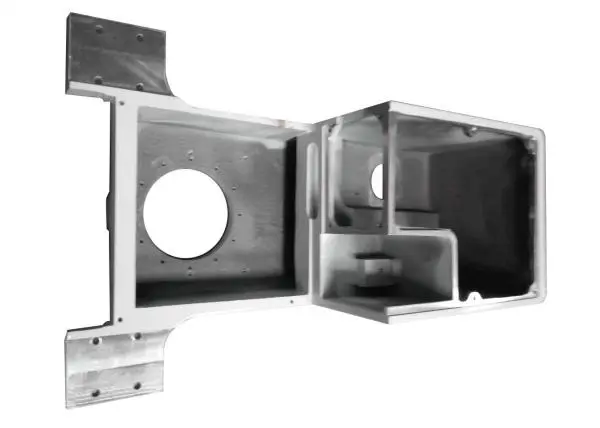
Prototype aluminum casting is an important step between design ideas and mass production because it allows makers to make test parts that work to verify the design before investing in full-scale production. Using this method of making things, molten aluminum alloys are poured into precise molds to make parts that are both light and strong and are very close to the final output specs. Companies can get accurate measurements and test how the material behaves in real life using advanced techniques like low-pressure casting and gravity casting. This makes it an essential tool for procurement managers and engineers who want to cut down on costly design changes and speed up market entry.
Understanding Prototype Aluminum Casting and Its Capabilities
What Makes Aluminum the Preferred Prototyping Material?
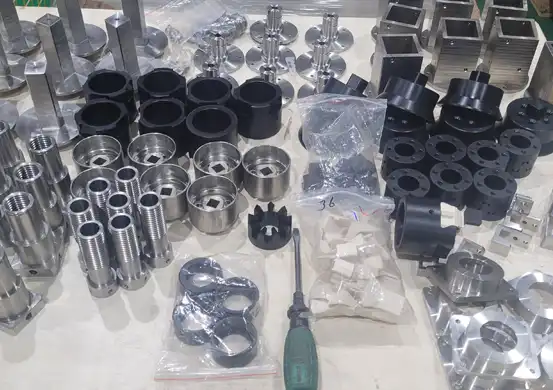
Aluminum is great for fast development because it has a great strength-to-weight ratio. This means that it keeps structures strong without adding extra weight to parts. The material naturally fights corrosion in a wide range of working conditions. This means that products don't need as much long-term upkeep and last longer. Another important benefit is that aluminum can be machined easily, so it can be used for secondary processes like CNC cutting with little tool wear. This makes it possible to make parts with tight tolerances and complex shapes. Because of these qualities, prototype aluminum casting is very useful in many fields, from cars to robots, where reducing weight has a direct effect on speed and energy economy.
Common Aluminum Alloys Used in Prototyping
Because it has balanced mechanical qualities and is easy to make, A356 aluminum alloy is most often used for prototypes. This silicon-magnesium alloy has a good tensile strength, usually between 24,000 and 33,000 PSI when heated to T6. This means it can be used for structure parts like robot shells and machinery housings. Because the alloy is fluid when poured, complicated shapes can fill fully, which reduces flaws like holes and missing parts. A356 is often the material of choice for clients in the heavy machinery and industrial equipment industries because it works reliably at a range of temperatures and keeps its shape while solidifying.
Step-by-Step Casting Process Overview
Mold preparation is the first step in the manufacturing process. This is where the tools are checked out and fired to the right temperatures to stop them from solidifying too soon. After being heated to about 1350°F, molten aluminum goes through a degassing process to get rid of any hydrogen that might cause internal holes. During the dumping process, controlled filling rates make sure that the material is spread out evenly inside the mold. We use low-pressure casting a lot. It uses compressed air to push liquid metal up into molds. This makes casts that are denser and have fewer flaws than gravity methods. After the parts have solidified, they are shot-blasted to prepare the surface and then CNC-machined to their final dimensions. This step-by-step method gives parts that meet strict quality standards while keeping production running smoothly.
Comparing Low-Pressure, Gravity, and Die Casting Methods
Low-pressure casting works best for making prototypes in middle quantities that need to have good mechanical qualities and few holes. The controlled filling method lowers turbulence, which makes the grain structure constant throughout the casting. Gravity casting is easy to use and doesn't require as many tools, so it's a good choice for trial runs of less than 100 pieces. However, finishing the surface may need extra work. Die casting produces very accurate measurements and smooth surfaces, but it costs more to buy the steel tools needed at first, so it should only be used when sample numbers get close to production volumes. Our facility keeps up with all three ways' tools, so we can tell you which one is best for you based on your batch size, complexity, and budget.
Key Factors and Benefits of Prototype Aluminum Casting for OEM Clients
Accelerating Time-to-Market Through Rapid Iterations
In current product creation cycles, speed is what gives you a competitive edge. Prototype aluminum casting lets engineering teams make many changes to a design in a short amount of time, finding flaws before they become costly production issues. When a Tier-1 car supplier came to us with a transmission case design that needed to be tested, we were able to deliver working prototypes in three weeks, which was half the time that competitors said it would take. At this speed, their engineers were able to finish stress tests and make changes to the design before investing in the finished tools. When you turn things around quickly, you can get into the market earlier and make money while your rivals are still in the planning stages.
Cost-Efficiency for Low-to-Medium Production Volumes
An economic study shows that aluminum casting can be cost-effective for as few as 50 pieces, especially when the prices of the tools are spread out over prototype and pre-production runs. CNC machining costs the same amount per hour no matter how complicated the job is. Casting, on the other hand, makes parts that are almost perfectly round and only need finishing cutting on important areas. We recently helped a company that makes building equipment that needed 200 hydraulic pump housings for testing in the field. Casting cut the cost per unit by 40% compared to fully machined options, and the mounting surfaces were still able to meet the necessary tolerances of ±0.005 inches. This cost structure is especially helpful for supply chain managers who have to balance the need for quality with the need to stay within budget.
Enabling Reliable Functional Testing
When testing a product's performance, the accuracy of the materials is important. 3D-printed samples made of plastic can't match the heat conductivity, stiffness, or fatigue resistance of real-world metal parts that are being used. When you cast samples from production-intent alloys like A356, you can be sure that the test results will accurately reflect how the finished product will behave. When quality engineers do damaging testing or long-term reliability trials on prototypes, they are more confident that the performance data from those tests will directly apply to parts that are mass-produced. Our quality system is ISO9001:2015 certified, which means that you can track everything from the certification of the raw materials to the final review. This provides paperwork that meets legal standards in the energy and aerospace sectors.
Designing for Manufacturability to Reduce Revisions
Technical teamwork during the planning phase keeps changes from having to be made later that cost a lot of money. Our engineering team looks over CAD models to find features that could lead to casting flaws, like wall thickness differences that are too big or too small, draft angles that aren't right, or undercuts that need complicated core parts. We give comments on Design for Manufacturing that strikes a balance between useful needs and production realities. Often, we suggest small changes to geometry that have a huge effect on yield rates. A recent robotics client agreed with our advice to change where the internal ribs were placed on a 16.7 kg robot shell casting. This got rid of any hot spots that might have caused shrinking porosity. This proactive method cut down on review cycles by three weeks and made sure that the performance of the prototype met the requirements for production.
Comparative Analysis: Prototype Aluminum Casting vs Other Prototyping Methods
Material Strength and Structural Integrity Comparison
Metal casting gives prototypes dynamic qualities that can't be achieved with other methods. Polymer-based 3D printing makes models that are correct in terms of shape, but the parts that are made have layered structures with uneven strength—components break along the edges of layers when they are loaded. Sand casting makes real metal parts, but the surfaces are rougher and need a lot of work to be smoothed out. The surface quality of investment casting is very good, but it takes longer for the shell to be built and for the metal to burn out. Die casting has the same qualities as the material, but it costs $15,000 to $50,000 to make hardened steel tools, which makes it impossible to make enough for a real sample. Prototype aluminum casting is the best of both worlds because it uses tooling that costs 60% less than die-casting equipment but still gives you 95% of the qualities of the industrial material.
Surface Finish and Dimensional Precision Evaluation
The as-cast surface finish is very different depending on the method used, which has a direct effect on the need for extra cutting. Die casting makes surfaces that are about 125 Ra (microinches) rough, which is usually fine without any other work. After shot blasting, our low-pressure method gets to 250–400 Ra, which is good for non-cosmetic uses or as a strong base for painting and coating. Sand casting usually gives 500 to 800 Ra, so useful areas need to be machined completely. When it comes to dimensions, die casting needs ±0.005 inches for most features, low-pressure casting needs ±0.010 to 0.015 inches, and sand casting needs ±0.030 inches or more. CNC machining can get tolerances as low as ±0.001 inches, but it costs three to five times as much per piece as casting and only needs to be used for important measurements.
Cost Implications Across Production Quantities
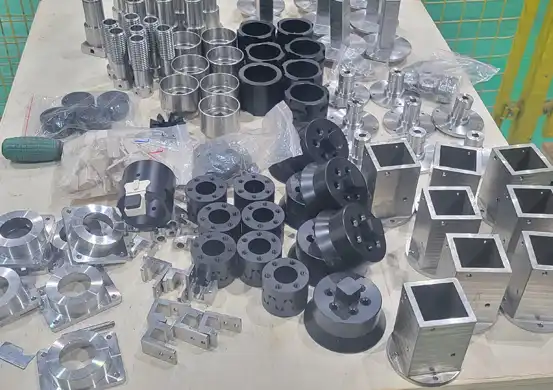
Based on the amount of orders, economic crossing points help choose the best way. Due to slow build rates and expensive powder materials, 3D printing metal over 10 pieces becomes too expensive. CNC cutting from billet is only affordable when it comes to less than 25 pieces, or when the design is very simple. Sand casting requires the least amount of money to buy tools ($2,000 to $5,000), but the cost of each piece is too high for more than 50 units to be worth it. Our low-pressure aluminum casting works best when it makes between 50 and 5,000 pieces. This is because the cost of the tools is between $8,000 and $12,000. This ability to grow is why procurement managers often ask for casting for bridge tools projects that include testing prototypes and starting to make a lot of them.
Conclusion
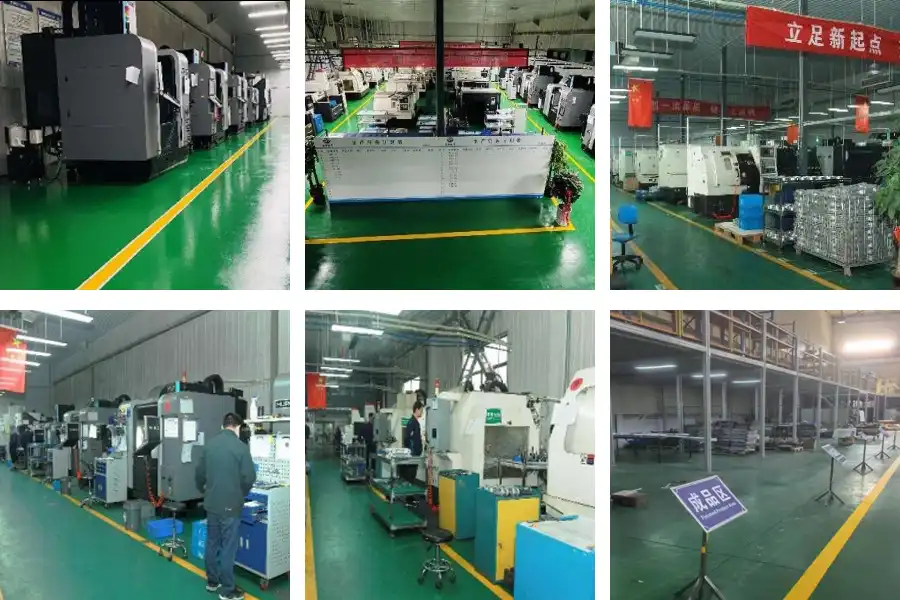
Prototype aluminum casting is a method of production that strikes a balance between speed, cost, and material accuracy as a product is being developed. The project's success depends on choosing capable OEM partners with a wide range of professional skills, extensive certifications, and open contact methods. With 20 years of experience in the field and ISO-certified management systems, Rongbao Enterprise offers complete solutions that include low-pressure casting, precise CNC cutting, and strict quality control. Our Xi'an facility has reasonable prices and enough production capacity to support both making prototypes and making a lot of them. This helps us form relationships that speed up market entry while keeping costs low. Procurement pros can get the most out of expert aluminum casting OEMs by reading this guide and knowing the trade-offs between casting methods, the properties of materials that must be met, and the criteria for evaluating suppliers.
FAQ
What are typical lead times for aluminum casting prototypes?
Standard wait times for prototype aluminum castings are three to four weeks for making the first set of tools and the first product. This time frame includes making the mold, testing the casting, and making sure the quality is good. For tasks that need to be done quickly, rush services can cut plans down to two weeks, but the extra costs usually add 20 to 30 percent to the base price. After the sample is approved, it takes an extra 3–4 weeks to make 100–500 pieces. Timelines may be pushed back by one to two weeks for complex shapes that need multi-piece molds or specialized core parts. Suppliers can properly distribute resources and commit to realistic delivery schedules when they are given clear deadline requirements during the quote process.
How does casting cost compare to 3D printing and CNC machining?
Comparing costs depends a lot on the amount and complexity of the parts. Metal 3D printing costs between $50 and $200 per piece for small parts, and the price stays pretty steady no matter how much you make. CNC cutting from solid billet costs between $100 and $500 per piece, based on how much material needs to be removed. Aluminum casting costs between $8,000 and $12,000 for the tools up front, but it lowers the price of each part to $20 to $80 for medium-complexity parts. Around 50 to 100 pieces is usually the split point. After that, casting offers big savings per unit that grow with volume.
Can aluminum casting handle complex geometries and tight tolerances?
Modern low-pressure casting makes parts with complicated internal channels, walls as thin as 2.5 mm, and complicated exterior features that would need a lot of work to be machined out of solid stock. Many practical needs can be met with as-cast dimensional limits of ±0.010 to 0.015 inches. When needed, selected CNC machining can tighten key dimensions to ±0.002 inches. For very precise parts like bearing holes or sealing surfaces, the cast-near-net-shape method works best because it takes little material during finishing steps, which cuts down on cutting time while keeping the shape accurate.
Partner with Rongbao Enterprise for Superior Prototype Aluminum Casting Solutions
With their advanced prototype aluminum casting skills, Rongbao Enterprise is ready to turn your design ideas into working sample parts. Our factory in Xi'an uses management systems that are approved by ISO9001, ISO14001, and ISO45001 to offer low-pressure casting, precise CNC cutting, and a full range of surface treatment services. We are experts at making A356 alloy parts that weigh between 2 kg and 50 kg. Our personalized OEM solutions help businesses ranging from robots to heavy machinery. Our team takes care of the whole project lifecycle, from consulting on Design for Manufacturing to producing up to 5,000 pieces a year, giving your supply chain the scalability it needs. Contact steve.zhou@263.net or zhouyi@rongbaocasting.com right away to talk to our engineering team about your unique needs and get detailed quotes from a prototype aluminum casting supplier that is known for providing quality, honesty, and on-time performance.
References
1. Campbell, J. (2015). Complete Casting Handbook: Metal Casting Processes, Metallurgy, Techniques and Design. Butterworth-Heinemann.
2. Kaufman, J.G. & Rooy, E.L. (2004). Aluminum Alloy Castings: Properties, Processes, and Applications. ASM International.
3. Beeley, P.R. (2001). Foundry Technology. Butterworth-Heinemann.
4. Carlson, K.D., Beckermann, C. (2009). "Prediction of Shrinkage Pore Volume Fraction Using a Dimensionless Niyama Criterion." Metallurgical and Materials Transactions A, 40(1), 163-175.
5. Bonollo, F., Urban, J., Bonatto, B., Botter, M. (2005). "Gravity and Low Pressure Die Casting of Aluminium Alloys: A Technical and Economical Benchmark." La Metallurgia Italiana, 97(6), 23-32.
6. Reilly, C., Green, N.R., Jolly, M.R. (2013). "The Present State of Modeling Entrained Defects in the Shape Casting Process." Applied Mathematical Modelling, 37(3), 611-628.
Learn about our latest products and discounts through SMS or email