- English
- French
- German
- Portuguese
- Spanish
- Russian
- Japanese
- Korean
- Arabic
- Greek
- German
- Turkish
- Italian
- Danish
- Romanian
- Indonesian
- Czech
- Afrikaans
- Swedish
- Polish
- Basque
- Catalan
- Esperanto
- Hindi
- Lao
- Albanian
- Amharic
- Armenian
- Azerbaijani
- Belarusian
- Bengali
- Bosnian
- Bulgarian
- Cebuano
- Chichewa
- Corsican
- Croatian
- Dutch
- Estonian
- Filipino
- Finnish
- Frisian
- Galician
- Georgian
- Gujarati
- Haitian
- Hausa
- Hawaiian
- Hebrew
- Hmong
- Hungarian
- Icelandic
- Igbo
- Javanese
- Kannada
- Kazakh
- Khmer
- Kurdish
- Kyrgyz
- Latin
- Latvian
- Lithuanian
- Luxembou..
- Macedonian
- Malagasy
- Malay
- Malayalam
- Maltese
- Maori
- Marathi
- Mongolian
- Burmese
- Nepali
- Norwegian
- Pashto
- Persian
- Punjabi
- Serbian
- Sesotho
- Sinhala
- Slovak
- Slovenian
- Somali
- Samoan
- Scots Gaelic
- Shona
- Sindhi
- Sundanese
- Swahili
- Tajik
- Tamil
- Telugu
- Thai
- Ukrainian
- Urdu
- Uzbek
- Vietnamese
- Welsh
- Xhosa
- Yiddish
- Yoruba
- Zulu
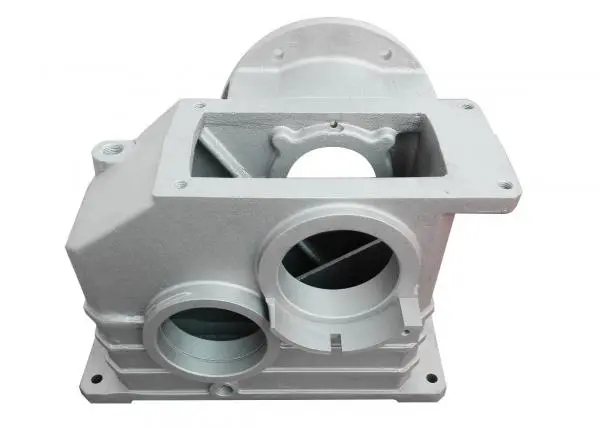
What is a gearbox housing?
A gearbox housing is more than an outer shell surrounding a transmission. It provides structural support for gears, shafts, bearings, and other internal components while helping maintain their alignment during operation. The design and manufacturing quality of a gearbox housing influence transmission stability, lubrication, heat dissipation, and service life. In industrial equipment, the housing must also suit the installation environment, expected loads, and maintenance requirements. Fire pump reduction gearboxes provide a useful example of these engineering demands. Their housings must support the transmission components while accommodating the operating conditions of equipment that may remain on standby for extended periods before being called into service. However, gearbox housings are also used in industrial machinery, agricultural equipment, material handling systems, pumps, and other mechanical drives. Understanding their functions, materials, casting methods, and quality requirements helps equipment manufacturers select a suitable design for their applications.
What a Gearbox Housing Does in a Transmission System?
The gearbox casing holds and supports the internal transmission system. Its structural purpose is as critical as its protective shell is so often described as being. The housing provides locations for bearings and mounting of the shaft, interfaces to connect the gearbox to surrounding equipment, and helps to preserve the relative positions of moving components.
Supporting Gears, Shafts, and Bearings
The gears transmit torque. This results in forces on the shafts and bearings of the gears. The housing is subjected to these forces via the bearing seats and mounting arrangements. Excess deformation of the housing under the action of the working loads might result in a change in gear contact, vibration, and bearing performance.
Therefore, a good design must be stiff and sturdy. The reaction of the housing to mechanical loads depends on the wall thickness, reinforcing ribs, geometry of the bearing support, the way things are mounted, and the qualities of the material. These are things that must be built together, not on their own.
The selection of a gear ratio, motor power, pump requirements, and the predicted operating conditions must be taken into account in the construction of a fire pump reduction gearbox. The enclosure must be dimensioned according to the particular load scenarios and installation needs and not to a generic casing layout.
Protecting Internal Components and Retaining Lubricant
The casing also shields the internal transmission parts from external impurities. Dust, moisture, and other unwanted things getting into the gearbox can have a negative effect on the lubricating condition and increase wear. The lubricating oil shall be contained in the enclosure for which it is designed, and provision shall be made for filling, draining, inspection, and maintenance.
The design of a housing normally includes an internal compartment, cover interface, shaft apertures, and mounting elements. Depending on the gearbox design, it may additionally contain inspection apertures, oil level indicators, breather connections, or drain plugs.
These things affect the complexity of production and the serviceability over the long haul. The design should facilitate inspection and oil changes for maintenance and should have accessible fasteners and well-defined sealing interfaces for assembly.
Managing Heat and Vibration
Gears and bearings produce heat as they work. Also, thermal losses may occur due to the movement of the lubricant, especially when the oil level, viscosity, or operating speed is not adapted to the transmission design. The housing transmits heat from the interior assembly to the environment external to it.
Heat transfer is dependent on exterior surface area, wall thickness, material, and ventilation conditions. Some designs also employ external ribs or fins to expand the available surface area. The effectiveness of the outside ribs or fins depends on the actual operating conditions and the air flow.
Then there is the matter of vibration. The propagation of vibration via the gearbox to adjacent equipment depends on the material damping, structural stiffness, mounting conditions, and the geometry of the casing. Therefore, housing design should be done jointly with gear shape, bearing selection, lubrication, and mounting system.
Choosing Materials and Manufacturing Methods
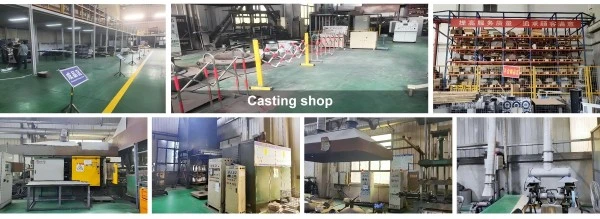
The choice of the appropriate manufacturing route depends on the geometry, the targeted mechanical performance, the production volume, and the global cost. Sand casting is a solution for complex housings, especially where the part has large interior cavities or is a design difficult to make from solid. If production volume, wall thickness, dimensional constraints, or material selections necessitate another technique, additional casting processes may be employed.
When Sand Casting Is a Practical Choice?
Sand casting is a foundry procedure using sand as a molding material. The pattern is the shape needed on the outside and used to make the mold. The outside mold alone cannot produce inner channels or cavities; thus, sand cores are used to form those.
Then the metal is left to set. The casting is cleaned, and the mold is broken. Further treatments may be heat treatment, shot blasting, machining, surface finishing, and inspection, in keeping with the design and the application.
Sand casting offers flexibility, too. It can deal with a large range of component sizes and geometries, including uneven exterior profiles, mounting bosses, reinforcing ribs, and internal voids. This is very useful for gearbox housings, where good structural qualities are desired with minimum removal of material.
Sand casting can also be good for low to medium volume production since the tooling can be less expensive than some permanent mold technologies. Finally, under this alternative, the complexity of the tooling, the machining allowances, the casting yield, the finishing needs, and the number of components ordered must still be considered.
Understanding Sand Molds and Core Making
The quality of the casting depends upon the state of the sand mold. Foundries control parameters including dispersion of sand particles, binder content, moisture (if applicable), mold strength, and gas permeability. These qualities determine the ability of the mold to hold its shape, exhaust gases, and withstand the temperature and pressure of pouring.
If the mold is too weak, it may change its shape as you pour the material. Gas-related issues might be due to insufficient permeability or lack of venting. Improper molding conditions may impact surface quality and dimensional consistency.
The construction of cores is especially critical for gearbox housing with inner voids. The core must stay in place when poured and be strong enough to withstand the stresses of the molten metal. The core-setting procedure and venting arrangements shall be suitable for the part geometry.
There are different types of sand systems, such as clay-bound sand, resin-bound sand, and sodium silicate-bound sand. Each sand system has a unique mix of strength, collapsibility, surface polish, cost, and environmental concerns. It should be based on foundry process capabilities and casting requirements, not the idea that one sand method is appropriate for all.
Matching the Alloy to the Application
The choice of material should be determined by the mechanical qualities required, the operating environment, and the limits of manufacture. Cast iron is often used for housings where stiffness, wear resistance at relevant applications, and vibration damping are useful. Suitability is dependent upon the particular load, grade, and design of the part.
Aluminum alloys are appropriate for applications where the weight of components is crucial. Depending on the alloy and surface treatment, they can impart useful casting and corrosion-resistant characteristics. But aluminum and cast iron are not suitable for all gearbox applications. The choice of material must reflect differences in stiffness, thermal behavior, strength, and design requirements.
"Because of the way it is made, there are limits to what you can do. Sand casting, gravity die casting, low-pressure die casting, and high-pressure die casting all make different demands on tooling, component geometry, wall thickness, production volumes, and dimensional control.
Hence, the material and production route should be considered together at the design stage. The advice of the foundry must be based on the drawing of the part, the conditions of application, the amount of production, and the agreed criteria of inspection with the client.
Design Requirements for Fire Pump Gearbox Housings
Fire pump gearboxes are one example where it is important to consider the working environment together with the design of the casting. The equipment may be sitting idle for long periods of time, but the transmission must be ready to go when needed. The housing must consequently be able to endure the necessary mechanical loads, the required lubricant retention, and the climatic conditions of the installation.
Mechanical Loads and Structural Rigidity
The bearing arrangement is located in the housing and transfers loads to the gearbox mounting points. Its geometry must contain enough material in the regions of bearing seats, fastening points, and other highly stressed regions. The ribs can be used to improve stiffness, but their proportions and position must be consistent with the casting process.
More wall thickness is not proportional to a better part. The added material comes at a price of greater weight, cost of casting and cooling time, and certain solidification faults. But very thin parts may not be easily filled or may not have enough structural performance.
Good design is a compromise between load capacity, stiffness, castability, access to machining, and cost. The final casting drawing will not be issued until engineering has verified the gearbox configuration, shaft positions, mounting orientation, and expected operating loads.
Corrosion Protection and Surface Finishing
Fire pumps may be installed in basements, plant rooms, and other locations where humidity and poor ventilation can result in corrosion. The surface protection system must be selected according to the real conditions. The intensity of exposure is different from object to object.
Prior to coating, the cast surfaces may need to be cleaned to remove leftover sand, scale, and other impurities. Shot blast or otherwise clean to an acceptable condition. Top coat or powder coating and primer as required by the material and requirements.
The choice of coatings should be made bearing in mind the substrate, the service environment, the expected exposure, and the maintenance requirements. The surfaces on the outside of the casting may not be treated the same as the surface to be machined or utilized as a sealing surface. Any criteria for masking, coating thickness, or finish should be established prior to manufacture.
Sealing Interfaces and Lubrication
Thus, appropriate interfaces are necessary, which keep the oil and avoid undesired contamination of the gearbox housing. The considerations in design and assembly are the split-line couplings, the cover interfaces, the shaft apertures, the inspection ports, and the drain connections.
The sealing mechanism of the joint depends on the joint geometry, lubrication, operating temperature, shaft speed, and predicted exposure to the environment. In some instances paper or composite gaskets, liquid sealants, and elastomeric seals can be used. Depending on the operating conditions, the shaft apertures can require radial shaft seals or alternative solutions.
Common machining processes such as bearing seats, cover joints, mounting surfaces, and seal bores. The engineering drawing and functional requirements shall specify the flatness, dimensional tolerance, surface roughness, and positional accuracy necessary. The required precision depends on the size of the item, the design of the sealing, and the conditions of assembly. Thus, one tolerance value cannot be applied for all housings.
The sealing performance is good because of the constructed gearbox. The result is proper shaft finish, seal installation, joint preparation, fastener tightening, and lubricant selection. But only casting quality is not sufficient to make the entire transmission leak-free.
Thermal Performance and Noise Considerations
A gearbox under constant load will generate heat that must be conducted through the casing and radiated away into the surroundings. The outside ribs can increase the available surface area, but the orientation, spacing, thickness, and location must be suited to the casting technique and installation requirements.
When building the thermal system, you will need to consider the lubrication requirements, ambient temperature, operating speed, duty cycle, and available airflow. If required, the heat dissipation performance of the housing can be checked via thermal analysis or testing.
And you need an equally structured plan for noise reduction. The final noise level is determined by the proper engagement of gears, the condition of the bearing, lubrication, shaft alignment, the rigidity of the mounting, and the vibration of the casing. The dampening qualities of cast iron are advantageous in some applications, but they do not eliminate the requirement for proper design and installation of transmissions.
For more demanding applications, engineers may want to consider housing vibration, mounting resonance, and temperature under representative operating circumstances. These checks are more useful evidence than the assumption that thicker walls or more ribs will always boost performance.
How Casting Quality Affects Housing Performance?
The gearbox housing must meet both the functional requirements of the finished product and the casting criteria. A casting may look good on the surface, but it may have interior discontinuities or dimensional defects affecting machinability, assemblability, or performance in service. Quality control should be based on the key features and future use of the component.
Controlling Common Casting Defects
In casting metals there are problems with porosity, shrinkage voids, inclusions, cold closures, and dimensional distortion. Their chances rely on alloy, mold design, pouring conditions, feeding systems, section thickness, and solidification behavior.
Process planning and production controls in foundries limit these threats. The flow of the metal is controlled by proper gating and feeding devices allowing for shrinkage during solidification. The mold and core design shall allow for complete filling and venting of gases. The alloy and casting design should be adjusted to the pouring temperature and other processing parameters.
Acceptance criteria must separate cosmetic and structural integrity, pressure containment, and machining or assembly faults. Not all signals on a surface are of the same relevance, and acceptance should be in accordance with the accepted drawing, specification, and inspection plan.
Machining and Dimensional Verification
After cleaning and preparation, the important portions of the casting can be machined to the desired size and surface finish. Examples of such features are bearing bores, shaft apertures, mounting faces, cover interfaces, and threaded holes.
The machining allowances must be included in the casting design. If not enough material, may not machine out well. But more allowances mean more material removed and more production time.
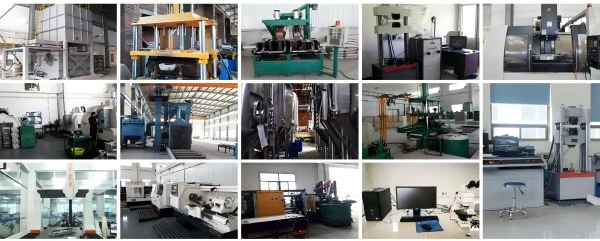
Dimensional inspection shall be performed on those features affecting assembly and function. It is contingent upon the drawing. Coordinate measuring equipment, bore gauges, calipers, micrometers, surface measuring devices, or special fittings can be used. The inspection methods and the sampling frequency will be determined by the required tolerances, the production volumes, and the quality plan.
Testing and Documentation
The inspection plan is valid and depends on the housing function. These normally start with a visual assessment and dimensional testing. Other treatments such as radiography or other nondestructive testing may be offered if internal integrity needs justify the same.
Pressure or leak testing shall be carried out only to the extent necessary for the design of the component and the applicable standard. A gearbox housing is not a pressure-containing component when it contains lubricating oil. The test technique should be designed for practical implementation with a clear definition of the pressure, time, and acceptance criteria.
Material certificates, inspection reports, heat-treatment records where necessary, and traceability information will ensure that clients may be assured that the components provided fit the prescribed criteria. The supplier and the buyer shall agree on the paperwork required, the process for nonconforming items, and whether third-party inspection is required or not before manufacturing starts.

Conclusion
The gearbox housing supports the internal transmission assembly, maintains the required positions of gears and bearings, protects components from outside contamination, and contributes to lubricant containment and heat dissipation. This casting’s performance is dependent on the link between structural design, material selection, quality of casting, machining accuracy and assembly requirements.
Sand casting is flexible for complex geometries and internal cavities of housings, however the method has to be adapted to the specific alloy, the component size, the production volume and the quality demands. Good mold design, controlled solidification, proper machining and recorded inspection all contribute to produce castings that satisfy the specified standards.
Ultimately, the decision on an appropriate gearbox housing is an engineering and procurement decision for the equipment producers. Clear drawings, clear acceptance criteria, and early contact with an experienced manufacturer give a good platform for reducing manufacturing costs and acquiring components suitable to the application.
For inquiries about gearbox housings or other precision-engineered components, you can reach out to Rongbao Enterprise at steve.zhou@263.net or zhouyi@rongbaocasting.com. Their team of experts is ready to assist you in finding the perfect solution for your specific application needs.
References
- ASM International. (2019). ASM Handbook, Volume 2A: Aluminum Science and Technology. Materials Park, OH: ASM International.
- Budynas, R. G., & Nisbett, J. K. (2020). Shigley's Mechanical Engineering Design (11th ed.). New York, NY: McGraw-Hill Education.
- Childs, P. R. N. (2013). Mechanical Design Engineering Handbook. Oxford, UK: Butterworth-Heinemann.
- Totten, G. E., & MacKenzie, D. S. (Eds.). (2003). Handbook of Aluminum: Vol. 1: Physical Metallurgy and Processes. New York, NY: Marcel Dekker, Inc.
- Wang, L., Shen, W., & Xie, H. (2018). Design and manufacture of gearbox housing using integrated CAD/CAE/CAM: From conceptual design to manufactured parts. Concurrent Engineering, 26(2), 186-199.

Learn about our latest products and discounts through SMS or email