- English
- French
- German
- Portuguese
- Spanish
- Russian
- Japanese
- Korean
- Arabic
- Greek
- German
- Turkish
- Italian
- Danish
- Romanian
- Indonesian
- Czech
- Afrikaans
- Swedish
- Polish
- Basque
- Catalan
- Esperanto
- Hindi
- Lao
- Albanian
- Amharic
- Armenian
- Azerbaijani
- Belarusian
- Bengali
- Bosnian
- Bulgarian
- Cebuano
- Chichewa
- Corsican
- Croatian
- Dutch
- Estonian
- Filipino
- Finnish
- Frisian
- Galician
- Georgian
- Gujarati
- Haitian
- Hausa
- Hawaiian
- Hebrew
- Hmong
- Hungarian
- Icelandic
- Igbo
- Javanese
- Kannada
- Kazakh
- Khmer
- Kurdish
- Kyrgyz
- Latin
- Latvian
- Lithuanian
- Luxembou..
- Macedonian
- Malagasy
- Malay
- Malayalam
- Maltese
- Maori
- Marathi
- Mongolian
- Burmese
- Nepali
- Norwegian
- Pashto
- Persian
- Punjabi
- Serbian
- Sesotho
- Sinhala
- Slovak
- Slovenian
- Somali
- Samoan
- Scots Gaelic
- Shona
- Sindhi
- Sundanese
- Swahili
- Tajik
- Tamil
- Telugu
- Thai
- Ukrainian
- Urdu
- Uzbek
- Vietnamese
- Welsh
- Xhosa
- Yiddish
- Yoruba
- Zulu
What is a casting fixed connector for three-way pipe?
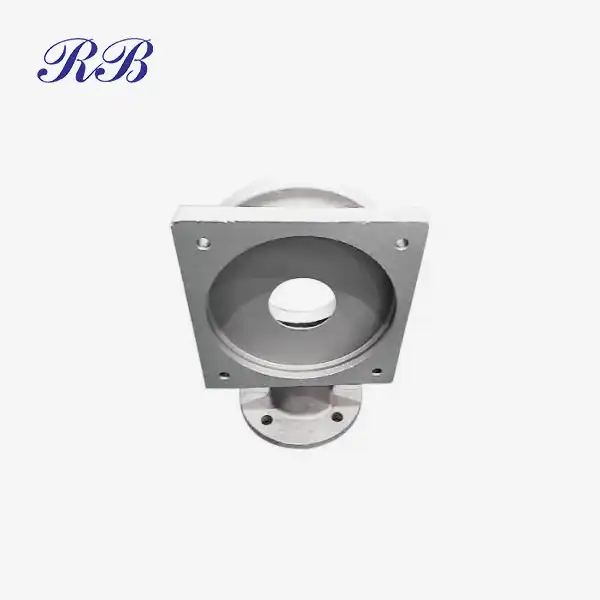
A casting fixed connector for three-way pipe is a precision-engineered metal component designed to create stable, rigid junctions in T-joint piping configurations. Manufactured through gravity casting processes—typically using aluminum alloys like ZL101A—these connectors provide structural integrity in systems requiring reliable fluid or gas distribution. The fixed design eliminates movement at junction points, ensuring consistent alignment and reducing stress concentration. With applications spanning automotive cooling systems, industrial fluid handling, and heavy machinery hydraulics, these connectors are essential for maintaining system reliability under high-pressure or high-vibration conditions while meeting stringent dimensional tolerances through CNC machining and surface treatments like shot blasting.
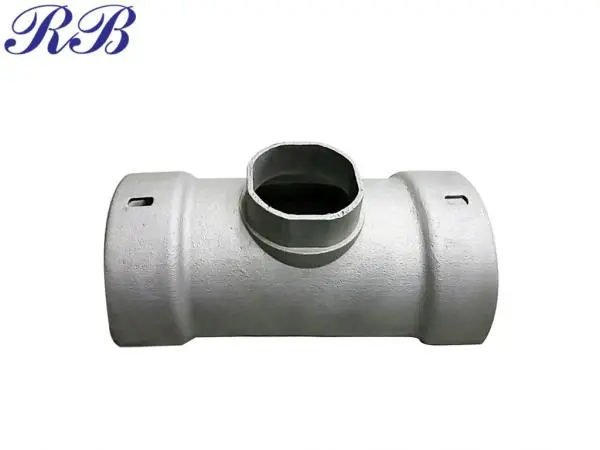
Understanding Casting Fixed Connectors for Three-Way Pipes
Three-way pipe systems need parts that can handle complicated flow dynamics while keeping the structure stable. We're seeing more and more industries needing reliable junction solutions that won't break down when things get tough.
The Fundamental Role of Fixed Connectors
Casting fixed connectors hold three pipe pieces together into one fixed unit, which is the main part of a T-joint. These parts don't allow rotational play like swivel or flexible joints do, which is very important in situations where exact flow direction is needed. Even small misalignments can cause turbulence in cooling circuits for cars, which lowers the efficiency of heat transfer by 15 to 20%. The rigid connection makes sure that joint separation doesn't happen when the temperature rises, which is a common way for poorly designed systems to fail.
Material Characteristics That Define Performance
Because it has balanced properties, ZL101A aluminium alloy stands out in the modern world of casting fixed connector making. This hypoeutectic aluminum-silicon alloy has between 6.7 and 7.5% silicon, which makes it easy to cast while still being strong. After being heated, the material's tensile strength is around 160–180 MPa, which is strong enough for most industrial uses while still being light enough to lower the system's mass. Resistance to corrosion is especially important in places where chemicals or water are present. Surface treatments like shot blasting make surfaces micro-textured, which makes it easier for coatings to stick and extends the life of the item in harsh conditions.
Stainless steel versions are better at resisting rust, but they cost more and are heavier because they are about 2.8 times denser than aluminium. We've seen that industries that work with corrosive fluids like stainless grades, even though they cost more, while the car and aircraft industries like aluminium for uses that need to be light. For a reasonable price, iron castings offer good corrosion protection, but they are not as strong as aluminium metals when it comes to weight.
Application Contexts Across Industries
Excavators and loaders use these casting fixed connectors for their hydraulic systems, which can handle forces of up to 3,000 PSI. The fixed design stops hose whip, which is a dangerous situation in which pressurised lines come loose and thrash around without being controlled. Manufacturers of construction equipment require fixed connectors to have dimensions that are accurate to within ±0.05mm so that the seal can be compressed properly. In the energy industry, oil and gas handling equipment uses casting fixed connectors that have to be able to handle both high pressures and temperature changes from -40°F to 300°F. Lightweight aluminium casting connectors are used in wind turbine cooling systems to keep the nacelle's weight as low as possible while still handling the heat from the gearbox and generator.
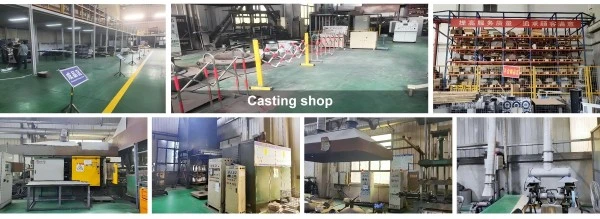
How Does a Casting Fixed Connector Work in Three-Way Pipes?
The main idea behind how it works is to make a continuous load path through the junction. When fluid pressure works on the inside of the casting fixed connector, the stress is spread out along its walls instead of being concentrated at weld points or threaded connections.
Mechanical Principles Behind Rigid Junctions
Gravity casting makes parts that are almost net-shaped and have constant wall thickness, which for casting fixed connectors under 1 kg is usually between 3 and 5 mm. This level of regularity stops weak spots that could cause cracks to spread. Fixed mounting usually has ends with flanges and bolt patterns that meet standards such as SAE J518 or ISO 6162. When you preload the bolt, it forms a locking force that is stronger than the separation forces caused by internal pressure. This keeps the system from leaking. When the system is pressurised, the body of the casting fixed connector goes through hoop stress, which is circumferential tension that is related to pressure and diameter. The yield strength of ZL101A is high enough to protect against pressures up to 2,500 PSI in most 25–50mm diameter uses.
Installation Best Practices for System Integrity
Preparing the surface is the first step in a proper fitting. To get flange edges clean to the level of cleaning required by ISO 8501-1 Sa2.5, rust, oil, and other contaminants must be removed. The type of gasket you choose depends on how it will be used. For example, EPDM rubber works well with water-glycol coolants, while nitrile is better for hydraulics that use oil. To properly spread clamping force, bolts are tightened in star patterns. Torque values are found using the equation T = K × D × F, where K is the friction coefficient, D is the diameter of the bolt, and F is the desired preload. To avoid overtightening, which can damage flanges and make leak tracks, we suggest using measured torque wrenches instead of impact tools.
When fluids are full of sediment, orientation is important. By putting the third port down, particles can settle away from the main flow paths, which protects internal surfaces from wear and tear. Because of thermal expansion, supports must be put within 300–500 mm of the casting fixed connector to stop cantilever loading, which could cause bending stresses that are too high for the material to handle over many thermal cycles.
Casting Fixed Connector vs Alternative Solutions: Making the Right Choice
To choose the best joining methods, you need to know how to weigh the pros and cons of different factors. Each approach has different effects on how well the system works, how hard it is to install, and how much it costs over its lifetime.

Comparing Structural Connection Methods
With welded joints, there are no more mechanical fasteners. This makes monolithic structures that should not have any leak routes. But welding creates areas where the material's properties change because of the heat. In aluminium alloys, the fusion zone is often only 60–70% as strong as the parent material. This means that it needs to be reinforced or lower working pressures must be accepted. The ability of the operator has a lot to do with the quality of the weld, which makes it hard to be consistent in field setups. Post-weld heat treatment can fix things, but it costs more and is harder to set up, so many projects can't use it.
Mechanical connections make installation faster, which is especially helpful during upkeep, when the cost of downtime is higher than the cost of the hardware. Manufacturers of groove-type couplings, such as Victaulic, make them resistant to pull-out through mechanical interference, but the pipes need to be carefully prepared first. The extra bulk—usually 30 to 50 mm longer than welded joints—makes installations with limited space difficult. Vibration resistance is lower than that of casting fixed connectors; we've seen loosening in situations with a continuous vibration frequency of 25Hz or more, which means that they need to be retightened more often, which adds to the maintenance workload.
Swivel connectors help with thermal expansion and vibration isolation, but they allow for movement, which isn't good for systems that need to keep the shape set. Compared to casting fixed connector designs, the extra closing surfaces make the number of possible leak points twice as high. We've seen more failures in swivel joints that are used above 180°F, because that's when sealants break down and let water in, which speeds up rust.
Material Selection Criteria for Optimal Performance
Aluminium metals work great in places where weight is important and where corrosion isn't a big problem. The average ZL101A three-way casting fixed connector weighs about 0.57 kg, which means that lifting equipment is not needed for handling. This means that installation time is 20–30% shorter than with steel components of the same type. The material's thermal conductivity—about 150 W/m·K—makes it easier for heat to escape in cooling systems, but designers need to be aware of its thermal expansion coefficients. In systems with cathodic protection, protective connections are needed because of electrical conductivity to stop galvanic cells from forming.
Grades of stainless steel like 316L are very resistant to corrosion, which is important in chemical processing and marine settings. When scratched, the inactive chromium oxide layer fixes itself, unlike painted surfaces that need to be refinished every so often. The cost of materials is three to four times higher than for aluminium, and cutting needs carbide tools and slower speeds, which adds to the time it takes to make something. When the pressure is above 5,000 PSI, the benefits of strength become important because thinner walls make up for the weight losses.
Budget concerns go beyond the original buy price. A full cost analysis looks at both installation labour, which tends to favour lighter materials, and lifetime upkeep, which is based on how resistant the material is to corrosion over time. We did the math and found that, even though they cost 40% more up front, stainless steel casting fixed connectors break even after 7–10 years in relatively corrosive settings compared to aluminium options.

Conclusion
In conclusion, casting fixed connectors is an established but still-evolving technology that is needed for solid three-way pipe systems in many different fields. Choosing between aluminium alloys, stainless steel, and iron castings relies on the needs that need to be met while keeping weight, corrosion protection, and cost in mind. Quality of manufacture has a big effect on long-term performance, so choosing a supplier is a strategic choice that affects the total cost of ownership. New developments in eco-friendly materials, digital integration, and additive manufacturing point to more innovation, while tried-and-true gravity casting methods are still useful for mass production. When procurement workers evaluate suppliers, they should look at more than just the price per item. They should also look at expert help, the ability to customise products, and the reliability of the supply chain to reduce risk in important situations.
FAQ
What pressure ratings do three-way pipe connectors typically support?
Pressure ratings depend on the material, the thickness of the wall, and the size of the port. In normal industrial settings, ZL101A aluminium casting fixed connectors with walls of 4-5 mm can handle 1,500 to 2,500 PSI. Stainless steel versions can handle 5,000 PSI or more. It is important to always check rates against specific operating conditions, such as temperature and fluid compatibility, because chemical attack or heat stress can lower the safe working pressure. Reliable manufacturers provide pressure-temperature curves that show you the safe ranges of operation.
How do I verify connector quality upon delivery?
First, use accurate callipers or a computerised metrology machine (CMM) to check the measurements and make sure that the important ones are within the allowed ranges. A visual check should find flaws on the surface, such as cracks, holes, or machining that isn't finished. Ask for material approvals that show how the metal was made and how many lots were made. When tested under 1.5 times the rated pressure, flaws in the casting or the way it was machined are revealed that weaken its integrity. Non-destructive testing, like X-ray checking, gives you the most confidence, but it costs more and is only really worth it for very important tasks.
Can fixed connectors accommodate thermal expansion in long pipe runs?
Casting fixed connectors don't allow for growth on their own; to do this, the system design needs to include expansion loops, bellows, or sliding supports that can handle changes in size. The casting fixed connector's job is to keep the junction's shape rigid while the flexible elements next to it control the movement of heat. If you don't handle expansion properly, you can cause bending forces that are too high for the material, which can lead to fatigue breakdowns after many thermal cycles.
Partner with Rongbao Enterprise for Reliable Casting Solutions
With 20 years of experience in metalcasting, Rongbao Enterprise makes three-way pipe casting fixed connectors that are precisely designed. Our integrated manufacturing includes gravity casting, CNC machining, and surface treatment all done under ISO-certified quality systems. This makes sure that the dimensions are correct and the material stays intact, which is important for tough applications. We can handle a wide range of purchasing needs while keeping quality high because our production capacity can handle orders from trials to 5,000-piece production runs. Customisation options include choosing the right material, changing the size, and adding special finishes that work best in certain settings. During the planning process, our technical team works together to give us information about how to make the product, which helps us improve both performance and cost-effectiveness. As a well-known company that makes casting fixed connectors for markets around the world, we know how hard it is for companies in the automotive, construction equipment, and industrial machinery sectors to get the parts they need. Supply chain risk is lower when there is thorough documentation, responsive communication, and clear quality processes. At the same time, cheap prices and reliable shipping schedules help you keep your production promises. You can email steve.zhou@263.net or zhouyi@rongbaocasting.com to talk about your unique needs. Visit rongbaocasting.com to see all of our services and learn how our engineering-focused approach turns buying parts into a strategic partnership.
References
- Davis, J.R. (2001). Aluminum and Aluminum Alloys. ASM International Handbook Committee. Materials Park, OH: ASM International.
- Campbell, J. (2015). Complete Casting Handbook: Metal Casting Processes, Metallurgy, Techniques and Design (2nd ed.). Oxford: Butterworth-Heinemann.
- Kaufman, J.G., & Rooy, E.L. (2004). Aluminum Alloy Castings: Properties, Processes, and Applications. Materials Park, OH: ASM International.
- American Society of Mechanical Engineers (2020). ASME B16.5: Pipe Flanges and Flanged Fittings: NPS 1/2 through NPS 24 Metric/Inch Standard. New York: ASME Press.
- Jacobson, D.M., & Humpston, G. (2005). Principles of Brazing. Materials Park, OH: ASM International.
- SAE International (2017). SAE J518: Hydraulic Flanged Tube, Pipe, and Hose Connections, Four-Bolt Split Flange Type. Warrendale, PA: SAE International Standards.
Learn about our latest products and discounts through SMS or email