- English
- French
- German
- Portuguese
- Spanish
- Russian
- Japanese
- Korean
- Arabic
- Greek
- German
- Turkish
- Italian
- Danish
- Romanian
- Indonesian
- Czech
- Afrikaans
- Swedish
- Polish
- Basque
- Catalan
- Esperanto
- Hindi
- Lao
- Albanian
- Amharic
- Armenian
- Azerbaijani
- Belarusian
- Bengali
- Bosnian
- Bulgarian
- Cebuano
- Chichewa
- Corsican
- Croatian
- Dutch
- Estonian
- Filipino
- Finnish
- Frisian
- Galician
- Georgian
- Gujarati
- Haitian
- Hausa
- Hawaiian
- Hebrew
- Hmong
- Hungarian
- Icelandic
- Igbo
- Javanese
- Kannada
- Kazakh
- Khmer
- Kurdish
- Kyrgyz
- Latin
- Latvian
- Lithuanian
- Luxembou..
- Macedonian
- Malagasy
- Malay
- Malayalam
- Maltese
- Maori
- Marathi
- Mongolian
- Burmese
- Nepali
- Norwegian
- Pashto
- Persian
- Punjabi
- Serbian
- Sesotho
- Sinhala
- Slovak
- Slovenian
- Somali
- Samoan
- Scots Gaelic
- Shona
- Sindhi
- Sundanese
- Swahili
- Tajik
- Tamil
- Telugu
- Thai
- Ukrainian
- Urdu
- Uzbek
- Vietnamese
- Welsh
- Xhosa
- Yiddish
- Yoruba
- Zulu
What are the advantages of die casting aluminum accessories?
Manufacturers want their parts to have dimensional precision, mechanical performance, reasonable cost of manufacture and dependable service life. Aluminum casting is a good solution to these needs, especially for goods that need to keep a small weight, without sacrificing functional strength. From electrical enclosures and telecommunications equipment to automotive assemblies and industrial machinery,die casting accessories support a wide range of applications where consistent material selection and production is crucial. And the benefits are not just that aluminum is less dense. By carefully considering the alloy and casting process manufacturers are able to cast intricate forms, including mounting points, reduce assembly time and cut down on the amount of material that must be machined away. But not every casting procedure is ideal for every part. High pressure die casting, gravity casting and low pressure casting differ in capability, tooling requirements and production costs. Understanding these differences can assist engineers and purchasing teams better evaluate vendors. This tutorial examines the main advantages of aluminum casting parts, the impact of manufacturing methods on product quality, and the factors buyers need to consider when obtaining custom parts.
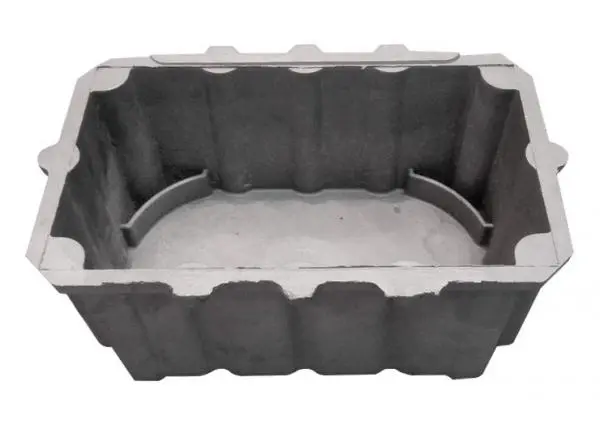
Why Aluminum Is a Practical Choice for Industrial Components?
Lower Weight Without Unnecessary Structural Compromise
Aluminum is substantially less dense than steel; thus, it’s appealing for components where weight affects shipping, installation, energy consumption, or equipment performance. In automotive systems, reducing the mass of the components can contribute to the reduction of the total weight of the vehicle. Lighter housings and brackets for industrial equipment make it easier to install and handle.
The real weight saving is a design problem. Replacing a steel part with an aluminum part may need modifications to wall thickness, rib position, mounting points, and load-bearing locations. The engineers have to verify the projected loads on the component and cannot presume that a lighter material would immediately provide equivalent strength.
A well-designed aluminum casting can have structural ribs, bosses for mounting, and many other features all in one piece. This method is to distribute burdens without adding unnecessary material. The low density together with the design flexibility can be highly advantageous, especially for equipment housing or specialist mechanical parts makers.
Corrosion Resistance for Different Operating Environments
“Aluminum reacts with air to form a thin oxide film. This layer prevents the metal below it from oxidizing further. This is the reason why many aluminum alloys are found in outdoor equipment, electrical enclosures, and other applications exposed to dampness.
The corrosion performance still depends on the climate and the alloy composition. More severe conditions can be caused by salt water, industrial chemicals, contact with dissimilar metals, and continual dampness. Thus, a part intended for coastal service may require a different material specification or surface treatment than one for a dry indoor environment.
Where appropriate, manufacturers may be able to apply a treatment, e.g., powder coating, anodizing, or other specified protective finishes, to increase surface performance. Shot blasting can also be used for casting cleaning or preparation. Please be aware that shot blasting is not a corrosion-protective coating.
The key concern for the procurement team is whether the alloy and finish chosen for die casting accessories are suitable for the actual service conditions. Giving the provider data about humidity, chemical exposure, temperature, and projected life of use helps to discover a suitable solution.
Thermal Conductivity and Electrical Enclosure Applications
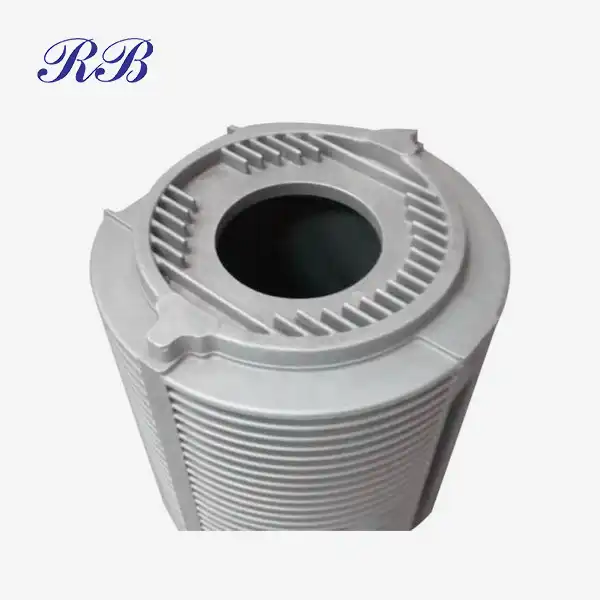
Aluminum has strong heat transfer capabilities and is a desirable choice for electronic housings, equipment enclosures, and elements that must disperse heat from interior assembly. Castings can be made with fins, ribs, and other surface features to increase the area available for heat dissipation.
Engineers are able to meet heat demand without any additional components. The performance of the finished system, however, is affected by wall thickness, air flow, contact surfaces, internal heat generation, and the surrounding environment. The thermal performance should be verified against the application requirements and not be assumed based on the material alone.
Producers of electrical equipment may also find aluminum’s combination of lightweight, machinability, and corrosion resistance attractive. Where an enclosure is required to satisfy certain ingress-protection, electrical, or hazardous-area standards, these must be validated using the relevant design and testing techniques.
How Casting Methods Influence Part Quality?
High-Pressure Die Casting for Complex, High-Volume Parts
High-pressure die casting—Molten metal is pressed under pressure into a metal die. The technology is well suitable for the production of large numbers of components with predictable dimensions and geometries of a reasonable degree of complexity. It can also allow for thin walls and integrated design features that would take multiple manufacturing steps otherwise.
Once the tooling is developed and the manufacturing parameters are set, the cycle times can be rather short. This makes the technology attractive for components of automobiles, housings of consumer devices, and other items of predictable, huge demand.
Tooling investment is a key aspect. There is often a significant initial investment for the die, process development, and validation for a high-pressure die casting project. The expenditure is easier to justify if you are intending to make enough copies to spread the costs over a lot of items.
The technique also requires tight control over filling, temperature, venting, and solidification. Gas trapping and porosity can influence pressure tightness, mechanical performance, and finish quality. Buyers should therefore agree on standards of inspection and levels of defects that would be acceptable before accepting output.
Gravity Casting for Suitable Structural Components
Gravity casting: Filling the mold by gravity rather than high injection pressure. Depending on the tooling and the production setup, it may be useful for aluminum components that call for slightly hefty sections, some alloy selections, or subsequent heat treatment.
The A356 aluminum alloy is frequently utilized in gravity and low-pressure casting applications. It has a composition with silicon and magnesium, which favors castability, and mechanical properties can be modified by proper processing and heat treatment. The choice of which part it is utilized for depends on the design, the desired attributes, and the method of manufacture.
Gravity casting should not be considered intrinsically superior or more porous than high pressure die casting. Results depend on mold design, cleanliness of metal, feeding, solidification, process parameters, and inspection. Well-engineered high-pressure die castings can be quite consistent, yet gravity castings can potentially have defects if the production is poorly regulated.
Gravity casting can offer a good compromise between design flexibility and manufacturing requirements for parts such as equipment housings and some industrial enclosures. The provider should propose the technique on the basis of the geometry of the part, mechanical parameters, annual volume, and finishing demands.
CNC Machining and Surface Finishing After Casting
The shape of a component is defined by the casting but not necessarily every detail of its final specification. Critical holes, threaded connections, bearing seats, sealing faces, and mating surfaces to the required dimensions and tolerances may need to be machined by CNC.
A well-planned manufacturing route will identify those characteristics that can be made in the mold and those elements that require additional operations. This distinction allows you to minimize costs while not sacrificing functional accuracy. The basic design must offer enough material for finishing by means of machining allowances.
Treatment of the surface is another aspect of the production strategy. Loose residues on a surface can be removed by shot blasting, which can also help prepare a component for further processing. Appearance, environmental exposure, or surface protection may necessitate powder coating or other special finish.
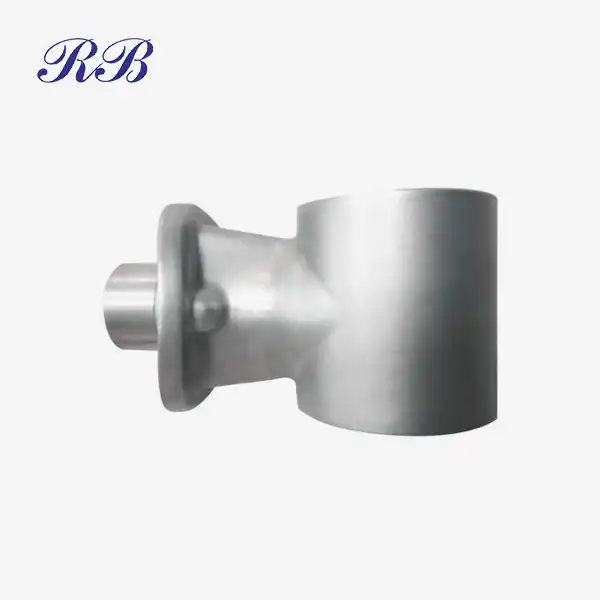
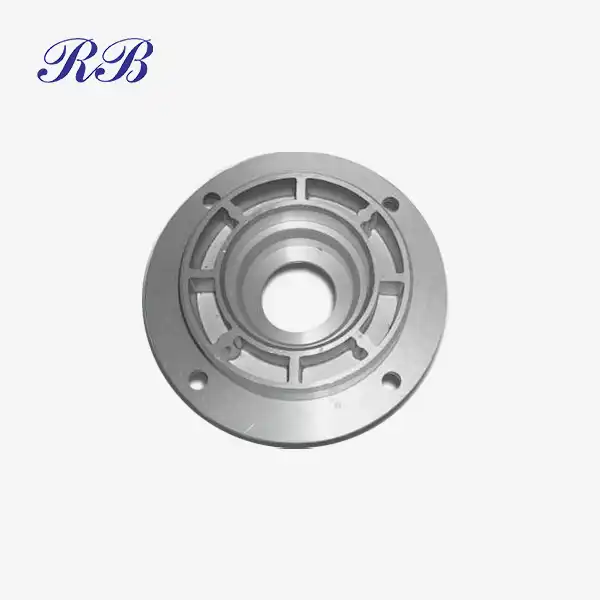
When considering custom die casting accessories, buyers should ask how casting, machining, finishing, and final inspection all work together. By regulating these activities through a defined manufacturing process, the handling can be minimized, accountability can be established, and quality issues can be tracked easily.
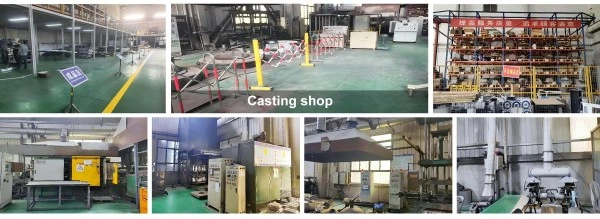
Where Aluminum Casting Creates the Greatest Value?
Equipment Housings and Electrical Enclosures
Industrial equipment usually requires an enclosure that not only covers interior components but also offers mounting places, cable-entry points, and access for maintenance. And with aluminum casting, you can include several of these features in one component, and you don’t have to build brackets or covers separately.
The final design still has to take into consideration wall thickness, sealing surfaces, fastener stresses, and the expected environment it will be used in. If an enclosure needs to meet a certain ingress protection rating or hazardous-area approval, the whole assembly must be examined against the applicable requirements.
To be compliant for explosion-protection applications, it’s not enough to simply rely on a casting material or production technique. Design, joints, interfaces with cover, fasteners, and other elements must meet the appropriate certification and test criteria.
Automotive and Transportation Components
And of course weight reduction is always a thought when designing a vehicle. Aluminum castings are employed for different kinds of housings, brackets, coatings, and structural components if their attributes answer the technological criteria.
Casting can integrate numerous qualities into one piece, which can reduce assembly time and the number of fasteners you need. It can also help with repetitive production if the design and tooling are solid.
All automotive parts are not cast by the same method. The choice of alloy and the manufacturing method are influenced by the loading conditions, impact requirements, fatigue performance, temperature of operation, and the quantity of production. The supplier shall show how the proposed procedure will fulfill these requirements.
Telecommunications and Electronic Equipment
Telecom equipment can be used outdoors or in applications where heat dissipation, corrosion resistance, and weight of installation are factors. Aluminum housings can incorporate mounting features and heat dissipation surfaces and can be compact overall in design.
The benefits depend on the overall product design. Surface polish, sealing arrangements, thermal interfaces, and environmental tests are further factors that influence the ultimate performance. The buyer should set specifications before obtaining prices so that the supplier may assess whether the component is appropriate for its intended usage.
Controlling Costs Through Better Product Design
Balancing Tooling Investment and Production Volume
The economics of casting is more than the quoted unit price. Total cost of ownership can be affected by tooling, material utilization, machining, finishing, inspection, packaging, and transportation.
For large production runs, high-pressure die casting can be cost-effective, as the tooling costs can be spread over several parts. For smaller volumes or a more diverse part geometry, gravity casting or some other process would presumably have a more suitable cost structure. Cheapest is not a universal assessment of casting types; it is a project decision.
Buying teams should develop bids based on realistic annual consumption and estimated purchase amount. It also helps establish tooling ownership, maintenance responsibilities, tooling life expectations, and costs associated with design changes. These statistics can help prevent surprises on costs once production gets underway.
Reducing Assembly and Machining Requirements
Engineers can incorporate many geometric features in a single part. The number of separate parts required in the assembly can be reduced by designing bosses, ribs, recesses, etc. as part of the casting.
Combining these can reduce the number of fastening processes, make inventory management simpler, and limit the number of interfaces that could become loose or misaligned. But if the designs of die casting accessories are too complicated, they can lead to difficulties in tooling or problems with filling and solidification.
Therefore, it is useful to have early communication between the designing team and the casting provider. Reviewing draft angles, wall transitions, machining allowance, and tolerance requirements before the tooling starts can assist in minimizing adjustments later and help create a more predictable production process.
Making More Efficient Use of Aluminum
Aluminum may be recycled, and scrap generated in manufacture can be recovered depending on the composition and impurities. Recycling material will cut the need for raw aluminum and boost the efficiency of material.
But the environmental impact of a final casting depends also on the origin of the aluminum, the energy for its melting, the process yield, the transport, and the service life of the product. Anyone who wants to see evidence of sustainability performance must request precise information on the source of the materials or about environmental impact and not just general statements about recyclability.
How to Evaluate a Reliable Casting Supplier?
Review Material Specifications and Quality Records
The provider should be able to identify the suggested alloy and how the recommended alloy fits the specifications of the component. Depending on use, buyers can demand material certificates, results of chemical composition, mechanical test data, dimensional inspection reports, or other applicable paperwork.
A quality management certification shows that the supplier has a documented management system, but it does not assure that every part will be as per its drawing. Buyers should also look at manufacturing controls, inspection methods, how nonconformance is managed, and traceability.
The safety-related parts shall be tested and certified before the manufacture. The provider and the buyer should agree on standards and acceptance criteria applicable as well as papers required for delivery.
Confirm Manufacturing and Finishing Capabilities
The supplier competencies ought to match the real project. Questions to be answered Will it provide the casting process necessary? Will it cope with the component dimensions and weight? Will it meet the required machining tolerances? Will it reach the requisite surface polish?
It also needs to be explicit on manufacturing capacity, estimated lead times, sample clearance processes, and how engineering changes are managed. The supplier will be aware of the control of drawings, 3D models, technical specifications & revision records for OEM & ODM projects.
One other consideration is packing. Good protection in storage and transport will prevent surface damage, deformation, and other handling problems. The packaging method should reflect the weight, finish, destination, and transportation conditions of the component.
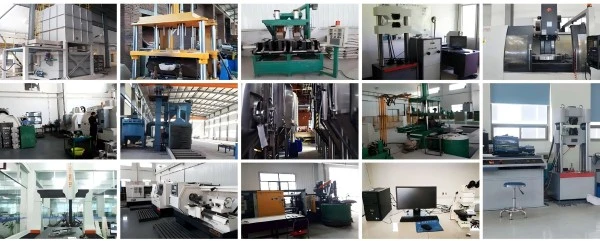
Conclusion
Aluminum casting can give producers with the desired combination of light weight, design freedom, thermal conductivity and potential cost savings. The most important factor is the choice of the right alloy and the right casting technique for the geometry of the part, the production volume and the service conditions. large pressure die casting is in general advantageous for advanced big volume production. Gravity casting may be appropriate for certain components of different material or processing properties . The desired result is still dependent on machining, surface finishing and inspection. When buying bespoke die casting accessories, buyers should consider technical competency, quality documents, production capacity and total project cost. Engaging with a supplier early might help you to design a feasible manufacturing route and reduce unnecessary changes in production.
Contact us today to discuss your project requirements. You can email us at steve.zhou@263.net or zhouyi@rongbaocasting.com. Let Rongbao Enterprise be your trusted partner for high-performance aluminum accessories.
References
1. "Properties and Selection: Nonferrous Alloys and Special-Purpose Materials," ASM International, ASM Handbook, Vol 2.
2. Lumley, R. N. (2011). "Fundamentals of Aluminium Metallurgy: Production, Processing and Applications." Woodhead Publishing.
3. Campbell, J. (2003). "Castings." Butterworth-Heinemann.
4. "Standard Specification for Aluminum-Alloy Sand Castings," ASTM International, Designation B26/B26M.
5. "Die Casting Engineering: A Hydraulic, Thermal, and Mechanical Process," Andresen, B. (2005). Marcel Dekker.
Learn about our latest products and discounts through SMS or email