- English
- French
- German
- Portuguese
- Spanish
- Russian
- Japanese
- Korean
- Arabic
- Greek
- German
- Turkish
- Italian
- Danish
- Romanian
- Indonesian
- Czech
- Afrikaans
- Swedish
- Polish
- Basque
- Catalan
- Esperanto
- Hindi
- Lao
- Albanian
- Amharic
- Armenian
- Azerbaijani
- Belarusian
- Bengali
- Bosnian
- Bulgarian
- Cebuano
- Chichewa
- Corsican
- Croatian
- Dutch
- Estonian
- Filipino
- Finnish
- Frisian
- Galician
- Georgian
- Gujarati
- Haitian
- Hausa
- Hawaiian
- Hebrew
- Hmong
- Hungarian
- Icelandic
- Igbo
- Javanese
- Kannada
- Kazakh
- Khmer
- Kurdish
- Kyrgyz
- Latin
- Latvian
- Lithuanian
- Luxembou..
- Macedonian
- Malagasy
- Malay
- Malayalam
- Maltese
- Maori
- Marathi
- Mongolian
- Burmese
- Nepali
- Norwegian
- Pashto
- Persian
- Punjabi
- Serbian
- Sesotho
- Sinhala
- Slovak
- Slovenian
- Somali
- Samoan
- Scots Gaelic
- Shona
- Sindhi
- Sundanese
- Swahili
- Tajik
- Tamil
- Telugu
- Thai
- Ukrainian
- Urdu
- Uzbek
- Vietnamese
- Welsh
- Xhosa
- Yiddish
- Yoruba
- Zulu
What grade of aluminum is used for die casting?
The aluminum grades most commonly used for die casting include A380, A360, A383, and ADC12, with A380 being the most widely specified grade. These alloys are specifically formulated for high pressure die casting applications, offering excellent fluidity, dimensional stability, and corrosion resistance. A380 aluminum contains approximately 8.5% silicon and 3.5% copper, providing optimal castability and mechanical properties for automotive and industrial components. The selection depends on specific application requirements such as strength, corrosion resistance, and surface finish quality needed for the final product.
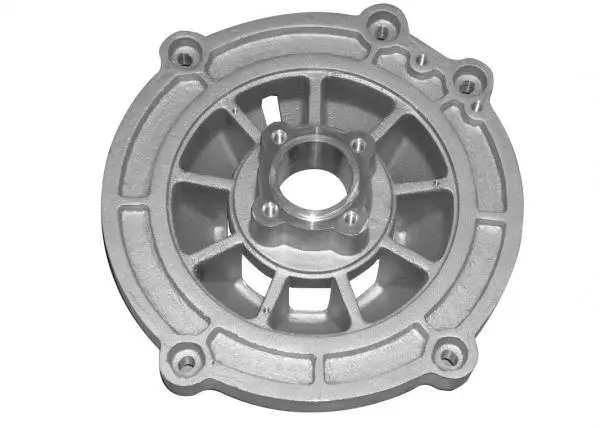
Understanding Aluminum Grades Used in High Pressure Die Casting
If you want to pick the right aluminum metal for die casting, you need to know what makes each type different and how those changes fit with the way the metal is made. Metals have been studied and used in business for many years, which is how the most popular aluminum alloys used in die casting were made.
Primary Aluminum Alloys for Die Casting Applications
As a general rule, A380 aluminum is used for most high pressure die casting jobs. Copper makes up 3.0% to 4% of this metal, and silicon makes up 7.5% to 9.5%. The silicon in the mixture helps it move better during drilling, and the copper makes it stiffer and easier to work with. When it comes to making engine parts, transmission housings, and structural brackets, A380 is a choice among industrial engineers because it is well-balanced and has a consistent casting behavior.
Better than A380 aluminum, A360 aluminum doesn't rust, which makes it great for boats and outdoor stuff. There is 9.0% to 10% silicon in A360, and almost no copper. This gives it a lot of flexibility and a good surface finish. If you need to fill the mold all the way, this grade works great for thin-wall uses.
To get a better handle on the silicon content, which is usually between 9.5% and 11.5%, A383 aluminum is a changed form of A380 aluminum. This grade is better for making complicated forms and parts because it is more flexible and has fewer pores. Aerospace companies often use A383 for strong parts of structures that are very important.
Material Characteristics Critical to Casting Success
What makes metal die casting materials easy to work with and what makes the finished part work are two sides of the same coin. The flexibility of the metal determines how well it fills complicated mold holes, and the way it hardens determines how accurate the measurements are and how good the surface is.
It is very important to control the cooling rate and find the best cycle time by looking at thermal conductivity. Aluminum metals, such as A360, conduct heat better, which speeds up the process and cuts down on cycle times. If a lot of things need to be made quickly so that the business can make money, this trait comes in handy.
Different kinds of metal don't fight corrosion in very different ways. The best ways to protect against damage from the surroundings are A360 and ADC12. When these better metals that don't rust are used on parts that are exposed to water, salt spray, or chemicals, those parts last longer and need less maintenance.
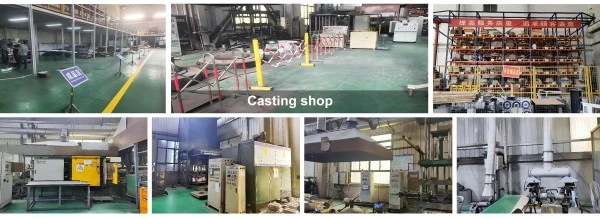
The High Pressure Die Casting Process and Aluminum Alloy Considerations
If you choose the right aluminum metal and fine-tune the process settings, each step in the high pressure die casting method will be different. Knowing how these things affect each other can help manufacturers get consistent quality and cut down on the number of mistakes they make.
Process Phase Analysis and Alloy Impact
It moves faster than 40 meters per second and is pushed into the die hole at pressures of 150 to 1200 bar during the injection phase. At this point, the alloy's ability to flow is very important, since not having enough flow can cause cold shuts or partial filling. The best mix of fluidity is found in the A380 and A383 alloys. This means that all holes are filled, even in difficult thin-wall parts.
It depends on how much silicon they have and how responsive they are to changes in how fast they cool that different types of aluminum concrete in different ways. Silicon-rich metals, like A360, harden more reliably. This means that they are less likely to have flaws caused by shrinkage and their sizes are more consistent. Process engineers can make the most of these qualities by changing how the metals are cooled to meet their needs.
During the release phase, you need to pay close attention to how the metal shrinks and grows when it gets hot. When you release parts, they are less likely to crack or change size if the aluminum doesn't grow as much, like A383. This makes it easier to take parts off.
Defect Prevention Through Alloy Selection
Making holes in die-cast metal is one of the hardest things to do. There are different kinds that are more or less likely to hold gas and shrink, which can cause holes. The balanced make-up of A380 makes it immune to both types of porosity when the process settings are right.
A cold shut flaw happens when different metal lines don't join together properly during mold filling. When metal is being filled, alloys that are more flexible, such as A360 and A383, keep it at the right temperature. This stops cold shut forming. This trait is very helpful in systems with lots of gates and forms that are hard to understand.
Different kinds of metal have different hot tear strengths because of the temperatures at which they solidify and how well they can handle heat stress. The controlled amount of silicon in A383 makes it less likely to tear when heated. This makes it a good choice for parts that have sections that are thick and thin or internal points that are sharp.

Advantages of Using Specific Aluminum Grades in High Pressure Die Casting
There are many great things about aluminum die casting metals, from how well they work mechanically to how quickly they can be made. Because of these perks, things work better and the total cost of ownership goes down using high pressure die casting.
Performance Characteristics and Engineering Benefits
Most things aren't as thick or strong as aluminum die casting metals. One example is the A380, which is very dense (only 2.7 g/cm³) but has compression forces of up to 320 MPa. With this mix, a lot of weight can be cut from cars and airplanes without hurting their structural strength.
High pressure die casting of aluminum produces a surface finish that is superior to most other production processes. Ra numbers below 1.6 micrometers are common if the die surface is ready and the right metal is picked. The A360 and ADC12 grades have very smooth surfaces because their grains are well placed and don't tend to become porous.
Cast aluminum is a great way to get rid of heat because it can conduct heat between 96 and 154 W/mK. Electronic housings, heat sinks, and thermal management parts don't always need extra cooling systems because aluminum can move heat around on its own.
Manufacturing and Economic Advantages
A lot of things affect how cost-effective something is, like how easy it is to recover the materials and how long the tools last. Reusing aluminum over and over again doesn't change much about how it works because it's easy to recycle. This trait lowers the cost of raw materials and helps people follow environmental rules.
There is still a lot less tool wear with aluminum metals than with steel or iron, even though they are used at higher temperatures. Most steel tools used to cast metal can go through 100,000 to 500,000 rounds, but this depends on how complicated the part is and what material is used. The cost of amortizing tools goes down, and it's easier to plan output schedules with this longer die life.
Because aluminum die molds can be machined, it is easy to do other things when they need to be done. Post-casting cutting can be done quickly and with little tool wear. This lets you make features that can't be cast directly but need to be very accurate and have tight tolerances.
Choosing the Right Supplier and Aluminum Grade for Your Die Casting Needs
How fast the parts are supplied, how much the whole job costs, and the quality of the parts all depend on which supplier is chosen. Many factors are used to make sure that the seller's skills meet the needs of the project. These factors also lower the risks in the supply chain.
Supplier Qualification and Capability Assessment
Different types of businesses need ISO approval in different ways. For instance, IATF 16949 rules must be followed for uses in cars, while AS9100 rules must be followed for uses in aircraft. With these standards, you can be sure that quality control is always planned and that there are always ways to keep growing.
When figuring out how much something can be made, you need to look at both what the equipment can do and how it can be grown to handle changes in number. It's easier to find the best price-to-delivery ratio for a wide range of production needs when suppliers offer a variety of machine types and levels of automation.
Leading sellers are different from basic casting providers because they know how to pick the right materials and make the process go more easily. It is very helpful for component development programs to be able to tell what kinds of metal are best for an application and how to create something so that it can be made.
Partnership Development and Risk Mitigation
To make a supply chain strong, you need to look at its financial security, its reach across regions, and how it handles risks. Suppliers who work with many different companies and have many production places have lower risk and better uptime guarantees.
When you make custom alloys, you can meet unique application needs that regular types can't match. This adaptability comes in very handy when better resistance to rust, weather properties, or mechanical properties are needed.
Partners believe that their relationship will work out in the long run when quality compliance checks are done, such as source audits and sample evaluations. Every so often, you should check the process controls, tracking tools, and how quickly correction steps work to make sure that performance stays high throughout the relationship.
Conclusion
A lot of things need to be taken into account when picking an aluminum grade for die casting. These include the material's technical properties, how quickly it can be made, and how much it costs. The A380 is still the most versatile choice for most uses. On the other hand, A360 and A383 are better at not rusting and working with complicated shapes. When a lot of things need to be made with tight specs and a smooth surface, high pressure die casting is the best way to do it. To be successful, you need to work with reputable companies that can show they know what they're doing and follow the quality system, and make sure the aluminum metal has the right traits for the job.
Partner with Rongbao Enterprise for Superior High Pressure Die Casting Solutions
As a high pressure die casting supplier, you can count on Rongbao Enterprise to give you exact metal parts that meet all the rules. As part of our full range of production services, we can make models, drill precisely, and treat the surface. You can be sure that your most important parts come from a single, reliable source this way.
The ISO 9001, ISO 14001, and ISO 45001 marks help us make sure that all of our processes are up to high quality standards. With modern technology and full-chain quality control, we make sure that the end result of big production runs is always the same. Twenty years of work in this area have made us well-known among partners around the world. In Europe, the US, and Japan, 70% of our goods are bought and sold.
Our expert staff can help you pick the best aluminum metal for your needs. This will ensure that your parts work well and cost as little as possible. Our ability to adapt to different needs and history of reliability mean that we will always deliver results that are above and beyond your expectations, whether you need a quick prototype or a lot of them made.
You can talk to Steve Zhou about your specific needs at steve.zhou@263.net or zhouyi@rongbaocasting.com.
FAQ
What is the most commonly used aluminum grade for high pressure die casting?
The most popular type of aluminum used in high pressure die casting, A380, is used to make 85% of all die cast aluminum components. This metal is easy to work with because it is strong, flexible, and has good mechanical properties. It's useful in technology, cars, and other fields.
How does aluminum grade selection affect die casting cycle time?
Aluminum types with more silicon, like A360 and A383, can usually go through cycles faster because they are more fluid and better at moving heat. It takes 10 to 15 percent less time to make these metals because they fill molds faster and harden more accurately than grades with less silicon.
Can different aluminum grades be used interchangeably in die casting applications?
When you want to use different kinds of aluminum together, you need to first check their mechanical properties, rust protection, and process factors. Each grade needs its own melting point, input pressure, and cooling rate in order to get the best casting quality. This needs to be looked into by engineers to make sure that all performance standards are met by all grades.
What factors determine the best aluminum grade for automotive die casting components?
The type of metal used in die casting for cars depends on what the part is used for, how it will be used, how heavy it needs to be, and how much it costs. A380 is often used to make engine parts since it is strong and stays stable even when it's hot. A360 is sometimes used for body parts because it doesn't rust and has a smoother finish. Most of the time, A383 is used to make crash safety parts that are stronger mechanically.
References
- ASM International Handbook Committee. "Aluminum and Aluminum Alloys: Properties and Selection." ASM International Materials Handbook, Volume 2, 2019.
- Campbell, John. "Complete Casting Handbook: Metal Casting Processes, Metallurgy, Techniques and Design." Butterworth-Heinemann Publishers, 2015.
- Aluminum Association Technical Committee. "International Alloy Designations and Chemical Composition Limits for Wrought Aluminum and Wrought Aluminum Alloys." The Aluminum Association Standards, 2018.
- Beeley, Peter R. and Smart, Richard F. "Investment Casting and High Pressure Die Casting: Fundamentals and Applications." Institute of Materials Publishing, 2017.
- Die Casting Society. "North American Die Casting Association Technical Standards for Aluminum Die Castings." NADCA Engineering Standards Manual, 2020.
- Kaufman, J. Gilbert and Rooy, Elwin L. "Aluminum Alloy Castings: Properties, Processes, and Applications." ASM International Publishing, 2016.
Learn about our latest products and discounts through SMS or email