- English
- French
- German
- Portuguese
- Spanish
- Russian
- Japanese
- Korean
- Arabic
- Greek
- German
- Turkish
- Italian
- Danish
- Romanian
- Indonesian
- Czech
- Afrikaans
- Swedish
- Polish
- Basque
- Catalan
- Esperanto
- Hindi
- Lao
- Albanian
- Amharic
- Armenian
- Azerbaijani
- Belarusian
- Bengali
- Bosnian
- Bulgarian
- Cebuano
- Chichewa
- Corsican
- Croatian
- Dutch
- Estonian
- Filipino
- Finnish
- Frisian
- Galician
- Georgian
- Gujarati
- Haitian
- Hausa
- Hawaiian
- Hebrew
- Hmong
- Hungarian
- Icelandic
- Igbo
- Javanese
- Kannada
- Kazakh
- Khmer
- Kurdish
- Kyrgyz
- Latin
- Latvian
- Lithuanian
- Luxembou..
- Macedonian
- Malagasy
- Malay
- Malayalam
- Maltese
- Maori
- Marathi
- Mongolian
- Burmese
- Nepali
- Norwegian
- Pashto
- Persian
- Punjabi
- Serbian
- Sesotho
- Sinhala
- Slovak
- Slovenian
- Somali
- Samoan
- Scots Gaelic
- Shona
- Sindhi
- Sundanese
- Swahili
- Tajik
- Tamil
- Telugu
- Thai
- Ukrainian
- Urdu
- Uzbek
- Vietnamese
- Welsh
- Xhosa
- Yiddish
- Yoruba
- Zulu
What are the principles of nozzle design?
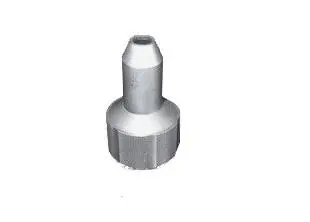
Nozzle design plays an important role in controlling how molten metal enters a mold during gravity casting. A well-designed nozzle helps maintain a suitable filling rate, directs metal toward the intended entry point, and reduces unnecessary turbulence in the gating system. For engineers and purchasing teams evaluating custom casting nozzles, the key is to match the nozzle's geometry and material to the casting process rather than rely on a standard design for every application. Understanding flow control, channel layout, and the relationship between custom casting nozzle geometry and metal behavior can help manufacturers develop more consistent casting operations.
Gravity and Flow Control: Getting Molten Metal into the Mold
In gravity casting, the filling is performed by the height difference between the supply of the molten metal and the mold chamber. However, unlike pressure-driven injection systems, the process is highly dependent on the available metal head, the resistance of the flow route, and the design of the gating system. These things have to be taken into consideration in the design of the nozzle. They allow the metal to enter the mold at a regulated pace.
Choosing the Right Outlet Diameter
The flow resistance and the quantity of metal that may pass through the exit depend directly on the opening of the nozzle. But a greater aperture does not always provide a better casting. The performance is dependent on the available metal head, the alloy characteristics, the length of the nozzle, and the shape of the coupled runner and gate.
If the aperture is too tiny, the channel of flow may interfere with filling and increase the time to fill the mold. If too big, the metal may enter the cavity too fast to get the desired filling pattern, and may increase the turbulence or upset the filling conditions of the mold.
Thus, engineers must choose the exit diameter based on the amount of the casting needed, the time desired to fill the casting, and downstream flow limitations. Calculations and experiments could be useful to find an appropriate starting point before the manufacturing parameters are determined.
Designing a Smooth Internal Flow Path
The interior profile of the nozzle influences the flow of molten metal through the nozzle. Local flow disturbances and pressure losses might rise due to changes in cross-section, wrongly aligned channels, and superfluous constraints. A well-built route aids in keeping a more predictable flow of metal on its way from the supply channel toward the mold.
The nozzle should also have a good fit with the runner and gate. A properly constructed outlet will not operate well if it gives a sudden transition or an unacceptable change in direction at the connecting point.
Such information is likely to be especially interesting to producers of complicated components. Mold filling might be more difficult when there are thin parts, small passageways, and variations in wall thickness. By analyzing the nozzle and gating system together, engineers may discover possible limits prior to tooling.
Separating Flow Distribution from Cavity Filling
A sound casting system must do more than just transport molten metal. It must also be able to distribute the metal to the desired portions of the mold without generating additional flow disruptions. Therefore, the relationship between the main channel, branch runners, gates, and mold cavity should be addressed during custom casting nozzle design.
Planning the Main Channel and Branch Runners
The main channel feeds metal to subsidiary runners or single gates in a multi-gate casting system. The size and location of the mold determines how much metal gets to each part of the mold, and how evenly the cavity is filled.
Where the flow resistance of the branch channels varies considerably, some sections may get metal before others. Depending on part shape and processing circumstances, this imbalance might result in partial filling or in undesirable meeting places of advancing metal fronts.
Engineers can cope with this by considering channel lengths, cross-sectional areas, branching angles, and gate placements. The goal is not to make all the channels equal, but rather to provide a flow distribution that is suitable for the casting geometry.
A single inlet may be adequate for a basic component. A bigger or more complex component can need several gates or a more carefully balanced runner layout. The final arrangement should be based on the actual filling needs, not only the number of outlets.
Reducing Turbulence and Uncontrolled Flow
When molten metal flows through sudden changes of section, severe bends or poorly adjusted passages, disturbances may occur in the metal. Too much turbulence may raise the possibility of oxide-film entrainment and other casting-quality issues, depending on the alloy and process circumstances.
It is good practice to prevent needless change in direction of flow and create a seamless transition whenever tooling layout permits. The location of the entrance point should also be selected to facilitate the desired filling sequence and to minimize undesired impingement on mold surfaces.
If a component needs metal to get to more than one place, several outputs might be advantageous. However, additional outlets do not automatically enhance the consistency of filling. Their placements, sizes, and links must be conceived to function together.
Simulation may assist engineers in assessing flow distribution and identifying probable issue areas before production trials. Physical testing is vital, too, since real performance depends on the pouring temperature, the state of the mold, the qualities of the alloy, and the operating methods.
Matching Nozzle Geometry to Metal Flow Behavior
The shape of the nozzle controls the direction of the metal leaving the outlet, the obstructions it will meet, and how it will enter the downstream flow channel. The ideal arrangement will depend on whether the application demands constant flow, a change in flow direction, or distribution at numerous entrance points.
Selecting the Outlet Angle and Direction
The angle of the exit controls the initial direction of the molten metal. If the nozzle is misaligned with the runner or the gate, metal may contact a wall or change direction suddenly, causing local disruptions.
Therefore, engineers should take into account the nozzle direction and the mold architecture. The idea is to direct metal where we want it to go, without undue impact and rapid changes of direction.
The right angle is application-specific. For a basic entrance on a tiny casting, a simple, easy flow could be all that is needed. If there are multiple cavities or limited access in a component, a different orientation may be needed to fit the tools and the filling operation.
The nozzle position should also be such that it permits practical installation, cleaning, and inspection. A design that looks good on paper but is hard to maintain might generate unnecessary complications in production.
Understanding Single-Outlet and Multi-Outlet Designs
A single-outlet custom casting nozzle has a simple flow route and may be suitable for relatively basic casting geometries. It also helps ease installation and periodic inspection.
Multi-outlet designs are worth consideration when the metal has to go to more than one place or when the gating system has to be distributed in a regulated manner. The location and size of each outlet is determined by the resistance of the flow channel and the quantity of metal needed by the segment concerned.
These setups are not to be confused with spray nozzles which are employed in procedures where atomization is desired. In traditional gravity casting, the purpose is normally to provide a regulated flow of liquid metal into the gating system and not to generate a fine spray of droplets.
Spray angle and droplet dispersion are only significant if the particular equipment or process is intended to create such a flow. Spray-nozzle concepts used indiscriminately in gravity casting might result in improper design.
Material Selection and Manufacturing Accuracy
Nozzle geometry is only one part of the design. The material must also tolerate the operating temperature, contact conditions, and thermal cycling associated with the intended casting process.
Evaluating Material Compatibility
The choice of nozzle material relies on the alloy being cast, the operating temperature, the length of time the nozzle will be in contact with the molten metal, and the desired service life. Resistance to thermal shock, chemical compatibility, mechanical strength, and wear resistance may affect the choice.
Some material may be unsuitable for one alloy or manufacturing environment but acceptable for another. Therefore, engineers must verify material compatibility with the supplier and examine any process-specific needs prior to ordering.
- Clearly state the intended working circumstances including the alloy, the temperature range, the production frequency and any specific exposure or cleaning needs. The information assists vendors in determining whether a suggested material would work for the application.
Maintaining Dimensional Accuracy
The precision of the completed nozzle to the authorized design is dictated by the manufacturing tolerances. Flow behavior and fit to installation may be affected by differences in outlet diameter, internal channel dimensions, surface polish, and mounting elements.
Buyers should annotate the technical design to specify the key dimensions and tolerances for bespoke parts. Inspection criteria should be specified prior to manufacturing, especially when the nozzle connects with current tools or is to be interchangeable with other parts.
Depending on the design, inspection may involve dimension measurement, visual examination and verification of stated material requirements. Where appropriate, extra inspections might be agreed between suppliers and purchasers on the basis of the operational environment and quality plan.
Good documentation reduces misconceptions between engineering, production and buying.
Testing and Refining a Custom Nozzle Design
Even a well-estimated nozzle should be checked against the actual casting requirements. The design process is normally aided by a mix of engineering study, simulation when applicable, and manufacturing testing.
Reviewing the Design Before Manufacturing
Before the production process starts, the engineers should verify the nozzle design with the mold and gating arrangement. This assessment should check the outlet size, internal passage, connecting interfaces, installation space, and flow direction.
Flow modeling may assist in determining where the filling order may cause problems in a complicated casting. The value of simulation is only as good as the quality of the inputs to the model and assumptions made; hence, findings should be seen as technical advice and not a guarantee of production performance.
A design review may also reveal manufacturing restrictions, such as internal elements that are difficult to manufacture or tolerances that can raise the cost of production without any improvement in performance.
Validating Performance During Production
Production trials enable engineers to evaluate the expected flow behavior with that obtained in casting. Time filling, unfinished sections, surface quality, dimensional consistency, and location of recurring flaws are relevant observations.
If a problem develops, the nozzle should not be assumed to be the sole culprit. Also, the pouring temperature, cleanliness of the metal, mold preparation, ventilation, runner design, and operating methods may be factors.
A systematic assessment of these aspects will assist in identifying whether the nozzle shape needs to be changed or if another portion of the process needs to be addressed. Recording the design and trial circumstances that were authorized also helps to enhance repeatability when the nozzle is re-ordered or utilized across production batches.
How to Specify Custom Casting Nozzles for Your Application
For purchasing managers and engineering teams, a defined technical specification makes the assessment of suppliers more efficient. We need more information from the manufacturer to determine the exact operating requirements, not just asking for a nozzle based on a vague description.
Use information:
- Alloy and casting process: Specify the casting technique and alloy being cast.
- Operating conditions: Specify anticipated temperature range, frequency of production, and essential service conditions.
- Technical drawings: Indicate the outlet dimensions, internal channels, connecting interfaces, mounting details, and tolerances necessary.
- Flow Requirements : Describe the intended fill behavior, the needed metal distribution, and any known flow-related difficulties.
- Material requirements: State the material or performance requirements, including heat resistance and compatibility with the alloy.
- Good documentation: Identify inspection documents, material paperwork, dimension reports, or other quality proof necessary for approval.
- Order and Delivery Details: Confirm order number, packing requirements, delivery timetable, and repeat manufacturing requirements.
If the application is still under development, purchasers might provide rough drawings and describe their planned purpose. The supplier may then examine the design, discover what’s lacking, and explore possible ways to make it before the final specification is signed off.
This method is very helpful for making bespoke equipment and replacement parts when the nozzle must match current machinery or suit unique production needs for the application.
Conclusion
The fundamentals of custom casting nozzle design do not stop with the selection of an output diameter. Good design incorporates gravity flow, internal passage geometry, channel distribution, outlet direction, material compatibility, manufacturing tolerances, and production validation.
The aim of gravity casting is to regulate the pace at which the molten metal is poured into the mold and to have a predictable filling pattern. The optimal approach relies on the alloy, component shape, gating configuration, and operating circumstances. One nozzle design cannot perform equally well in all applications.
A good beginning point for manufacturers assessing custom casting nozzles is a comprehensive drawing, explicit operational requirements, and a rigorous design review. Working with a provider that can examine the geometry, production needs, and inspection standards, engineering and buying teams may make better choices on bespoke nozzle solutions.
If you are starting a new casting project, or need a replacement nozzle for your current equipment, have your technical drawings and application data ready for a design evaluation. Discussing these criteria with a knowledgeable manufacturer may assist you in developing an appropriate specification and determining the route to manufacturing.
FAQ
1. How does nozzle design impact the quality of cast parts?
Nozzle design plays a crucial role in determining the quality of cast parts. Proper design ensures controlled flow of molten metal, reduces defects such as porosity and inclusions, and promotes uniform filling of the mold cavity. This results in improved structural integrity, better surface finish, and more consistent mechanical properties in the final product.
2. What are the key considerations when designing a custom casting nozzle?
When designing a custom casting nozzle, key considerations include the specific alloy being used, the geometry of the part being cast, the required flow rate and velocity, and the desired spray pattern. Engineers must also consider factors such as orifice size and shape, nozzle angle, and the overall flow channel design to achieve optimal performance for the specific application.
3. How can multi-orifice nozzles improve casting quality?
Multi-orifice nozzles can improve casting quality by providing more uniform coverage of the mold cavity. They allow for better distribution of molten metal, which can help reduce hot spots and minimize the risk of incomplete filling. This more even distribution can lead to improved mechanical properties and reduced defects in the final cast part.
4. What role does material selection play in nozzle design?
Material selection is critical in nozzle design as it affects both the performance and durability of the nozzle. The chosen material must withstand high temperatures and resist wear from the flow of molten metal. Common materials for casting nozzles include high-temperature alloys, ceramics, and specially treated metals. The specific choice depends on factors such as the casting alloy, operating temperature, and expected production volume.
5. How can simulation software aid in nozzle design?
Simulation software plays a valuable role in nozzle design by allowing engineers to model and analyze fluid flow, heat transfer, and solidification processes. These tools can help optimize nozzle geometry, predict potential defects, and refine the overall casting process before physical prototypes are created. This approach can save time and resources while improving the final design quality.
Custom Casting Nozzle Supplier: Rongbao Enterprise
As we've explored the principles of nozzle design, it's clear that expertise and precision are crucial in creating high-quality custom casting nozzles. If you're in the market for top-tier casting solutions, look no further than Rongbao Enterprise. Founded in 2003, Rongbao has established itself as a specialized manufacturer in aluminum alloy casting and precision processing.
Whether you're in the automotive industry, aerospace sector, medical field, or electrical and electronic industry, Rongbao Enterprise has the expertise to meet your custom casting nozzle needs. Their commitment to reasonable cost control, stable and timely delivery, controllable product quality, and excellent after-sales service makes them an ideal partner for your manufacturing requirements.
Ready to elevate your casting processes with high-quality custom nozzles? Contact Rongbao Enterprise today to discuss your specific needs and discover how their expertise can benefit your projects. Reach out to Steve Zhou at steve.zhou@263.net or zhouyi@rongbaocasting.com to start the conversation and take the first step towards optimizing your casting operations.
References
1. Campbell, J. (2015). Complete Casting Handbook: Metal Casting Processes, Metallurgy, Techniques and Design. Butterworth-Heinemann.
2. Sabau, A. S., & Viswanathan, S. (2003). Microstructural evolution during filling and solidification of metal matrix composites. Metallurgical and Materials Transactions B, 34(2), 243-255.
3. Jorstad, J., & Rasmussen, W. M. (2013). Aluminum casting technology. American Foundry Society.
4. Kaufman, J. G., & Rooy, E. L. (2004). Aluminum alloy castings: properties, processes, and applications. ASM International.
5. Guo, Z., Saunders, N., Schillé, J. P., & Miodownik, A. P. (2009). Material properties for process simulation. Materials Science and Engineering: A, 499(1-2), 7-13.
Learn about our latest products and discounts through SMS or email