- English
- French
- German
- Portuguese
- Spanish
- Russian
- Japanese
- Korean
- Arabic
- Greek
- German
- Turkish
- Italian
- Danish
- Romanian
- Indonesian
- Czech
- Afrikaans
- Swedish
- Polish
- Basque
- Catalan
- Esperanto
- Hindi
- Lao
- Albanian
- Amharic
- Armenian
- Azerbaijani
- Belarusian
- Bengali
- Bosnian
- Bulgarian
- Cebuano
- Chichewa
- Corsican
- Croatian
- Dutch
- Estonian
- Filipino
- Finnish
- Frisian
- Galician
- Georgian
- Gujarati
- Haitian
- Hausa
- Hawaiian
- Hebrew
- Hmong
- Hungarian
- Icelandic
- Igbo
- Javanese
- Kannada
- Kazakh
- Khmer
- Kurdish
- Kyrgyz
- Latin
- Latvian
- Lithuanian
- Luxembou..
- Macedonian
- Malagasy
- Malay
- Malayalam
- Maltese
- Maori
- Marathi
- Mongolian
- Burmese
- Nepali
- Norwegian
- Pashto
- Persian
- Punjabi
- Serbian
- Sesotho
- Sinhala
- Slovak
- Slovenian
- Somali
- Samoan
- Scots Gaelic
- Shona
- Sindhi
- Sundanese
- Swahili
- Tajik
- Tamil
- Telugu
- Thai
- Ukrainian
- Urdu
- Uzbek
- Vietnamese
- Welsh
- Xhosa
- Yiddish
- Yoruba
- Zulu
What are the defects in aluminium gravity die casting process?
Aluminium gravity die casting is a way to make things where molten aluminium runs into a steel mould that can be used again and again. This type of casting makes parts with great surface finish and mechanical qualities. This process is great for medium-sized production that needs better quality than sand casting, but it can have a number of flaws that can affect the structure of the product. Porosity from trapped gases or shrinking, cold shuts (where metal streams don't join properly), misruns, surface flaws, inclusions, and warping are all common problems. Understanding these flaws helps purchasing managers, quality engineers, and technical teams make sure that the quality of the casting is always the same. This lowers the amount of scrap metal and the cost of repair in industrial, automobile, and construction equipment settings.
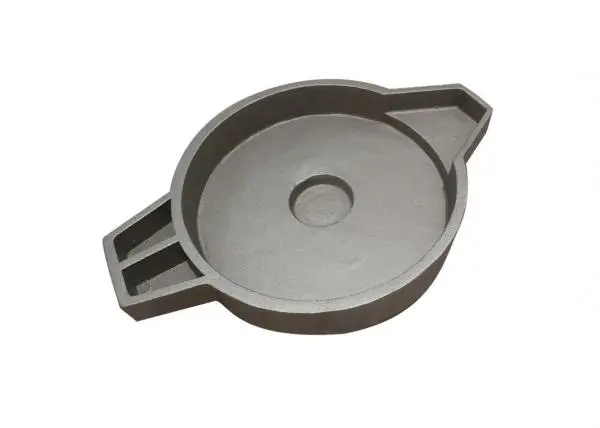
Common Defects in Aluminium Gravity Die Casting Process
When working with permanent mold casting, quality control starts with finding patterns of flaws. Each type of defect has its own effects on the structure's strength, the way the surface looks, and the processing needs further down the line. Please allow me to explain the most common defects we see in production settings.
Porosity Issues
Within gravity casting, porosity is one of the most difficult flaws to deal with. Gas porosity happens when hydrogen dissolved in molten aluminium forms bubbles that form small holes in the casting as it cools. Shrinkage porosity changes in different ways. For example, when aluminium goes from liquid to solid, it shrinks by about 6-7%, and areas that harden last can have holes in them if they aren't fed enough. Both types are weaker in terms of mechanical strength and pressure tightness, which is especially important for hydraulic parts or structural parts that are loaded and unloaded over and over again. X-rays or pressure tests are often the only ways that quality engineers find these flaws, so it is much cheaper to keep them from happening in the first place.
Cold Shuts and Misruns
When two different metal streams meet but don't fuse fully, leaving a seam or weak spot in the casting, this is called a cold shut. This usually happens when the metal cools down too much before it fills the mould all the way. Misruns are castings that aren't finished because the metal hardens before it reaches all of the mold's cavities. They are most common in thin-walled sections or farthest ends. There are immediate concerns about rejection because these flaws can usually be seen on visual inspection and can't be fixed cheaply. Automotive makers have a lot of trouble with these when they have to cast complicated brake parts or gearbox housings that have to be filled all the way.
Surface Defects and Inclusions
There are many types of surface flaws, from rough spots and metal splashes to oxide films that form when air reacts with aluminium during filling. Inclusions are outside substances, like slag, oxides, or mould coating bits, that get stuck inside the casting. Some flaws on the surface can be fixed by grinding or polishing the part more, but flaws that are built into the structure pose hidden risks. When they are loaded, they can cause cracks because they concentrate stress. This is especially a problem for aerospace applications or high-performance engine parts. When parts are meant to be seen, they have to meet extra aesthetic standards, and the quality of the surface has a direct effect on how well customers accept the parts.
Dimensional Variations and Warping
Manufacturers have a lot of trouble with warping and physical instability, even when casts look good on the inside. Differential shrinking, which leads to distortion, is caused by different cooling rates in complex shapes. During solidification, residual stresses are locked into the casting. These stresses can make parts move during machining or even while they are in service. During the incoming review, these problems become clear when precise readings show out-of-tolerance conditions that require rework or rejection. When heavy machinery manufacturers work with big aluminium castings, warping is especially expensive because they have to make more room for error when they're machining to account for the unpredictable patterns of distortion.
Root Causes of Aluminium Gravity Die Casting Defects
To figure out why defects happen, you have to look at how the different factors that affect how metal behaves during the aluminium gravity die casting process are connected. The finished part quality is affected by the material properties, the process parameters, the state of the tools, and the people who work on the part.
Material and Alloy Selection Factors
The way a casting behaves is directly affected by the aluminium alloys used, such as A356, A380, or special mixes. The A356 has great fluidity and pressure tightness, which makes it good for complex geometries. The A380, on the other hand, is better at filling dies but less flexible. Care must be taken to control the alloy's impurities, especially the iron content, which changes how fluid it is, and the hydrogen content, which creates pores. A lot of procurement managers only look at the unit price, but differences in the quality of the alloy between suppliers lead to higher defect rates, which create hidden costs. By using methods like reduced pressure tests to measure melt cleanliness, porosity levels can be predicted before filling even starts. This lets preventative action be taken instead of sorting later on.
Process Parameter Control
Pouring temperature is a delicate balance: if it's too hot, it picks up too much gas and wears away mould, and if it's not hot enough, it causes cold shuts and misruns. To make sure the metal flows smoothly without slowing down solidification too much, the mould temperature needs to be set to exact ranges, usually between 200°C and 300°C based on the material and shape. How metal enters the mould depends on how well the gates are designed. Badly designed gates can cause turbulence, air to get trapped, and oxide to form. Cooling rate impacts grain structure and feeding effectiveness, so it's important to pay close attention to the mold's material, design, and where the cooling channels are placed. Operators must always follow the same steps, because even with the best equipment settings, mistakes can happen if the pouring rate or how the mould is handled changes.
Equipment and Operational Variables
The state of the mould gets worse after repeated heat cycle, which leads to surface cracking, coating wear, and changes in size that affect the quality of the part. These slow drops in quality can be stopped with regular upkeep and mould repair. Coating application—usually releases made from graphite—must be even and the right thickness to protect the mould and let the part come out cleanly. Skill as an operator affects many quality factors, such as being able to tell when the metal temperature is right, evenly applying coatings, starting the pour at the right time, and spotting problems early on. Training programs and standard work directions help keep things the same between shifts and team members. This lowers the variation in quality from batch to batch that comes from people being different.
How to Minimize and Prevent Defects in Aluminium Gravity Die Casting?
Strategies for preventing problems are used at every stage of the value chain, from planning to final inspection for aluminium gravity die casting. Using more than one method together makes strong quality systems that always get the job done while keeping costs low.
Design Optimization Approaches
Casting design is a key factor in how well a product is made. Even cooling and fewer problems with shrinkage are helped by walls that are all the same thickness. Smooth transitions between sections also help filling go more smoothly. Draft angles of 1-3 degrees make it easy to remove parts without damaging them, and large fillet radii keep stress from building up in places where it could cause cracks. Feeding methods like risers, chills, and directional solidification make sure that the porosity from shrinkage focuses on non-critical areas or risers that are then taken away. Design for manufacturability reviews that include both product engineers and casting experts find problems before they cost a lot of money to fix. Simulation software can predict filling patterns, thermal gradients, and shrinkage zones. This lets designers make changes to the design that get rid of flaws almost before the steel is cut.
Process Control and Monitoring Techniques
Temperature control systems with thermocouples in several places make sure that each shot is the same. When compared to simple top-pouring, tilt-pouring allows for controlled, smooth filling that keeps air from getting trapped and reduces the formation of oxides. Vacuum-assisted systems remove air from the mould cavity while it is being filled, which greatly reduces gas porosity in important situations. Using an inert gas, like argon or nitrogen, to purge aluminium stops it from oxidising during melting and transfer processes. Statistical process control charts keep an eye on important factors such as pour temperature, cycle time, and reject rates. When trends show that the process is drifting, they take appropriate action before big problems happen. Leading foundries use real-time tracking and automatic alerts when parameters go beyond the limits of control. This keeps whole batches from going out of specification.

Inspection and Quality Assurance Methods
Non-destructive testing finds problems inside that can't be seen with the naked eye. X-ray radiography can show porosity, inclusions, and missing fills without damaging parts, but it needs special tools and translators who are trained to do so. Ultrasonic testing finds internal flaws by reflecting sound waves, which makes screening faster for mass production. Before machining starts, coordinate measure machines are used to check that the dimensions of the casts meet the tolerance standards. Destructive testing on sample parts, such as metallographic examination and testing of mechanical properties, makes sure that production meets the requirements set out in the specifications. Partnering with customers to improve quality as a supplier, such as through shared defect analysis and observed inspections, builds trust and encourages continuous improvement by openly discussing quality performance and corrective actions.
Partner with Rongbao Enterprise for Defect-Free Casting Solutions
At Rongbao Enterprise, we've spent twenty years perfecting permanent mold casting methods that give industries around the world consistently defect-free aluminium parts. We can do everything in the manufacturing process, from making the mould to casting, precision machining, surface treatment, and final inspection. Because we are vertically integrated, we are in charge of all aspects of quality and don't have to rely on outside sources for important tasks. We have three international certifications: ISO 9001, ISO 14001, and ISO 45001. These make sure that all of our operations follow the same management practices. This gives procurement managers confidence in the way we handle quality.
Our technical team has a lot of experience with gravity casting, low-pressure casting, and high-pressure die casting. This lets us suggest the best process for your needs instead of pushing every project to use the same method. We bought high-tech inspection tools, like X-ray systems and coordinate measuring machines, that can find flaws in parts before they get to your building. This makes it easier for you to check the parts as they come in and keeps your lines from stopping, which costs a lot of money. Seventy percent of our production goes to markets in Europe, the United States, and Japan. This shows that we can meet strict international quality standards for a wide range of uses in industrial tools, energy systems, cars, and building equipment.
When you work with a trustworthy aluminium gravity die casting manufacturer like Rongbao Enterprise, you get more than just a supplier of parts. You get a technical partner who cares about your success. Get in touch with Steve Zhou at steve.zhou@263.net or zhouyi@rongbaocasting.com to talk about how our expertise in preventing defects and integrated manufacturing can improve the reliability of your supply chain and lower your total cost of ownership through consistent, high-quality delivery.
Conclusion
Problems in the aluminium gravity die casting process, like porosity, cold shuts, inclusions, and warping, are caused by complicated relationships between the qualities of the material, the process factors, and the way it is used. If procurement workers and engineering teams understand how these defects happen, they can use strategies to stop them, such as design optimisation, process control, and inspection routines. By comparing the defect profile of gravity casting, sand casting, and pressure die casting, it is possible to find the best manufacturing method for each application while keeping cost and volume constraints in mind. To be successful, you need to work with experienced suppliers who can show they have both the technical know-how and the quality system maturity to give you consistent results that keep your production schedules and customer commitments.
FAQs
Can porosity in gravity die castings be completely eliminated?
It's very hard to get rid of porosity completely, but it can be brought down to almost nothing with the right alloy, controlled melting, vacuum-assisted pouring, and better gating design. Degassing treatments lower the amount of hydrogen in heat-treatable alloys like A356 so that it is below critical levels. When it comes to critical uses, it's more common to set maximum porosity levels that can be checked with an X-ray than to expect zero flaws.
How do I know if my current supplier's defect rates are acceptable?
Different uses have different industry standards, but for serial production, car providers usually aim for defect rates below 500 PPM (0.05%). Check your supplier's work against inspection reports, guarantee claims, and events where the line was interrupted. Ask for regular quality reports that show how defects are changing over time and how well corrective actions are working to make sure that things are always getting better instead of just fixing problems as they come up.
What's the typical lead time for aluminium gravity die casting projects?
Designing and making the tools usually takes 8 to 12 weeks, depending on how complicated they are. Then, samples are made and approved, which takes another 2 to 4 weeks. The lead time for production is between 4 and 8 weeks, depending on the size of the order and the schedule. If you work with suppliers who keep standard mould bases and tried-and-true process settings, you can cut these lead times down by a lot compared to doing everything yourself.
References
- Campbell, J. (2015). Complete Casting Handbook: Metal Casting Processes, Metallurgy, Techniques and Design. Butterworth-Heinemann Publishing.
- Kaufman, J. G. & Rooy, E. L. (2004). Aluminum Alloy Castings: Properties, Processes, and Applications. ASM International Materials Park.
- American Foundry Society. (2018). Casting Defects Handbook: Visual Guide to Identification and Solutions. AFS Technical Publications.
- Dispinar, D. & Campbell, J. (2011). "Porosity, Hydrogen and Bifilm Content in Al Alloy Castings." Materials Science and Engineering A, Vol. 528, pp. 3860-3865.
- Jorstad, J. L. (2020). "Understanding Quality in Aluminum Castings: Defect Formation and Prevention Strategies." International Journal of Metalcasting, Vol. 14, pp. 937-951.
- European Aluminium Association. (2017). Best Practice Guide for High Quality Permanent Mold Casting. EAA Technical Committee Publications.
Learn about our latest products and discounts through SMS or email