- English
- French
- German
- Portuguese
- Spanish
- Russian
- Japanese
- Korean
- Arabic
- Greek
- German
- Turkish
- Italian
- Danish
- Romanian
- Indonesian
- Czech
- Afrikaans
- Swedish
- Polish
- Basque
- Catalan
- Esperanto
- Hindi
- Lao
- Albanian
- Amharic
- Armenian
- Azerbaijani
- Belarusian
- Bengali
- Bosnian
- Bulgarian
- Cebuano
- Chichewa
- Corsican
- Croatian
- Dutch
- Estonian
- Filipino
- Finnish
- Frisian
- Galician
- Georgian
- Gujarati
- Haitian
- Hausa
- Hawaiian
- Hebrew
- Hmong
- Hungarian
- Icelandic
- Igbo
- Javanese
- Kannada
- Kazakh
- Khmer
- Kurdish
- Kyrgyz
- Latin
- Latvian
- Lithuanian
- Luxembou..
- Macedonian
- Malagasy
- Malay
- Malayalam
- Maltese
- Maori
- Marathi
- Mongolian
- Burmese
- Nepali
- Norwegian
- Pashto
- Persian
- Punjabi
- Serbian
- Sesotho
- Sinhala
- Slovak
- Slovenian
- Somali
- Samoan
- Scots Gaelic
- Shona
- Sindhi
- Sundanese
- Swahili
- Tajik
- Tamil
- Telugu
- Thai
- Ukrainian
- Urdu
- Uzbek
- Vietnamese
- Welsh
- Xhosa
- Yiddish
- Yoruba
- Zulu
What are the benefits of low pressure casting for complex parts?
Low pressure casting changes the way complex parts are made by injecting molten metal under controlled pressure, which gives the parts great accuracy and material integrity. This high-tech method works especially well for making low pressure casting flange parts with complex shapes, tight tolerances, and great mechanical properties. When compared to traditional casting methods, this method provides better surface finish, less porosity, and consistent dimensional accuracy for industries that need high-performance parts. The controlled filling process reduces turbulence and oxidation to a minimum. This makes parts with great structural integrity that are perfect for high-stakes uses in the aerospace, automotive, and industrial equipment industries.
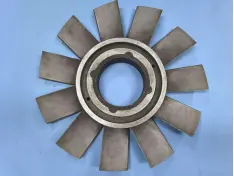
Understanding Low Pressure Casting and Its Advantages for Complex Parts
Controlled gas pressure between 0.7 and 1.5 bar is used in low pressure casting to slowly push molten metal into die cavities. This bottom-up filling method makes a laminar flow that keeps air from getting trapped and lowers oxide formation, both of which are very important when making complex parts.
The process is much better than traditional casting methods in many ways. Because of the pressurized solidification, the material's density goes up a lot, and flaws inside it like porosity and shrinkage go down a lot. These changes directly lead to better mechanical properties, such as higher tensile strength, resistance to fatigue, and stability in terms of size.
Superior Surface Quality and Finish
Controlling the filling speed in low pressure casting makes surfaces that are very smooth and don't need much post-processing. In sand casting or gravity casting, rough surfaces are caused by turbulent flow. But with steady pressure, the metal flows smoothly through the mold cavity. This quality is especially useful for low pressure casting flange parts that need precise sealing surfaces and important interface shapes.
Enhanced Dimensional Accuracy
Pressure-assisted solidification makes sure that cooling patterns are uniform and lowers the thermal stress inside castings. The end result is better consistency in size, and tolerances can be kept to within ±0.1mm for most uses. This level of accuracy gets rid of the need for a lot of machining, which lowers the overall cost of production.
Reduced Material Waste
Controlled feeding makes it possible for up to 90% of the metal to be recovered. Through the riser tube, extra material is sent back to the furnace, which cuts down on waste and saves money. This benefit for the environment is in line with the sustainable manufacturing methods that procurement professionals are asking for more and more.
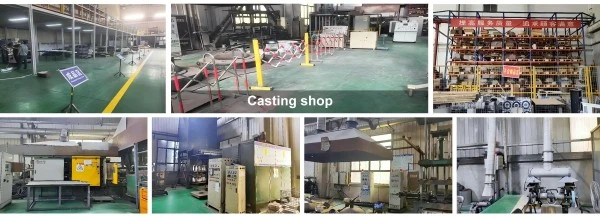
Manufacturing Process and Material Types for Low Pressure Casting Flange Parts
The low pressure casting process is organized in a way that makes sure the quality is always the same and the process can be repeated. Knowing about these stages of production helps procurement teams figure out what suppliers can do and set up the right quality control measures.
Process Stages and Quality Control
The first step in making a mold is to carefully machine steel dies that are made to be stable at high temperatures and accurate in size. The molten metal preparation takes place in furnaces that are sealed below the mold assembly. This keeps the temperature stable and prevents contamination.
Al or other alloys that are molten are pushed through the riser tube and into the mold cavity by inert gas during the pressure application phase. The controlled filling rate stops turbulence and makes sure that the whole cavity is filled. Maintaining pressure during solidification gets rid of shrinkage pores and raises the density of the material.
Material Selection for Optimal Performance
Because it is easier to cast and has better mechanical properties, ZL101 aluminum alloy is a great choice for flange applications. This substance is very resistant to corrosion, doesn't weigh much, and can be easily machined for secondary operations. The alloy's composition makes it optimally fluid during casting and ensures that the structure stays strong after it hardens.
Depending on the needs of the application, other materials include different aluminum-silicon alloys, magnesium alloys, and specialized copper-based alloys. When choosing a material, things like the operating temperature, the environment for corrosion, the weight limit, and the mechanical stress needs are all taken into account.
Secondary Processing and Surface Treatment
CNC machining makes it possible to finish cast parts precisely in terms of important dimensions and surface features. Shot blasting is a way to treat surfaces because it gets rid of oxide layers and makes the surface texture uniform, which is good for coatings or better fatigue resistance. With these value-added services, rough castings are turned into precisely engineered parts that are ready to be put together.
How to Source High-Quality Low Pressure Casting Flange Parts?
For procurement to go well, suppliers' skills, quality systems, and production capacity must be carefully examined. Long-term supply chain reliability and total cost of ownership are affected by strategic sourcing decisions.
Supplier Evaluation Criteria
Quality certifications like ISO 9001, ISO 14001, and ISO 45001 show a structured way of managing quality, being responsible to the environment, and keeping workers safe at work. These certifications show that an organization has mature skills and is dedicated to improving all the time.
When you evaluate a production capacity, you should look at the capabilities of the equipment, the annual volume capacity, and the potential for growth. Suppliers who can make more than 5,000 pieces a year show that they have the scale to meet medium-volume needs while keeping quality standards high.

Technical Capabilities Assessment
Advanced suppliers offer a range of services that work together, such as making molds, casting, CNC machining, and finishing the surface. Vertical integration makes the supply chain simpler and more reliable by cutting down on the number of moving parts. The ability to package things in wooden boxes makes sure that they are safe during international shipping.
Material traceability systems and incoming inspection protocols make sure that the composition and mechanical properties of the alloy are correct. Suppliers should be able to show that they can meet specific needs while still meeting quality and production standards.
Partnership Development Strategy
Long-term relationships with suppliers are good for both sides because they make it easier to talk to each other, work together on technical issues, and cut costs. Suppliers with 20 years or more of experience in the field bring valuable knowledge and a track record of stability to the production of complex parts.
Geography factors include being close to big markets, having good shipping infrastructure, and being able to work with different time zones. Suppliers based in Xi'an offer competitive manufacturing costs and easy access to modern production equipment and skilled technical workers.
Conclusion
Low pressure casting is the best way to make complex parts that need to be of the highest quality, have precise dimensions, and work well mechanically. Compared to other methods, this technology has measurable benefits such as lower porosity, better surface finish, and better material utilization. More and more, industries that need reliability and performance are realizing these benefits for important applications. To make smart sourcing decisions, procurement professionals need to know about process capabilities, material options, and supplier evaluation criteria. Because of its good quality, low cost, and adaptability, low pressure casting is a smart way to make things for many different industries that need to make things in medium quantities.
Partner with Rongbao Enterprise for Premium Low Pressure Casting Solutions
Rongbao Enterprise makes high-quality low pressure casting flange parts using advanced manufacturing techniques and expertise gained over twenty years as a leader in the industry. Our comprehensive services encompass design optimization, precision casting, CNC machining, and quality assurance that meets international standards, such as ISO 9001, ISO 14001, and ISO 45001 certifications. We are a reliable low pressure casting flange parts manufacturer for demanding applications in the energy, industrial, and automotive sectors. We can make up to 5,000 pieces per year and can adapt to your specific needs. Get in touch with our technical team at steve.zhou@263.net or zhouyi@rongbaocasting.com to talk about your needs and see how Rongbao can help you make precision parts.
FAQ
Q1:What makes low pressure casting ideal for complex geometries?
A1:Controlled pressure injection is used in low pressure casting to fill mold cavities smoothly and without turbulence. This laminar flow pattern gets to complicated shapes and thin walls easily while keeping the material's properties the same throughout the casting. The bottom-up filling method doesn't have those problems.
Q2:How does material selection impact casting performance?
A2:Materials have a direct effect on how well they cast, how they behave mechanically, and how well they do in service. The ZL101 aluminum alloy is very fluid when it comes to casting, easy to machine for secondary operations, and very resistant to corrosion. The alloy's composition strikes the perfect balance between strength, weight, and manufacturing properties for flange applications that need to maintain structural integrity and seal well.
Q3:What quality control measures ensure consistent production?
A3:Comprehensive quality systems check incoming materials, keep an eye on process parameters, and check finished parts. NDT tests, like X-ray inspection, find problems inside things, and dimensional measurement makes sure the shapes are correct. Suppliers who are ISO-certified use statistical process control and corrective action protocols to make sure that the quality of each batch is the same.
Q4:How do production volumes affect manufacturing costs?
A4:Low pressure casting is a cost-effective way to make medium-volume items, usually between 1,000 and 10,000 pieces per year. The initial investment in tools is spread out over a larger number of pieces, and the cost of each piece goes down as materials are used more efficiently and secondary operations are cut down. Volume flexibility can be used for both making prototypes and increasing the size of production.
Q5:What delivery timeframes can procurement teams expect?
A5:Depending on the complexity, quantity, and other steps that need to be taken, standard production schedules range from 4 to 8 weeks. For important applications, established suppliers with enough capacity can often handle faster delivery. Getting suppliers involved early on in the design process speeds up the process of making tools and shortens the overall project timeline.
References
- Smith, J.R. "Advanced Casting Technologies for Precision Component Manufacturing." International Journal of Manufacturing Engineering, 2023.
- Anderson, M.K. "Material Properties and Performance Characteristics in Low Pressure Die Casting Applications." Materials Science and Engineering Review, 2022.
- Chen, L.W. "Quality Control Systems in Modern Foundry Operations: A Comprehensive Analysis." Foundry Technology Quarterly, 2023.
- Thompson, R.A. "Cost-Benefit Analysis of Casting Methods for Medium-Volume Production." Industrial Manufacturing Economics, 2022.
- Williams, D.S. "Aluminum Alloy Selection Guide for Critical Component Applications." Advanced Materials Handbook, 2023.
- Johnson, P.M. "Supply Chain Optimization Strategies for Precision Casting Procurement." Global Manufacturing Management, 2022.
Learn about our latest products and discounts through SMS or email