- English
- French
- German
- Portuguese
- Spanish
- Russian
- Japanese
- Korean
- Arabic
- Greek
- German
- Turkish
- Italian
- Danish
- Romanian
- Indonesian
- Czech
- Afrikaans
- Swedish
- Polish
- Basque
- Catalan
- Esperanto
- Hindi
- Lao
- Albanian
- Amharic
- Armenian
- Azerbaijani
- Belarusian
- Bengali
- Bosnian
- Bulgarian
- Cebuano
- Chichewa
- Corsican
- Croatian
- Dutch
- Estonian
- Filipino
- Finnish
- Frisian
- Galician
- Georgian
- Gujarati
- Haitian
- Hausa
- Hawaiian
- Hebrew
- Hmong
- Hungarian
- Icelandic
- Igbo
- Javanese
- Kannada
- Kazakh
- Khmer
- Kurdish
- Kyrgyz
- Latin
- Latvian
- Lithuanian
- Luxembou..
- Macedonian
- Malagasy
- Malay
- Malayalam
- Maltese
- Maori
- Marathi
- Mongolian
- Burmese
- Nepali
- Norwegian
- Pashto
- Persian
- Punjabi
- Serbian
- Sesotho
- Sinhala
- Slovak
- Slovenian
- Somali
- Samoan
- Scots Gaelic
- Shona
- Sindhi
- Sundanese
- Swahili
- Tajik
- Tamil
- Telugu
- Thai
- Ukrainian
- Urdu
- Uzbek
- Vietnamese
- Welsh
- Xhosa
- Yiddish
- Yoruba
- Zulu
What are the applications for cast lamp holder covers?
A lamp holder cover does more than protect the connection between a lighting fixture and its mounting structure. It also affects installation compatibility, weather resistance, maintenance requirements, and the overall appearance of the finished lighting system. Choosing the right cast lamp holder cover helps lighting manufacturers, contractors, and project buyers meet the requirements of different applications without overlooking structural fit or long-term maintenance. Cast lamp holder cover aluminum covers are especially beneficial for projects that demand strength, controlled weight, corrosion protection, and variable production choices. Their applicability is dependent on the alloy, quality of the casting, surface treatment, structural design, and circumstances at the place of installation. Knowing these needs of application helps to define the suitable component for industrial facilities, municipal roadways, and commercial outdoor areas.
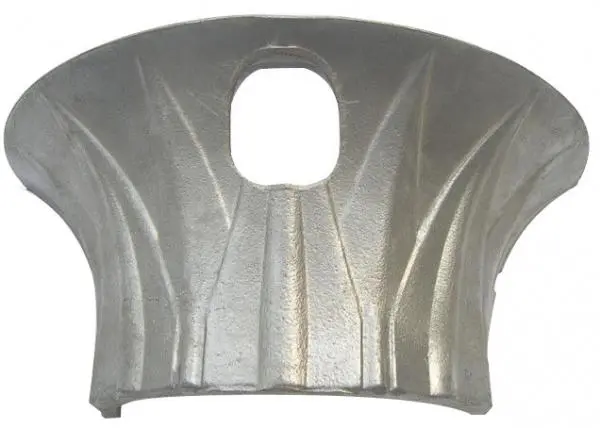
Industrial Lighting Applications
More is frequently demanded of lighting components in industrial buildings than in conventional interior situations. Dust, vibration, temperature changes, oil contamination, and cleaning chemicals may be encountered in manufacturing plants, vehicle repair shops, warehouses, and processing plants.
So, the choice of lamp holder cover should be based on the actual working conditions, not only the appearance.
Protection Against Dust and Environmental Exposure
Dust and airborne particles may accumulate around electrical connections, mounting interfaces, and ventilation holes. This might result in a greater demand for cleaning and more difficult maintenance when dealing with metalworking materials or plastic parts.
Cast aluminum provides a tough housing structure that can be scaled to the size of the lamp holder and its electrical connection. A good location of apertures, adequate seals and carefully designed interfaces help to reduce the intrusion of unwanted particles.
The degree of protection depends on the whole lighting system including cover, gaskets, cable entrance, fasteners and method of installation. The buyer should confirm that the required ingress protection grade is satisfied and should not assume that a metal housing alone would provide the appropriate sealing.
Compatibility of the alloy and surface finish mentioned with the specific substances in the presence of oil mist, cutting fluids, or cleaning chemicals has to be checked.
Structural Stability in Demanding Work Areas
Lighting fixtures used in industrial settings may be subject to vibration created by nearby machinery, material handling equipment or industrial operations. A poorly fitted cover may put more stress on mounting points and fasteners.
Gravity allows designers to include mounting elements, reinforce parts, and build specific user interfaces directly into the housing design. If tighter tolerances are needed for a feature like a threaded hole, mounting face, or connecting surface, then CNC machining may be used.
Design issues include total assembly weight, orientation of installation, fastener configuration, and projected vibration for bigger fixtures. Any reinforcement should be chosen on the basis of technical assessment and not arbitrarily fixed on the installation structure.
Buyers should also consider access for inspection and replacement in the case of equipment that is operated regularly. Properly situated fasteners and electrical access points will allow frequent maintenance, and a well-designed cover will help.
Material and Surface Treatment Selection
Due to its relatively low weight and strong structural rigidity, cast lamp holder cover aluminum is a frequent material for industrial lighting. But the corrosion resistance is dictated by the alloy composition, surface condition, quality of the coating, and the exposure conditions.
For regular industrial settings, a suitable protective finish may be sufficient. Facilities that are exposed to aggressive chemicals, frequent washing, or corrosive atmospheres need more accurate materials and coating selections.
Depending on the alloy, the intended look, and the expected service conditions, powder coating, anodizing, and other finishing procedures may be considered. Not all the therapies are applicable to all casting alloys. The buyer must confirm that the method is compatible with the producer.

Municipal Street and Public Lighting
Municipal lighting projects usually include streetlights, public walkways, residential streets, parking lots, and other shared spaces. These installations often need a consistent appearance, stable mounting, and affordable maintenance in many lighting locations.
The main challenge for contractors and municipal procurement teams is to identify components that are compatible with the existing system and meet the environmental and budgetary objectives of the project.
Supporting Streetlight Renovation Projects
Upgrading streetlights isn’t necessarily a full tear-down. Among the responsibilities are the upgrade of the lighting fixture or its mounting parts. The existing pole or mounting framework is retained.
The suggested assembly may be manufactured with a cast lamp holder cover with a certain mounting interface. This might include unique dimensions, bolt patterns, connection apertures, or mounting features depending on the application.
Buyers should give the size of the existing item, mounting designs, and any other interface measurements prior to purchase. Photographs may be used to depict the installation but are not a substitute for dimensional drawings where fit is critical.
Mass production should have compatibility certification. When the first sample or prototype is verified against the actual mounting structure, it might help to reveal interference, alignment issues, and fastener problems before producing a large order.
Weather Resistance and Maintenance Considerations
Outdoor lighting components are susceptible to rain, humidity, sunlight, temperature variations, and airborne contaminants. Salt spray may cause a whole other level of corrosion concerns in coastal locations.
Cast lamp holder cover aluminum covers may be surface treated as necessary to help protect the casting and maintain proper appearance. The correct finish depends on the environment, degree of exposure, scheduled maintenance plan, and project characteristics.
Procurement teams must consider the full assembly and not simply the cover material. The functioning of the finished lighting system depends on drainage, sealing, selection of fasteners, electrical connections, and quality of installation.
And in the case of large municipal projects, standardized proportions and repeatable manufacture are equally important. Standardized designs and documented inspection criteria = no variation between batches in installation and the ability to acquire replacement parts.
If contractors have a supplier that can consistently provide casting quality, machining accuracy, and finishing standards, they can manage huge orders more efficiently.
Partner with us today; reach out to steve.zhou@263.net or zhouyi@rongbaocasting.com to discuss how our casting expertise can enhance your next lighting project.
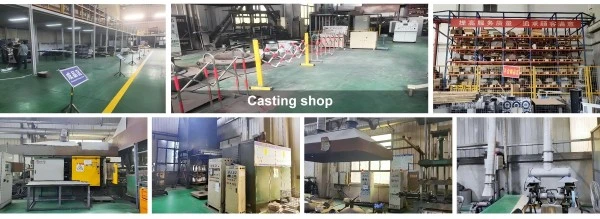
Commercial Outdoor and Landscape Lighting
Functional and aesthetic requirements for outdoor business lighting. Lamps are often integrated into the design of retail malls, hotels, pedestrian avenues, landscaped complexes, and commercial premises accessible to the public.
The cover in these cases should complement the fixture while offering an appropriate mounting structure and practical access for maintenance.
Custom Finishes for Architectural Compatibility
The exposed surface of a lamp holder cover might impact the compatibility of the lighting fixture with the surroundings around it. What works in an industrial structure may not function in a hotel entryway, a groomed promenade, or a luxury shopping complex.
The buyer may pick powder coating, suitable anodizing methods, or other ornamental finishes, depending on the casting alloy and the appearance the buyer wants. Colors may be coordinated to complement the light housing, pole, or surrounding architecture.
When color consistency is important over the life of a project, the buy specification should specify the finish required, a color reference, the surface appearance, and the allowable deviation. would be nice to have a physical sample to evaluate the result before manufacturing.
Weather exposure and cleaning processes should be included in outdoor finishing standards. The ornamental finish must be suitable for the situation in which it is to be used and not only attractive when first delivered.
Different Sizes for Different Lighting Fixtures
Pathway lights are typically seen in commercial projects, working together with bollard lights, pole-mounted lamps and larger landscape lighting units. The pieces vary in size and mounting requirements; therefore, one standard cover will not serve all uses.
Custom castings provide the option to create the housing shape, wall sections, flange geometry, and mounting parts. These parameters can be met by CNC machining at the critical connection points.
The cover must be designed taking into consideration the weight of the fixture and the mounting method. The buyer should provide information on light assembly, mounting structure, space available, and limits on overall dimensions.
This data allows the manufacturer to decide whether the design can be realistically cast, machined, finished and assembled.
Installation Safety and Service Access
For lighting fixtures above pedestrian areas, safe installation and access for maintenance should be considered. The selection of fasteners, brackets and any secondary retention features needed should be based on the overall assembly design.
Depending on the intended location of a cast lamp holder cover, there may be alternatives for mounting; however, this should not be mistaken for a properly built fastening mechanism.
The fastening arrangement, installation instructions, and applicable safety requirements will be checked by the project team before final approval. At the design stage, consideration should also be given to maintenance access and replacement of fixtures if they are difficult to reach.
How to Choose the Right Cast Lamp Holder Cover
Different applications need different standards. Before choosing a product, the specifications that the cover should fulfill need to be identified by the buyers and explained to the producer in a clear manner.
Confirm Material and Manufacturing Requirements
First, determine the alloy you want, the casting procedure, and the mechanical requirements. Gravity casting may be used to create precision aluminum housings. The final result depends on the geometry of the item, the design of the tooling, the process control, and subsequent machining.
For custom parts, ask your supplier whether they can produce the shape you desire and preserve the proportions you require. If the part has threaded holes or precise mounting faces, call them out on the engineering design.
Quality procedures of the project may also require material certifications and dimensional inspection records as required.
Specify Environmental and Performance Needs
Tell us where you will be mounting the light fixture and what you will use it for. Key factors include whether the exposure is indoors or outdoors, the humidity, the temperature range, the amount of dust, if there is contact with chemicals, vibration, and the cleaning operations.
If the project has a stated ingress protection rating, corrosion test, coating specification, or load requirement, provide the corresponding standard and acceptance criteria in the request for quotation.
Don’t believe the general promises of “weatherproof” or “heavy-duty” without definition of what those terms mean for the application.
Evaluate Customization and Quality Control
Ask about drawing review, prototype production, tooling setups, CNC machining, surface finishing, and final inspection for OEM and ODM projects.
This process enables both parties to sign off on the design before full-scale production. The application quality assessments might include dimensions, obvious casting flaws, thread quality, coating appearance, and assembly compatibility.
Also, buyers should state the quantities they want to manufacture, packaging requirements, lead times, and the documentation that goes with each transaction.
Why Work with Rongbo for Custom Casting Solutions?
Rongbo Enterprise provides casting solutions to customers that want components that fit certain product designs and installation demands. It may be gravity casting, CNC machining and surface treatment, so as to facilitate the customized lamp holder cover manufacture for diverse lighting applications.
The value of a manufacturing partner to lighting producers, distributors and project builders is more than simply delivering the shape they asked for. Consistent measurements, effective technical communication, acceptable finishing options, and sound production planning all help make the purchasing process easier.
Buyers may provide a technical design, reference sample, required alloy, surface finish, estimated order quantity, and application when requesting a price. If there is no comprehensive plan, then preliminary measurements and photographs may assist in starting the dialog, but engineering approval may still be required before manufacture.
The production team will then be able to look at the suggested design and identify the main dimension requirements and research suitable casting and finishing options. The testing and quality paperwork for the project must be discussed before finalizing the purchase.
Conclusion
Cast lamp holder covers are used in industrial lighting, municipal street light systems, commercial outdoor fixtures, and landscape lighting. Criteria for each application include mounting compatibility, environmental protection, structural stability, surface appearance, and access for maintenance.
The first step in selecting the correct cover is to understand installation conditions and define measurable product requirements. Before production, we should check the material selection, the quality of casting, the accuracy of machining, the surface treatment, and the design of fastening.
Rongbo Enterprise offers customized lamp holder cover solutions to satisfy the project-specific requirements and manufacturing demands of the lighting components. Send us your drawings, specifications, or sample requests, and let us create a casting solution that’s perfect for your next lighting project.
References
1. General Administration of Quality Supervision, Inspection and Quarantine of the People's Republic of China, Standardization Administration of China. GB/T 9286-1998 Paints and Varnishes - Cross-cut test of paint film [S]. Beijing: China Standards Press, 1998.
2. General Administration of Quality Supervision, Inspection and Quarantine of the People's Republic of China, Standardization Administration of China. GB/T 1766-2008 Paints and Varnishes - Rating method for aging of coatings [S]. Beijing: China Standards Press, 2008.
3. China Electronics Technology Standardization Institute. GB/T 34036-2017 Smart City - Terminology [S]. Beijing: China Standards Press, 2017.
4. China Lighting Association. Outdoor Lighting Product Design and Application Guide [M]. Beijing: China Light Industry Press, 2020: 89-105.
5. International Organization for Standardization. ISO 12944-5:2018 Paints and varnishes - Corrosion protection of steel structures by protective paint systems - Part 5: Protective paint systems [S]. Geneva: ISO, 2018.
Learn about our latest products and discounts through SMS or email