- English
- French
- German
- Portuguese
- Spanish
- Russian
- Japanese
- Korean
- Arabic
- Greek
- German
- Turkish
- Italian
- Danish
- Romanian
- Indonesian
- Czech
- Afrikaans
- Swedish
- Polish
- Basque
- Catalan
- Esperanto
- Hindi
- Lao
- Albanian
- Amharic
- Armenian
- Azerbaijani
- Belarusian
- Bengali
- Bosnian
- Bulgarian
- Cebuano
- Chichewa
- Corsican
- Croatian
- Dutch
- Estonian
- Filipino
- Finnish
- Frisian
- Galician
- Georgian
- Gujarati
- Haitian
- Hausa
- Hawaiian
- Hebrew
- Hmong
- Hungarian
- Icelandic
- Igbo
- Javanese
- Kannada
- Kazakh
- Khmer
- Kurdish
- Kyrgyz
- Latin
- Latvian
- Lithuanian
- Luxembou..
- Macedonian
- Malagasy
- Malay
- Malayalam
- Maltese
- Maori
- Marathi
- Mongolian
- Burmese
- Nepali
- Norwegian
- Pashto
- Persian
- Punjabi
- Serbian
- Sesotho
- Sinhala
- Slovak
- Slovenian
- Somali
- Samoan
- Scots Gaelic
- Shona
- Sindhi
- Sundanese
- Swahili
- Tajik
- Tamil
- Telugu
- Thai
- Ukrainian
- Urdu
- Uzbek
- Vietnamese
- Welsh
- Xhosa
- Yiddish
- Yoruba
- Zulu
Low Pressure Cast VS Flow Form
Metal manufacturing technologies play a critical role in determining the performance, cost, and sustainability of industrial components, from automotive parts to aerospace structures. Two widely adopted methods, Low Pressure Cast (LPC) and Flow Form (FF), each offer unique advantages tailored to specific application needs. This article compares their process mechanics, material outcomes, cost structures, and environmental impacts to help manufacturers make informed decisions aligned with performance goals and operational constraints.
Process Fundamentals: Mechanisms and Operational Differences
The core distinction between Low Pressure Cast and Flow Form lies in how they shape metal, one relies on pressure-driven molten metal filling, while the other uses rotational plastic deformation. Understanding these mechanisms is key to evaluating their suitability for different component designs and production scales.
Low Pressure Cast (LPC): Controlled Molten Metal Infusion
LPC is a casting process that uses low, steady pressure to push molten metal into a mold cavity, ensuring uniform filling and minimal defects. Its operational steps and key parameters include:
- Melting and Containment: Metal alloys (typically aluminum, magnesium, or copper) are melted in a sealed crucible to prevent oxidation and maintain temperature consistency (e.g., 650–750°C for aluminum alloys).
- Pressure Application: Compressed inert gas (often nitrogen) applies pressure ranging from 0.02 to 0.2 MPa (0.2–2 bar) to the molten metal surface. This pressure forces the metal upward through a riser tube into the mold cavity.
- Solidification: Pressure is maintained during cooling to eliminate shrinkage voids and porosity. Once solidified, the mold is opened, and unused molten metal flows back into the crucible for reuse.
- Key Advantage: Laminar flow (non-turbulent) of molten metal reduces gas entrapment, a common issue in gravity casting, resulting in higher casting integrity.
Flow Form (FF): Rotational Shaping of Preforms
FF is a plastic deformation process that refines and reshapes a solid metal preform (typically a cast or forged blank) via high-speed rotation and roller pressure. Its operational framework includes:
- Preform Preparation: A cylindrical or disk-shaped preform is created using casting or forging. For example, aluminum wheel blanks are often cast first to achieve a basic shape.
- Rotational Deformation: The preform is clamped to a rotating spindle (speeds range from 500–2000 RPM) and pressed by hydraulically controlled rollers. The rollers apply localized pressure (5–20 MPa) to stretch and compress the metal, particularly along the outer rim or tube walls.
- Heat Treatment (Optional): Post-forming heat treatment (e.g., T6 tempering for aluminum) optimizes grain structure and mechanical properties, enhancing strength and fatigue resistance.
- Key Advantage: The rotational process aligns metal grains along the direction of stress, significantly improving structural performance compared to traditional casting.
Material Properties and Application Suitability
While low pressure casting and FF both produce high-quality metal components, their process-induced material properties—such as strength, density, and durability—differ significantly. These differences directly dictate which technology is better suited for specific industrial applications, from mass-produced automotive parts to high-performance aerospace components.
Mechanical Performance: Strength, Density, and Fatigue Resistance
Mechanical properties are critical for components subjected to load, vibration, or environmental stress. Here's how low pressure casting and FF compare:
- Tensile Strength: LPC components (e.g., aluminum alloys) typically exhibit tensile strengths of 280–320 MPa, sufficient for non-critical structural parts. FF components, by contrast, achieve 350–400 MPa, an improvement of 20–30%, due to grain refinement from rotational deformation (ASM International, 2022).
- Porosity and Density: LPC's pressure-assisted solidification reduces porosity to less than 1% (by volume), resulting in uniform density. FF further eliminates micro-voids via plastic deformation, achieving near-full density (99.5%+), critical for high-stress applications like aircraft tubing.
- Fatigue Life: FF components have 40–50% longer fatigue life than LPC counterparts. For example, FF automotive wheels can withstand 1 million+ load cycles, compared to 600,000–800,000 cycles for LPC wheels (Automotive Engineering International, 2023).
Application Domains: Matching Process to Industry Needs
The unique properties of LPC and FF make them suited for distinct use cases:
- Low Pressure Cast Applications: LPC excels at producing complex, near-net-shape components in high volumes. Key applications include:
- Automotive: Engine blocks, cylinder heads, and rear subframes (where complex geometries and cost efficiency are prioritized).
- Aerospace: Secondary structural components (e.g., bracket assemblies) that require moderate strength but not extreme fatigue resistance.
- Industrial: Pump housings and valve bodies, where dimensional accuracy and low porosity are essential.
- Flow Form Applications: FF is ideal for high-performance, lightweight components. Key applications include:
- Automotive: High-performance and electric vehicle (EV) wheels (reducing unsprung weight by 1–2 kg per wheel, improving range and handling).
- Aerospace: Tubing for fuel lines and hydraulic systems (where high strength and fatigue resistance are critical).
- Sports Equipment: Bicycle frames and motorcycle components (where lightweighting and durability are key selling points).
Cost Structure and Environmental Sustainability
Beyond performance, cost and sustainability are increasingly important factors for manufacturers aiming to balance profitability with environmental goals. low pressure casting and FF differ significantly in their upfront investments, operational costs, and ecological footprints, factors that shape long-term viability.
Cost Analysis: Tooling, Production, and Material Yield
Cost competitiveness depends on production volume, component complexity, and post-processing needs. Here's a breakdown:
- Tooling Costs: LPC molds have lower upfront costs (typically $50,000–$200,000) due to simpler design and lower pressure requirements. FF tooling (including spindles, rollers, and preform molds) costs 1.5–2 times more ($150,000–$400,000) due to precision machining and high-wear components (Society of Manufacturing Engineers, 2022).
- Production Costs: Low pressure casting is more cost-effective for high-volume production (10,000+ units/year) due to faster cycle times (2–5 minutes per part). FF has longer cycle times (5–15 minutes per part) but becomes economical for mid-to-high volumes (5,000–50,000 units/year) when lightweighting reduces downstream costs (e.g., EV battery size).
- Material Yield: LPC has a high material yield (95%+) because unused molten metal is recycled back to the crucible. FF also has strong yield (92–97%) due to near-net shaping, though minor machining may generate small scrap volumes.
Environmental Impact: Energy Consumption and Waste Generation
Sustainability is a key driver for modern manufacturing, and both processes have distinct environmental profiles:
- Energy Use: LPC consumes moderate energy (15–25 kWh per kg of aluminum) due to melting and low-pressure operations. FF requires higher energy (25–40 kWh per kg of aluminum) due to rotational deformation and optional heat treatment, though this is offset by longer component lifespans (Journal of Cleaner Production, 2023).
- Waste Generation: LPC generates minimal waste (less than 5% of raw material) due to recyclable unused molten metal. FF produces 3–8% waste, primarily from minor machining, which is also fully recyclable. Both processes outperform forging (15–20% waste) in waste reduction.
- Carbon Footprint: Low pressure casting has a lower carbon footprint (8–12 kg CO₂ per kg of aluminum) compared to FF (12–18 kg CO₂ per kg of aluminum). However, FF's lightweight components reduce end-use emissions (e.g., EV range improvements cut lifetime vehicle emissions by 5–10%), creating a net environmental benefit in some cases (International Aluminium Institute, 2022).

Low Pressure Casting Supplier: Rongbao Enterprise
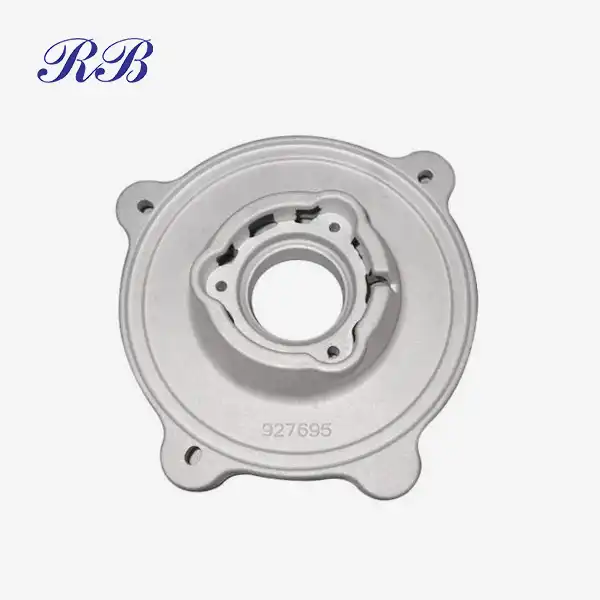
Rongbao Enterprise stands out as a professional manufacturer, factory, and supplier in China. With a focus on customized low pressure casting solutions at competitive prices, Rongbao has established itself as a leader in the field since its founding in 2003.
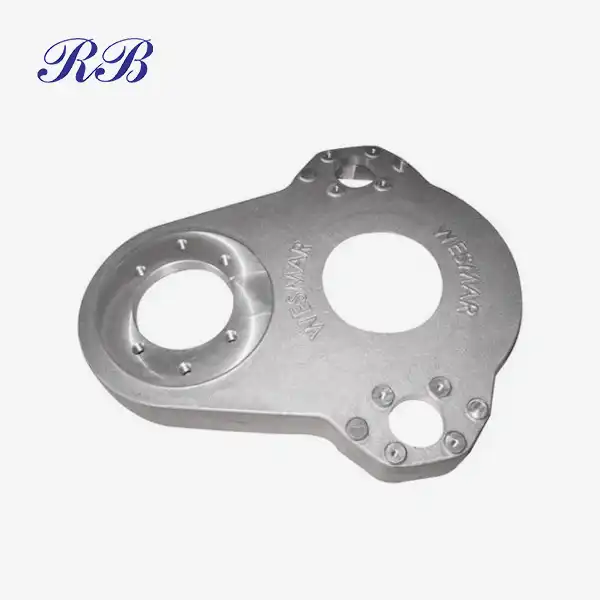
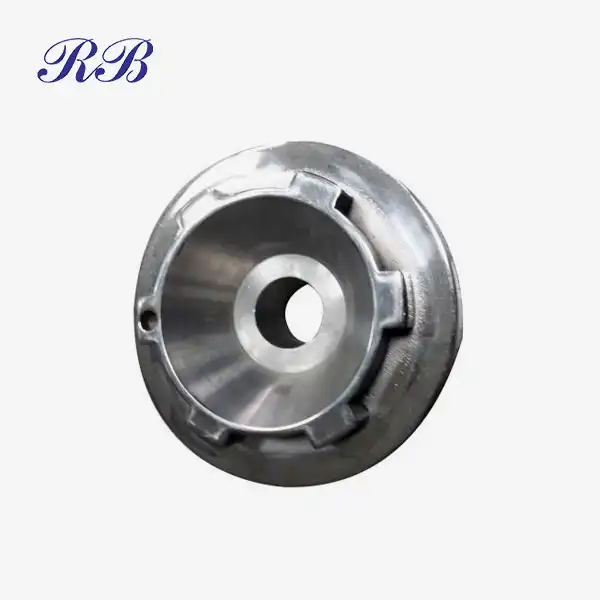
Rongbao specializes in a wide range of low-pressure casting products, including:
- Motor Cover Castings
- Stator Housings
- Decorative Ornaments
- Craft Souvenirs
- Axial Flow Fan Accessories
- Impellers
- Gear Parts
- Aluminum Housings
- Motor Housings
With a commitment to quality, environmental sustainability, and innovation, Rongbao has earned certifications in ISO 9001:2016, ISO 14001, and ISO 45001. The company's global reach, with 70% of products exported to markets including the United States, Europe, and Japan, speaks to its reliability and expertise in meeting international standards.
If you're looking for high-quality, customized casting solutions, don't hesitate to reach out to Rongbao Enterprise. For free samples and inquiries, contact them at steve.zhou@263.net or zhouyi@rongbaocasting.com.
References
- ASM International. (2022). Metal Casting Handbook: Volume 1—Processes.ASM International, Materials Park, OH.
- Automotive Engineering International. (2023). “Flow-Formed Wheels: Balancing Strength and Lightweighting for EVs.” SAE International Journal of Materials and Manufacturing, 16(2), 145–158.
- Society of Manufacturing Engineers. (2022). Cost Analysis of Metal Forming Processes. SME, Dearborn, MI.
- Journal of Cleaner Production. (2023). “Environmental Life Cycle Assessment of Low Pressure Casting vs. Flow Forming for Aluminum Components.” 367, 132987.
- International Aluminium Institute. (2022). Sustainability Metrics for Aluminium Manufacturing Processes. IAI, London, UK.
Learn about our latest products and discounts through SMS or email