- English
- French
- German
- Portuguese
- Spanish
- Russian
- Japanese
- Korean
- Arabic
- Greek
- German
- Turkish
- Italian
- Danish
- Romanian
- Indonesian
- Czech
- Afrikaans
- Swedish
- Polish
- Basque
- Catalan
- Esperanto
- Hindi
- Lao
- Albanian
- Amharic
- Armenian
- Azerbaijani
- Belarusian
- Bengali
- Bosnian
- Bulgarian
- Cebuano
- Chichewa
- Corsican
- Croatian
- Dutch
- Estonian
- Filipino
- Finnish
- Frisian
- Galician
- Georgian
- Gujarati
- Haitian
- Hausa
- Hawaiian
- Hebrew
- Hmong
- Hungarian
- Icelandic
- Igbo
- Javanese
- Kannada
- Kazakh
- Khmer
- Kurdish
- Kyrgyz
- Latin
- Latvian
- Lithuanian
- Luxembou..
- Macedonian
- Malagasy
- Malay
- Malayalam
- Maltese
- Maori
- Marathi
- Mongolian
- Burmese
- Nepali
- Norwegian
- Pashto
- Persian
- Punjabi
- Serbian
- Sesotho
- Sinhala
- Slovak
- Slovenian
- Somali
- Samoan
- Scots Gaelic
- Shona
- Sindhi
- Sundanese
- Swahili
- Tajik
- Tamil
- Telugu
- Thai
- Ukrainian
- Urdu
- Uzbek
- Vietnamese
- Welsh
- Xhosa
- Yiddish
- Yoruba
- Zulu
What are the advantages and disadvantages of sand casting?
Sand casting is one of the oldest and most widely used metal casting methods, with a history dating back thousands of years. It involves creating a mold from sand, pouring molten metal into the mold cavity, and allowing the metal to cool and solidify before removing the sand to reveal the final part.
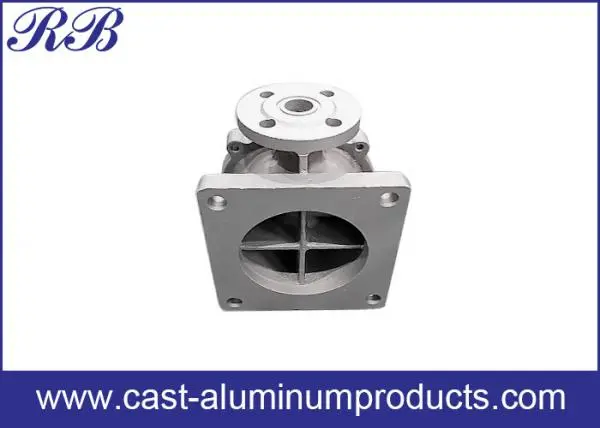
Advantages of Sand Casting: Accessibility and Versatility
Sand casting's enduring popularity stems from two primary strengths: its accessibility (low barriers to entry in terms of cost and equipment) and its versatility (ability to handle diverse part sizes, shapes, and materials). These advantages make it an ideal choice for many manufacturing scenarios, particularly when cost efficiency and flexibility are prioritized over ultra-high precision or mass production speeds.
Cost-Effectiveness for Low-to-Medium Volume Production
One of the most significant advantages of sand casting is its cost-effectiveness, especially for low-to-medium volume production runs. Unlike die casting, which requires expensive metal dies (often costing tens of thousands of dollars) that are only economical for high-volume projects (e.g., millions of parts), sand casting uses molds made from readily available sand, which drastically reduces upfront tooling costs.
For small batches, such as custom parts for agricultural machinery, prototype components for industrial equipment, or specialized components for niche industries, sand casting eliminates the prohibitive tooling expenses associated with other methods.
Additionally, sand is highly reusable. "Green sand," the most common type used in sand casting, consists of sand, clay, and water, and can be recycled multiple times after use, further lowering material costs over time.
While sand casting may require more labor than automated processes like die casting, the savings from reduced tooling and material costs typically offset labor expenses for production runs of fewer than 10,000 parts. For example, a manufacturer producing 500 engine blocks for a vintage tractor restoration project would find sand casting far more economical than investing in die casting tooling that would only be used once. This cost efficiency also extends to large parts: sand molds can be scaled to accommodate components as large as ship propellers or industrial gearboxes, which would be impractical or impossible to produce with methods limited by die size.
Design Flexibility
Beyond cost, sand casting offers design flexibility. Using detachable sand cores, it can handle complicated shapes, such as parts with holes, undercuts, or shapes that aren't normal. This flexibility is very important for parts like engine blocks, which need complicated internal pathways for oil and coolant, or pump housings, which have complicated interior chambers. Sand casting can be used with many different metals and alloys, from ordinary ones like cast iron, aluminum, and copper to high-temperature alloys like stainless steel and nickel-based superalloys. Because of this flexibility, producers don't have to change casting procedures when they deal with new materials. This makes production easier and lowers costs that are associated to the process.
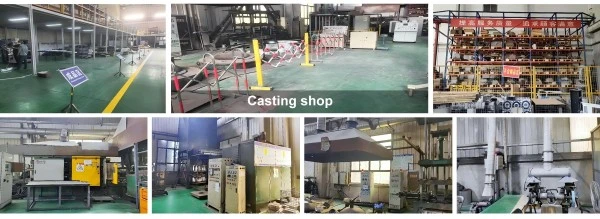
Disadvantages of Sand Casting: Precision and Efficiency Challenges
While sand casting's accessibility and cost benefits make it a staple in many industries, it is not without inherent limitations that can impact its suitability for certain applications. These challenges primarily center on precision, surface quality, and production efficiency, factors that become critical when manufacturing parts requiring tight tolerances, smooth finishes, or high-volume output. Recognizing these limitations is essential to avoid costly rework, delays, or mismatches between the casting method and project requirements.
Dimensional Inaccuracy and Surface Finish Limitations
The most notable disadvantage of sand casting is its relatively low dimensional accuracy and rough surface finish, both of which stem from the properties of sand as a mold material. Sand is porous and somewhat compressible, which means it can shift or deform slightly when molten metal is poured into the cavity. This deformation, combined with metal shrinkage during cooling (a natural process where molten metal contracts as it solidifies), leads to dimensional variations that are larger than those of more precise methods like die casting or investment casting.
Typical dimensional tolerances for sand casting range from ±0.5 mm to ±2 mm for small parts, and can be even wider for large components, compared to die casting, which often achieves tolerances of ±0.1 mm to ±0.3 mm. For parts requiring tight fits (e.g., automotive transmission components or aerospace fasteners), these tolerances may be insufficient, forcing manufacturers to invest in additional machining operations to bring the part to the required dimensions. This post-casting machining adds both time and cost to the production process, eroding some of sand casting's initial cost advantages.
Rough Surface Finish
Surface finish is another key limitation. Sand molds leave a rough texture on the final part, with average surface roughness (Ra) values ranging from 12.5 μm to 25 μm. In contrast, die casting produces parts with Ra values of 3.2 μm to 6.3 μm, smooth enough for many applications without additional finishing. The rough surface of sand-cast parts not only affects aesthetics but can also impact performance: for example, a rough surface on a pump impeller can increase fluid friction and reduce efficiency. To improve surface quality, sand-cast parts often require grinding, sandblasting, or polishing, which further increases production time and costs.
Additionally, sand casting is less efficient for high-volume production. Unlike die casting, where a single die can produce hundreds or thousands of parts per hour, sand casting molds are typically single-use (or limited to a few uses for resin-bonded sand molds), requiring new molds to be created for each part or small batch. This mold preparation process, including mixing sand, shaping the cavity, and inserting cores, is labor-intensive and time-consuming, leading to lower production rates. For projects requiring millions of identical parts (e.g., consumer electronics components or small automotive fasteners), sand casting's slow production speed makes it impractical compared to automated methods.
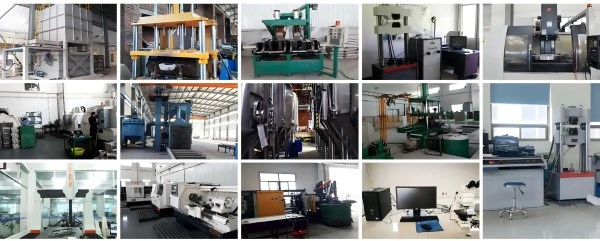
Practical Considerations for Sand Casting Application: Balancing Pros and Cons
To maximize the value of sand casting, it is essential to balance its advantages (cost efficiency, versatility, large-part capability) against its disadvantages (precision limitations, surface finish issues, lower efficiency).
Material Compatibility and Industry-Specific Use Cases
Material compatibility is a key factor in selecting sand casting. Unlike die casting, which is most effective for low-melting-point non-ferrous metals (e.g., aluminum, zinc, magnesium) due to the heat resistance limits of metal dies, it works well with both low and high-melting-point metals. This makes it the preferred method for casting ferrous metals like cast iron and steel, which have melting points too high for die casting dies (which are typically made from tool steel).
Industry-specific use cases further highlight where sand casting excels. In the automotive industry, it is used for large components like engine blocks, cylinder heads, and crankshafts, parts that require complex internal geometries, are produced in medium volumes (tens of thousands per year), and use cast iron or aluminum.
Sand casting remains a vital manufacturing method due to its unique combination of cost-effectiveness, versatility, and ability to handle large or complex parts. Its advantages, low tooling costs for low-to-medium volume production, compatibility with diverse metals, and flexibility for complex geometries, make it indispensable in industries ranging from automotive to heavy machinery. However, its limitations, dimensional inaccuracy, rough surface finish, and lower efficiency for high-volume production require careful consideration when selecting a casting method.

Sand Casting Supplier: Rongbao Enterprise
Rongbao Enterprise delivers integrated component supply solutions for equipment manufacturers across various industries. Their commitment to environmental sustainability, innovation, and precision has earned them a global reputation, with 70% of their products exported to markets in the United States, Europe, Japan, and beyond.
For more information or to request a free sample, contact Rongbao Enterprise today:
Email: steve.zhou@263.net or zhouyi@rongbaocasting.com
Don't miss the opportunity to elevate your manufacturing processes with Rongbao's expert sand casting services. Reach out now to discuss your project needs and experience the difference that comes with working with a leader in the field.
References
- ASM International. (2014). ASM Handbook, Volume 15: Casting. ASM International. This comprehensive handbook provides authoritative insights into casting processes, including sand casting, with detailed analysis of material compatibility, mold design, and process limitations.
- Foundry Management & Technology. (2022). “The Role of Sand Casting in Modern Manufacturing: Advantages and Limitations.” Foundry Management & Technology, 150(3), 28–34. This industry journal article offers real-world examples of sand casting applications and compares its performance to other casting methods.
- Smith, J., & Jones, R. (2020). “A Comparative Analysis of Casting Methods: Sand Casting vs. Die Casting.” Journal of Manufacturing Processes, 58, 112–125. This peer-reviewed study quantifies the dimensional accuracy, cost, and efficiency differences between sand casting and die casting, supporting data-driven decision-making.
- American Foundry Society (AFS). (2021). Sand Casting Best Practices Guide. American Foundry Society. This guide outlines industry standards for sand casting, including mold preparation, material selection, and quality control measures to improve precision and surface finish.
_1751074553490.webp)
Learn about our latest products and discounts through SMS or email