- English
- French
- German
- Portuguese
- Spanish
- Russian
- Japanese
- Korean
- Arabic
- Greek
- German
- Turkish
- Italian
- Danish
- Romanian
- Indonesian
- Czech
- Afrikaans
- Swedish
- Polish
- Basque
- Catalan
- Esperanto
- Hindi
- Lao
- Albanian
- Amharic
- Armenian
- Azerbaijani
- Belarusian
- Bengali
- Bosnian
- Bulgarian
- Cebuano
- Chichewa
- Corsican
- Croatian
- Dutch
- Estonian
- Filipino
- Finnish
- Frisian
- Galician
- Georgian
- Gujarati
- Haitian
- Hausa
- Hawaiian
- Hebrew
- Hmong
- Hungarian
- Icelandic
- Igbo
- Javanese
- Kannada
- Kazakh
- Khmer
- Kurdish
- Kyrgyz
- Latin
- Latvian
- Lithuanian
- Luxembou..
- Macedonian
- Malagasy
- Malay
- Malayalam
- Maltese
- Maori
- Marathi
- Mongolian
- Burmese
- Nepali
- Norwegian
- Pashto
- Persian
- Punjabi
- Serbian
- Sesotho
- Sinhala
- Slovak
- Slovenian
- Somali
- Samoan
- Scots Gaelic
- Shona
- Sindhi
- Sundanese
- Swahili
- Tajik
- Tamil
- Telugu
- Thai
- Ukrainian
- Urdu
- Uzbek
- Vietnamese
- Welsh
- Xhosa
- Yiddish
- Yoruba
- Zulu
Why is sand casting still used today?
Sand casting, one of the oldest metal forming processes dating back over 6,000 years, has endured through centuries of technological advancement, from the invention of permanent mold casting to modern 3D printing-based casting methods. In an era dominated by high-precision, automated manufacturing, it is natural to question why this "traditional" process remains a cornerstone of industries ranging from automotive and aerospace to construction and energy.
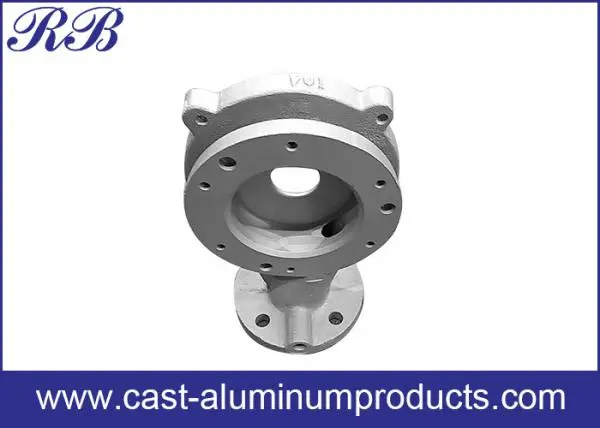
Cost-Effectiveness for Diverse Production Scales
Low Initial Equipment and Tooling Costs
Unlike advanced casting processes such as die casting or investment casting, sand casting requires minimal upfront investment in specialized equipment. The core tools for sand casting include molding flasks, pattern tools, and sand mixing machines, all of which are significantly less expensive than the high-pressure die-casting machines or precision wax-injection systems used in other methods. For example, a basic sand casting setup for small to medium parts can be established for under $50,000, while a die casting machine capable of producing similar parts may cost $500,000 or more.
Patterns, the tools used to create mold cavities, also contribute to cost savings. Sand casting patterns can be made from low-cost materials like wood, foam, or plastic for prototype or low-volume production. Even metal patterns (used for higher volumes) are less complex and cheaper to manufacture than the steel dies required for die casting. This low initial cost barrier makes sand casting accessible to small businesses, startups, and workshop groups that may not have the capital for advanced casting technologies.
Economical Material Usage and Recycling
The primary material in sand casting, molding sand, is abundant, low-cost, and highly recyclable. Silica sand, the most common aggregate in molding sand, is widely available globally and costs as little as $20 per ton, far less than the metal alloys used in permanent molds. Additionally, up to 95% of used molding sand can be reclaimed through processes like screening, magnetic separation, and thermal reconditioning. Reclaimed sand retains most of its original properties, reducing the need for fresh sand and lowering material waste.
This recyclability not only cuts material costs but also minimizes environmental impact, a secondary benefit that aligns with modern sustainability goals. Unlike permanent molds, which require periodic replacement (and disposal of worn metal), reclaimed sand reduces landfill waste and lowers the carbon footprint of casting operations. For industries focused on cost reduction and sustainability, this combination is highly appealing.
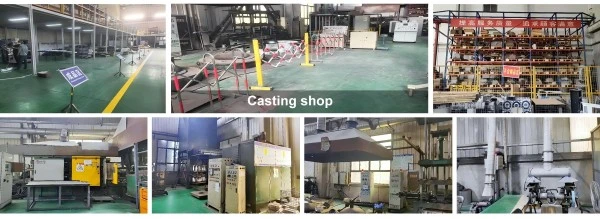
Exceptional Design Flexibility and Material Compatibility
Ability to Accommodate Complex Geometries
Sand casting's greatest technical advantage is its ability to produce parts with complex geometries that are difficult or impossible to achieve with other casting methods. Molding sand is a malleable material that conforms to the shape of the pattern, allowing for intricate features such as internal cavities, thin walls (as thin as 3mm for certain metals), and irregular contours. This flexibility is critical for parts like engine blocks (with multiple coolant passages), pump housings (with internal impellers), and industrial valves (with complex flow channels).
Internal cavities, a common challenge in casting, are easily created using sand cores, small, pre-formed sand shapes placed inside the mold before pouring. Cores can be designed to match almost any internal geometry, from simple holes to complex labyrinths. For example, sand casting is used to produce large gearboxes with internal gear teeth, as cores can be positioned to create the gear profiles without the need for post-casting machining. This ability to integrate complex features reduces the need for secondary operations (e.g., drilling, milling), saving time and cost.
Wide Compatibility with Metal Alloys
Unlike die casting (which is primarily limited to non-ferrous metals like aluminum, zinc, and magnesium) or investment casting (which struggles with high-melting-point alloys), sand casting is compatible with nearly all commercially used metals and alloys. This includes:
- Ferrous metals: Cast iron (gray iron, ductile iron), carbon steel, and alloy steel—materials critical for heavy machinery, automotive components, and construction equipment.
- Non-ferrous metals: Aluminum, copper, brass, bronze, and magnesium—used in lightweight parts, electrical components, and marine applications.
- High-temperature alloys: Nickel-based superalloys and titanium alloys—essential for aerospace engines and industrial furnaces, where melting points exceed 1,500°C.
This compatibility stems from the high heat resistance of molding sand (silica sand melts at ~1,713°C), which can withstand the extreme temperatures of molten high-alloy metals. No other casting process offers such broad material flexibility, making sand casting indispensable for industries that work with diverse metal types.
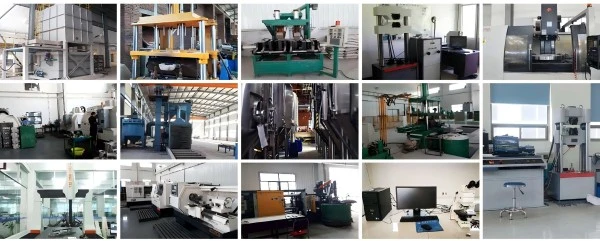
Flexibility & Fast Turnaround for Design Iterations
In today's fast-paced manufacturing environment, the ability to quickly iterate designs and produce prototypes is crucial. Sand casting offers a level of flexibility and speed that makes it invaluable for rapid prototyping and design refinement.
Rapid Prototyping Capabilities
The sand casting process allows for quick changes to part designs without significant retooling costs. If a design needs modification, it's often as simple as altering the pattern - a process that can be done in a matter of hours or days, depending on the complexity. This agility is particularly valuable in industries with evolving product designs or those requiring frequent customization.
For instance, an automotive parts manufacturer might use sand casting to quickly produce prototype engine blocks. If testing reveals the need for design changes, such as altering coolant channels or reinforcing certain areas, these modifications can be rapidly implemented in the pattern, allowing for a new prototype to be cast and tested in a fraction of the time it would take with other manufacturing methods.
Bridging Prototype to Production
Sand casting provides a smooth transition from prototype to full production. The same process used for creating a handful of prototype parts can be scaled up for larger production runs without significant changes to the manufacturing setup. This continuity not only saves time but also ensures that the production parts maintain the same characteristics as the approved prototypes.
This scalability is particularly beneficial for industries with unpredictable or fluctuating demand. A manufacturer can start with a small production run and easily ramp up as demand increases, without the need for substantial additional investment in tooling or equipment.

Sand Casting Supplier: Rongbao Enterprise
For those seeking high-quality sand casting services, Rongbao Enterprise stands out as a leading provider. With a legacy dating back to 2003, Rongbao has established itself as a specialized manufacturer in aluminum alloy casting and precision processing.
Rongbao's commitment to quality is evident in their certifications, including ISO 9001:2016 for Quality Management, ISO 14001 for Environmental Management, and ISO 45001 for Occupational Health and Safety Management. This dedication to excellence has allowed them to export 70% of their products to markets in the United States, Europe, Japan, and beyond.
Whether you're in the automotive, aerospace, medical, or electrical industries, Rongbao offers tailored solutions to meet your specific needs. Their range of products includes:
- Cast Rectangular Hoppers
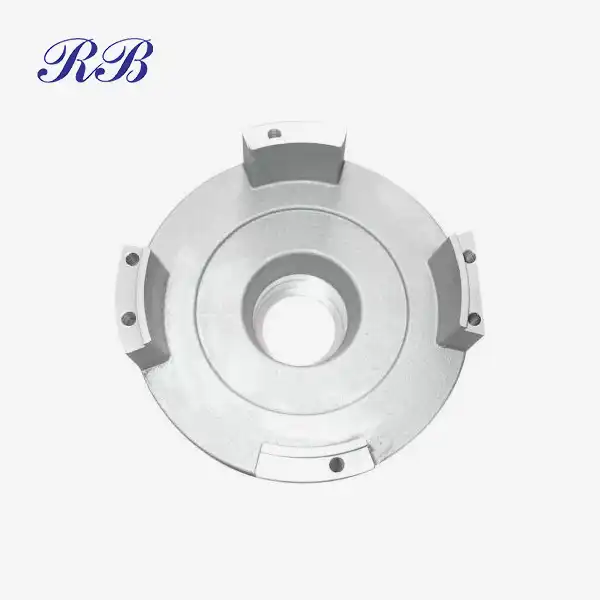
- Precision Sand Casting Parts
- Special Valve Body Castings
- Cast Elbow Pipes
- Cast Engine Bearings
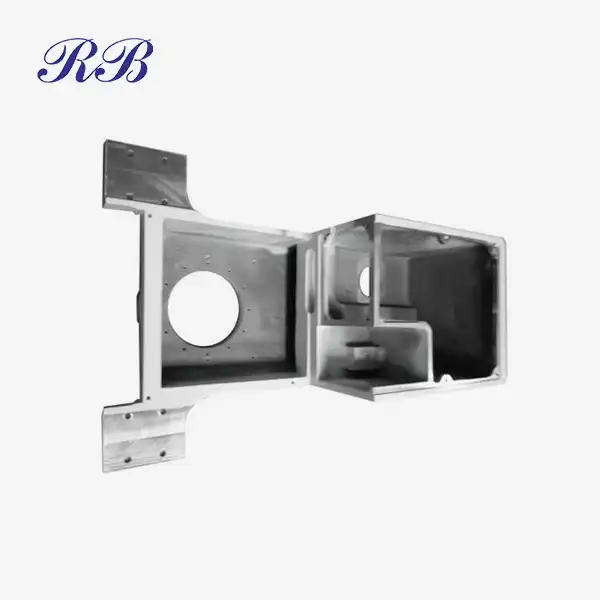
- Gearbox Housings
- Large Sand Casting Parts
If you're looking for a reliable partner for your sand casting needs, don't hesitate to reach out to Rongbao Enterprise. Their team of experts is ready to assist you in finding the perfect solution for your project.
For more information or to request a free sample, contact Rongbao Enterprise today:
Email: steve.zhou@263.net or zhouyi@rongbaocasting.com
Take the next step in your manufacturing journey with Rongbao Enterprise - where quality meets innovation in sand casting.
References
- Campbell, J. (2015). Complete Casting Handbook: Metal Casting Processes, Techniques and Design. Butterworth-Heinemann.
- Groover, M. P. (2020). Fundamentals of Modern Manufacturing: Materials, Processes, and Systems. John Wiley & Sons.
- American Foundry Society. (2021). Casting Source Directory. AFS Publications.
- Kalpakjian, S., & Schmid, S. R. (2014). Manufacturing Engineering and Technology. Pearson.
- ASM International. (2008). ASM Handbook, Volume 15: Casting. ASM International.
Learn about our latest products and discounts through SMS or email