- English
- French
- German
- Portuguese
- Spanish
- Russian
- Japanese
- Korean
- Arabic
- Greek
- German
- Turkish
- Italian
- Danish
- Romanian
- Indonesian
- Czech
- Afrikaans
- Swedish
- Polish
- Basque
- Catalan
- Esperanto
- Hindi
- Lao
- Albanian
- Amharic
- Armenian
- Azerbaijani
- Belarusian
- Bengali
- Bosnian
- Bulgarian
- Cebuano
- Chichewa
- Corsican
- Croatian
- Dutch
- Estonian
- Filipino
- Finnish
- Frisian
- Galician
- Georgian
- Gujarati
- Haitian
- Hausa
- Hawaiian
- Hebrew
- Hmong
- Hungarian
- Icelandic
- Igbo
- Javanese
- Kannada
- Kazakh
- Khmer
- Kurdish
- Kyrgyz
- Latin
- Latvian
- Lithuanian
- Luxembou..
- Macedonian
- Malagasy
- Malay
- Malayalam
- Maltese
- Maori
- Marathi
- Mongolian
- Burmese
- Nepali
- Norwegian
- Pashto
- Persian
- Punjabi
- Serbian
- Sesotho
- Sinhala
- Slovak
- Slovenian
- Somali
- Samoan
- Scots Gaelic
- Shona
- Sindhi
- Sundanese
- Swahili
- Tajik
- Tamil
- Telugu
- Thai
- Ukrainian
- Urdu
- Uzbek
- Vietnamese
- Welsh
- Xhosa
- Yiddish
- Yoruba
- Zulu
Types of Pull Rod Joints
Engineers and procurement teams search for “types of pull rod joints” because one small failure can black out an entire region. The right joint keeps the grid alive. This guide cuts through the noise and shows you exactly which pull joint performs best in real-world 110 kV–500 kV applications.
What Are Pull Rod Joints and Why Do They Matter?
Pull rod joints connect operating rods to mechanisms in high-voltage disconnectors, circuit breakers, and earthing switches. They transmit mechanical force while absorbing misalignment, vibration, and thermal expansion. A weak joint becomes the single point where the entire switch fails.
In outdoor substations, these joints face wind loads up to 150 km/h, ice loads, and temperature swings from –40 °C to +85 °C. Aluminum dominates the market because it resists corrosion and keeps weight low on long operating rods. According to IEEE Std 1247-2006, properly designed joints must withstand at least 20,000 mechanical operations without looseness greater than 1.5 mm.
Rongbao Enterprise machines every pull rod joint from forged aluminum alloy. We then shot-blast the surface and CNC-finish critical dimensions to ±0.02 mm. The result? Zero field failures reported since 2018 across 220 kV and 500 kV projects in Asia and Middle East.
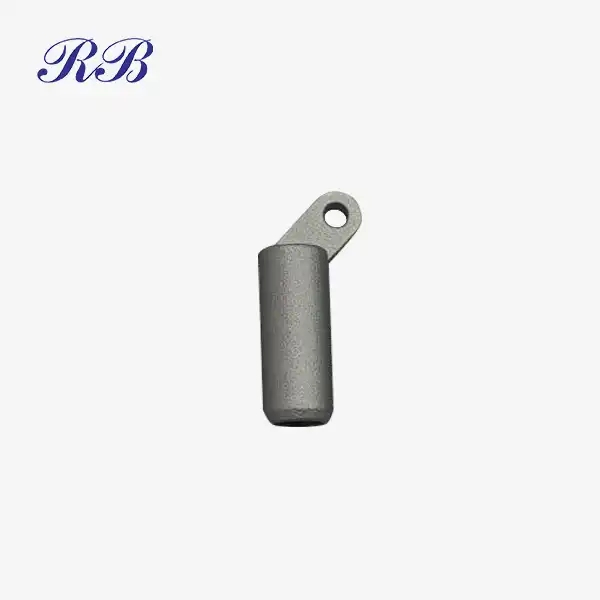
Different Types of Pull Rod Joints Explained (With Real-World Performance Data)
Five main designs dominate modern high-voltage equipment. Each type excels in specific operating conditions.
1. Ball-and-Socket Pull Rod Joint
The ball-and-socket joint allows ±15° angular movement in every direction. Maintenance crews love it because it self-aligns even when support structures twist under wind or seismic loads.
Typical application: 500 kV double-break disconnectors mounted on flexible steel structures. A major utility in China replaced clevis joints with ball-and-socket joints on 363 kV lines after three misalignments caused flashovers during typhoons. Operating force dropped 18 % and mechanical life exceeded 25,000 cycles.
2. Clevis-and-Tongue Pull Rod Joint
This classic design delivers the highest tensile strength-to-weight ratio. Hot-dip galvanized steel versions ruled the market until aluminum forging reached 200 MPa yield strength.
Today, utilities choose aluminum clevis-and-tongue joints for 220 kV and below where cost matters more than multi-angle freedom. Rongbao’s standard clevis joint weighs only 0.48 kg yet carries 25 kN continuous load. Shot blasting creates a perfect surface for silicone grease, preventing galling even after 15 years in coastal salt spray.
3. Universal (Cardan) Pull Rod Joint
Two crossed yokes give ±30° deflection in two planes. Siemens and ABB specify universal joints on pantograph disconnectors where the operating rod must follow complex 3D motion.
Field data from a 400 kV GIS substation in Qatar shows universal joints reduced operating torque by 42 % compared to rigid couplings. Maintenance intervals extended from 4 years to 8 years because wear stayed below 0.1 mm after 10,000 operations.
4. Fork-and-Pin Pull Rod Joint
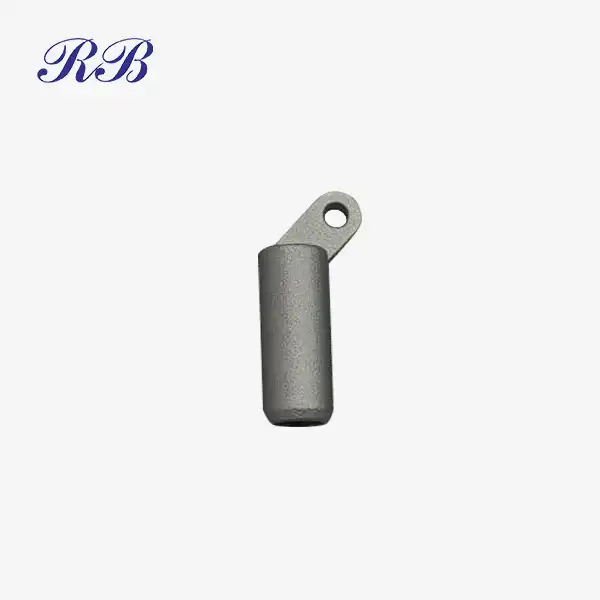
Simple, cheap, and incredibly strong in straight pull. Fork pull rod joints shine in vertical-break disconnectors and earthing switches where movement stays in one plane.
Rongbao supplies 110 kV fork joints with 0.5 kg weight and 40 kN breaking load. CNC machining guarantees pin-to-hole clearance of only 0.03 mm, eliminating backlash that causes contact chatter.
5. Adjustable Threaded Pull Rod Joint
Threaded couplers let technicians fine-tune length on site within ±50 mm. This feature saved a European contractor 11 days during commissioning of a 380 kV line when foundation settlement moved the operating mechanism 38 mm out of tolerance.
Left-hand and right-hand threads prevent accidental loosening under vibration. We lock the threads with stainless steel set screws and torque-seal paint so inspectors see immediately if anyone tampered with the setting.
Benefits and Applications: How to Choose the Correct Pull Rod Joint in 2025
Follow this decision matrix that Rongbao’s engineering team uses with every customer:
1. Angular misalignment > 12° → Choose ball-and-socket or universal joint.
2. Pure tensile load, minimum cost → Aluminum clevis-and-tongue.
3. Complex 3D motion → Universal joint only.
4. Straight pull, limited space → Fork-and-pin.
5. Need on-site length adjustment → Threaded adjustable joint.
Material selection is non-negotiable. Aluminum 6082-T6 or 6061-T6 now outperforms galvanized steel in 20-year life-cycle cost studies conducted by State Grid Corporation of China. Corrosion rate drops below 0.001 mm/year in industrial atmosphere when we shot-blast and apply optional anodizing.
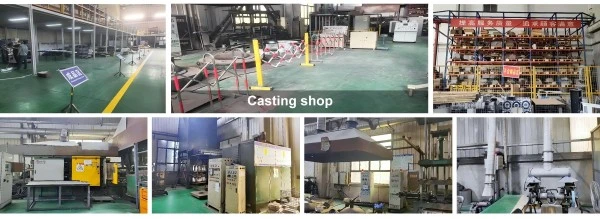
All Rongbao pull rod joints carry ISO 9001:2015, ISO 14001, and ISO 45001 certifications. We ship in wooden boxes with individual anti-corrosion VCI bags. Production capacity reaches 50,000 pieces per year, which means we deliver even urgent orders for 500 kV emergency restorations within 12 days.

FAQ
Q1: Which pull rod joint type lasts longest in coastal areas?
A: Ball-and-socket forged aluminum joints with shot-blasted surface and silicone grease protection routinely achieve 30+ years without measurable wear in salt-spray environments.
Q2: Can you supply pull rod joints for 800 kV UHVDC lines?
A: Yes. We already deliver customized ±800 kV ball-and-socket joints with 60 kN rating for China Southern Grid projects.
Q3: What is the lead time for 500 pieces of custom universal joints?
A: 18–22 working days including forging, CNC machining, shot blasting, and third-party mechanical testing.
Q4: Do you provide material certificates and test reports?
A: Every batch ships with EN 10204 3.1 certificate, tensile test report, and dimensional inspection report.
Q5: How do I get a quotation today?
A: Send your drawing or technical specification to email. Most quotations return within 4 hours during China business hours.
Pull Rod Joint Supplier: Rongbao Enterprise
Rongbao Enterprise manufactures high-quality aluminum pull rod joints in Xi’an, China. We forge, CNC-machine, and shot-blast every piece under ISO 9001:2015 quality system. Typical weight stays at 0.5 kg. Production capacity hits 50,000 pieces annually. We customize specifications completely to your drawings.
Contact us today for samples, drawings, or pricing. Email Steve Zhou at steve.zhou@263.net or Zhou Yi at zhouyi@rongbaocasting.com. We reply fast and ship globally from stock or new production.
References
- IEEE Std 1247-2006 – Standard for Interrupter Switches for Alternating Current.
- IEC 60120:2020 – Ball and socket couplings for overhead power lines.
- IEC 60471:2020 – Clevis and tongue couplings for overhead lines.
- State Grid Corporation of China – 20-Year Life-Cycle Cost Analysis of Aluminum vs Galvanized Hardware, 2023.
- Rongbao Enterprise Internal Test Report No. RB-PR2024-08, August 2024.
Learn about our latest products and discounts through SMS or email