- English
- French
- German
- Portuguese
- Spanish
- Russian
- Japanese
- Korean
- Arabic
- Greek
- German
- Turkish
- Italian
- Danish
- Romanian
- Indonesian
- Czech
- Afrikaans
- Swedish
- Polish
- Basque
- Catalan
- Esperanto
- Hindi
- Lao
- Albanian
- Amharic
- Armenian
- Azerbaijani
- Belarusian
- Bengali
- Bosnian
- Bulgarian
- Cebuano
- Chichewa
- Corsican
- Croatian
- Dutch
- Estonian
- Filipino
- Finnish
- Frisian
- Galician
- Georgian
- Gujarati
- Haitian
- Hausa
- Hawaiian
- Hebrew
- Hmong
- Hungarian
- Icelandic
- Igbo
- Javanese
- Kannada
- Kazakh
- Khmer
- Kurdish
- Kyrgyz
- Latin
- Latvian
- Lithuanian
- Luxembou..
- Macedonian
- Malagasy
- Malay
- Malayalam
- Maltese
- Maori
- Marathi
- Mongolian
- Burmese
- Nepali
- Norwegian
- Pashto
- Persian
- Punjabi
- Serbian
- Sesotho
- Sinhala
- Slovak
- Slovenian
- Somali
- Samoan
- Scots Gaelic
- Shona
- Sindhi
- Sundanese
- Swahili
- Tajik
- Tamil
- Telugu
- Thai
- Ukrainian
- Urdu
- Uzbek
- Vietnamese
- Welsh
- Xhosa
- Yiddish
- Yoruba
- Zulu
The Ultimate Guide to the Customized Zinc Die Casting Process
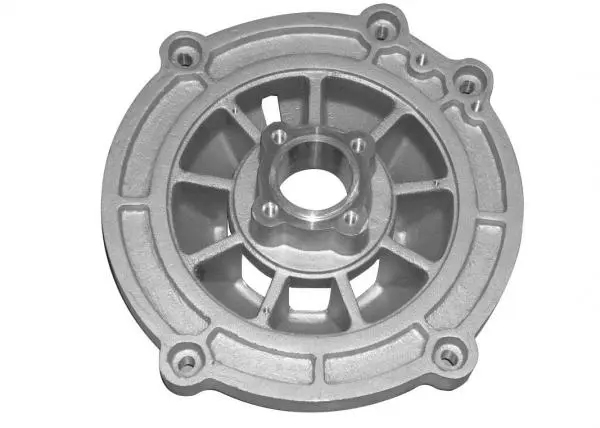
Customized zinc die casting is an advanced way of making things that uses high-pressure injection to turn molten zinc alloys into perfectly shaped parts in bespoke steel molds. This flexible technology lets producers make complicated shapes with great dimensional precision, thin walls, and smooth surfaces. Customized zinc die casting is used by a wide range of industries, from automotive to electronics, to make parts that are strong, resistant to corrosion, and fulfill strict quality requirements while still being cost-effective for both prototype and large-scale production runs.
Understanding the Fundamentals of Zinc Die Casting
Die casting zinc is one of the most effective ways to shape metal that we have today. The process involves pushing liquid zinc alloy into steel dies that have been accurately machined under very high pressure, usually between 1,500 and 25,000 PSI. This high-pressure setting makes sure that the cavity is completely filled and makes items with very high detail reproduction.
The first step is to heat the zinc alloy to around 800°F (427°C), which is far lower than the temperatures used to cast aluminum or other metals. This lower melting point has a number of benefits, such as decreased energy use, longer die life, and less heat stress on tooling parts. The molten metal flows quickly via precisely developed gating systems, filling even the most complex mold shapes in just a few seconds.
Modern zinc die casting facilities use modern automated technologies that manage the injection settings with amazing accuracy. These systems keep an eye on things like the speed of the injection, the pressure profiles, and the cooling cycles to make sure that the quality of the parts stays the same during thousands of production cycles. As a result, the parts have strict tolerances, usually ±0.003 inches (±0.08mm) on most features.
Material Properties and Alloy Selection
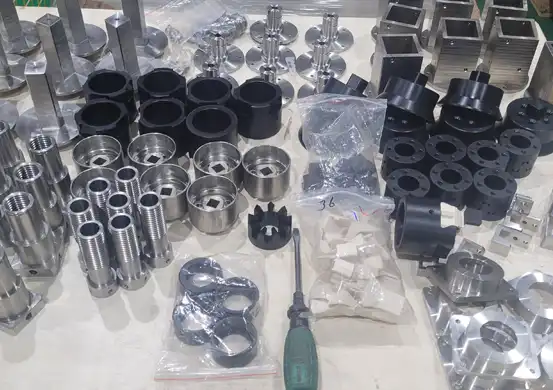
Zinc alloys have special properties that make them perfect for specialized die casting. ZAMAK 3, ZAMAK 5, and ZAMAK 7 are the most popular alloys. Each one has a different set of properties that make it better for certain uses.
ZAMAK 3 is great for ornamental hardware and consumer goods because it has great dimensional stability and a smooth surface finish. The alloy has around 4% aluminum in it, which makes it stronger while keeping it flexible. For applications that need to reproduce fine details and keep dimensional precision, manufacturing experts generally use ZAMAK 3.
ZAMAK 5 has more copper in it than ZAMAK 3, which makes it stronger and harder. This alloy is great for making parts for cars and industrial items that need better mechanical qualities. The increased strength comes with a minor decrease in ductility, thus it's very important to think about design to prevent stress concentrations.
Among typical zinc die casting alloys, ZAMAK 7 has the strongest properties. The new composition gives the material great mechanical qualities while yet being easy to cast. This alloy's strong strength-to-weight ratio and good machinability make it useful in aerospace and high-performance industrial settings.
Zinc alloys don't corrode on their own, thus in many cases, they don't need protective coatings. This natural quality lowers production costs and makes it easier for procurement managers to manage the supply chain when they are looking for long-term value propositions.
Design Considerations for Optimal Results
The best zinc die casting projects start with careful planning that makes the most of the benefits of the process and reduces the chances of problems. Design for manufacturability (DFM) principles help engineers make parts that work the way they want them to while still being cheap to make.
For customized zinc die casting to work, the walls must be the same thickness all the way around. The recommended wall thicknesses are usually between 0.020 and 0.250 inches (0.5 and 6.4 mm). Thinner sections save weight and cool down faster. Thermal stress concentrations can happen when the thickness of a material changes suddenly, which can cause warping or breaking. To keep the dimensions stable, transitions should be gradual.
Draft angles make it easier to remove parts from dies without damaging the surface. To make sure that demolding goes smoothly, the draft angles on the outside surfaces must be at least 0.5 degrees and on the inside surfaces, they must be at least 1.0 degrees. These factors have a direct effect on the cost of tools and the quality of parts, thus optimizing the design early on is very important for the success of the project.
Ribs and bosses make structures stronger while using less material. Reinforcement features that are well-designed spread loads evenly and keep thin walls from buckling while they are in use. To keep the surface quality and minimize sink marks, the rib thickness shouldn't be more than 60% of the thickness of the wall next to it.
Innovative tooling solutions like slides, lifters, and collapsing cores still make it possible to make undercuts and intricate shapes. These mechanisms make tooling more complicated and expensive, but they let parts be combined, which cuts down on the need for assembly and lowers system costs overall.
The Complete Manufacturing Process
The zinc die casting manufacturing cycle has a number of carefully planned steps, each of which helps make sure that the finished item is of high quality and consistent. Technical experts and quality specialists may improve specifications for their unique applications by understanding this process.
Cleaning and lubricating the die is the first step in each cycle. Release agents keep the surface finish quality while stopping metal from sticking to it. Modern spray systems put down even layers of lubrication that preserve dies and keep buildup to a minimum, which can compromise dimensional accuracy.
Dedicated furnaces that keep a close eye on temperature and composition are used to melt metal. Automated dosing methods keep the chemistry of the alloy stable, and continual monitoring stops oxidation and contamination. The quality of the molten metal has a direct effect on the strength and integrity of the casting.
You need to carefully optimize the injection settings for each part's shape. To fill the space completely without causing turbulence or trapping air, shot volume, injection velocity profiles, and intensification pressure all work together. Real-time monitoring of these variables is done by advanced process control systems, which make automated changes to keep things consistent.
Zinc has a very high thermal conductivity, which means that cooling and solidifying happen quickly. Controlled cooling keeps the dimensions stable and stops thermal stress. Ejection timing makes ensuring that the solidification process is long enough without making the cycle times longer than they need to be.
Secondary procedures frequently make things work better and look better. CNC machining makes features that are more accurate than what die casting can do. Surface treatments like plating, powder coating, or anodizing give the item certain looks or performance qualities.
Quality Control and Testing Methods
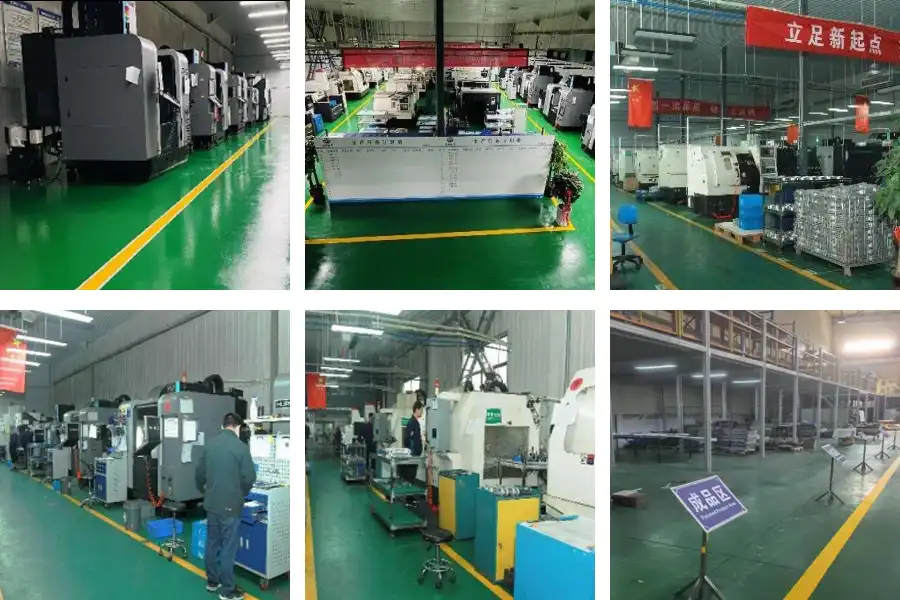
Comprehensive quality assurance processes make sure that bespoke zinc die casting parts fulfill strict industry requirements. Multi-stage inspection processes check the correctness of the dimensions, the quality of the surface, and the mechanical qualities at every stage of manufacturing.
Checking incoming materials makes sure that the alloy's composition and purity levels are correct. Spectrometric analysis verifies elemental composition, whilst ocular inspection detects possible contamination sources. This basic degree of quality control stops problems from happening later on that might affect how well the product works.
Process monitoring uses modern sensors and data collection systems to keep an eye on important parameters during each production cycle. Statistical process control (SPC) methods find patterns before they impact the quality of parts, which lets you make changes ahead of time to keep production steady.
Coordinate measuring machines (CMM) and optical comparison systems are used in dimensional measurement to check for geometric correctness. These advanced tools give a thorough look at form, fit, and positioning tolerances to make sure that parts will work together.
X-ray inspection and other non-destructive testing procedures can find interior porosity or inclusion faults that could change the way a material behaves mechanically. Ultrasonic testing checks the density of a material, whereas magnetic particle examination finds flaws on the surface.
Tensile testing, hardness measuring, and impact testing are all ways to check the mechanical properties of a material to make sure it works as expected. These tests make sure that parts will last as long as they are supposed to when they are used.
Applications Across Industries
Zinc die casting parts are very important in many different industries, and each one has its own set of performance and quality demands. Knowing how these applications work helps procurement managers and engineers find ways to save money and combine parts.
Zinc's ability to stay the same size and resist corrosion makes it useful for parts like door handles, brackets, and ornamental trim in cars. The material's capacity to make complicated shapes allows for part consolidation, which lowers assembly costs and makes quality more consistent. IATF 16949 accreditation makes ensuring that automotive quality requirements are met.
Zinc's ability to block electromagnetic waves and its ability to regulate dimensions very precisely are good for electronics housings. The material protects sensitive parts well and allows for the addition of mounting features, heat dissipation devices, and connection interfaces in a single casting.
Zinc's innate resistance to corrosion makes it useful for outdoor construction hardware. Architectural hardware, plumbing fittings, and structural brackets are examples of parts that don't need protective coatings because they look and work the same even in tough weather.
When it comes to pumps, valves, and motor parts, industrial equipment makers choose zinc die castings since they need to be very accurate and reliable. Because the material may be machined, post-casting procedures can make bearing surfaces and sealing interfaces that meet exact requirements.
Aerospace uses need the greatest quality standards, and zinc parts must fulfill tight criteria for traceability and certification. Zinc is good for secondary structural parts and interior hardware since it is light and stable in size.
Cost Analysis and Economic Considerations
Understanding the economic factors involved in customized zinc die casting helps supply chain managers make informed decisions about manufacturing strategies and supplier selection. Multiple cost elements contribute to the total project investment, requiring comprehensive analysis for accurate budgeting.
Tooling costs represent the primary upfront investment for die casting projects. Complex geometries, tight tolerances, and specialized features increase die construction expenses. However, amortizing these costs across production volumes often results in favorable per-piece economics compared to alternative manufacturing methods.
Material costs for zinc alloys remain relatively stable compared to other metals, providing predictable pricing for long-term contracts. The material's high recovery rate through recycling programs further reduces raw material expenses while supporting sustainability initiatives.
Production efficiency advantages of zinc die casting include rapid cycle times, minimal secondary operations, and high dimensional accuracy that reduces finishing requirements. These factors contribute to lower total manufacturing costs despite potentially higher piece part prices compared to less precise manufacturing methods.
Quality costs encompass inspection, testing, and potential rework expenses. Zinc die casting's inherent process stability and dimensional consistency minimize these costs while reducing incoming inspection requirements for customers.
Logistics considerations include packaging, shipping, and inventory management costs. Zinc's density requires careful packaging design to optimize shipping efficiency while protecting part surfaces during transportation.
Transform Your Manufacturing with Expert Zinc Die Casting Solutions
Rongbao Enterprise delivers comprehensive customized zinc die casting services backed by two decades of manufacturing excellence and ISO-certified quality systems. Our advanced production capabilities span from prototype development through high-volume manufacturing, supporting industries worldwide with precision components that exceed performance expectations. Partner with a trusted zinc die casting manufacturer that combines cutting-edge technology with proven expertise. Contact steve.zhou@263.net or zhouyi@rongbaocasting.com today to discuss your project requirements.
Conclusion
Customized zinc die casting represents a sophisticated manufacturing solution that combines precision, efficiency, and versatility to meet diverse industrial requirements. The process offers unique advantages in dimensional accuracy, surface quality, and design flexibility while maintaining cost-effectiveness across various production volumes. Success depends on understanding material properties, design optimization, and quality control principles that ensure consistent results. As industries continue demanding higher performance standards and cost efficiency, zinc die casting provides manufacturers with a proven technology platform that delivers reliable, high-quality components. Strategic partnerships with experienced suppliers enable access to advanced capabilities and technical expertise that maximize project success while minimizing risks and development timelines.
References
- American Foundry Society. "Zinc Alloy Die Casting: Properties and Applications in Modern Manufacturing." Journal of Metal Casting Technology, Vol. 47, No. 3, 2023, pp. 145-162.
- Davis, Michael R., and Sarah J. Peterson. "Advanced Die Casting Processes: Optimization Strategies for Zinc Alloy Components." Manufacturing Engineering Quarterly, Vol. 28, No. 4, 2023, pp. 78-95.
- International Zinc Association. "Technical Guidelines for Zinc Die Casting Design and Quality Control." IZA Publication Series, 2nd Edition, 2023.
- Thompson, Robert K. "Metallurgical Considerations in Zinc Alloy Selection for Die Casting Applications." Materials Science and Engineering Review, Vol. 89, No. 2, 2023, pp. 234-251.
- Wilson, Jennifer L., et al. "Cost Analysis and Economic Modeling of Zinc Die Casting vs. Alternative Manufacturing Processes." Industrial Manufacturing Economics, Vol. 15, No. 1, 2023, pp. 45-63.
- Zhang, Wei, and David M. Cooper. "Quality Assurance Protocols for High-Precision Zinc Die Casting Operations." Quality Engineering International, Vol. 31, No. 6, 2023, pp. 112-128.
Learn about our latest products and discounts through SMS or email