- English
- French
- German
- Portuguese
- Spanish
- Russian
- Japanese
- Korean
- Arabic
- Greek
- German
- Turkish
- Italian
- Danish
- Romanian
- Indonesian
- Czech
- Afrikaans
- Swedish
- Polish
- Basque
- Catalan
- Esperanto
- Hindi
- Lao
- Albanian
- Amharic
- Armenian
- Azerbaijani
- Belarusian
- Bengali
- Bosnian
- Bulgarian
- Cebuano
- Chichewa
- Corsican
- Croatian
- Dutch
- Estonian
- Filipino
- Finnish
- Frisian
- Galician
- Georgian
- Gujarati
- Haitian
- Hausa
- Hawaiian
- Hebrew
- Hmong
- Hungarian
- Icelandic
- Igbo
- Javanese
- Kannada
- Kazakh
- Khmer
- Kurdish
- Kyrgyz
- Latin
- Latvian
- Lithuanian
- Luxembou..
- Macedonian
- Malagasy
- Malay
- Malayalam
- Maltese
- Maori
- Marathi
- Mongolian
- Burmese
- Nepali
- Norwegian
- Pashto
- Persian
- Punjabi
- Serbian
- Sesotho
- Sinhala
- Slovak
- Slovenian
- Somali
- Samoan
- Scots Gaelic
- Shona
- Sindhi
- Sundanese
- Swahili
- Tajik
- Tamil
- Telugu
- Thai
- Ukrainian
- Urdu
- Uzbek
- Vietnamese
- Welsh
- Xhosa
- Yiddish
- Yoruba
- Zulu
The Complete Guide to the Casting Manufacturing Process
Casting manufacturing processes are a set of metal forming processes that pour liquid metal into a formed cavity, allow the metal to solidify and recover a near net shape item. It is the only viable technique to create a single piece hollow valve body, a turbomachinery blade or a robotic arm frame. The casting is divided into four process families, each related to a published ASTM standard. Each process family ceases to be the correct solution at a certain economic or technical line.
Most customers looking for a casting production provider want two things: A process that meets their geometry and tolerance and A process that survives a given cost objective at their yearly volume. Here's a walk-through of what each variety offers, where the boundaries are, and how to balance the trade-offs.
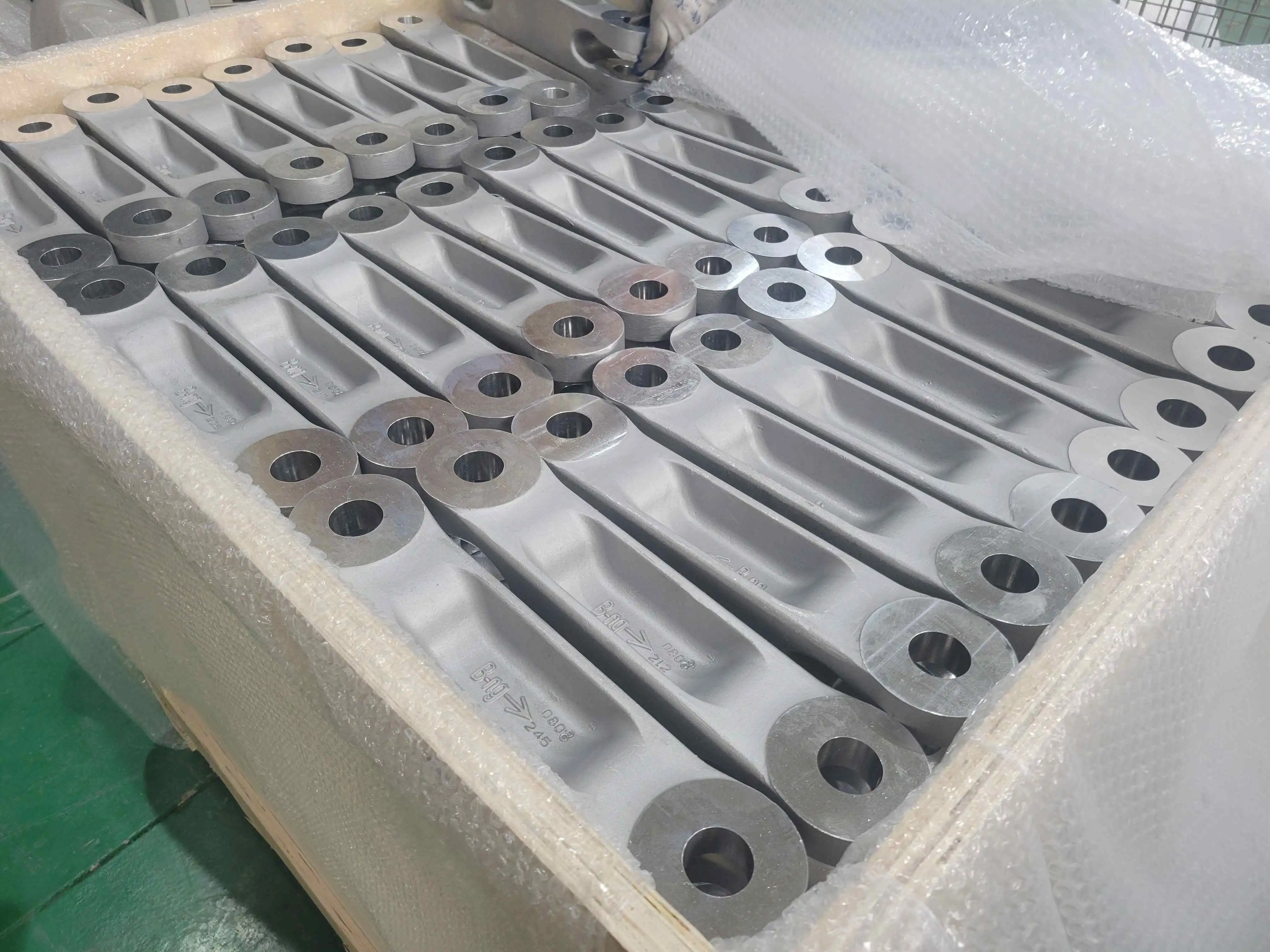
Mastering the Fundamentals of Metal Casting
Each casting manufacturing method solves four engineering questions: how the cavity is made, how the molten metal is supplied, how quickly it cools, and what happens to it once it hardens. The decisions at each stage dictate whether the product coming out of the foundry is a structural bracket or a refuse bin. When validating a new casting manufacturing supplier, a process engineer verifies the essentials below.
Why shrinkage, draft and gating drive pattern design
As the molten metal cools from pouring temperature to room temperature, then again during solidification as the crystal structure of the material changes. Aluminum alloys shrink from the liquid to the solid state around 1.3 percent in volume and another 0.5 percent from solid to room temperature, so a sand pattern is formed from 1 to 1.5 percent bigger than the completed dimension. Each vertical face of the pattern is given a draft angle of from 1 to 3 degrees so that the mold may be stripped without spalling the cavity wall. The gating system is used to convey the molten metal into the cavity and feed the liquid metal into the shrinkage during the solidification. Get any of them incorrect and the casting production process will yield a part with shrinkage porosity, misruns or cold shuts.
Alloy chemistry and the A356 family of aluminum
The most used alloys in the aluminum casting production are from the A356 family with the specifications ASTM B26/B26M for sand castings, ASTM B108/B108M for permanent mold castings and ASTM B85/B85M for pressure die castings. A356.0 chemistry is kept at silicon 6.5 to 7.5 percent, magnesium 0.25 to 0.45 percent, iron 0.20 max, copper 0.20 max, manganese 0.10 max, zinc 0.10 max and titanium 0.20 max. The temper is designated A356-T6 after solution treatment near 540 °C, water quench and artificial aging near 155 °C. The casting manufacture must provide a separately cast test bar with tensile of at least 234 MPa, yield of at least 165 MPa and elongation of at least 3.5 percent. Normal production is around 262 MPa tensile, 186 MPa yield and 5-8% elongation, with a Brinell hardness of 75-80.
Diverse Casting Methods for Every Application
Casting manufacturing is divided into two practical families. Expendable mold techniques create a fresh cavity with each pour, and accept that expense as the price of geometric flexibility or a difficult alloy. In permanent-mold methods, a metal die is used which will operate for thousands or millions of cycles, amortizing the die cost during a manufacturing run. A customer who views the casting production process as one rather than two will often choose the incorrect supplier.
Expendable mould processes and the ASTM standards that govern them
Sand casting is the most common disposable method. A sand mold is fused silica created around a reusable pattern , torn apart after the pour , and reassembled for the next phase . ASTM B26/B26M-18 covers aluminum alloy sand castings bought to a chemical and minimum mechanical property envelope. Includes the separate cast test bar technique. Lost wax method, or investment casting, forms a one piece ceramic shell around a wax design, melted away before the pour. ASTM A732/A732M-20 Specification for Carbon and Low-Alloy Steel Investment Castings and Cobalt Alloys for High Strength at Elevated Temperatures ASTM A985/A985M-21 Specification for General Requirements for Steel Investment Castings for Pressure-Containing Parts Investment casting is the winner when surface polish, dimensional precision and internal passageways are more important than piece cost and the loser where volume surpasses a break even barrier.
|
Process family |
Governing ASTM |
Typical part weight |
Annual volume sweet spot |
|
Sand casting |
B26/B26M-18 (aluminum) |
0.5 to 500 kg |
50 to 5,000 pieces |
|
Investment casting |
A732/A732M-20, A985/A985M-21 (steel) |
0.05 to 50 kg |
100 to 50,000 pieces |
|
Permanent mold casting |
B108/B108M-19 (aluminum) |
0.5 to 80 kg |
1,000 to 100,000 pieces |
|
Pressure die casting |
B85/B85M-18 (aluminum) |
0.02 to 15 kg |
10,000 to 1,000,000 pieces |
The buyer facing the casting manufacturing process choice should weigh four practical questions:
- What is the heaviest and thinnest section the part carries?
- What is the annual volume, and over how many years does that volume run?
- Which alloy is the design locked to, and which ASTM standard governs it?
- Is the part pressure tight, and does the casting manufacturing process have to pass a leak test?
Permanent mould processes and where each one stops being right
Permanent mold casting manufacturing process pours molten aluminum into a reusable steel or iron die at atmospheric or low pressure . It yields a denser product with higher mechanical qualities than a sand casting of the same alloy . ASTM B108/B108M-19 covers the aluminum alloy grades, the property envelopes and the test bar shape for permanent mold castings. Pressure die casting is a process in which molten aluminum is forced into a steel die at high velocity and high pressure to produce thin walled, high volume products such as motor housings. ASTM B85/B85M-18 covers aluminum alloy pressure die castings. It includes the chemical and physical limitations that should be used as a reference by the purchaser. The honest limit for pressure die casting is that the die cost is too expensive for short runs, thus, the casting manufacturing technique is not the right option for low yearly volume. Permanent mold casting can not retain the tight tolerance a product machined from solid bar can keep. Below roughly 0.8 mm wall thickness it ceases being the proper option.
Ensuring Quality and Compliance in Manufacturing
Permanent mold casting is the process of pouring molten aluminum into a reusable steel or iron die under atmospheric or low pressure. It creates a denser product with superior mechanical properties compared to a sand casting of the same alloy. ASTM B108/B108M-19 specifies the aluminum alloy grades, property envelopes and test bar form for permanent mold castings. Pressure die casting is a high velocity and high pressure method of forcing molten aluminum into a steel die to make thin walled, high volume goods like motor housings. ASTM B85/B85M-18 Aluminum Alloy Pressure Die Castings. It contains the chemical and physical restrictions that should be used as a reference by the purchaser. The honest drawback of pressure die casting is the high die cost for short runs. Thus, the casting production method is not the correct choice for low annual volume. Permanent mold casting cannot provide the precise tolerance that a product machined from solid bar can. About 0.8 mm wall thickness and below it ceases to be the correct choice.
Conclusion
Casting manufacturing process is a category, not a single technology, and the proper one for a particular item is determined by the controlling ASTM standard, the alloy, the yearly volume and the tolerance the assembly really requires. Sand casting (ASTM B26/B26M), permanent mold casting (ASTM B108/B108M), pressure die casting (ASTM B85/B85M), and investment casting (ASTM A732/A732M or A985/A985M) each have a specified envelope and each ceases to be the correct solution at a certain break even point. Aluminum at 2.68 g/cm3 vs. steel at 7.85 g/cm3 implies an aluminum part is around 66 percent lighter than the same volume in steel. That’s why a supplier quoting A356-T6 is correct for a weight essential housing, and inaccurate for a continuous immersion part with no coating. The procurement engineer that understands the casting production process in its genuine families, standards and break even lines is the one who finds a supplier that provides parts instead of excuses.
FAQ
1. How does ISO 8062-3 affect what I get from a casting manufacturing process supplier?
ISO 8062-3:2023 sets the general dimensional and geometrical tolerance grades and the machining allowance grades that a foundry can quote against. A drawing that does not call out a tolerance grade gives the supplier permission to ship to the coarsest ISO 8062-3 band, almost always looser than the assembly needs. Always name a tolerance grade on the print.
2. What is the real difference between A356-T6 in sand and A356-T6 in a permanent mold?
Both tempers use the same A356.0 chemistry and the same T6 heat treatment sequence, but the separately cast test bar values differ because the cooling rate differs. ASTM B26/B26M sets the minimum tensile at 234 MPa for a sand test bar, while ASTM B108/B108M sets tighter envelopes for permanent mold test bars cooled faster in a steel die. The foundry cannot deliver the permanent mold number on a sand casting.
3. When is a casting manufacturing process the wrong answer for my part?
A casting is the wrong answer when the load case requires wrought directional properties that solidified metal cannot supply, when the annual volume is below the break even point of the chosen process, when the thinnest wall is below about 0.8 mm for a permanent mold or about 1.5 mm for a sand casting, or when the service environment calls for a wrought product specification the foundry cannot certify.
4. Why density is the first number to compare across alloys
Density sets the weight of every part made from the alloy. Aluminum at 2.68 g/cm3 against carbon steel at 7.85 g/cm3 or 316L stainless at 8.0 g/cm3 means a 3.6 kg stainless component becomes roughly 1.2 kg in aluminum, a 2.4 kg saving that justifies the casting manufacturing process cost in weight critical applications.
5. What should I ask a casting manufacturing process supplier before signing the PO?
Ask for the governing ASTM or ISO specification they will ship against, the separately cast test bar values they will guarantee, the ISO 8062-3 tolerance grade they will hold, and the nondestructive testing method and acceptance criteria. A supplier that answers with document numbers is qualified; one that answers with adjectives is not.
Casting Supplier: Rongbao Enterprise
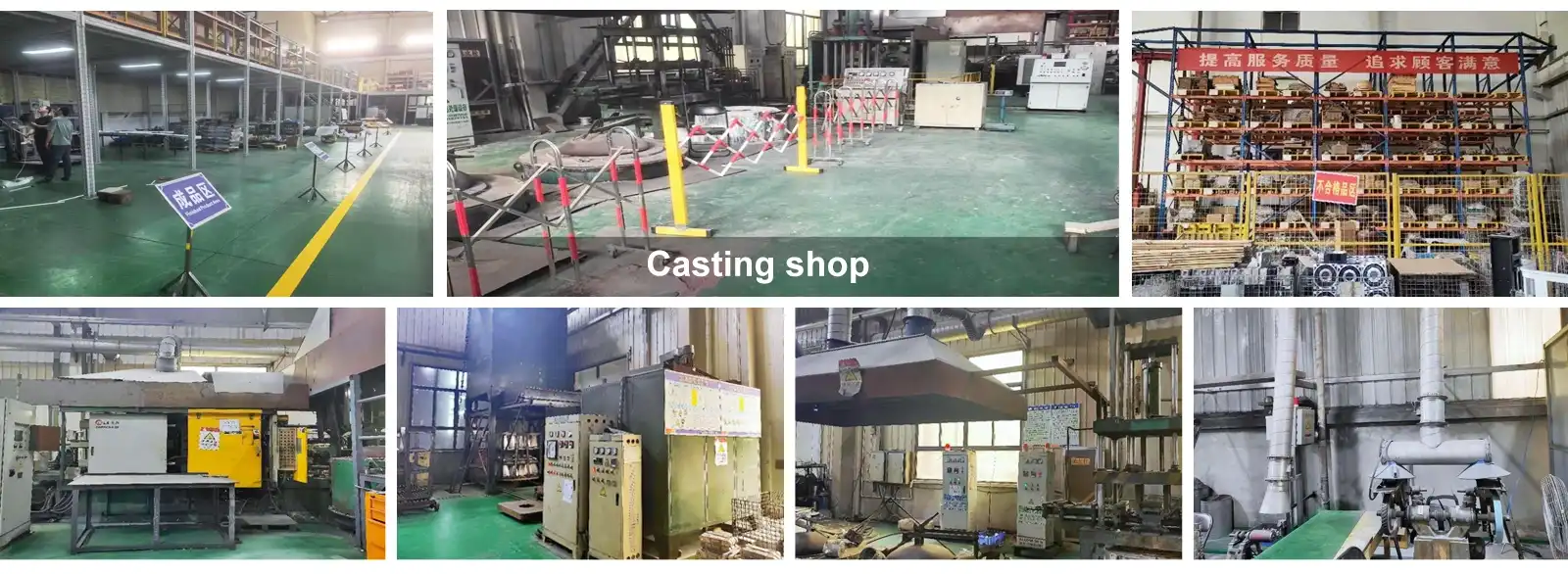
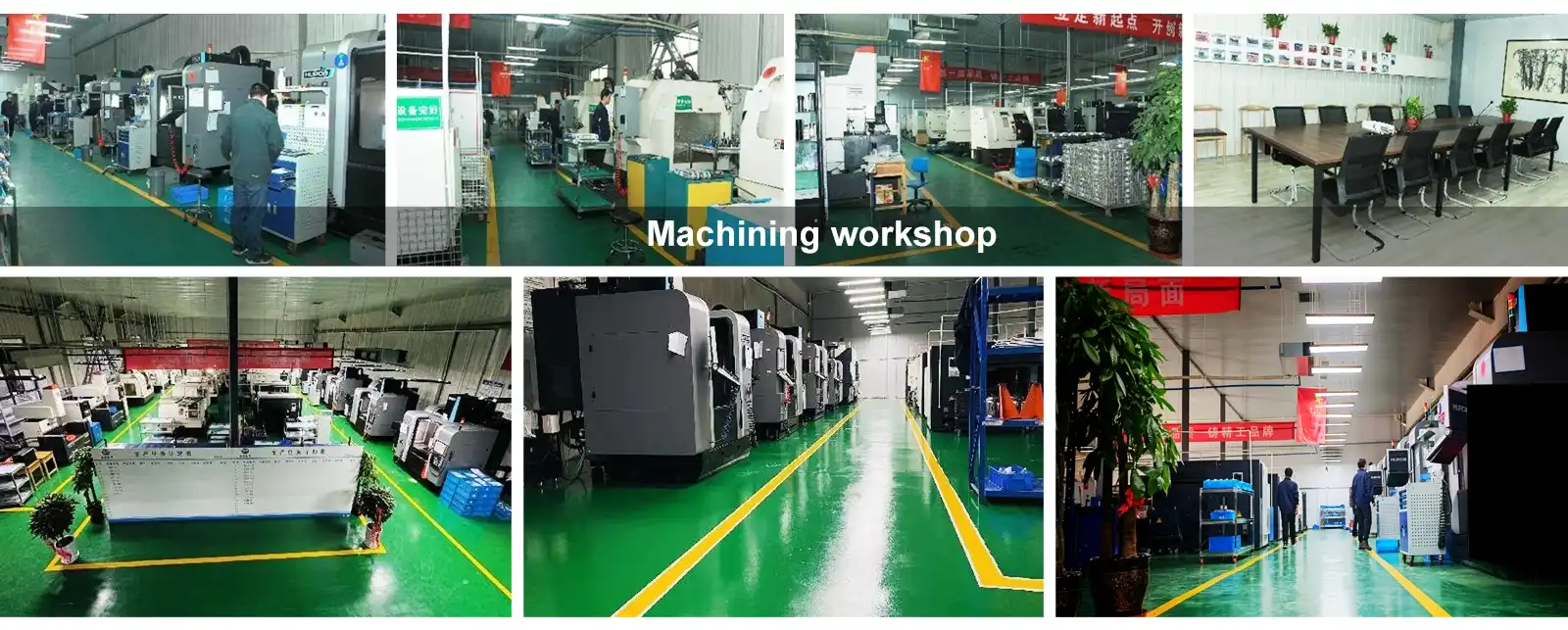
Selecting the right casting manufacturing process supplier is a strategic decision, and Rongbao Enterprise has run a single foundry in Xi'an since 2003 serving buyers in industrial machinery, electrical appliances, instruments, communication, automotive, marine, fire extinguishing, security and medical rehabilitation. About 70 percent of output is exported to the United States, Europe and Japan. Our facility on Fengwu East Road in Fengjing Industrial Park covers more than 6,000 square meters and holds ISO 9001:2015, ISO 14001 and ISO 45001, with PPM defect rate below 50. We run high pressure die casting, low pressure die casting, gravity casting, precision CNC machining and shot blasting on one site.
We work to drawing or 3D model plus annual volume plus service environment, and return a manufacturability review, a material and process recommendation, and a written quotation. Email zhouyi@rongbaocasting.com with your drawing and your annual volume.
References
1. ASTM International. ASTM B26/B26M-18, Standard Specification for Aluminum Alloy Sand Castings. ASTM International, 2018.
2. ASTM International. ASTM B108/B108M-19, Standard Specification for Aluminum Alloy Permanent Mold Castings.
3. ASTM International. ASTM B85/B85M-18, Standard Specification for Aluminum Alloy Die Castings. ASTM International, 2018.
4. ASTM International. ASTM A732/A732M-20, Standard Specification for Castings, Investment, Carbon and Low Alloy Steel for General Application, and Cobalt Alloy for High Strength at Elevated Temperatures. ASTM International, 2020.
5. Campbell, John. Complete Casting Handbook: Metal Casting Processes, Metallurgy, Techniques and Design. Butterworth Heinemann, 2015. ISBN 978-0-444-63509-9
6. ASM International. ASM Handbook, Volume 15: Casting. ASM International, 2008. ISBN 978-0-87170-711-6
Learn about our latest products and discounts through SMS or email