- English
- French
- German
- Portuguese
- Spanish
- Russian
- Japanese
- Korean
- Arabic
- Greek
- German
- Turkish
- Italian
- Danish
- Romanian
- Indonesian
- Czech
- Afrikaans
- Swedish
- Polish
- Basque
- Catalan
- Esperanto
- Hindi
- Lao
- Albanian
- Amharic
- Armenian
- Azerbaijani
- Belarusian
- Bengali
- Bosnian
- Bulgarian
- Cebuano
- Chichewa
- Corsican
- Croatian
- Dutch
- Estonian
- Filipino
- Finnish
- Frisian
- Galician
- Georgian
- Gujarati
- Haitian
- Hausa
- Hawaiian
- Hebrew
- Hmong
- Hungarian
- Icelandic
- Igbo
- Javanese
- Kannada
- Kazakh
- Khmer
- Kurdish
- Kyrgyz
- Latin
- Latvian
- Lithuanian
- Luxembou..
- Macedonian
- Malagasy
- Malay
- Malayalam
- Maltese
- Maori
- Marathi
- Mongolian
- Burmese
- Nepali
- Norwegian
- Pashto
- Persian
- Punjabi
- Serbian
- Sesotho
- Sinhala
- Slovak
- Slovenian
- Somali
- Samoan
- Scots Gaelic
- Shona
- Sindhi
- Sundanese
- Swahili
- Tajik
- Tamil
- Telugu
- Thai
- Ukrainian
- Urdu
- Uzbek
- Vietnamese
- Welsh
- Xhosa
- Yiddish
- Yoruba
- Zulu
Investment Casting for the Aerospace Industry: Precision Engineering at High Altitudes
Investment casting supplies the geometric complexity and alloy range aerospace engineers need for components that run from the minus 55 °C upper troposphere to the 950 °C gas path of a modern high bypass turbofan. The process wraps a ceramic shell around a disposable wax pattern and reproduces features such as internal cooling passages in a single near net shape operation. Buy to fly ratios on titanium and nickel superalloy parts fall from roughly 8 to 1 to between 1.5 and 2.5 to 1 once a part moves to investment casting.
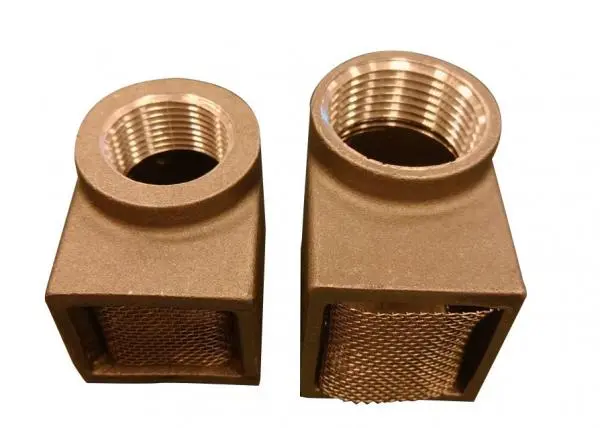
Why Do Aerospace Engineers Rely on Investment Casting?
Aerospace design engineers adopt investment casting because three hard constraints intersect on a drawing review: a geometry no cutter can reach, an alloy that resists machining, and a part count that has to be amortised across a fleet.
Geometric freedom that machining cannot match
Investment casting reproduces features that a milling cutter or EDM electrode cannot reach. Internal cooling passages inside a turbine blade, trailing edges below 1 mm and integrated mount bosses all sit inside the ceramic shell and arrive in the as cast part. Machining these features either forces a multi piece assembly with fasteners, or it forces a programmer to accept 30 to 60 percent machining time as set up and air cuts.
Buy to fly ratios and material economy
The buy to fly ratio is the kilogram of bar stock that goes in divided by the kilogram of finished part that comes out. For a milled titanium bracket this number often sits between 6 to 1 and 10 to 1 because the cutter has to clear envelopes around every feature. Casting places metal only where the part needs metal.
Reproducibility from a single master die
Investment casting uses a permanent die to inject wax patterns, and that die lives for the life of the program. Every wax pattern pulled from the same die carries the same geometry to within roughly 0.05 mm on critical features. A fleet of cast parts stays within drawing tolerances across thousands of pieces. Reproducibility is the reason the process underpins volume production of single crystal nickel superalloy turbine blades.
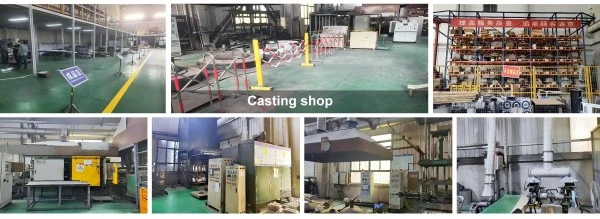
Advanced Materials Utilized in Aerospace Casting
The alloy family chosen for an aerospace part is set by service temperature, stress state and corrosion exposure, and investment casting accepts all three families aerospace actually flies. The middle section names the alloys, the governing specification for each, and the heat treatment that locks the microstructure in place.
Nickel superalloys such as Inconel 718 for hot section parts governed by SAE AMS5383F.
Titanium alloys such as Ti 6Al 4V for hot structure and corrosion resistant brackets.
Aluminum alloys such as A356.0 for airframe and bracket work close to ambient service.
Nickel superalloys for the hot section
Hot section parts run at temperatures where aluminium would soften and most stainless grades would scale. The casting route is dominated by nickel superalloys such as Inconel 718, which SAE AMS5383F specifies as 52.5Ni, 19Cr, 3.0Mo, 5.1Cb, 0.90Ti, 0.60Al and 18Fe, vacuum melted. The heat treatment is exact: homogenize at 1,093 plus or minus 14 °C for 1 to 2 hours, solution treat at 954 to 982 °C for at least 1 hour, precipitation treat at 718 plus or minus 8 °C for 8 hours, furnace cool to 621 plus or minus 8 °C at 55 plus or minus 8 °C per hour, hold 8 hours, air cool.
Titanium for hot structure and corrosion resistance
Ti 6Al 4V and Ti 6Al 4V ELI are investment cast for fire walls, structural brackets near engines, and landing gear components where the strength to weight ratio and corrosion resistance justify the input cost. Titanium is reactive when molten and burns in air, so the casting route runs under vacuum. The result is a one piece titanium component with buy to fly around 2 to 1.
Aluminum castings for airframe and bracket work
Aluminum investment castings carry the airframe and bracket work behind the hot section. A356.0 and A357.0 type AlSi7Mg alloys are cast into thin walled housings, electronic enclosures, antenna brackets and landing gear door fittings where service temperature stays close to room temperature. Mechanical properties follow the T6 logic: solution treat near 540 °C, quench, then artificially age near 155 °C to develop tensile strength on the order of 262 MPa with elongation in the 5 to 8 percent range. Above roughly 200 °C the alloy begins to overage.
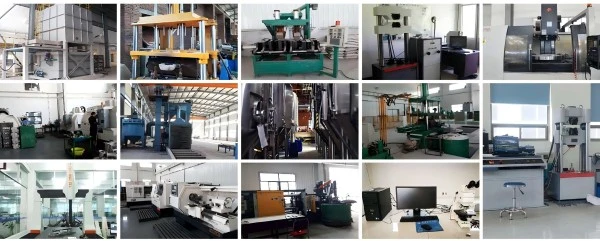
Ensuring Safety and Precision in Every Component
Geometry and alloy are only half of what makes a flight worthy part. The other half is the inspection regime that decides whether an aerospace casting is accepted, reworked or scrapped, and that regime runs on named specifications rather than on a supplier promise.
Buying to a class, not a promise
Aerospace castings are bought against an inspection class. SAE AMS2175B classifies castings and sets the nondestructive testing method, the sampling frequency and the acceptance criteria by class. The same standard sets whether the casting is inspected by radiography, by liquid penetrant, by both, or by magnetic particle. A buyer who specifies a class on the drawing tells the foundry exactly which test method to run and how often to sample, the difference between a foundry claim and a flight worthy investment casting.
| Inspection method | What it detects | Governing standard | Where it is used |
|---|---|---|---|
| Liquid penetrant | Surface breaking defects: cracks, laps, cold shuts, surface connected porosity | ASTM E165, ASTM E1417 | Final surface check on every part |
| Radiographic | Internal porosity, shrinkage cavities, foreign inclusions | ASTM E1742 | Internal soundness on flight critical parts |
| Magnetic particle | Surface and near surface defects on ferromagnetic alloys | ASTM E709 | Carbon and low alloy steel castings |
| Dimensional | Geometry against drawing, machining allowance grade | ISO 8062 part 3 | Coordinate measuring machine verification |
Liquid penetrant for surface defects, radiography for internal soundness
The two dominant nondestructive methods on aerospace investment castings answer different questions and both have to pass before a part flies. Liquid penetrant testing under ASTM E165 and ASTM E1417 only sees defects that break the surface: cracks, laps and surface connected porosity. Radiographic examination under ASTM E1742 sees internal porosity, shrinkage cavities and foreign inclusions that liquid penetrant cannot reach. Radiography is read against a reference picture set such as ASTM E505 for aluminum and magnesium castings.
Dimensional control and traceability
Dimensional control on aerospace investment castings is set against the general tolerance and machining allowance grades in ISO 8062 part 3, with critical features tightened on the drawing. Coordinate measuring machines verify the geometry against the part serial number, and the wax pattern, the ceramic shell build record, the melt sheet, the heat treatment chart and the inspection record are filed against the same serial number. If a fleet operator raises a question on an investment casting, the foundry can pull the full chain of documents back to the heat of metal.
Conclusion
Investment casting is the engineering answer to a specific problem: an aerospace component that combines a geometry no cutter can reach with an alloy no other process can shape. The named specifications (SAE AMS5383F, SAE AMS2175B, ASTM E1742, ASTM E165) and the named materials (titanium and nickel superalloys for hot structure, aluminum castings for airframe and bracket work) turn the process into a flight worthy route. The honest limit is mechanical: a part that needs wrought grain flow in one direction is the wrong fit for investment casting and the right fit for a forging. Where the geometry and the alloy line up with the process, investment casting is the most efficient route available.
FAQs
At what buy to fly ratio does investment casting beat machining for a titanium aerospace bracket?
A buy to fly ratio above roughly 5 to 1 on a titanium aerospace bracket is where machining starts to lose its economic case. Investment cast titanium brackets typically run between 1.5 to 1 and 3 to 1. Once the bracket is small and simple enough that machining holds the tolerance without scrapping more than about 60 percent of the input billet, machining becomes the more efficient route.
How is an aerospace casting inspection class chosen under SAE AMS2175B?
SAE AMS2175B classifies castings by the consequence of failure and sets the nondestructive testing method, the sampling frequency and the acceptance criteria for each class. A buyer assigns a class on the drawing, which decides whether the part is inspected by radiography, by liquid penetrant, by magnetic particle or by a combination. The class also sets the sampling rate, so a low risk bracket may be sampled on a statistical basis while a flight critical blade is inspected at 100 percent.
What heat treatment is specified for Inconel 718 investment castings to SAE AMS5383F?
SAE AMS5383F specifies a three stage heat treatment for Inconel 718 castings. Homogenize at 1,093 plus or minus 14 °C for 1 to 2 hours, solution treat at 954 to 982 °C for at least 1 hour, then precipitation treat at 718 plus or minus 8 °C for 8 hours, furnace cool to 621 plus or minus 8 °C at 55 plus or minus 8 °C per hour, hold 8 hours and air cool.
When is investment casting the wrong choice compared with forging or machining?
Investment casting is the wrong choice when the load case demands a directional grain flow that only a forging can provide, or when the tolerance band is tighter than the ceramic shell can hold without secondary machining. The process is also the wrong choice for a single piece development run where the wax tooling cost cannot be amortised across a fleet. In those cases a forging or a machining from solid billet operation is the better engineering answer.
What is the operating temperature ceiling for aluminum investment castings on an aerospace airframe?
A356.0 aluminum castings begin to overage above roughly 200 °C, which sets the practical ceiling for the alloy on an airframe. Above that temperature the T6 temper starts to lose strength and the part begins to creep. Hot section components facing gas path temperatures above 600 °C move to nickel superalloy castings such as Inconel 718 to SAE AMS5383F.
Investment Casting Supplier: Rongbao Enterprise
Rongbao Enterprise is a Chinese casting and precision machining supplier founded in 2003 and operating from a 6,000 square meter facility on Fengwu East Road in the Fengjing Industrial Park of Xi'an. Processes cover high pressure die casting, low pressure die casting, gravity casting and precision CNC machining. Certifications in force are ISO 9001:2015, ISO 14001 and ISO 45001, and about 70 percent of output is exported to the United States, Europe and Japan.
For buyers looking at cast aluminum, stainless or low alloy steel components, send us your 3D model or drawing, your annual volume in pieces, and the service environment in terms of temperature, load and corrosion exposure. In return we will run a manufacturability review on the geometry, recommend a material and process route against the named specification on your drawing, and return a quotation. Email zhouyi@rongbaocasting.com or steve.zhou@263.net with your drawing and your annual volume.
References
SAE International. SAE AMS2175B, Castings, Classification and Inspection of. SAE International, 2024.
SAE International. SAE AMS5383F, Nickel Alloy, Corrosion and Heat Resistant, Investment Castings, 52.5Ni 19Cr 3.0Mo 5.1Cb 0.90Ti 0.60Al 18Fe, Vacuum Melted, Homogenization and Solution Heat Treated. SAE International, 2018.
ASTM International. ASTM A732/A732M-20, Standard Specification for Castings, Investment, Carbon and Low Alloy Steel for General Application, and Cobalt Alloy for High Strength at Elevated Temperatures. ASTM International, 2020.
ASTM International. ASTM E1742/E1742M-18, Standard Practice for Radiographic Examination. ASTM International, 2018.
Lütjering, Gerd, and James C. Williams. Titanium. Springer, 2007. ISBN 978-3-540-71397-5
Donachie, Matthew J., and Stephen J. Donachie. Superalloys: A Technical Guide. ASM International, 2002. ISBN 978-0-87170-749-9
Learn about our latest products and discounts through SMS or email