- English
- French
- German
- Portuguese
- Spanish
- Russian
- Japanese
- Korean
- Arabic
- Greek
- German
- Turkish
- Italian
- Danish
- Romanian
- Indonesian
- Czech
- Afrikaans
- Swedish
- Polish
- Basque
- Catalan
- Esperanto
- Hindi
- Lao
- Albanian
- Amharic
- Armenian
- Azerbaijani
- Belarusian
- Bengali
- Bosnian
- Bulgarian
- Cebuano
- Chichewa
- Corsican
- Croatian
- Dutch
- Estonian
- Filipino
- Finnish
- Frisian
- Galician
- Georgian
- Gujarati
- Haitian
- Hausa
- Hawaiian
- Hebrew
- Hmong
- Hungarian
- Icelandic
- Igbo
- Javanese
- Kannada
- Kazakh
- Khmer
- Kurdish
- Kyrgyz
- Latin
- Latvian
- Lithuanian
- Luxembou..
- Macedonian
- Malagasy
- Malay
- Malayalam
- Maltese
- Maori
- Marathi
- Mongolian
- Burmese
- Nepali
- Norwegian
- Pashto
- Persian
- Punjabi
- Serbian
- Sesotho
- Sinhala
- Slovak
- Slovenian
- Somali
- Samoan
- Scots Gaelic
- Shona
- Sindhi
- Sundanese
- Swahili
- Tajik
- Tamil
- Telugu
- Thai
- Ukrainian
- Urdu
- Uzbek
- Vietnamese
- Welsh
- Xhosa
- Yiddish
- Yoruba
- Zulu
Casting Connecting Frame for the Industrial Robot Arm Market
Industrial robots are standard in modern industry, especially in the automotive, electronics, metal processing, logistics and general industrial production. As robots become more widely adopted, manufacturers are paying more attention to the mechanical components which determine the stiffness of the arm, its weight, dimensional accuracy and long-term operating stability. These include the casting connecting frame. The casting connecting frame is one of the main structural components for connecting and supporting elements of an articulated robot arm. The demand for such items is directly proportional to the overall rise of industrial automation. Factories throughout the world installed more than 603,000 new industrial robots in 2025, bringing the global operational stock to over 5 million units, the International Federation of Robotics (IFR) reported. Asia was the largest regional market with China continuing to hold the largest share of annual installations. But the growth in the robot business does not entail that there is an independently identifiable multi-billion dollar market for connecting frames. The frame can usefully be seen as a specific component in the supply chain of industrial robots. The demand for it is dictated by the robot design, the payload, the arm geometry, the production volume, the material selection and the manufacturing strategy of each robot manufacturer. This difference is critical to component buyers. Procurement teams need to look beyond generic robotics market estimations and see if a casting supplier can consistently provide the desired shape, mechanical attributes, machining precision, inspection results and delivery performance.
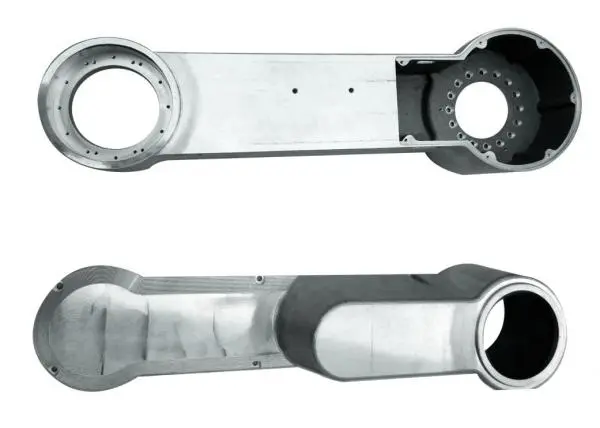
Why Connecting Frames Matters in Industrial Robot Construction?
In order to carry the necessary payload and maintain its preprogrammed position, an articulated robot arm must move regularly. Therefore, structural elements must be able to sustain dynamic loads without increasing mass. In addition to mounting surfaces, bearing seats, cable-routing features, ribs, bosses, and other integrated components, a connecting frame usually serves as a rigid connection between the arm's primary components.
Numerous aspects of the robot's performance are impacted by the frame design. The load that motors and gearbox systems must bear is increased by excessive weight. Vibration or positional instability can result from insufficient rigidity, especially while accelerating and decelerating quickly. Alignment issues during assembly may also result from inadequate dimensional control at mounting interfaces.
For these reasons, when a frame has a somewhat complex three-dimensional design, casting may be preferred. Casting can produce a large portion of the necessary geometry close to the final form rather than machining the complete component from a solid block. Then, key interfaces like mounting holes, bearing locations, reference surfaces, and other functional areas can be the focus of machining.
This method lets designers add ribs and other structural elements to the initial casting design while cutting down on material waste and machining time.
Market Demand Follows the Expansion of Industrial Automation
The primary market for structural robot components is the industrial robotics sector. According to IFR, 542,000 industrial robots were installed globally in 2024, with 74% of new deployments occurring in Asia. In that year, 54% of all installations worldwide were located in China.
According to the most recent data, the trend persisted until 2025. Over 354,000 industrial robots have been placed in China, making up about 59% of all deployments worldwide. With more than 38,500 installations in 2025, the US also had a significant increase.
These numbers show that the market for robot parts is substantial and varied. But not every application needs a frame in the same manner.
Rigidity, repeatability, and outstanding production-cycle longevity may be priorities for automotive robots. Dimensional uniformity and minimum moving mass may be more important in electronic applications. Different combinations of payload capacity, cycle speed, and structural strength may be needed for logistics robots. Compact design and weight reduction are frequently given top priority in collaborative robots.
Therefore, rather than merely providing a conventional cast component, a supplier of a casting connecting frame must comprehend the application.
Automotive and Electric Vehicle Production
One of the most significant applications for industrial robots is still the automotive industry. Automation is widely used in the industrial processes of welding, painting, material handling, assembling, and batteries.
Robot components may be subjected to severe acceleration patterns and high cycle counts as vehicle manufacturing becomes increasingly automated. As a result, consistent interfaces and dependable mechanical qualities are crucial for joining frames. Repeatability between casting batches is crucial for high-volume procedures because even small dimensional differences can have an impact on downstream assembly.
Electronics and Precision Assembly
Robots are used for pick-and-place, handling, assembling, dispensing, and inspection in the electronics manufacturing industry. Low vibration and precise alignment may be more important in other circumstances.
The first stage in obtaining these qualities for a cast frame is the casting design. The final component is impacted by transition radii, wall thickness, rib arrangement, and machining allowances. To prevent internal flaws that could impair the final product's performance, the casting process must be continuously monitored.
Logistics and General Industrial Automation
Automation is also becoming more prevalent in logistics and warehousing. Different structural configurations may be needed for robots used in palletizing, sorting, material transport, and machine tending than for robots employed in electronics manufacturing.
A lightweight aluminum frame may offer a helpful compromise between moving mass and structural strength in specific situations. But rather than just picking the lightest material available, the right alloy and casting technique should be chosen based on the actual load and design parameters.
Regional Trends Affect Component Sourcing
The supply chain for robot parts is directly impacted by the geographic dispersion of industrial robot installations. Asia remains the most significant location for both production and consumption. According to IFR, 401,665 industrial robot installations—or 74% of all deployments worldwide—took place in Asia in 2024.
China is especially significant. In 2024, there were over two million industrial robots in operation, with 57% of robot installations in the domestic market coming from Chinese firms.
Because of this specialism, Asian casting and machining firms could be strategically significant sources of robot structural components for purchasers. However, when choosing a supplier, considerations other than unit cost and physical closeness should be taken into account. The total procurement risk can be significantly impacted by engineering communication, process expertise, inspection systems, production capacity, and export experience.
North America and Europe continue to be significant automation markets. In contrast to the United States, where industrial robot installations grew by 12% in 2025, Germany has a very robust industrial automation foundation.
Because of this, a supplier catering to these markets ought to be able to produce documentation appropriate for OEM projects overseas using international designs and standards.
Choosing the Right Material for a Casting Connecting Frame
The necessary stiffness, strength, weight, corrosive environment, casting method, machining requirements, and anticipated production volume should all be considered when choosing a material.
Because aluminum alloys combine useful mechanical qualities, high castability, and relatively low density, they are appealing for many robot structural components. Aluminum alloy A356 is one option for products that need to strike a compromise between mechanical performance and castability. The final component's properties are influenced by heat treatment, casting quality, and subsequent machining.
A356 or any other alloy, however, shouldn't be applied universally. The engineering requirements dictate the proper grade. A large, high-payload arm may require a different material strategy than a frame for a small robot.
Another important factor is the casting design. Reducing the size of each wall is not the only approach to achieve lightweight construction. Load routes, local stress concentrations, mounting areas, rib shape, and machining allowances are all factors that designers must take into account. A well-designed casting can maximize structural performance while reducing needless mass in specific locations.
Gravity Casting and Other Manufacturing Options
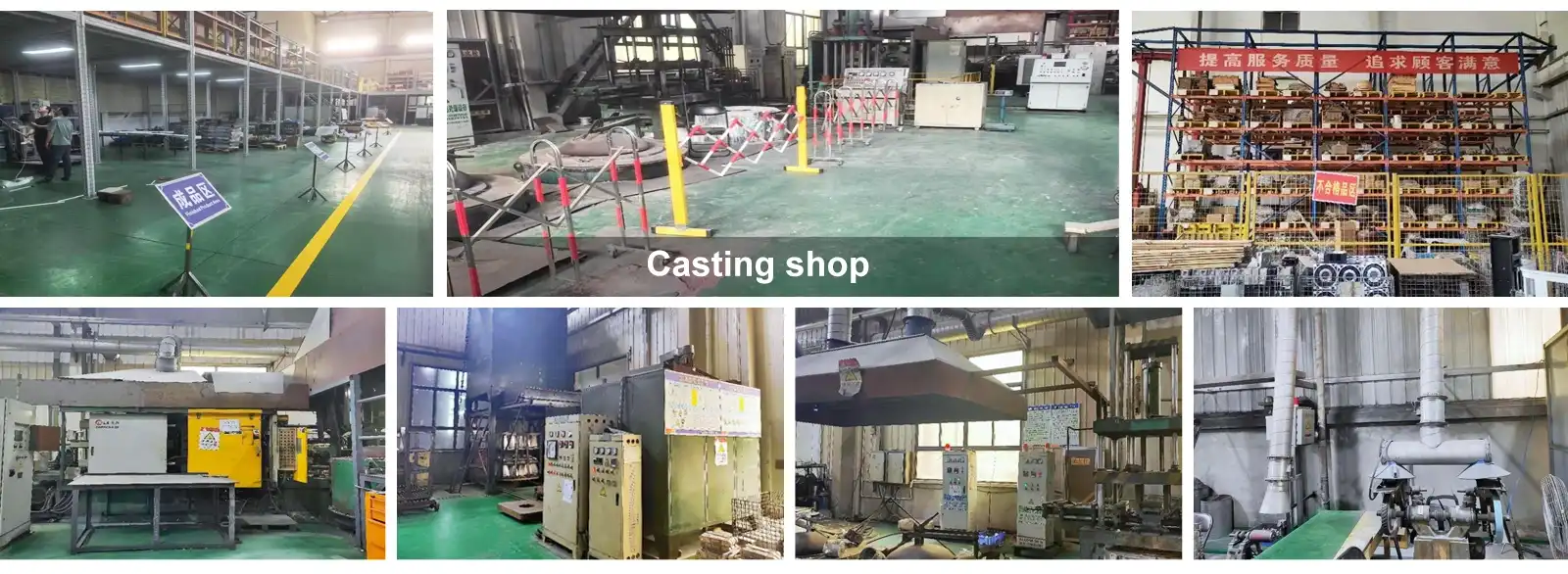
Some aluminium robot frames, including a casting connecting frame, are cast in gravity, as this technique may generate somewhat complicated designs without the costly tooling expenditure of some high-pressure die-casting programs.
Gravity casting provides useful flexibility for prototypes, low-volume production, or parts with exacting structural geometry. The ultimate decision should be based on quantity of production, geometry, surface finish required, dimensional tolerances, alloy, tooling cost and machining needs.
High-pressure die casting may be more attractive for higher-volume operations where the cycle time and repeatability warrant dedicated tooling. For some aluminium parts, low-pressure casting can also be considered where regulated fill and structural quality are crucial.
There is no automatic superiority of any process. The right decision depends on the design of the component and the production goal.
CNC Machining Is Critical After Casting
Typically, the basic geometry is cast, although critical functional interfaces are often CNC machined.
A robot frame can have mounting holes, bores for bearings, threaded holes, locating surfaces, or interfaces for motors and reducers. These features may demand much closer control of the dimensions than the main cast surface.
A viable manufacturing path would therefore involve casting, heat treatment if specified, shot blasting or other surface preparation, CNC machining, deburring, dimensional inspection and final cleaning.
Machining allowances must be incorporated in the casting design. If a vital location does not have enough material remaining, the final dimension necessary cannot be obtained by machining. In contrast, an excessive allowance increases machining time and material removal.
In OEM projects this makes communication between the casting engineer and the machining engineer crucial before finalising production tooling.
Quality Control Should Focus on the Complete Component
A supplier’s quality claim is more effective when it is related to specific inspection actions.
The user of a connecting frame casting may need to check the dimensional inspection, material verification, casting appearance, machining precision and internal casting quality as required by the application.
Critical regions can include bearing seats, mounting faces, bolt-hole designs and references for alignment. Internal or surface discontinuities may require additional inspection procedures depending on the component specification.
The inspection strategy should be established before mass production, not attached after a dimensional problem arises. Process consistency is very critical when making the same part repeatedly. The customer may want hundreds or thousands of parts that all have interfaces that are interchangeable with each other.
This is also where the review of drawings comes in handy. A supplier should be able to identify imprecise tolerances, insufficient machining allowances, difficult-to-cast parts, and other manufacturing problems before tooling is made.
What Buyers Should Check Before Ordering?
The lowest quotation is not usually the least-cost alternative for a robot component. Much higher downstream costs can arise from a casting that requires a lot of rework, offers inconsistent machining results or causes assembly issues.
When looking for a casting connection frame, purchasers should start by providing the 2D sketch and, if possible, a 3D model. The supplier should then confirm the intended material, casting technique, machining route and inspection requirements.
Here are some very useful questions to ask when evaluating suppliers:
- Can the supplier produce the size and weight of the casting required?
- Does the chosen alloy satisfy the stated mechanical requirements?
- Does the supplier have proper CNC machining capabilities for functional interfaces?
- How are casting flaws and dimensional variations controlled?
- Do you keep records of inspection and material documentation available upon request?
- What is the suggested tooling and sample approval process?
- Is the production capacity sufficient for the annual volume required?
- What is the package for overseas shipping?
- These queries will provide you more helpful information than asking a source if he “makes aluminium castings".
Casting Connecting Frame Supplier: Rongbao Enterprise
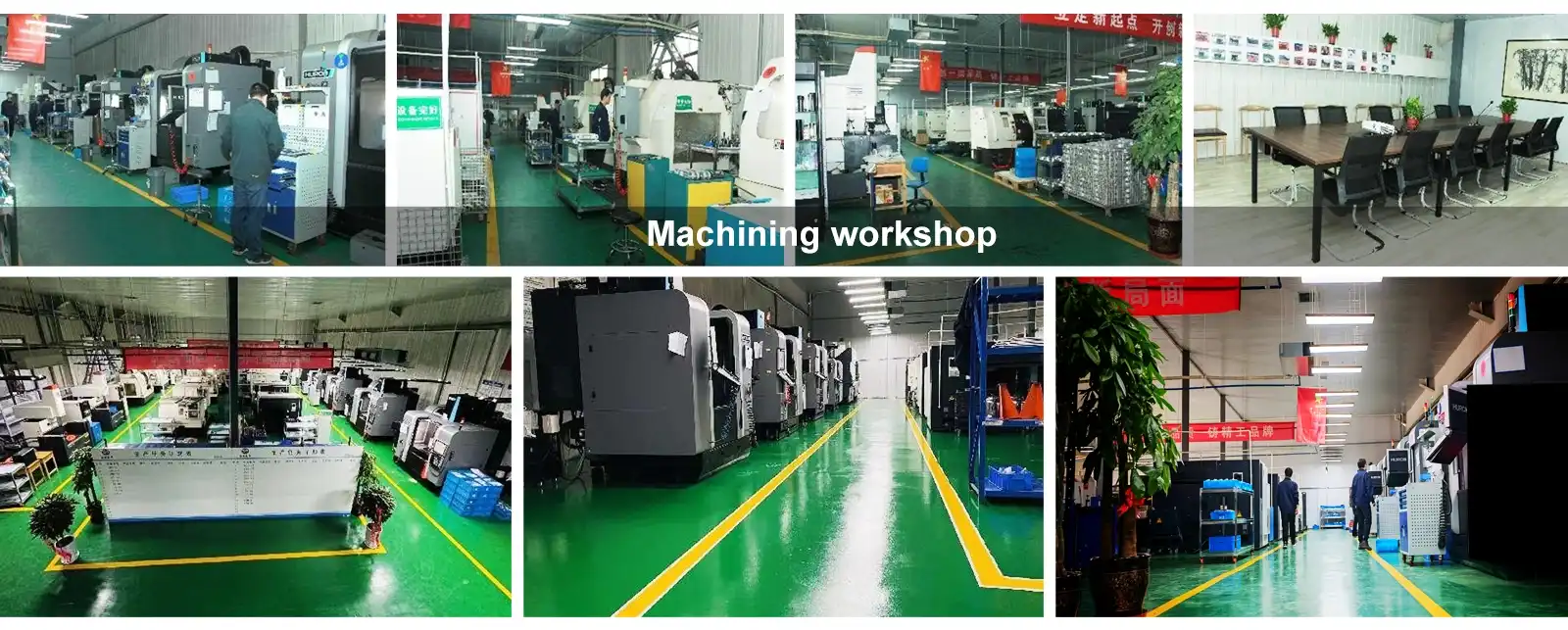
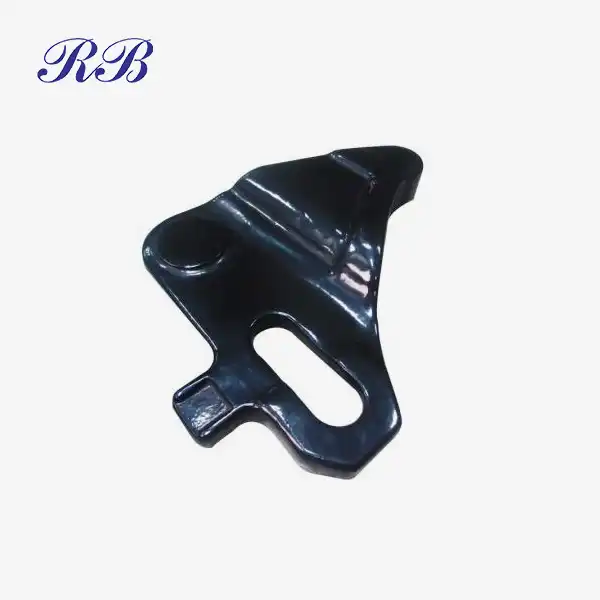
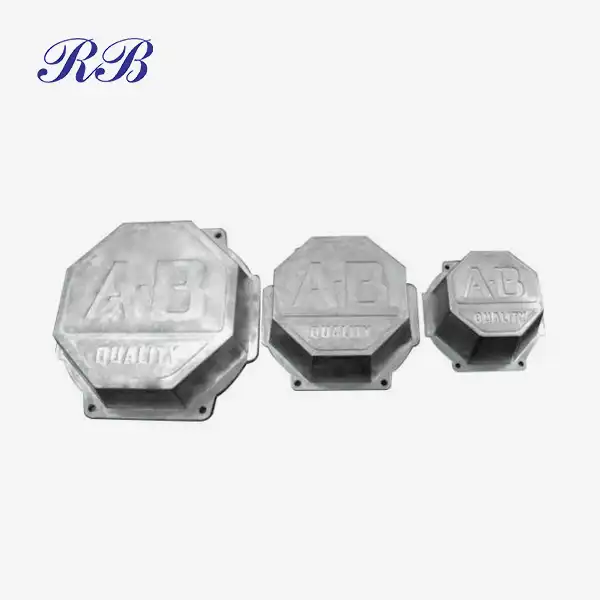
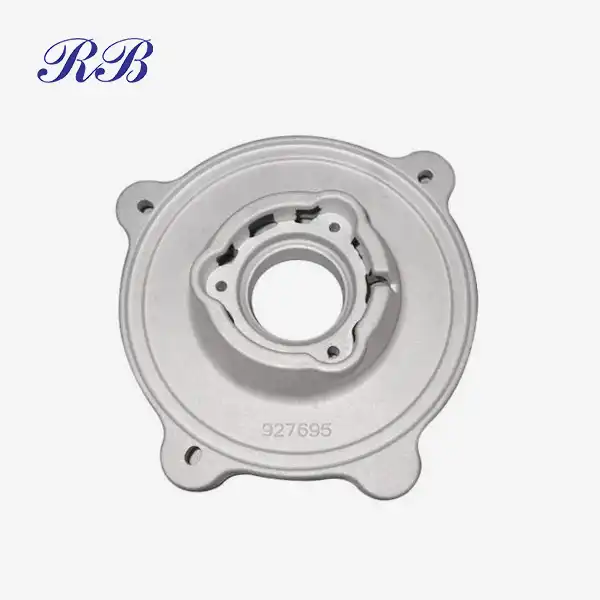
Rongbao Enterprise was founded in 2003, specialising in aluminium alloy casting, casting connecting frame, and precision processing. The company is a provider of casting and machining solutions for specialised industrial components. It also supports OEM/ODM projects based on customer designs and specifications.
It has the capabilities of high-pressure die casting, low-pressure die casting and gravity casting, along with CNC machining. This combination allows the casting process and the subsequent machining operations to be treated as one manufacturing path, rather than as distinct activities.
This is critical for structural components of robots where the cast geometry and the reference surfaces for machining need to cooperate. An appropriate manufacturing process can encapsulate the real load requirements, mounting interfaces, material specification and production volume of the component.
Rongbao’s casting connecting frame is made of A356 aluminium alloy, and the weight of its components is about 9.5 kg. Prior to manufacturing, a customer considering this sort of component should confirm the material specification, final dimensions, tolerances, machining requirements and inspection criteria against the applicable drawing.
Rongbao has an annual manufacturing capacity of about 5,000 pieces and can accommodate bespoke specifications for OEM/ODM. Its certifications of quality management are the ISO 9001:2015, ISO 14001 and ISO 45001. The company also said that 70 per cent of its items were sold to areas such as the United States, Europe and Japan.
Export experience might be advantageous to international buyers, especially when projects entail custom packaging, documentation, shipping co-ordination and repeat production. The component is packed in a wooden box for transit. Rongbao can provide the manufacturing route, including casting and CNC machining.
For the new project, buyers can provide component drawings, 3D models, needed alloy, annual amounts, target delivery schedules, machining needs and inspection parameters to make quotation accuracy better. This allows the provider to examine tooling, casting process, machining processes and manufacturing capacity prior to order confirmation.
Conclusion
The casting connection frame is a rather specialised component, but its engineering needs are strongly related to the wider development of industrial robotics. The global robot installations continue to drive demand for structural components with low weight, appropriate stiffness, consistent dimensions and uniform production quality. The latest IFR data reveals that the use of industrial robots, especially in Asia and China, continues to grow.
The problem for customers is not just finding a source who can make an aluminium casting. The more significant concern is whether the supplier can control the whole manufacturing chain, from casting design and material selection to CNC machining to final inspection. Risk reduction in production can be accomplished through drawing review before tooling, crucial tolerance definition, alloy and casting process confirmation, and designing a proper inspection plan.
Rongbao Enterprise is a specialised aluminium component manufacturer offering gravity casting, die casting, CNC machining and OEM/ODM production. The best way for manufacturers to establish if a suggested casting connecting frame will meet the mechanical, dimensional, production and delivery requirements of the project is to provide detailed technical specifications at the quotation stage for the development or sourcing of the robot arm structure.
To learn more about Rongbao Enterprise’s high-precision casting connecting frame offerings, or to discuss your specific technical requirements, please reach out. Our experts are ready to assist with detailed information and competitive quotes. You may contact us directly via email at steve.zhou@263.net or zhouyi@rongbaocasting.com. Secure your supply chain with a proven leader in specialized aluminum casting.
References
- International Federation of Robotics. (2021). World Robotics 2021 Industrial Robots Report.
- Mordor Intelligence. (2022). Industrial Robot Market - Growth, Trends, COVID-19 Impact, and Forecasts (2022-2027).
- McKinsey & Company. (2020). The future of manufacturing: Robotics and automation.
- Advanced Manufacturing Research Center. (2022). Lightweight Materials in Robotics: Trends and Applications.
- Kalpakjian, S., & Schmid, S. R. (2020). Manufacturing Engineering and Technology (8th ed.). Pearson Education.
Learn about our latest products and discounts through SMS or email