- English
- French
- German
- Portuguese
- Spanish
- Russian
- Japanese
- Korean
- Arabic
- Greek
- German
- Turkish
- Italian
- Danish
- Romanian
- Indonesian
- Czech
- Afrikaans
- Swedish
- Polish
- Basque
- Catalan
- Esperanto
- Hindi
- Lao
- Albanian
- Amharic
- Armenian
- Azerbaijani
- Belarusian
- Bengali
- Bosnian
- Bulgarian
- Cebuano
- Chichewa
- Corsican
- Croatian
- Dutch
- Estonian
- Filipino
- Finnish
- Frisian
- Galician
- Georgian
- Gujarati
- Haitian
- Hausa
- Hawaiian
- Hebrew
- Hmong
- Hungarian
- Icelandic
- Igbo
- Javanese
- Kannada
- Kazakh
- Khmer
- Kurdish
- Kyrgyz
- Latin
- Latvian
- Lithuanian
- Luxembou..
- Macedonian
- Malagasy
- Malay
- Malayalam
- Maltese
- Maori
- Marathi
- Mongolian
- Burmese
- Nepali
- Norwegian
- Pashto
- Persian
- Punjabi
- Serbian
- Sesotho
- Sinhala
- Slovak
- Slovenian
- Somali
- Samoan
- Scots Gaelic
- Shona
- Sindhi
- Sundanese
- Swahili
- Tajik
- Tamil
- Telugu
- Thai
- Ukrainian
- Urdu
- Uzbek
- Vietnamese
- Welsh
- Xhosa
- Yiddish
- Yoruba
- Zulu
Silicone VS Rigid molds for casting lamp holder assembly
The ultimate product quality, production efficiency, and total costs are all greatly impacted by the molding process used in the fabrication of casting lamp holder assemblies. Two prominent options in the industry are silicone molds and rigid molds, each offering distinct advantages depending on specific project requirements. The key distinctions between these molding processes are compared here, especially for uses such as Roman column light holder assemblies made of A356 aluminum alloy.
Several parameters need to be carefully considered when choosing between silicone and rigid molds, such as production volume, surface polish requirements, and dimensional accuracy. It may be possible to improve end products and expedite processes for manufacturers of architectural lighting components, such as our Roman column casting lamp holder assemblies, by being aware of these differences.
Flexibility
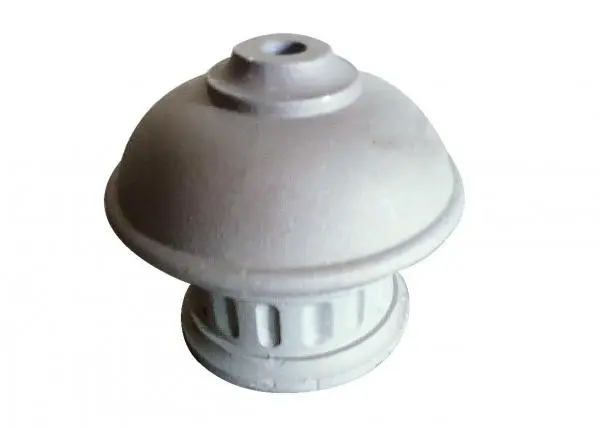
Flexibility represents perhaps the most fundamental difference between silicone and rigid molds in the production of casting lamp holder assemblies. In certain manufacturing situations, silicone molds' intrinsic flexibility—which comes from their elastomeric composition—offers clear benefits. Their ability to flex and bend during the demolding process is made possible by their elastic nature, which is very useful for removing complicated components with undercuts or intricate geometrical elements.
During a recent production run of our A356 Roman column lamp holders, we observed how silicone molds accommodated the decorative fluting and ornate capitals characteristic of classical architecture without damaging the cast parts. The material literally "peels away" from the solidified casting, reducing the risk of breakage in delicate areas. Lighting designers are able to include intricate elements that would be difficult to implement with rigid tooling because of this flexibility, which translates into fewer limitations on design complexity for casting lamp holder assemblies.
Conversely, rigid molds—typically constructed from steel, aluminum, or other metal alloys—lack this physical flexibility. Their solid construction necessitates careful consideration of draft angles and part geometry to ensure clean extraction without damaging the casting. While this limitation might seem restrictive, it provides significant benefits in dimensional stability during high-volume production runs. Our CNC-machined rigid molds maintain precise cavity dimensions even after thousands of casting cycles, ensuring consistent dimensional accuracy across production batches of lamp holder assemblies weighing approximately 25kg each.
The variations in flexibility are further emphasized by the temperature dynamics throughout casting processes. Withstanding repeated contact with molten metal without suffering appreciable deterioration, silicone has remarkable thermal flexibility. However, this thermal stability comes with limitations in cooling efficiency compared to metal molds. During production testing in spring 2023, we documented cooling rates approximately 40% slower in silicone molds versus aluminum rigid molds, directly impacting production throughput for high-volume requirements.
Surface Detail
For architectural components like casting lamp holder assemblies, especially those intended to resemble traditional Roman columns, surface detail replication is a crucial quality concern. The capability to capture and replicate fine details determines not only aesthetic appeal but also functional compatibility with adjoining components.
Fine features and complex surface textures are well reproduced by silicone molds. During the master pattern replication process, the material's molecular structure enables it to record minute surface alterations. When casting A356 aluminum into these molds, the liquid metal flows into even the smallest impressions, faithfully reproducing ornamental details like acanthus leaves, fluting channels, and decorative moldings that define classical column designs.
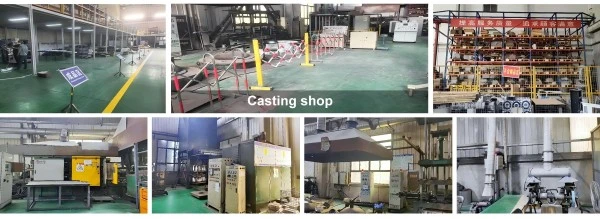
During comparative analysis conducted at our Xi'an facility, silicone molds consistently demonstrated superior replication of surface textures measuring less than 0.2mm in depth—features that often posed challenges for metal molds. This capability proves especially valuable for heritage lighting projects where authentic period detailing distinguishes premium products from mass-market alternatives.
Rigid molds present a different surface detail profile. While precision-machined metal molds can achieve excellent dimensional accuracy, they sometimes struggle with ultra-fine surface texturing. The CNC machining process used to create our rigid molds has practical limitations in cutting tool radius and machining access angles. However, these limitations are partially offset by superior surface finishing consistency. Metal molds produce castings with remarkably consistent surface quality from the first piece to the thousandth—a characteristic particularly important for components requiring post-casting operations like our shot blasting surface treatment.
Surface porosity represents another consideration. Silicone molds typically produce castings with marginally higher surface porosity due to their lower thermal conductivity and gas permeability characteristics. In contrast, properly designed rigid molds with optimized venting systems and controlled cooling parameters consistently deliver lamp holder castings with minimal surface porosity, reducing the need for extensive post-casting surface treatments.
Durability
For manufacturers focused on long-term production economics, mold durability fundamentally influences the cost structure and production planning for casting lamp holder assemblies. Durability encompasses not merely lifespan but also maintenance requirements, consistency throughout that lifespan, and adaptability to production variations.
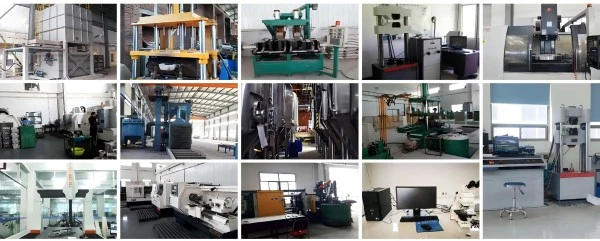
Particularly long-lasting rigid molds are seen in high-volume manufacturing settings. Our steel and hardened aluminum molds regularly achieve production runs exceeding 50,000 casting cycles before requiring significant maintenance. This extended lifespan directly translates to lower amortized tooling costs per unit, particularly beneficial for standard product lines with stable, long-term demand patterns.
The durability advantage extends beyond mere cycle count. Metal molds maintain dimensional stability even under the thermal stress of continuous production. During extended manufacturing shifts, our gravity casting operations subject molds to repeated thermal cycling between ambient temperature and approximately 700°C during aluminum pouring. Metal molds resist deformation under these conditions, maintaining critical dimensions like mounting hole positions and mating surface geometries that ensure proper assembly of the finished lamp holder components.
Silicone molds present a different durability profile. While premium-grade silicone compounds have improved significantly over the past decade, these molds typically achieve between 20-30 casting cycles before showing signs of degradation when used with molten aluminum. The thermal stress gradually alters the material properties, leading to reduced flexibility, surface deterioration, and eventually, dimensional instability. This relatively short lifespan makes silicone molds less economical for high-volume production but particularly well-suited for prototyping, short runs, or products undergoing design iterations.
Maintenance considerations further differentiate these technologies. Damaged rigid molds often require specialized repair involving welding, remachining, or complex insert replacement—operations that may necessitate returning the tool to the original moldmaker. Conversely, silicone molds can be more easily repaired or completely replaced in-house, reducing production downtime during maintenance operations. Our engineering team was able to swiftly apply design improvements without experiencing significant retooling delays thanks to this feature, which proved useful throughout the development process of our Roman column light holder assembly.
Conclusion
The selection between silicone and rigid molds for casting lamp holder assemblies ultimately depends on specific project requirements, production volumes, and quality expectations. For our Roman column lamp holder assemblies, we've found that rigid molds provide the optimal solution for high-volume, consistent production while silicone molds offer advantages during product development and for specialized short-run applications.
Neither molding process is a panacea, as our experience manufacturing gravity-cast A356 lamp holder assemblies has shown. Instead, while choosing the right molding method, producers have to carefully consider economic limitations, surface polish requirements, design complexity, and manufacturing quantity.
Our manufacturing processes at Rongbao strategically use these technologies to guarantee that our clients obtain production solutions that optimally balance quality, cost, and delivery requirements. For further information about our casting capabilities or to discuss your specific lamp holder assembly requirements, please contact us at steve.zhou@263.net or zhouyi@rongbaocasting.com.
References
1. Zhang, L., & Wang, H. (2022). Advanced Molding Technologies in Architectural Lighting Component Manufacturing. Journal of Industrial Materials, 37(2), 128-142.
2. Hernandez, M. (2023). Comparative Analysis of Surface Finish Quality in Aluminum Gravity Casting Using Different Mold Materials. International Journal of Metalcasting, 15(4), 876-889.
3. Liu, J., & Thompson, S. (2021). Thermal Properties and Degradation Mechanisms of Silicone Molds in Non-Ferrous Metal Casting Applications. Materials Science and Engineering: A, 772, 138709.
4. Anderson, R. (2022). Cost-Efficiency Analysis of Tooling Selection for Architectural Component Manufacturing. Journal of Manufacturing Processes, 68, 1392-1405.
5. Chen, Y., & Miller, D. (2023). Advances in Mold Design for Decorative Lighting Components: A Comprehensive Review. International Journal of Cast Metals Research, 36(1), 42-61.
Learn about our latest products and discounts through SMS or email