- English
- French
- German
- Portuguese
- Spanish
- Russian
- Japanese
- Korean
- Arabic
- Greek
- German
- Turkish
- Italian
- Danish
- Romanian
- Indonesian
- Czech
- Afrikaans
- Swedish
- Polish
- Basque
- Catalan
- Esperanto
- Hindi
- Lao
- Albanian
- Amharic
- Armenian
- Azerbaijani
- Belarusian
- Bengali
- Bosnian
- Bulgarian
- Cebuano
- Chichewa
- Corsican
- Croatian
- Dutch
- Estonian
- Filipino
- Finnish
- Frisian
- Galician
- Georgian
- Gujarati
- Haitian
- Hausa
- Hawaiian
- Hebrew
- Hmong
- Hungarian
- Icelandic
- Igbo
- Javanese
- Kannada
- Kazakh
- Khmer
- Kurdish
- Kyrgyz
- Latin
- Latvian
- Lithuanian
- Luxembou..
- Macedonian
- Malagasy
- Malay
- Malayalam
- Maltese
- Maori
- Marathi
- Mongolian
- Burmese
- Nepali
- Norwegian
- Pashto
- Persian
- Punjabi
- Serbian
- Sesotho
- Sinhala
- Slovak
- Slovenian
- Somali
- Samoan
- Scots Gaelic
- Shona
- Sindhi
- Sundanese
- Swahili
- Tajik
- Tamil
- Telugu
- Thai
- Ukrainian
- Urdu
- Uzbek
- Vietnamese
- Welsh
- Xhosa
- Yiddish
- Yoruba
- Zulu
Sand Casting Advantages And Disadvantages
Although sand casting is still one of the most flexible and cost-effective ways to shape metal, it is important to be aware of its drawbacks in order to make wise purchasing decisions. For this type of metal casting, molten metal is poured into a mould hole that has been formed by packing sand around a design. The mould is broken off to show the finished part after the metal has cooled and hardened. The process can handle everything from small, complicated parts to huge engine blocks that weigh several tonnes. Compared to other production methods, it gives designers a lot of freedom and lower beginning tooling costs. However, it has problems with surface quality and dimensional accuracy that buyers must carefully weigh against the needs of their specific project.
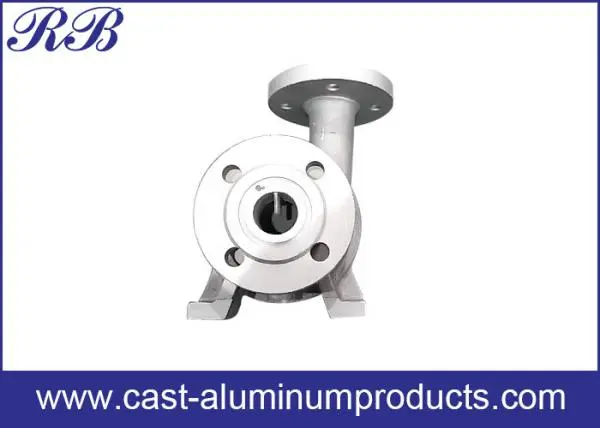
Key Advantages of Sand Casting for Global B2B Procurement
The method delivers compelling benefits that address multiple concerns faced by procurement managers, technical engineers, and supply chain directors. These benefits come from the fact that the process is naturally flexible and doesn't require as many complicated tools as some other casting technologies. Knowing these strengths helps buyers figure out when this method will give them the most strategic value for sourcing components through sand casting.
Low Initial Tooling Investment
To make die casting or permanent moulds, which require pricey steel tools, sand moulds are made from cheap, disposable materials with patterns that can be made quickly. Because of this, the process is great for making prototypes, small to medium-sized batches of products, and unique parts that are only made once. This feature is especially helpful for procurement teams that are dealing with tight budgets or don't know how much demand will be. It lowers financial risk while still letting them make changes to plans without having to pay a lot of money for retooling.
Complex Geometry Capability
Because sand moulds are disposable, they can be used to make complicated internal passages, undercuts, and external features that would be hard or impossible to make with permanent mould techniques. Technical engineers like having this much design freedom when they're making parts with built-in cooling channels, mounting features, or organic shapes that are better for structural performance. This feature gets rid of the need for a lot of extra assembly work, which makes manufacturing simpler and lowers the risk of quality problems that come with building things out of multiple pieces.
Material Compatibility and Flexibility
The method works well with almost any metal combination that can be cast, from ordinary iron and aluminium alloys to special bronzes, magnesium, and high-temperature superalloys. Because this material is so flexible, quality engineers can choose alloys that are perfectly matched to performance needs, such as strength, resistance to corrosion, thermal properties, and ease of machining. This flexibility is very helpful for buyers who need to find parts for demanding uses in energy equipment or heavy machinery because it lets them improve material properties without being limited by process limitations.
Scalability Across Production Volumes
Depending on the mould production method and amount of automation, output can range from a single prototype unit to thousands of parts. This scalability lets product development cycles start with testing a prototype, move on to pilot production, and finally reach full-scale production without having to make major changes to the process. Supply chain managers like this consistency because it makes working with suppliers easier and cuts down on the work that needs to be done to qualify suppliers when moving between different manufacturing processes at different stages of production.
Limitations and Disadvantages Every Buyer Should Consider
Even though there are big benefits, procurement professionals need to know about the downsides of this way of making things. These restrictions affect the quality of the surface, the ability to control the dimensions, the speed of production, and environmental concerns. A clear evaluation of these factors keeps surprises from happening that cost a lot during the testing and production ramp-up phases of a sand casting project.
Surface Finish and Dimensional Precision Constraints
Some parts made with this method have rougher surfaces than those made with die casting or investment casting. The roughness levels of the surfaces are usually between 200 and 800 microinches. To get smooth surfaces or close specs, the sand grains may leave marks that need to be fixed with more cutting, grinding, or finishing. For aluminium castings, the accuracy of the dimensions is usually between ±0.030 and ±0.060 inches, but this depends on the size and complexity of the geometry of the part. When setting inspection standards and figuring out which surfaces need post-processing to meet functional requirements, quality engineers must take these limits into account.
Mold Preparation Time and Consistency Challenges
For each casting, a new sand mould is needed, and moulding by hand can cause cycle times to vary, which can mess up delivery plans. Even when automated moulding equipment is used, the process usually takes longer to set up and make than high-pressure die casting. The properties of the sand can also change from batch to batch, which can change the strength and permeability of the mould and, in turn, the quality of the casting. If procurement managers are worried about the reliability of deliveries, they should talk to possible suppliers about how to prepare moulds, how to control quality, and how to plan for capacity. This will make sure that production dates match up with project deadlines.
Defect Susceptibility and Quality Control Needs
Some types of defects can happen during the process, such as porosity from trapped gases, sand inclusions when mould material breaks off during pouring, shrinkage holes from not giving the solidification process enough, and dimensional warping from uneven cooling rates. Because of these quality risks, strict checking procedures must be used. These include looking at the product visually, measuring its dimensions, using non-destructive tests like X-rays or ultrasonics to check important parts, and possibly destructive tests to confirm the material's properties. Clear acceptance criteria must be set by quality assurance teams, and they must work closely with suppliers to take corrective actions when defect rates go above acceptable levels.
Environmental and Sustainability Considerations
The old way of getting rid of sand causes problems for the environment because used foundry sand builds up quickly and needs to be managed properly. Modern systems for recycling sand can get back 90–95% of moulding sand and use it again, but the equipment that is needed to do this can be expensive at first. Concerns about air quality are also raised by the release of volatile organic compounds during the pouring and cooling of metal in some binder systems. Directors of supply chains that care more and more about sustainability need to check that their suppliers follow environmental management systems, cut down on waste, and follow rules like EPA standards in the US or similar international frameworks.
Conclusion
Sand casting is one of a kind in the manufacturing world. It strikes a balance between design freedom, material flexibility, and low cost, but at the cost of surface quality and accuracy in size. This method works especially well for medium-sized parts with complicated shapes and production numbers below 10,000 units per year for procurement workers who work in the energy, building equipment, automotive, and industrial machinery sectors. For success, you need to have realistic standards about the tolerances that can be reached, work together on the plan ahead of time, choose suppliers carefully by focusing on their process control skills, and keep working with them on quality issues. Companies that use this method's strengths strategically while minimising its weaknesses through smart design and good relationships with suppliers get the lowest total cost of ownership and a steady supply of parts.

FAQs
What tolerance ranges can realistically be achieved?
Dimensional tolerances usually fall between 0.030 and 0.060 inches, based on the size and shape of the part. In general, aluminium casts are tighter than iron castings. When critical dimensions need tolerances below ±0.015 inches, secondary machining is usually needed. Most surfaces have a roughness level of 200 to 800 microinches, but chemically bound sand systems can make this level 125 to 200 microinches. Instead of demanding too much precision, which drives up costs, buyers should be more realistic about the tolerances they specify based on the function they need to meet.
How do lead times compare with other casting methods?
Initial prototypes can be made in two to four weeks, which includes making the pattern. This is faster than die casting tooling, which takes eight to twelve weeks. Depending on the complexity and volume, production wait times can be anywhere from 4 to 8 weeks. This is about the same as permanent mould casting but longer than die casting's 2 to 3 week rounds once the tools are made. When you look at the whole time it takes from idea to finished parts, this method is faster for small jobs because it requires less money up front.
What environmental practices should buyers evaluate?
Ask about sand restoration rates; the best providers get 90–95% of their sand back. Find out what kind of binder systems are being used. More environmentally friendly options cut volatile emissions by a lot. ISO14001 certification means that the environment is being managed in a systematic way. Progressive suppliers keep track of metrics like how much waste is made per tonne of castings made, how much energy is used per part, and how much scrap metal is recycled. This shows that they care about sustainability in more ways than just following the rules.
Partner with Rongbao Enterprise for Reliable Sand Casting Solutions
Rongbao Enterprise has been providing precision metal casting parts to picky buyers around the world for 20 years. These buyers expect consistent quality and quick service. We can make a lot of different things using gravity casting, low-pressure methods, high-pressure die casting, and precision cutting. We are also certified by ISO9001, ISO14001, and ISO45001 to make sure we meet standards for quality, safety, and the environment. We offer custom solutions to purchasing managers, technical engineers, and supply chain directors in the energy, construction equipment, automotive, and industrial machinery industries, from the first design consultation to the delivery of finished parts.
Our unified method solves the whole supply chain problem, from making tools that are cost-effective and controlling processes well to making sure quality is high and making sure global logistics work well. Since 70% of our production is sent to tough markets in Europe, North America, and Japan, we know what quality standards and safety requirements are expected around the world. Our technical team works closely with your engineers to make designs that are easier to make. This cuts costs while improving performance and dependability.
Rongbao Enterprise is the manufacturing partner you need whether you need a small number of prototypes to test your product or a lot of products with regular delivery times. Steve Zhou, one of our technical experts, can be reached at steve.zhou@263.net or zhouyi@rongbaocasting.com to talk about your specific component needs. As your reliable sand casting supplier, we want you to see what a difference real manufacturing expertise and customer dedication make. You can learn more about what we can do and get a full quote right now by going to rongbaocasting.com.
References
- American Foundry Society. (2021). Sand Casting Processes and Materials: Technical Guidelines for Industrial Applications. Schaumburg: AFS Publishing.
- Campbell, J. (2015). Complete Casting Handbook: Metal Casting Processes, Metallurgy, Techniques and Design. 2nd Edition. Oxford: Butterworth-Heinemann.
- Beeley, P. R., & Smart, R. F. (2018). Foundry Technology. 3rd Edition. London: Butterworth-Heinemann Scientific.
- Brown, J. R. (2019). Foseco Ferrous Foundryman's Handbook. 11th Edition. Oxford: Elsevier Science.
- Heine, R. W., Loper, C. R., & Rosenthal, P. C. (2020). Principles of Metal Casting. New Delhi: McGraw-Hill Education India.
- Stefanescu, D. M. (2017). ASM Handbook Volume 15: Casting. Materials Park: ASM International.
Learn about our latest products and discounts through SMS or email