- English
- French
- German
- Portuguese
- Spanish
- Russian
- Japanese
- Korean
- Arabic
- Greek
- German
- Turkish
- Italian
- Danish
- Romanian
- Indonesian
- Czech
- Afrikaans
- Swedish
- Polish
- Basque
- Catalan
- Esperanto
- Hindi
- Lao
- Albanian
- Amharic
- Armenian
- Azerbaijani
- Belarusian
- Bengali
- Bosnian
- Bulgarian
- Cebuano
- Chichewa
- Corsican
- Croatian
- Dutch
- Estonian
- Filipino
- Finnish
- Frisian
- Galician
- Georgian
- Gujarati
- Haitian
- Hausa
- Hawaiian
- Hebrew
- Hmong
- Hungarian
- Icelandic
- Igbo
- Javanese
- Kannada
- Kazakh
- Khmer
- Kurdish
- Kyrgyz
- Latin
- Latvian
- Lithuanian
- Luxembou..
- Macedonian
- Malagasy
- Malay
- Malayalam
- Maltese
- Maori
- Marathi
- Mongolian
- Burmese
- Nepali
- Norwegian
- Pashto
- Persian
- Punjabi
- Serbian
- Sesotho
- Sinhala
- Slovak
- Slovenian
- Somali
- Samoan
- Scots Gaelic
- Shona
- Sindhi
- Sundanese
- Swahili
- Tajik
- Tamil
- Telugu
- Thai
- Ukrainian
- Urdu
- Uzbek
- Vietnamese
- Welsh
- Xhosa
- Yiddish
- Yoruba
- Zulu
Aluminium Gravity Die Casting Process
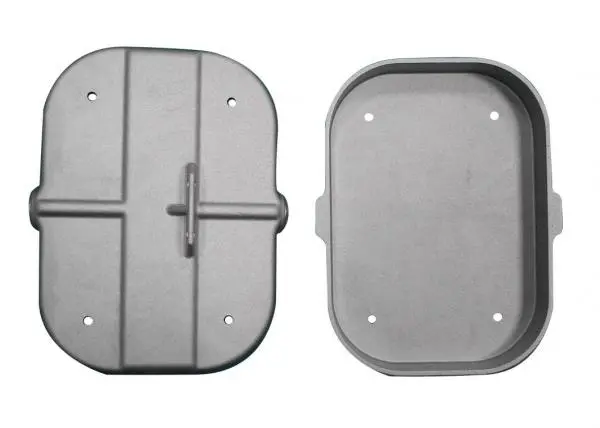
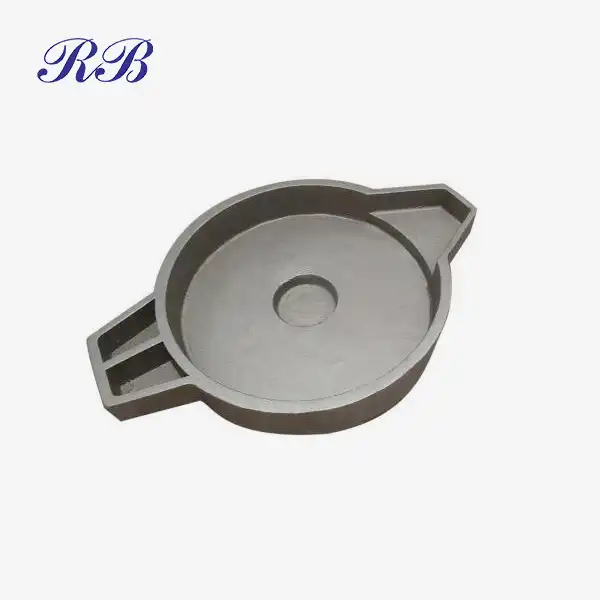
Aluminium gravity die casting is a way to cast metal in which molten aluminium runs into a steel mould that can be used again and again. This process makes parts with a smooth surface and good stability. This fixed mould method is in the middle of sand casting and high-pressure die casting. It produces better quality parts than sand methods and costs less to set up than pressure methods. This method is used to make important parts that need to be consistent in size and structure in many industries, from the auto industry to aerospace.
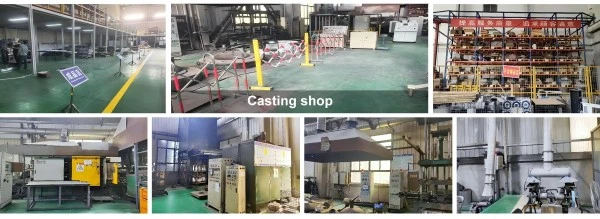
We at Rongbao Enterprise know that engineers and buying managers are always under pressure to find the best mix between price, quality, and delivery time. Customised permanent mould casting solutions that deal with these problems head-on are what our facility does best. We have been in business for 20 years and have standards such as ISO9001, ISO14001, and ISO45001, so we can serve customers around the world who need precise aluminium parts for tough jobs. Our full-chain manufacturing ensures that your parts meet strict requirements without affecting lead times, whether you're looking for brake callipers for commercial vehicles or housings for industrial machinery.
Understanding Aluminium Gravity Die Casting
The Core Process Explained
The first step in the aluminium gravity die casting process is to make permanent moulds out of steel or iron that are custom-made for your part's shape. These reusable dies can handle thousands of cycles, which makes them cheaper for mid-volume production runs than disposable sand moulds. The operators heat the mould to a controlled temperature, which is usually between 300°C and 450°C based on the alloy chosen. They then use ceramic layers to keep the metal from sticking and make it easier for the part to come out.
The mould hole is then filled with molten aluminium that has been heated to between 700°C and 750°C. The liquid metal fills the hole just by falling into it, with no help from vacuum or outside pressure. Many foundries use tilt-pouring methods, in which the mould turns while it's being filled to keep the metal flowing smoothly and reduce turbulence that could cause flaws. When the metal is poured, it solidifies from the outside in. This creates a fine grain structure that makes the metal stronger.
Key Material Considerations
Because they are good at casting, aluminium alloys A356 and A380 are most often used in gravity die uses. After being heated, A356 is much stronger and more flexible, which makes it perfect for structural parts in cars and aerospace brackets. This alloy is made up of silicon and magnesium, which make it very fluid when it's being cast and very resistant to corrosion when it's being used. Because it has more copper, A380 is easier to machine and is often used for general industrial parts like valve bodies and pump housings.
Parts made with a fixed mould have less porosity than parts made with sand casting because the metal mould quickly removes heat, which encourages directed solidification. This controlled cooling makes the material denser and with fewer empty spaces inside, which directly meets the needs for fatigue resistance and pressure-tightness. Surface roughness values for components are usually between 3.2 and 6.3 micrometres right out of the mould. This means that they don't need to be finished again, which cuts down on costs and time spent on production.
Critical Process Variables
Controlling the temperature of the mould is very important for getting consistent quality. When temperatures are too low, the mixture hardens too quickly and doesn't fill all the way, and when temperatures are too high, cycle times are slowed down and the casting may become distorted. Foundries with a lot of experience keep an eye on temperature profiles during production runs and make changes as needed to keep conditions at their best. Heat transfer rates and the quality of the part surface are also affected by the thickness of the coating that is put on the mould surfaces. This means that careful calibration is needed based on the shape of the part and the metal that is used.
Comparing Aluminium Gravity Die Casting with Other Casting Methods
Performance Against Sand Casting
For traditional sand casting, moulds made of bonded sand are used only once and thrown away. This method allows for a wide range of sizes and low tooling costs for prototype or small-batch work. Sand casting, on the other hand, makes surfaces that are rougher, usually between 12.5 and 25 micrometres Ra. This means that they need to be machined a lot for precise uses. Dimensional errors are usually between ±0.5mm and ±1.5mm. Permanent mould gravity casting, on the other hand, gets within ±0.2mm to ±0.5mm straight from the die.
The mechanical features are also very different. Because of gas entrapment and slower cooling rates, sand-cast aluminium often has higher porosity levels. This makes the tensile strength 10% to 20% lower than gravity die cast equivalents. Permanent mould casting gives you the material stability that sand methods can't always match when your application needs reliable performance under cyclic loading or pressure control.
Distinguishing from High-Pressure Die Casting
High-pressure die casting uses forces greater than 1,500 psi to push liquid metal into steel dies, filling holes with thin walls in milliseconds. This method works great for making complicated shapes with walls that are less than 2 mm thick and very close limits. But the fast injection traps air in the melt, making holes that make heat treatment impossible and strength development limited. Most of the time, parts made with high-pressure ways can't be riveted or put through T6 heat treatment without getting blisters.
Under normal air pressure, aluminium gravity die casting fills moulds more slowly, letting held gases escape and making parts that can be heated later. This makes the process better for parts that need to be as strong as possible after T6 ageing, like suspension parts or solid aircraft fittings. The cost of making the moulds is also 40% to 60% less than that of high-pressure dies. This is because gravity moulds can handle less mechanical stress and don't need as many complicated injection mechanisms.
Low-Pressure and Investment Casting Alternatives
Low-pressure die casting uses low air pressure (10 to 15 psi) to push metal up into upside-down moulds. This gives you more control over the fill rate than pure gravity methods. This method works well for high-value automotive parts like cylinder heads and wheels, where the slightly higher cost of the equipment pays for itself in lower scrap rates. Investment casting uses ceramic shell moulds around wax models to make very complex shapes, but it has long production times and high costs that keep it mostly used in aircraft and medical devices.
When buying teams understand these trade-offs, they can choose the best process for their needs. Aluminium gravity die casting is a good compromise between sand casting and high-pressure methods. It produces better quality parts than sand casting and better material features than high-pressure methods, while still having acceptable tooling costs and production freedom. At Rongbao Enterprise, our engineering team helps clients make this choice by looking at things like annual volume, complexity, strength needs, and budget limits to suggest the most cost-effective method.
Design Tips and Common Issues in Aluminium Gravity Die Casting
Optimizing Part Geometry
Design-for-manufacturability concepts are the first step to making aluminium gravity die casting work. Different cooling rates can cause bending or internal stress, but wall thickness uniformity stops this from happening. We suggest keeping sections the same thickness between 3 mm and 10 mm whenever possible and changing thicknesses gradually when that's not possible. Sharp corners put stress in one place and stop metal from flowing, so specifying radii of at least 1.5mm to 3mm makes the casting yield better and the part last longer.
Draft angles make it easier for parts to come out of the mould without getting damaged. Vertical walls should have a taper of 1° to 3°, and flows should be steeper in lower places. Permanent mould casting is hard to do with undercuts because the rigid die can't collapse like sand does. This means that complex slides or cores are needed, which makes the tooling more complicated and increases the cycle time. When design engineers and casting experts work together early on, these limitations are found during the idea phase. This keeps expensive changes from having to be made later.
Preventing Common Defects
Porosity is still the most common problem that happens when casting aluminium. When hydrogen that was dissolved in liquid metal crystallises during solidification, it leaves small holes in the structure. This is called gas porosity. Shrinkage porosity happens when not enough metal feeds the areas that harden last, which usually happens in thick spots or single hot spots. By keeping the direction of solidification toward feed metal pools, proper gating design and smart use of risers can stop both of these processes.
Cold shuts are visible seams where two metal fronts meet but don't fully fuse. They usually happen when the pouring temperature is too low or the mould coating is too thick, which over-chills the metal that is moving forward. These breaks can be avoided by keeping the right temperature settings throughout the process. Surface cracks appear when differences in temperature cause stresses that are higher than the metal's strength when it is still partially solid. Cracking can be lessened by controlling the cooling rate and choosing the right material.
Quality engineers at Rongbao Enterprise use thorough inspection protocols that take these possible problems into account. We check the incoming alloy's composition using spectroscopy, keep an eye on the temperature while the mould is being prepared and poured, and use CMM equipment calibrated to aerospace standards to check the parts' dimensions. This methodical approach guarantees stability from batch to batch, which is important for buying managers who are looking for long-term supply partners.

Conclusion
Aluminium gravity die casting strikes the perfect mix between quality, cost, and production flexibility. It works well for making medium-sized parts for the car, industrial, and specialised equipment industries. When compared to sand casting, this method makes parts with better mechanical properties while requiring a lot less tooling than high-pressure methods. This guide explains the technical basics, design factors, and supplier qualification requirements. By doing so, procurement professionals and engineers can make smart choices that improve product performance and supply chain reliability. Strategic partnerships with experienced foundries turn these process skills into competitive advantages through teamwork in engineering, consistent quality, and quick customer service throughout the lifecycle of a product.
FAQ
What aluminum alloys work best for aluminium gravity die casting?
The most popular options are the A356 and the A380, and each has its own benefits. After being heated to T6, A356 is very strong, which makes it perfect for structural and safety-critical parts. A380 is easier to machine and is often chosen for items that need a lot of secondary processes. When poured, both alloys flow easily, and when they cool in fixed moulds, they form fine grain structures. The choice you make depends on your needs for mechanical properties, the environment in which it will be used, and the processing you need to do after casting. Based on the function and performance requirements of your part, our technical team can suggest the best alloys.
How does gravity casting compare to other ways of making things?
Between sand casting and high-pressure die casting, the cost of tools is in the middle. Permanent moulds cost more to buy at first than sand patterns, but they can make thousands of parts while sand moulds can only be used once. Once you sell 500 to 1,000 units, the price per piece starts to be competitive. When you buy more than 10,000 pieces, high-pressure die casting has lower unit costs, but you have to spend two to three times as much on tools. Gravity casting is the most cost-effective way to make things in medium quantities, especially when the ability to heat treat the parts adds value.
Which certifications should I verify with potential suppliers?
ISO9001 sets standards for quality control that can be used in any industry. IATF16949 certification shows that the car supply chain meets the standards for advanced quality planning and ongoing growth. Facilities that work with aerospace markets should keep their AS9100 registration. Beyond certifications, you can find out about a company's production capabilities by touring its facilities, looking at samples of its parts, and getting references from customers who have used similar products before.
Partner with Rongbao Enterprise for Reliable Gravity Die Casting Solutions
Rongbao Enterprise has been performing aluminium gravity die casting for 20 years and can help manufacturers find reliable aluminium part suppliers. Our 70% export rate to tough markets in Europe, the United States, and Japan shows that we can regularly meet foreign quality standards. We have full powers that include mould development, gravity casting, precision machining, and surface treatment. This means that we can supply entire parts without you having to arrange with multiple vendors.
Our quality management system is certified by ISO9001, ISO14001, and ISO45001, which means that all of our processes are the same when it comes to quality, safety, and the environment. Full-chain inspection methods check the makeup of materials, the accuracy of measurements, and the mechanical properties at every stage of production. This makes it easier for your quality teams to do new inspections. Whether you need brake parts for cars, pump housings for factories, or custom-engineered parts, our expert staff works together during the planning phase to make sure the parts are easy to make and don't cost too much.
As a well-known company that makes metal gravity die castings, we know that getting things done well requires more than just low prices. It also needs good communication, on-time delivery, and a relationship that is always looking for ways to make things better. Get in touch with our team at steve.zhou@263.net or zhouyi@rongbaocasting.com to talk about the parts you need. We'll give you clear quotes and in-depth technical tests that will help you compare our skills to the needs of your particular application.
References
- Campbell, J. (2015). Complete Casting Handbook: Metal Casting Processes, Metallurgy, Techniques and Design. Butterworth-Heinemann.
- Kaufman, J. G., & Rooy, E. L. (2004). Aluminum Alloy Castings: Properties, Processes, and Applications. ASM International.
- Beeley, P. R., & Smart, R. F. (1995). Investment Casting. The Institute of Materials.
- American Foundry Society. (2018). Metalcasting Process Overview and Comparison Guide. AFS Technical Publications.
- Rao, P. N. (2017). Manufacturing Technology: Foundry, Forming and Welding. McGraw Hill Education.
- Groover, M. P. (2020). Fundamentals of Modern Manufacturing: Materials, Processes, and Systems. Wiley Publishing.
Learn about our latest products and discounts through SMS or email