- English
- French
- German
- Portuguese
- Spanish
- Russian
- Japanese
- Korean
- Arabic
- Greek
- German
- Turkish
- Italian
- Danish
- Romanian
- Indonesian
- Czech
- Afrikaans
- Swedish
- Polish
- Basque
- Catalan
- Esperanto
- Hindi
- Lao
- Albanian
- Amharic
- Armenian
- Azerbaijani
- Belarusian
- Bengali
- Bosnian
- Bulgarian
- Cebuano
- Chichewa
- Corsican
- Croatian
- Dutch
- Estonian
- Filipino
- Finnish
- Frisian
- Galician
- Georgian
- Gujarati
- Haitian
- Hausa
- Hawaiian
- Hebrew
- Hmong
- Hungarian
- Icelandic
- Igbo
- Javanese
- Kannada
- Kazakh
- Khmer
- Kurdish
- Kyrgyz
- Latin
- Latvian
- Lithuanian
- Luxembou..
- Macedonian
- Malagasy
- Malay
- Malayalam
- Maltese
- Maori
- Marathi
- Mongolian
- Burmese
- Nepali
- Norwegian
- Pashto
- Persian
- Punjabi
- Serbian
- Sesotho
- Sinhala
- Slovak
- Slovenian
- Somali
- Samoan
- Scots Gaelic
- Shona
- Sindhi
- Sundanese
- Swahili
- Tajik
- Tamil
- Telugu
- Thai
- Ukrainian
- Urdu
- Uzbek
- Vietnamese
- Welsh
- Xhosa
- Yiddish
- Yoruba
- Zulu
High Pressure Die Casting VS Sand Casting
Product quality, production costs, and delivery timeliness are all affected by the manufacturing choice that procurement managers must make when deciding between high pressure die casting and sand casting. Using steel molds and tremendous pressure, high pressure die casting can produce aluminum and zinc components in large quantities with smooth surfaces and thin walls. The use of disposable sand molds in sand casting allows for more design freedom and less tooling costs. This process is ideal for low-to medium production runs since it can handle high-melting-point metals like steel and iron, although it does result in thicker walls and rougher surfaces.
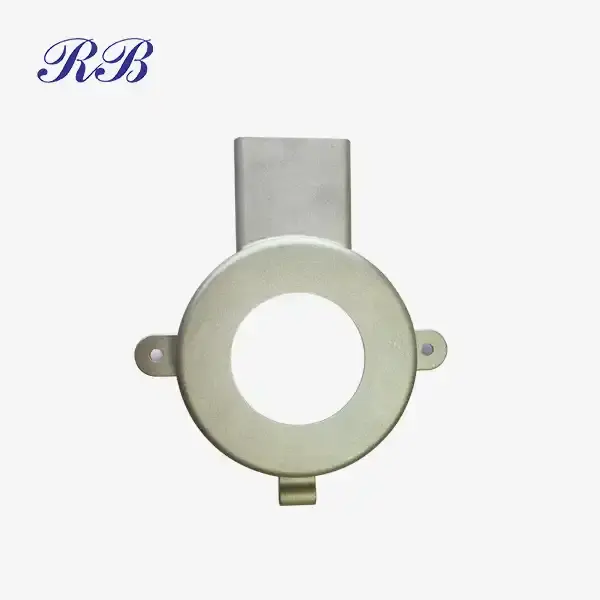
Understanding High Pressure Die Casting and Sand Casting
Aluminum, zinc, and magnesium are examples of lightweight alloys that are well-suited to high pressure die casting, which entails pumping molten metal into steel molds under pressure to achieve high accuracy and short production cycles. Two sides of a steel mold are clamped together to form a sealed chamber in this operation by use of automated equipment. To guarantee full filling of complex geometries and thin-walled sections, molten metal is forced into this cavity at pressures up to 2000 bar at speeds of up to 60 m/s.
The Mechanics of High Pressure Die Casting
For the die casting process, the steel mold halves are held in place during injection by a moving platen and a stationary platen. The mold opens mechanically when the molten metal cools under pressure, and the final casting is removed by use of ejector pins. This mechanical method is ideal for parts with complicated interior features and tight tolerances because of the remarkable dimensional accuracy it produces.
Sand Casting Fundamentals
Sand casting, on the other hand, makes use of sand-based molds, which have higher material versatility (including iron and steel), cheaper tooling costs, and are appropriate for bigger or more complicated items. However, it often has slower production rates. Making a mold out of a specifically blended sand mixture is the second step in the sand casting process, after making a pattern. The sand mold is filled to the brim with molten metal as it flows into the cavity via a gating system, propelled by gravity.
Even high-temperature materials that die casting equipment can't handle are no problem for this time-honored casting process. It is common practice to use sand molds just once before destroying them during part removal. However, the sand material may be recovered and used for making new molds. This method gives foundries a lot of leeway to play around with different shapes and prototypes.
Comparing the Production Process and Performance
There are notable distinctions between the two casting technologies' operational workflows, which have an effect on production planning and quality results. Mold clamping, metal injection at pressures up to 2000 bar, and quick cooling are the steps that make up HPDC's process. This allows for cycle durations that are typically less than one minute. These days, high pressure die casting machines can make over a thousand pieces per day, even for tiny components, since their cycles only take thirty to forty-five seconds to finish.
Production Speed and Efficiency
Through the use of automated systems for material management, temperature control, and quality monitoring, die casting equipment functions constantly with minimum user interaction. The constant cooling rates and dimensional stability over thousands of pieces are ensured by the steel molds' stable thermal characteristics across manufacturing runs. Suppliers in the automobile industry who are in charge of just-in-time delivery are likely to be interested in die casting due to its repeatability.
Quality and Surface Characteristics
The steps involved in sand casting—preparing the mold, pouring the material, cooling it, and cleaning it—can take a long time, depending on how complicated the mold is. Sand casting provides more flexibility, but with coarser finishes and broader tolerances, compared to HPDC's better dimensional precision, smooth surface finish, and reduced failure rates. The normal surface roughness range for die cast components is 1.6-3.2 micrometers, but for sand cast components it is 12.5-25 micrometers.
Having a grasp of these intricacies in manufacturing allows procurement teams to evaluate suppliers' capabilities while maintaining a balance between speed, quality, and cost. Depending on the part size and geometrical complexity, sand casting usually maintains tolerances around ±0.5mm, whereas die casting consistently produces part-to-part variance within ±0.1mm for most dimensions.
Advantages and Disadvantages for Industrial Application
Fast volume production, reproducibility, and precise feature definition are strengths of high pressure die casting. However, this process might limit design complexity or material choice and requires a significant initial tooling investment. Die casting is only cost-effective at production quantities of 5,000-10,000 pieces per year due to the high cost of the steel molds needed for the process, which may range from $50,000 to $200,000 depending on the intricacy of the item.
Economic Considerations for Die Casting
For mass production, die casting is a good option because of these benefits:
- Short processing times: 100–1000 components per day per machine
- Superior surface finish: Requires little in the way of additional machining
- Rigid dimensional control: reliability in output from batch to batch
- Efficient use of materials: Produces less waste than machining methods
The break-even analysis is conditional on the complexity of the item and the yearly volume requirements, but these benefits result in reduced per-part costs for big production runs. Die casting expenditures are often justified for automotive applications because of the high quality requirements and multi-year manufacturing commitments associated with these parts.

Sand Casting Benefits and Limitations
Although sand casting can handle big, complicated geometries with ease and has minimal tooling costs, it usually results in worse surface quality and longer production periods. Sand casting is an appropriate technology for prototype development and medium-volume manufacturing because to its pattern costs, which vary from $2,000 to $20,000. Manufacturers of new equipment are drawn to the ability to make rapid design modifications without requiring extensive tooling adjustments.
Strategic guidance on when to opt for HPDC versus sand casting based on production volume, part complexity, and budget constraints is provided in this section, which examines cost structures and return on investment. This information is essential for procurement decision-makers managing diverse product portfolios across multiple manufacturing locations.
Practical Decision-Making Guide for B2B Procurement
Using examples from actual industrial settings, this section assists procurement professionals in finding the best casting process to meet the needs of their projects in terms of mechanical performance, part size, volume goals, and material qualities. To make an informed casting option, you must be familiar with the ways in which tooling amortization, secondary operations, and quality control expenditures affect the overall cost of ownership.
Supplier Evaluation Criteria
The certifications, technical capabilities, and supply chain resilience of a supplier should be prioritized as essential evaluation factors. IATF 16949 caters especially to the needs of the automotive sector, whereas ISO 9001 shows dedication to quality management systems. The process controls and documentation requirements of suppliers that have numerous certifications tend to be more stringent.
Industry-Specific Applications
Various case studies in the automotive, electronics, and aerospace industries illustrate situations when the benefits of HPDC become critical. Die casting is a great process for automotive gearbox housings since it can make intricate mounting elements and internal channels all at once. The electromagnetic shielding qualities and exact connection alignments of die casting are used in electronic enclosures.
Ecological concerns bring attention to CSR-aligned sustainability aspects, such as energy use and recyclability. Die casting uses about 20-30% less energy per item than machined components, yet when it comes time to recycle, aluminum die castings are still 95% recyclable.

Our Company and Offerings
With decades of manufacturing expertise and strict quality control standards, Rongbao Enterprise stands as a reliable worldwide partner that specializes in high pressure die casting solutions. Precision machining, gravity casting, high-pressure die casting, and low-pressure die casting are all part of our extensive manufacturing capabilities. We can accommodate a wide range of materials and meet the unique production needs of many industries.
Technology and Manufacturing Excellence
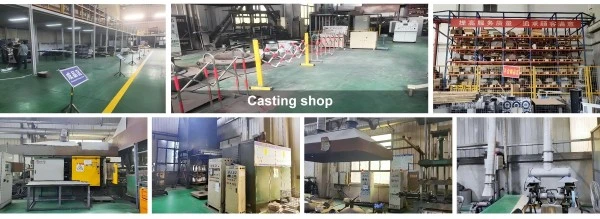
Modern automated machinery for casting, machining, and testing allows us to produce with the efficiency and accuracy required to satisfy global quality requirements. In order to meet your supply chain needs, we have established standardized large-scale workshops with a high production capacity. This allows us to handle huge orders with manageable delivery cycles.
Ensuring standardized management and conformity with worldwide criteria, our triple certification system (ISO 9001, ISO 14001, and ISO 45001) remains vital in quality assurance. At every stage of the production process, from receiving raw materials to delivering completed goods, our full-chain quality control system checks to make sure everything is up to par.
Rapid prototyping, contract production, and customized product lines are just a few of the many industrial needs that our custom casting services can meet. Complete "from design to finished product" solutions that simplify your procurement procedures are provided by our value-added services, which include mold development and surface treatment. We have strong worldwide awareness and reliable partnerships with partners all over the world, and 70% of our goods go to popular markets including Japan, Europe, and the United States.
We guarantee a smooth integration into our clients' manufacturing processes by committing to flexible and prompt delivery and constant technical assistance. We encourage potential customers to investigate the ways in which our knowledge might improve procurement efficiency, decrease risks, and increase product dependability via joint venture possibilities.
Conclusion
Choosing between high pressure die casting and sand casting requires careful evaluation of production volume, precision requirements, surface finish specifications, and part complexity. Die casting delivers superior dimensional accuracy and surface quality for high-volume aluminum and zinc components, while sand casting provides design flexibility and material versatility for complex geometries and various alloys. Understanding these fundamental differences enables procurement professionals to make informed decisions that optimize manufacturing outcomes and cost-effectiveness for their specific applications.
Partner with Rongbao Enterprise for Your High Pressure Die Casting Needs
Rongbao Enterprise delivers comprehensive die casting solutions that transform your manufacturing challenges into competitive advantages. Our experienced engineering team provides personalized consultations to optimize your casting specifications while reducing total cost of ownership. Connect with our specialists at steve.zhou@263.net or zhouyi@rongbaocasting.com to discuss your high pressure die casting requirements and discover why leading manufacturers choose us as their trusted supplier. Request detailed quotes, sample parts, or technical demonstrations through rongbaocasting.com to experience our quality commitment firsthand.
FAQ
What factors determine whether to choose high pressure die casting or sand casting?
Production volume represents the primary determining factor, with die casting becoming cost-effective above 5,000-10,000 annual parts due to higher tooling costs. Part complexity, required surface finish, dimensional tolerances, and material selection also influence this decision significantly.
How do lead times compare between these casting methods?
High pressure die casting typically delivers parts within 2-4 weeks after tooling completion, with cycle times under one minute. Sand casting requires 4-8 weeks for complex parts, though simple geometries may complete faster. Tooling development takes 8-12 weeks for die casting versus 2-4 weeks for sand casting patterns.
What material limitations exist for high pressure die casting?
Die casting works primarily with low-melting-point alloys including aluminum, zinc, and magnesium. Iron, steel, and high-temperature alloys exceed equipment capabilities and require sand casting or other methods. Material selection impacts both process feasibility and final part properties.
References
1. Campbell, John. "Complete Casting Handbook: Metal Casting Processes, Metallurgy, Techniques and Design." Butterworth-Heinemann, 2015.
2. Vinarcik, Edward J. "High Integrity Die Casting Processes." John Wiley & Sons, 2003.
3. Brown, John R. "Foseco Foundryman's Handbook: Facts, Figures and Formulae." Butterworth-Heinemann, 2000.
4. ASM International Handbook Committee. "Casting: ASM Handbook Volume 15." ASM International, 2008.
5. Kaufman, J. Gilbert. "Introduction to Aluminum Alloys and Tempers." ASM International, 2000.
6. Street, Arthur C. "The Diecasting Book." Portcullis Press, 1977.
Learn about our latest products and discounts through SMS or email