- English
- French
- German
- Portuguese
- Spanish
- Russian
- Japanese
- Korean
- Arabic
- Greek
- German
- Turkish
- Italian
- Danish
- Romanian
- Indonesian
- Czech
- Afrikaans
- Swedish
- Polish
- Basque
- Catalan
- Esperanto
- Hindi
- Lao
- Albanian
- Amharic
- Armenian
- Azerbaijani
- Belarusian
- Bengali
- Bosnian
- Bulgarian
- Cebuano
- Chichewa
- Corsican
- Croatian
- Dutch
- Estonian
- Filipino
- Finnish
- Frisian
- Galician
- Georgian
- Gujarati
- Haitian
- Hausa
- Hawaiian
- Hebrew
- Hmong
- Hungarian
- Icelandic
- Igbo
- Javanese
- Kannada
- Kazakh
- Khmer
- Kurdish
- Kyrgyz
- Latin
- Latvian
- Lithuanian
- Luxembou..
- Macedonian
- Malagasy
- Malay
- Malayalam
- Maltese
- Maori
- Marathi
- Mongolian
- Burmese
- Nepali
- Norwegian
- Pashto
- Persian
- Punjabi
- Serbian
- Sesotho
- Sinhala
- Slovak
- Slovenian
- Somali
- Samoan
- Scots Gaelic
- Shona
- Sindhi
- Sundanese
- Swahili
- Tajik
- Tamil
- Telugu
- Thai
- Ukrainian
- Urdu
- Uzbek
- Vietnamese
- Welsh
- Xhosa
- Yiddish
- Yoruba
- Zulu
Robotic Rehabilitation In Spinal Cord Injury
Spinal cord injury (SCI) is one of the most difficult conditions to treat in modern medicine. In the United States alone, there are about 17,730 new cases each year. The advent of medical rehabilitation robot technology has altered the landscape of SCI therapy. These advanced technologies, made using precise mechanical machining methods, open up new ways for functional recovery and neuroplasticity to improve. Robotic rehabilitation is different from traditional therapy methods because it offers standardized, repeatable treatments that can be fine-tuned to meet the needs of each patient.
Key Challenges in SCI Rehabilitation
Rehabilitation after a spinal cord injury is hard in many ways, and it needs a full understanding and new ideas to work. The severity of neurological injury is very different for each patient, which means that their rehabilitation demands are also very different. Traditional approaches have a hard time meeting these needs consistently. Motor function impairment, sensory loss, and autonomic dysfunction all work together to make rehabilitation situations that need both advanced technology and clinical knowledge.
One primary challenge involves the variability in injury completeness and level. Complete injuries result in total loss of motor and sensory function below the injury site, while incomplete injuries present partial preservation of neural pathways. This heterogeneity requires rehabilitation technologies capable of adapting to diverse functional capacities and recovery potentials. Medical rehabilitation robot systems must accommodate these variations through adjustable parameters and customizable treatment protocols.
The psychological impact of SCI cannot be understated in rehabilitation planning. Patients often experience depression, anxiety, and motivation challenges that directly affect treatment compliance and outcomes. Traditional therapy sessions may lack the engaging, measurable feedback that patients need to maintain long-term commitment to recovery protocols. Robotic systems address this challenge by providing real-time performance metrics, gamification elements, and consistent positive reinforcement throughout therapy sessions.
Resource limitations present another significant obstacle in SCI rehabilitation. Qualified therapists are often in short supply, and manual therapy techniques can be physically demanding, limiting the intensity and duration of treatment sessions. The precise mechanical machining needed to make effective rehabilitation robots lets healthcare facilities offer more therapy while keeping the quality of care the same. These systems can work for long periods of time without becoming tired, which means that patients can get rigorous therapy programs that would not be possible with solely human interaction.
Lower Extremity Rehabilitation (Gait, Standing)
Lower extremity rehabilitation constitutes the cornerstone of functional recovery for individuals with spinal cord injuries. Being able to stand and walk again has a direct effect on independence, heart health, bone density, and mental wellness. Advanced medical rehabilitation robot systems made just for lower limb training have changed the way people restore their gait and enhance their standing balance.
Gait training robots use advanced biomechanical algorithms to mimic the way people walk naturally while giving them the right support and direction. These systems use precision-engineered parts made with cutting-edge mechanical machining methods to make sure that movement paths are smooth and natural. The aluminum construction commonly used in these devices offers optimal strength-to-weight ratios while maintaining the durability required for intensive rehabilitation protocols. Patients secured in these systems can practice walking motions at various speeds and assistance levels, gradually building strength and relearning movement patterns.
The integration of body weight support systems with robotic gait trainers enables patients to begin walking practice earlier in their recovery process. Traditional rehabilitation often requires patients to achieve significant strength gains before attempting upright mobility. Robotic systems circumvent this limitation by providing precise partial weight support, allowing neural pathways to begin reactivation while muscles gradually strengthen. The mechanical machining precision required for weight support mechanisms ensures patient safety while delivering consistent, adjustable assistance levels.
Standing medical rehabilitation robots address multiple physiological needs simultaneously. Prolonged upright positioning helps maintain bone density, improves cardiovascular function, and reduces complications associated with prolonged immobilization. Modern standing robots incorporate dynamic balance challenges, proprioceptive training, and weight-shifting exercises that engage core stabilization muscles and promote postural control development. The electroplating surface treatments applied to these devices ensure longevity and hygiene maintenance in clinical environments.
Benefits of Robotic Rehabilitation in SCI
The therapeutic advantages of robotic rehabilitation in spinal cord injury treatment extend far beyond traditional manual therapy capabilities. Medical rehabilitation robots offer continuous, intensive training programs that make the most of neuroplasticity and give objective measurements of results. Advanced mechanical machining makes sure that the parts are made with such high quality that they will work reliably for thousands of therapy sessions, making them a cost-effective choice for long-term rehabilitation programs.
Neuroplasticity enhancement represents the most significant benefit of robotic SCI rehabilitation. These systems provide the high-repetition, task-specific training essential for neural pathway reorganization and functional recovery. Medical rehabilitation robot technology enables patients to perform hundreds of movement repetitions per session, far exceeding what manual therapy can achieve. The constant movement patterns that come from properly machined parts assist build motor memory and encourage the cortical reconfiguration that is needed for functional development.
Patient motivation and engagement improve dramatically with robotic rehabilitation systems. Interactive interfaces, progress monitoring displays, and gamification aspects turn therapy sessions from things you just sit through into things you do with a purpose. Patients can see how far they've come using objective measurements, which helps them stay motivated throughout tough times in their rehabilitation. These devices give patients quick feedback that helps them grasp what they can do and work toward specific functional goals.
Safety enhancements inherent in robotic rehabilitation systems protect patients during intensive training while enabling aggressive therapy protocols. Built-in safety mechanisms prevent excessive forces, monitor patient responses, and automatically adjust assistance levels based on real-time performance data. A protective framework allows patients to push their limits safely, potentially accelerating recovery timelines compared to more conservative traditional approaches.
Standardization of treatment protocols through medical rehabilitation robots ensures consistent care quality across different therapists and treatment sessions. The precision achieved through advanced mechanical machining eliminates variability in movement patterns, force application, and timing that can occur with manual therapy. This consistency is particularly valuable in research settings where treatment standardization is essential for outcome validation and protocol development.
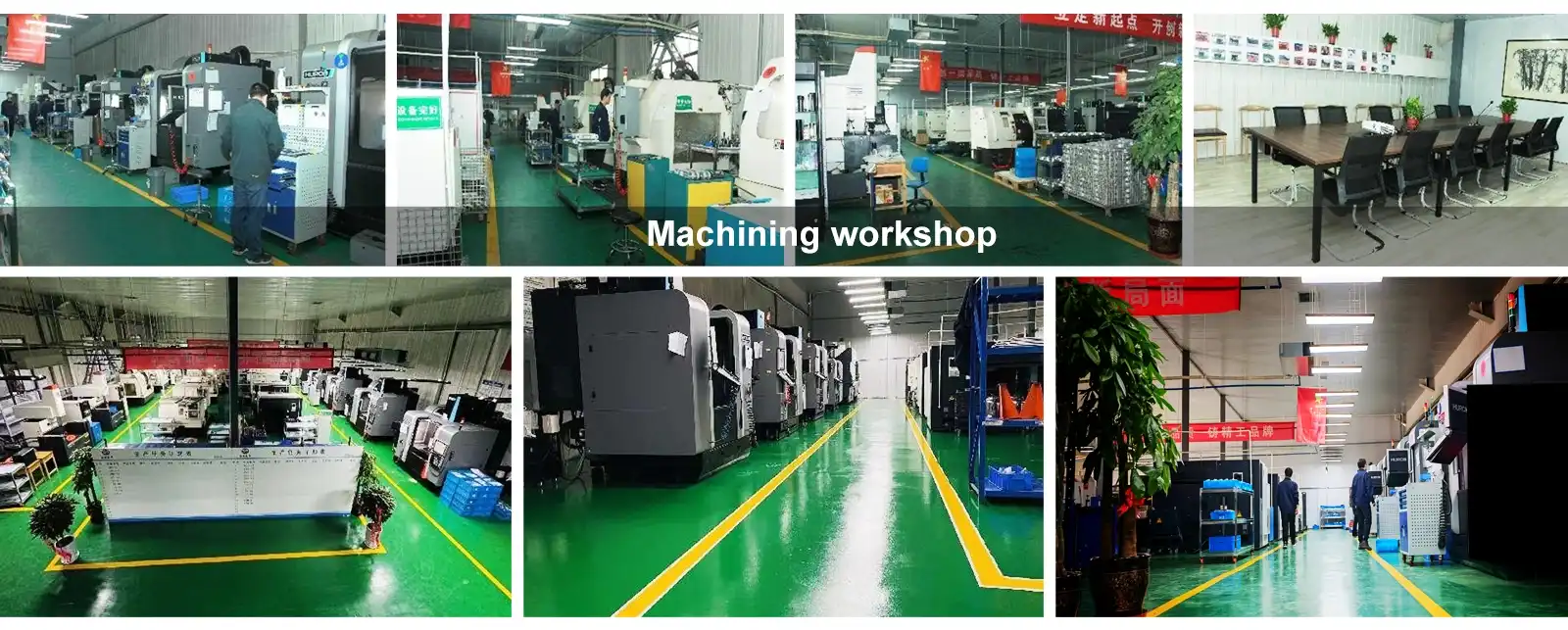
Rongbao Enterprise produces high-quality parts for medical rehabilitation robots using innovative mechanical machining methods. Our ISO9001:2015, ISO14001, and ISO45001 certifications ensure the highest standards in quality management, environmental responsibility, and occupational health safety. We can make 500 pieces and customize the parameters to meet the changing needs of rehabilitation technology manufacturers all over the world.
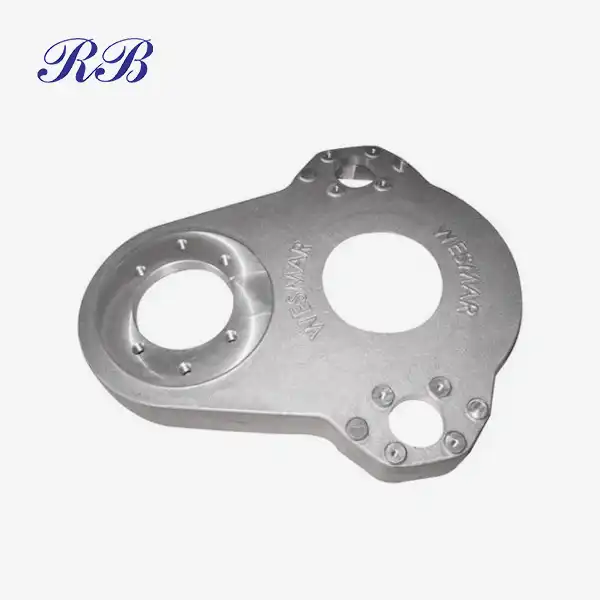
The parts of our lower limb rehabilitation robot are made of aluminum, are CNC machined for precision, and are electroplated for the best performance and durability. From our facility in Xi'an, China, we provide comprehensive OEM/ODM customization services with secure wooden box packaging and reliable delivery.
For inquiries about medical rehabilitation robot manufacturing and mechanical machining services, please contact our team at zhouyi@rongbaocasting.com or steve.zhou@263.net.
References
- National Spinal Cord Injury Statistical Center. Spinal cord injury facts and figures at a glance. University of Alabama at Birmingham, 2023.
- Calabrò RS, et al. Robotic gait rehabilitation and substitution devices in neurological disorders: where are we now? Neurological Sciences. 2023;44(1):23-41.
- Mehrholz J, Harvey LA, Thomas S, Elsner B. Walking training for individuals with spinal cord injury. Cochrane Database of Systematic Reviews. 2023;7:CD006676.
- Esquenazi A, et al. Robot-assisted walking training in individuals with spinal cord injury: a systematic review and meta-analysis. Archives of Physical Medicine and Rehabilitation. 2022;103(5):1041-1053.
- Van Hedel HJ, Dietz V. Rehabilitation of locomotion after spinal cord injury. Restorative Neurology and Neuroscience. 2022;28(1):123-134.



Learn about our latest products and discounts through SMS or email