- English
- French
- German
- Portuguese
- Spanish
- Russian
- Japanese
- Korean
- Arabic
- Greek
- German
- Turkish
- Italian
- Danish
- Romanian
- Indonesian
- Czech
- Afrikaans
- Swedish
- Polish
- Basque
- Catalan
- Esperanto
- Hindi
- Lao
- Albanian
- Amharic
- Armenian
- Azerbaijani
- Belarusian
- Bengali
- Bosnian
- Bulgarian
- Cebuano
- Chichewa
- Corsican
- Croatian
- Dutch
- Estonian
- Filipino
- Finnish
- Frisian
- Galician
- Georgian
- Gujarati
- Haitian
- Hausa
- Hawaiian
- Hebrew
- Hmong
- Hungarian
- Icelandic
- Igbo
- Javanese
- Kannada
- Kazakh
- Khmer
- Kurdish
- Kyrgyz
- Latin
- Latvian
- Lithuanian
- Luxembou..
- Macedonian
- Malagasy
- Malay
- Malayalam
- Maltese
- Maori
- Marathi
- Mongolian
- Burmese
- Nepali
- Norwegian
- Pashto
- Persian
- Punjabi
- Serbian
- Sesotho
- Sinhala
- Slovak
- Slovenian
- Somali
- Samoan
- Scots Gaelic
- Shona
- Sindhi
- Sundanese
- Swahili
- Tajik
- Tamil
- Telugu
- Thai
- Ukrainian
- Urdu
- Uzbek
- Vietnamese
- Welsh
- Xhosa
- Yiddish
- Yoruba
- Zulu
Aluminum Alloy Castings Properties Processes And Applications
The demand for aluminium alloy castings is rising because they can achieve strict industry standards while yet being cost-effective. Modern manufacturing methods have changed to make castings that are more accurate in terms of size, have better mechanical qualities, and are more consistent in quality than traditional materials. As sectors keep putting weight loss ahead of performance, aluminium alloy castings are a smart choice for producers who want to stay ahead of the curve.
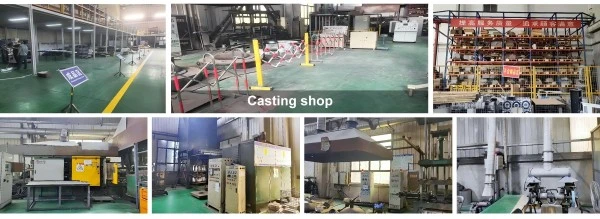
Properties of Aluminum Alloy Castings
The exceptional properties of aluminum alloy castings make them particularly attractive for industrial applications where performance and reliability are paramount. These castings have amazing strength-to-weight ratios, with tensile strengths between 150 and 350 MPa and densities that are around one-third that of steel.The characteristic is very useful in the automobile and aerospace industries, because reducing weight immediately leads to better fuel efficiency and performance.
Another big benefit of aluminium alloy castings is that they don't rust. Aluminium oxide forms naturally on the surface and acts as a barrier to keep things from getting worse, even in tough weather. Because they are naturally resistant to oxidation and chemical assault, these castings are very durable and need little maintenance. This makes them great for outdoor and maritime use.
Thermal conductivity properties of aluminum alloy castings facilitate efficient heat dissipation, making them ideal for applications requiring thermal management. Heat sinks, engine components, and electronic housings benefit from aluminum's ability to conduct heat approximately four times more effectively than steel. This thermal efficiency contributes to improved performance and extended component lifecycles in temperature-sensitive applications.
The electrical conductivity of aluminum alloy castings, while lower than pure aluminum, remains sufficient for many electrical applications. These qualities, along with their light weight and ability to be shaped, make aluminium castings good for electrical enclosures, gearbox parts and power distribution systems that need both good electrical performance and strong structure.
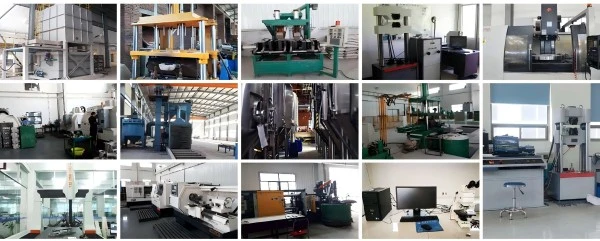
Manufacturing Processes for Aluminum Alloy Castings
High-pressure die casting represents the most widely utilized manufacturing process for aluminum alloy castings, particularly suited for high-volume production of complex geometries. This process involves injecting molten aluminum alloy into precision-machined steel dies under pressures ranging from 10 to 175 MPa. The rapid solidification achieved through high-pressure die casting produces castings with excellent dimensional accuracy, smooth surface finishes, and thin wall sections that would be difficult to achieve through other methods.
The high-pressure die casting method is very productive, with cycle times that can be as short as 30 seconds or as long as several minutes, depending on the size and complexity of the parts. Its efficiency makes it especially appealing for use in cars, where a lot of parts like engine blocks, gearbox housings, and structural elements are needed. The technique always makes castings with tolerances as fine as ±0.1 mm, which cuts down on or gets rid of the need for secondary machining processes.
Low-pressure die casting provides an alternative approach that offers superior metal flow control and reduced porosity compared to high-pressure methods. In this process, molten aluminum is drawn into the die cavity through controlled pressure application, typically ranging from 0.1 to 1.0 bar. This gentle filling process minimizes turbulence and air entrapment, resulting in castings with enhanced mechanical properties and improved structural integrity.
Gravity casting, also known as permanent mold casting, utilizes gravitational force to fill die cavities with molten aluminum alloy. The process excels in producing castings with excellent mechanical properties due to controlled solidification rates and minimal turbulence during filling. While production rates are lower than pressure casting methods, gravity casting offers superior flexibility for medium-volume production runs and complex internal geometries.
Investment casting techniques enable the production of aluminum alloy castings with intricate details and complex internal passages that would be impossible to achieve through conventional machining. Making wax designs, covering them with ceramic materials, and then melting the wax out to make exact moulds is part of this procedure. Investment casting makes castings with very smooth surfaces and exact dimensions, which is great for aeronautical and medical uses where accuracy is very important.
Sand casting remains relevant for large, complex aluminum alloy castings where tooling costs for permanent molds would be prohibitive. Modern sand casting methods use better moulding materials and computer-controlled pouring systems to make things better and more consistent, giving you a lot of design freedom and is great for making prototypes and making small amounts of things.

Applications of Aluminum Alloy Castings
The biggest market for aluminium alloy castings is the automotive business, which uses these parts a lot in most vehicle systems. Aluminium is lightweight and good at moving heat around, which makes it useful for engine blocks, cylinder heads, gearbox housings and suspension parts. Modern automakers are using aluminium castings more and more to meet fuel economy rules while still meeting safety and performance standards for the structure.
Applications in the powertrain show how flexible aluminium alloy castings can be in harsh vehicle conditions. Fuel tanks, intake pipes, and oil pans for turbochargers must be made of materials that can stand up to high temperatures, changes in pressure, and thermal cycling. The parts are strong and stable at high temperatures because they are cast from an aluminium metal. Plus, they help the car weigh less, which saves gas and cleans the air.
Applications in the powertrain show how flexible aluminium alloy castings can be in harsh vehicle conditions. Fuel tanks, intake pipes, and oil pans for turbochargers must be made of materials that can stand up to high temperatures, changes in pressure, and thermal cycling. The parts are strong and stable at high temperatures because they are cast from an aluminium metal. Plus, they help the car weigh less, which saves gas and cleans the air.
Aluminium alloy castings are used in the electrical and electronic industries because they conduct electricity and keep it from getting through. Transformers, electrical panels, and heat sinks for power electronics all use aluminium because of its thermal and electrical qualities. It is excellent for shielding delicate electronic devices in both industrial and consumer environments since it can block electromagnetic waves without changing its shape.
Aluminum Alloy Casting Supplier
When firms need trustworthy aluminium alloy casting solutions, working with experienced vendors gives them access to advanced manufacturing capabilities and quality control systems. Rongbao Enterprise, which started in 2003, is a company that specialises in casting aluminium alloys and doing precision work.
Companies that need aluminium alloy casting solutions can get help by talking directly to production experts that know the specific needs and quality standards of the sector. For more information on how modern aluminium alloy casting may improve your manufacturing processes and product performance, please email Rongbao at zhouyi@rongbaocasting.com or steve.zhou@263.net.
References
1. ASM International. (2023). Aluminum and Aluminum Alloys: Properties and Applications. Materials Park, OH: ASM International.
2. Campbell, J. (2022). Complete Casting Handbook: Metal Casting Processes, Metallurgy, Techniques and Design. 3rd Edition. Butterworth-Heinemann.
3. Davis, J.R. (Ed.). (2023). Aluminum and Aluminum Alloys: Technical Guide. ASM International Specialty Handbook.
4. International Journal of Cast Metals Research. (2023). "Advances in High-Pressure Die Casting of Aluminum Alloys." Cast Metals Research, 36(2), 125-140.
5. Kaufman, J.G., & Rooy, E.L. (2022). Aluminum Alloy Castings: Properties, Processes, and Applications. 4th Edition. ASM International.
Learn about our latest products and discounts through SMS or email