- English
- French
- German
- Portuguese
- Spanish
- Russian
- Japanese
- Korean
- Arabic
- Greek
- German
- Turkish
- Italian
- Danish
- Romanian
- Indonesian
- Czech
- Afrikaans
- Swedish
- Polish
- Basque
- Catalan
- Esperanto
- Hindi
- Lao
- Albanian
- Amharic
- Armenian
- Azerbaijani
- Belarusian
- Bengali
- Bosnian
- Bulgarian
- Cebuano
- Chichewa
- Corsican
- Croatian
- Dutch
- Estonian
- Filipino
- Finnish
- Frisian
- Galician
- Georgian
- Gujarati
- Haitian
- Hausa
- Hawaiian
- Hebrew
- Hmong
- Hungarian
- Icelandic
- Igbo
- Javanese
- Kannada
- Kazakh
- Khmer
- Kurdish
- Kyrgyz
- Latin
- Latvian
- Lithuanian
- Luxembou..
- Macedonian
- Malagasy
- Malay
- Malayalam
- Maltese
- Maori
- Marathi
- Mongolian
- Burmese
- Nepali
- Norwegian
- Pashto
- Persian
- Punjabi
- Serbian
- Sesotho
- Sinhala
- Slovak
- Slovenian
- Somali
- Samoan
- Scots Gaelic
- Shona
- Sindhi
- Sundanese
- Swahili
- Tajik
- Tamil
- Telugu
- Thai
- Ukrainian
- Urdu
- Uzbek
- Vietnamese
- Welsh
- Xhosa
- Yiddish
- Yoruba
- Zulu
Quality Evaluation of Gravity Sand Casting Parts: 3 Key Inspection Standards
Buying cast components is not simply a matter of checking the alloy, quantity, and price on a quotation. For industrial applications, the more important question is whether the finished component matches the drawing and can perform consistently in the intended assembly. This is especially important when sourcing gravity sand casting parts, because the sand casting process involves several variables from mold preparation and pouring to cooling, cleaning, machining, and final inspection. A sand casting might have a good surface appearance but suffer from dimensional variability, inadequate machining allowance, internal porosity, inclusions, or surface flaws. Some of these problems may be detected by normal inspection, while others will need special test equipment or material verification. Hence, a realistic inspection strategy for procurement managers, engineers, and quality teams should not be limited to appearance only. The part should be verified to the authorized design, material specification, process requirements and agreed acceptance criteria. There are three areas of special importance: dimensional accuracy, internal and material integrity, and surface quality. Combined, they provide a practical way to evaluate castings and compare vendors before placing a production order.
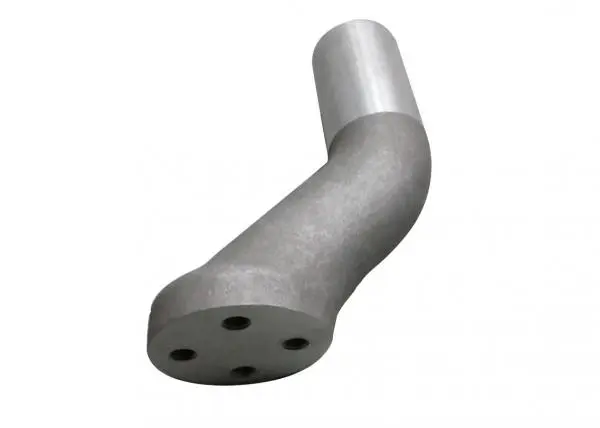
Start With the Drawing and Critical Dimensions
Dimensional inspection is usually the first place to look when evaluating a finished casting. The purpose is not to measure every feature with the same level of precision. Instead, inspection should focus on dimensions that affect assembly, machining, function, and interchangeability.
Check the Features That Affect Assembly
Dimensional variance is an inherent part of gravity sand casting parts. The design must allow for metal contraction as it solidifies, but the final shape may also be affected by mold preparation, sand quality, core location, and pouring circumstances.
Accordingly, the sketch should specify the most important dimensions.
Depending on the component, they might include:
- Overall length, breadth and height
- Mounting-hole locations
- Bore dimensions
Center-to-center distances
Wall thickness
Flange size
Date Locations
- Allowance for machining
- Flatness of the mated faces
A little discrepancy on an exterior non-functional surface is much less of a concern in assembly than a misplaced mounting hole. The inspection approach should reflect that shift.
May relate to, but not substitute for, general casting standards and the tolerances on the customer's design. Take, for example, ISO 8062, which establishes a set of dimensional and geometrical tolerances for castings. The tolerances must be determined during engineering and quoting.
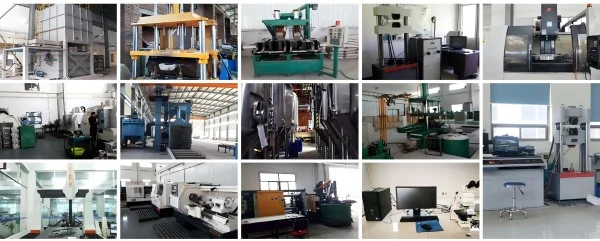
Inspect the Casting Before Machining
Many gravity sand casting parts are not utilized in their raw form. They may undergo CNC milling, drilling, turning, boring, or other machining processes before they are finally dimensioned.
Pre-machining examination is thus important
Take, for example, a cast housing that requires a machined sealing face. The casting has enough material in that location to allow the machining process to take off the necessary quantity and leave a finished, uniform surface. If the casting is locally too small, machining will not be able to rectify it.
Therefore, checking the amount of machining allowance before processing helps avoid wasting machining time and rejected completed products.
A realistic process may look like this:
Casting → cleaning → dimensional inspection → CNC machining → inspection
The specific process differs from component to component, but the idea is the same: don’t wait until the machining is done to find out that the initial casting didn’t have enough material.
Match Measuring Equipment to the Tolerance
For complicated geometries and parts with many important dimensions, Coordinate Measuring Machines (CMMs) might be beneficial. It may measure chosen surfaces and features in 3 dimensions and compare the measured findings with nominal CAD or drawing data. But CMM inspection is not automatically necessary for all the castings. For simpler pieces, calibrated calipers, micrometers, height gages, bore gages, and other appropriate instruments may be more feasible. All that matters is that the measuring equipment is accurate enough for the tolerance being tested. Sampling and statistical process control may also be used by suppliers to monitor essential dimensions for repeat manufacturing. The idea is to detect dimensional drift before it becomes an issue for the whole batch. A meaningful dimensional inspection report should generally include component number, drawing revision, measured values, necessary tolerances, inspection date, and pertinent batch information.
Look Beyond the Surface for Internal Quality
A casting may be visually sound, yet have internal discontinuities. These may impact machinability, mechanical properties, fatigue performance, or long-term dependability depending on the purpose of the component. Typical internal casting defects include porosity, shrinkage cavities, inclusions, and some fractures. The choice of the correct inspection technique relies on the material, the shape, the application, and the risk level of the part.
Decide When Non-Destructive Testing Is Necessary
Non-destructive testing is a way to test a part without harming it. But not every casting requires every NDT approach. For a very basic industrial component, visual inspection, dimensional inspection, and material verification may be adequate. Additional examination may be required for a highly loaded or safety-sensitive component. Radiographic testing is a method of examining interior characteristics. X-rays or gamma rays are beamed through the casting, and the density variations of the material are shown in the picture. Thus, internal cavities and other discontinuities may be detected and evaluated. ASTM E155 Standard Reference Radiographs of Some Aluminum and Magnesium Alloy Castings. When these are called out, the customer and supplier should agree on the suitable reference level and acceptance criteria, rather than merely declaring that “X-ray inspection is required.”Another option is ultrasonic testing. The transducer emits high-frequency sound waves into the material, and the reflected signals may reveal variations within the component. UT may be used for certain internal discontinuities, but the casting shape and material must be acceptable for a successful ultrasonic examination.
The correct question for procurement is therefore not:
- Does this vendor provide X-ray inspection?
- A better question would be:
- “Can this vendor suggest and perform the inspection method specified on this particular part?
The difference helps eliminate wasteful testing, but still protects vital parts.
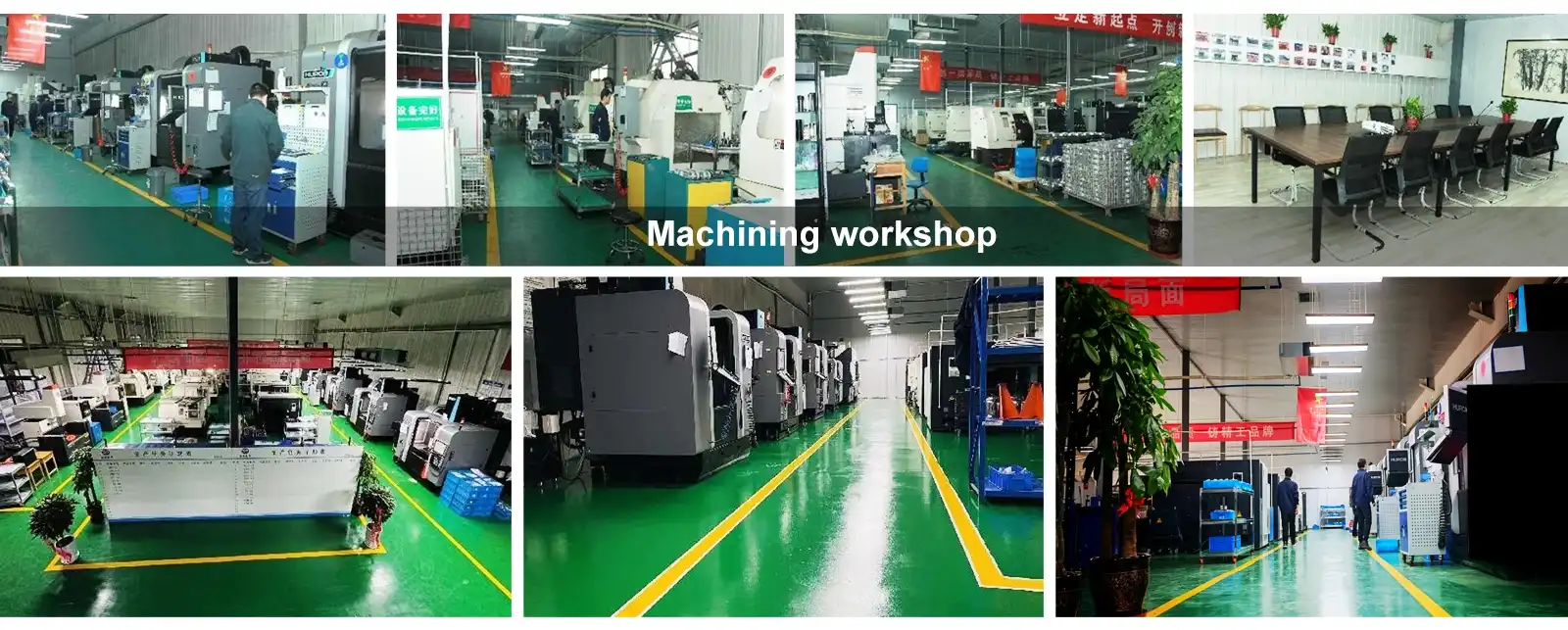
Confirm the Alloy Instead of Relying on Appearance
Material verification is a separate part of quality control. Two castings may seem virtually the same, yet they have distinct chemical compositions. If a client requires a certain alloy, then the provider should have a process to verify that the material used is in accordance with the necessary specification. Chemical composition study of metals is often carried out using Optical Emission Spectroscopy (OES). The result may be compared with the specification of the alloy concerned. For example, if an aluminum alloy such as A356 has been specified, confirm the chemical composition against the appropriate material criteria. Silicon, magnesium, iron, copper, and other elements affect the properties of the alloy. Visual examination should not be used for material identification. Material records should also be traceable to the appropriate melt, heat, or manufacturing batch, as needed by the project for repeat manufacture.
Documentation of the stuff that may be useful is:
- Designation of alloy
- Chemical make-up
- Recognition of heat or melting
- Materials certificate
- Lot of production
- Condition of heat treatment
- Mechanical test results when applicable
This may be quite helpful if a customer has to examine a quality problem a few months following delivery.
Verify Heat Treatment and Mechanical Properties When Required
Certain casting alloys are available in certain heat-treated states. In such circumstances, heat treatment records and mechanical testing may also need to be part of the examination. Tensile testing may offer data for ultimate tensile strength, yield strength, and elongation, according to the specifications. Production and testing of test coupons according to the appropriate standard may be performed. The frequency of examination should be determined in advance. One customer may want testing each manufacturing lot. Another application may want periodic verification . Another rationale for discussing quality criteria before mass manufacturing rather than after the components have been made.
Surface Quality Should Match the Application
Surface quality is often the easiest aspect of a casting to inspect, but it is also one of the areas where buyer and supplier expectations can differ. Raw gravity sand casting parts are not expected to have the same appearance as a machined component. Sand grain, cleaning marks, minor texture differences, and other characteristics can be normal for the process. The key is to distinguish normal casting characteristics from defects that could affect the part's use.
Identify Defects During Visual Inspection
Visual inspection is still part of ultimate quality control.
Inspectors may search for, depending on the design and application:
- Cold shut.
- Cracks in the Facade
- Inclusions of sand
- Blow holes.
- Too much flashiness
- Misalignment.
- Crumbs
- Burn on
- Vacant places
- Damage due to handling or cleaning
For example, cold shuts may develop when several streams of molten metal meet without fusing together correctly. Inclusions of sand may develop if any loose mold material gets lodged in the casting . Not every visible blemish is a cause for rejection. Acceptance is based on its position, size, depth, and influence on the operation of the component. Thus, a realistic inspection specification should specify what is to be accepted and what is not, rather than just state a “good surface”.
Inspect After Cleaning and Finishing
Cleaning of castings usually follows the shakeout. Shot blasting is used to remove remaining gravity sand casting parts and scale and provides a more consistent surface condition.
After cleaning, inspect the surface. Residual sand or scale might hide surface indications. If the casting is to be painted, coated, anodized, or machined later, then the required pre-treatment condition should also be specified. The surface that is to be machined as a sealing face has different requirements than the external surface that is to remain as cast, for example. If surface roughness is of functional relevance, this must also be stated. There is no reason for imposing a precision-machined surface requirement on a purposefully given as-cast region.
Use Penetrant Inspection for Relevant Surface Defects
Dye penetrant inspection, or liquid penetrant testing, may detect certain surface-breaking discontinuities that would not be seen during visual examination. The method usually entails washing the surface, applying penetrant, waiting for the needed dwell time, removing excess penetrant, and adding developer. Then relevant signals may be assessed in relation to the inspection technique and acceptance criteria.DPI might be effective when surface fractures are of particular concern. However, it cannot be regarded as a general guarantee for fault-free castings. Its scope is determined, and it must be applied appropriately, like other inspection techniques. The choice of the inspection technique should always be based on the real risk of the component.
Build the Inspection Plan Before Production
One of the best methods to avoid casting quality issues is to specify inspection standards before production starts.
The buyer should offer as much relevant technical information as feasible, for example:
Part Illustration
- Amendment drawing
- Grade of Material
- Annual/Batch Quantity
- Criteria for casting
- Machining specifications
- Important dimensions
- Surface specifications
- Heat Treatment Specifications
- NDT specifications
- Relevant standards
- Sample requirements
- Required Documents of Quality
This provides the provider with a clear foundation for production planning and quote. It also avoids a typical trap of finding out after manufacturing that the customer had anticipated some test or tolerance never specified in the initial technical specifications.
Separate First Article Inspection From Routine Production Inspection
A First Article Inspection is important when bringing in a fresh casting, new pattern, or a revised design.
You may inspect the first authorized sections in more detail to confirm:
- Geometry casting
- Key dimensions
- Machining allowance
- Stuff.
- Surface condition.
- Heat Treating
- Special inspection requirements
Once the procedure has been authorized, ordinary production may proceed according to the established sample and inspection plan. This is more feasible than doing the most intense examination of every component regardless of its use.
Keep Quality Records Traceable
Professional suppliers should trace inspection results back to the original production batch.
A documentation bundle may include (depending on project):
- Dimensional examination report
- Material Cert.
- Report Chemical analysis
- History of Heat Treating
- NDT report.
- Mechanical test report
- Conformity Certification
- Batch No.
For orders that repeat themselves, traceability is of great value. The supplier may then use this information to maintain the same material, process, and inspection criteria when the same part is purchased months later.
How to Evaluate a Gravity Sand Casting Supplier
The inspection equipment alone does not reveal the complete picture. A supplier may have the latest measurement equipment, but buyers need to understand how that equipment is integrated into the manufacturing process.
Ask about the supplier’s process for handling the component from mold preparation through to final delivery.
A good provider should be able to talk about:
- Pattern and mold control: How are patterns kept and dimensional changes controlled?
- Melting and material control: How is the alloy identified and confirmed before pour?
- Process control: How do you regulate the pouring temperature, mold condition, and other essential process parameters?
- Machining control: If machining is necessary, how is the transition from casting to final machining controlled?
- Inspection: What dimensions are verified and with what equipment, and how frequently are measurements taken?
- Does the provider give the necessary inspection report when required? NDT
- Traceability: Is it possible to trace the material and inspection data to a certain manufacturing batch?
- Nonconforming Parts: What if the Casting Does Not Meet Inspection Requirements?
These inquiries will provide you considerably more meaningful information than merely inquiring if a supplier has “strict quality control.”
Make Quality Requirements Part of the Purchase Order
The finest quality control begins before the first mold is formed. When bespoke castings are involved, the technical criteria should be agreed upon by the customer and supplier at the quote or engineering stage. Critical dimensions should be clearly indicated, the material specified, and any particular inspection noted. This is especially crucial for gravity sand casting items which will be machined after casting. Raw casting should have adequate material for machining. The finished component should meet the final design. It may be easier to communicate if the casting provider also does machining and inspection, since the dimensional requirements are related throughout the manufacturing process.
Conclusion
Evaluating gravity sand casting parts components involves more than just looking at a completed surface to see whether it appears clean. A quality program integrates the design, the material specification, the casting process, the machining needs, the inspection procedures, and the final paperwork. Three important aspects are dimensional correctness, internal and material integrity, and surface quality. Dimensional inspection verifies that the part will fulfill its assembly and machining requirements. Material verification and proper NDT are used to detect flaws that are not verifiable from the outside. Surface examination confirms that the casting and cleaning are adequate for the intended purpose. The most practical way is to specify approval criteria before manufacturing starts. •Material, critical dimensions, tolerance requirements, surface condition, NDT requirements, sampling strategy, and needed quality documentation. When comparing vendors, don't just listen to generic statements regarding quality. Ask how they measure parts, how they regulate machining allowance, how they track materials, how they deal with nonconforming castings, and whether they can produce inspection records for the actual manufacturing batch. For bespoke castings, giving the supplier the drawing, material grade, quantity, machining needs, and inspection expectations at the quote stage offers the supplier the knowledge to build an acceptable production and quality-control plan. This gives more clarity to the purchase process and fewer preventable quality problems in subsequent manufacturing stages.
FAQ
Q1: What is the most common defect found in gravity sand casting parts?
A: Gas porosity and shrinkage porosity are the most common issues. Gas porosity results from trapped air or gas released during solidification. Shrinkage occurs when the metal contracts and there is insufficient feed material to fill the void. Proper mold design and gating systems mitigate these risks.
Q2: How does gravity casting compare to die casting regarding internal quality?
A: Gravity casting generally offers superior internal integrity. The metal enters the mold with less turbulence compared to the high-pressure injection of die casting. Less turbulence means less trapped gas. This makes gravity casting suitable for parts requiring heat treatment or pressure tightness.
Q3: Can defects found during inspection be repaired?
A: Sometimes. Minor surface defects can often be polished out or repaired via welding, provided the customer's specifications allow it. However, structural defects like deep internal porosity usually require the part to be scrapped. Quality standards dictate what is repairable and what is not.
Q4: What documents should I request to verify quality standards?
A: You should request a Material Test Report (MTR) or Certificate of Compliance (CoC). This document includes the chemical analysis of the alloy, mechanical property test results (tensile strength), and confirmation that the parts passed NDT inspections like X-ray or dye penetrant testing.
Gravity Sand Casting Parts Supplier: Rongbao Enterprise
You require a partner who understands the stakes of your industry. Finding a supplier is easy, but finding a partner with verifiable quality standards is difficult. Rongbao Enterprise eliminates the guesswork from your supply chain. We specialize in manufacturing high-performance gravity sand casting parts. Our expertise focuses on critical infrastructure components. We produce Conductors for power transmission that keep the grid online.
Your parts undergo rigorous Mechanical processing. We use advanced CNC machining to achieve precise tolerances. We verify these dimensions with CMM technology. For the final touch, we apply shot-blasting surface treatment. This ensures a clean, uniform finish. We offer flexible OEM/ODM services. We deliver Customized solutions tailored to your specifications. Whether you need a prototype or a full Production run of 5000 pieces, we scale to meet your needs.
Our products originate from Xi'an, China, a hub of industrial excellence. We ensure they reach you safely. We use robust Wooden box Transportation packaging to prevent damage during transit. Do not compromise on quality. Contact Rongbao Enterprise today. Send your technical inquiries to steve.zhou@263.net or zhouyi@rongbaocasting.com. Let us provide the reliability your project demands.
References
1. ASTM International. "ASTM E155 - Standard Reference Radiographs for Inspection of Aluminum and Magnesium Castings." ASTM International, West Conshohocken, PA, 2020.
2. Campbell, John. "Complete Casting Handbook: Metal Casting Processes, Metallurgy, Techniques and Design." Butterworth-Heinemann, 2nd Edition, 2015.
3. ISO. "ISO 8062-3:2007 - Geometrical Product Specifications (GPS) — Dimensional and geometrical tolerances for moulded parts — Part 3: General dimensional and geometrical tolerances and machining allowances for castings." International Organization for Standardization, Geneva, 2007.
4. ASM International. "ASM Handbook, Volume 15: Casting." ASM International, Materials Park, OH, 2008.
5. Brown, John R. "Foseco Non-Ferrous Foundryman's Handbook." Butterworth-Heinemann, 11th Edition, 1999.
Learn about our latest products and discounts through SMS or email