- English
- French
- German
- Portuguese
- Spanish
- Russian
- Japanese
- Korean
- Arabic
- Greek
- German
- Turkish
- Italian
- Danish
- Romanian
- Indonesian
- Czech
- Afrikaans
- Swedish
- Polish
- Basque
- Catalan
- Esperanto
- Hindi
- Lao
- Albanian
- Amharic
- Armenian
- Azerbaijani
- Belarusian
- Bengali
- Bosnian
- Bulgarian
- Cebuano
- Chichewa
- Corsican
- Croatian
- Dutch
- Estonian
- Filipino
- Finnish
- Frisian
- Galician
- Georgian
- Gujarati
- Haitian
- Hausa
- Hawaiian
- Hebrew
- Hmong
- Hungarian
- Icelandic
- Igbo
- Javanese
- Kannada
- Kazakh
- Khmer
- Kurdish
- Kyrgyz
- Latin
- Latvian
- Lithuanian
- Luxembou..
- Macedonian
- Malagasy
- Malay
- Malayalam
- Maltese
- Maori
- Marathi
- Mongolian
- Burmese
- Nepali
- Norwegian
- Pashto
- Persian
- Punjabi
- Serbian
- Sesotho
- Sinhala
- Slovak
- Slovenian
- Somali
- Samoan
- Scots Gaelic
- Shona
- Sindhi
- Sundanese
- Swahili
- Tajik
- Tamil
- Telugu
- Thai
- Ukrainian
- Urdu
- Uzbek
- Vietnamese
- Welsh
- Xhosa
- Yiddish
- Yoruba
- Zulu
Production Process For Casting Craft Souvenirs
While “casting craft souvenirs” is a broad category, our typical configuration uses A356 aluminum via precision casting, followed by CNC machining and shot blasting. The standard piece weight is around 2 kg, and our line is balanced for a capacity of about 500 pieces per run, with wooden‑box transport packaging to protect surfaces and edges. Each order is customized under OEM/ODM arrangements and executed under our integrated management system certified to ISO9001:2015 (quality), ISO14001 (environment), and ISO45001 (occupational health and safety).
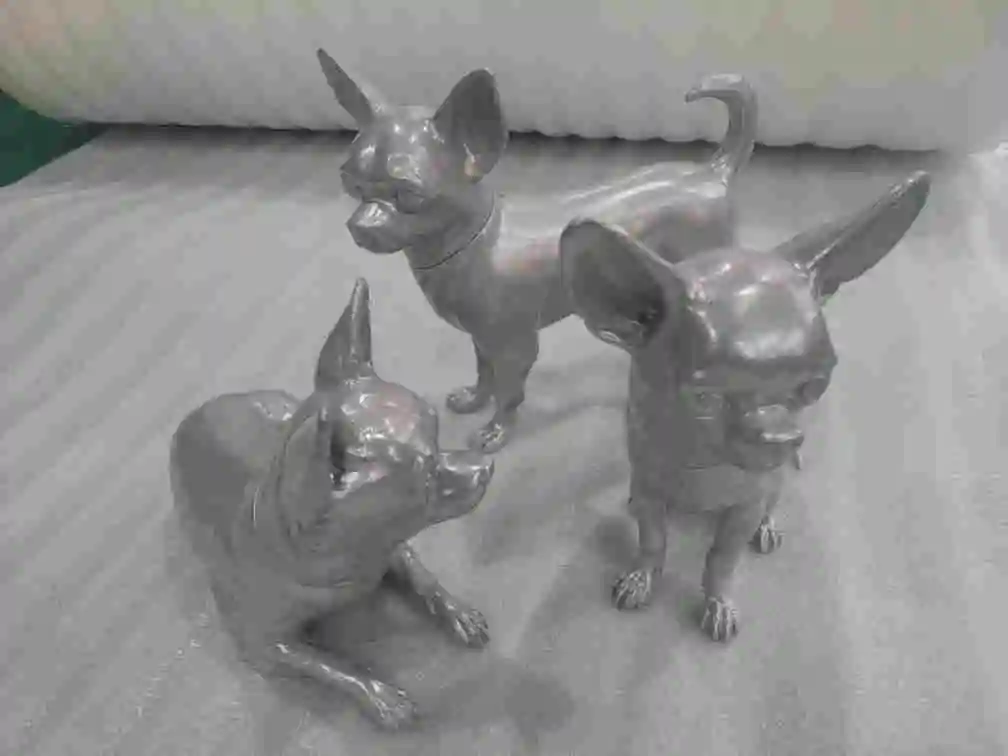
Pre-Production Preparation: Align with Custom Requirements
Every successful souvenir program begins with alignment. In practical terms, that means translating a concept—often a logo, commemorative motif, or architectural silhouette—into a manufacturable model. We start with reference drawings or a brief from the client’s purchasing manager or engineering lead. If there is no 3D file, our engineering group constructs one in a common interchange format such as STEP or IGES and validates it for casting: draft angles are added (typically 1–3 degrees for A356), fine features are checked for minimum wall thickness, and relief is built in for subsequent machining. The first gate review challenges the design on three fronts: castability, dimensional stability, and surface fidelity.
After the model is stable, we run a process design study. Runners, gates, and risers are placed to control metal flow and solidification. For casting craft souvenirs, balanced filling helps maintain surface detail in low-relief areas like lettering. We plan shrinkage allowances for A356 (commonly around 1.3%, but validated per geometry) and define machining stock—enough to clean up datum faces without driving unnecessary cycle time. If the souvenir includes inserts or multi-material assemblies, fixtures are designed and a poka-yoke scheme is documented to prevent mix-ups during machining or finishing.
Quality planning is integrated at this stage. A control plan lists critical dimensions, cosmetic classes, and sampling frequencies. Incoming material inspection includes alloy certificates for A356 heats and verification via spectrometer. For buyers concerned with cost control and timelines, this early rigor avoids rework later. We set a preliminary schedule that includes tooling fabrication, trial casting, and a first article inspection (FAI). Procurement teams receive a manufacturing readiness package summarizing risks, mitigations, and the projected takt time for a 500‑piece lot. Only after sign‑off do we proceed to tooling.
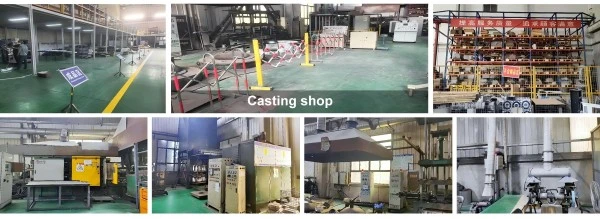
Casting: Shape Formation via Precision Casting
Precision casting (investment casting) is well‑suited to small and medium souvenirs with fine texture. We produce wax patterns in dimensionally controlled dies, assemble them into trees, and build ceramic shells through alternating slurry and stucco coats. The shell system is tuned for A356, striking a balance between permeability and strength so that the metal front doesn’t erode details during pour. Dewaxing and firing follow, ensuring burnout is complete to reduce gas defects.
Melt practice for A356 prioritizes cleanliness. We charge verified ingot, use fluxes where appropriate, and apply inert‑gas degassing to bring hydrogen below acceptable thresholds. Temperature control is conservative—high enough for flow into thin filigree but not so high that it coarsens microstructure. Pouring is executed with attention to turbulence; smooth, low‑head streams reduce oxide film formation. The riser strategy supports directional solidification toward the feeders, helping avoid shrinkage cavities in aesthetic zones.
After solidification, shells are knocked out. Gates and risers are removed with controlled cutting paths to protect adjacent surfaces. At this stage, we perform a first pass inspection: visual checks for misruns, cold shuts, and ceramic inclusions; dimensional checks on reference points to ensure we remain within the machining stock plan. Because casting craft souvenirs often include branding and commemorative text, we verify that all characters are legible across the tree, not just on the optimal positions. Heat treatment may be applied based on the design intent; for display‑grade aluminum souvenirs where structural loads are minimal, we typically keep the as‑cast temper unless the customer specifies a different property profile.
Surface preparation sets the stage for finishing. Shot blasting is used to even the tone, remove minor remnants of shell material, and create a consistent tactile feel. For pieces destined for anodizing or paint, we evaluate surface Ra and, if needed, modify the blasting media to achieve uniformity. This controlled finish makes the subsequent CNC work cleaner and shortens deburring time.
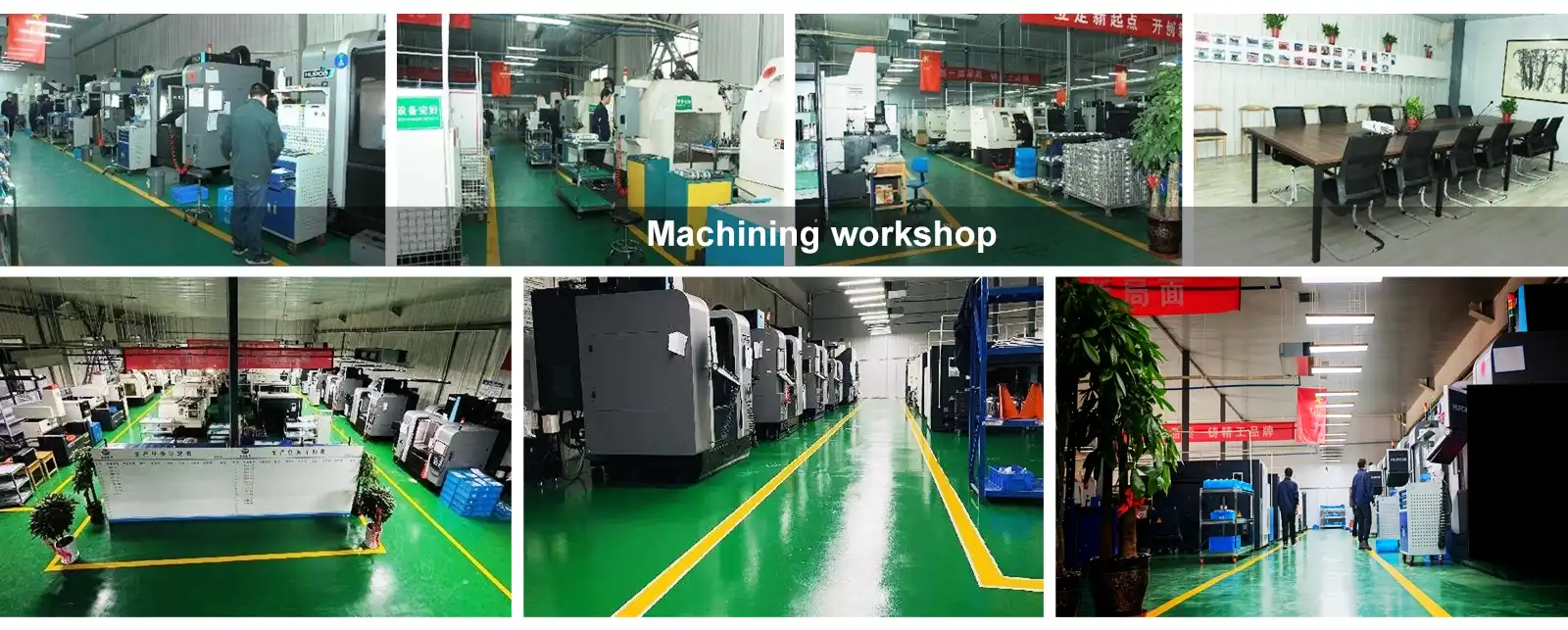
Post-Casting Refinement: CNC Machining for Precision & Detail
CNC machining brings the part to its final, precise geometry and refines details that casting alone cannot resolve. We fixture the castings on soft jaws or custom nests that reference stable surfaces identified during process planning. Toolpaths are programmed to avoid chatter on thin sections; where lettering or emblems require crisp edges, we combine larger tools for bulk removal with fine tools for edge definition. Coolant strategy and feed rates are tuned to A356 to minimize built‑up edge and preserve surface integrity.
Dimensional control links back to the control plan. Critical datums—flatness on base planes, concentricity for any bore features, and location of mounting holes—are verified in‑process using probing cycles. This helps keep cycle times predictable for buyers managing delivery windows. After machining, deburring removes sharp edges without rounding design intent. If the souvenir includes assembly steps—say, a base, a plaque, or a stand—we perform a dry fit to validate stack‑up tolerances before final cleaning.
Final finishing closes the loop. Shot blasting provides the uniform matte surface specified for most commemorative pieces; alternative finishes can be evaluated on request. Each piece is cleaned, dried, and bagged. For transport, we use wooden boxes with internal dunnage to prevent movement and edge contact; humidity indicators can be added for long routes. A certificate packet accompanies shipments: alloy verification for A356, process traceability, and inspection records aligned to ISO9001:2015 requirements. By this point, the casting craft souvenirs are not merely decorative—they are reproducible products with documented processes, which matters when procurement teams need predictable quality at a controlled cost.
From concept alignment to precision casting and CNC refinement, the workflow described here focuses on practical controls that matter to purchasing and engineering teams: stable quality, predictable timelines, and transparent documentation. By standardizing around A356, investment casting, and controlled finishing, Rongbao delivers commemorative pieces that meet design intent without compromising throughput or traceability. When you are ready to translate a brand story into metal, our process is ready to scale from a pilot run to a full 500‑piece batch—consistently and responsibly.

Product Snapshot and Buyer Notes
Application: Crafts (commemorative, corporate, and event souvenirs)
Material: A356 aluminum
Weight (typical): ~2 kg per piece
Core Process: Precision casting with CNC machining
Surface Treatment: Shot blasting; other finishes upon request
Certification: ISO9001:2015, ISO14001, ISO45001
OEM/ODM: Customized to specification (STEP/IGES supported)
Production Capacity: ~500 pieces per batch
Procurement considerations: fixed tooling amortization, gating marks location for cosmetic zones, machining allowance strategy, and packaging tests for final leg of transport.
To initiate a design review or request samples for your casting craft souvenirs program, contact Rongbao at steve.zhou@263.net or zhouyi@rongbaocasting.com. Our team will provide a feasibility assessment, schedule, and quotation aligned with your cost and delivery targets.
References
1. ASM International. Metals Handbook, Volume 15: Casting. ASM International.
2. ISO 9001:2015 Quality management systems — Requirements. International Organization for Standardization.
3. Davis, J. R. Aluminum and Aluminum Alloys. ASM Specialty Handbook, ASM International.
4. Campbell, J. Complete Casting Handbook: Metal Casting Processes, Metallurgy, Techniques and Design. Elsevier.
5. ISO 14001 and ISO 45001 Standards. International Organization for Standardization.
Learn about our latest products and discounts through SMS or email