- English
- French
- German
- Portuguese
- Spanish
- Russian
- Japanese
- Korean
- Arabic
- Greek
- German
- Turkish
- Italian
- Danish
- Romanian
- Indonesian
- Czech
- Afrikaans
- Swedish
- Polish
- Basque
- Catalan
- Esperanto
- Hindi
- Lao
- Albanian
- Amharic
- Armenian
- Azerbaijani
- Belarusian
- Bengali
- Bosnian
- Bulgarian
- Cebuano
- Chichewa
- Corsican
- Croatian
- Dutch
- Estonian
- Filipino
- Finnish
- Frisian
- Galician
- Georgian
- Gujarati
- Haitian
- Hausa
- Hawaiian
- Hebrew
- Hmong
- Hungarian
- Icelandic
- Igbo
- Javanese
- Kannada
- Kazakh
- Khmer
- Kurdish
- Kyrgyz
- Latin
- Latvian
- Lithuanian
- Luxembou..
- Macedonian
- Malagasy
- Malay
- Malayalam
- Maltese
- Maori
- Marathi
- Mongolian
- Burmese
- Nepali
- Norwegian
- Pashto
- Persian
- Punjabi
- Serbian
- Sesotho
- Sinhala
- Slovak
- Slovenian
- Somali
- Samoan
- Scots Gaelic
- Shona
- Sindhi
- Sundanese
- Swahili
- Tajik
- Tamil
- Telugu
- Thai
- Ukrainian
- Urdu
- Uzbek
- Vietnamese
- Welsh
- Xhosa
- Yiddish
- Yoruba
- Zulu
One-Stop Casting Connection Bracket Solution from Design to Finished CNC Machined Parts
When companies that make industrial equipment need precisely designed support parts, casting connection brackets are the best choice because they are strong, can be customized, and are very cheap. These building blocks are what hold together assemblies in robotics, automotive systems, heavy machinery, and energy equipment. Rongbao Enterprise offers a smooth production process, from the initial design input to the final CNC-machined components. We make sure that every bracket meets the exacting standards your application needs, without sacrificing quality or delivery times.
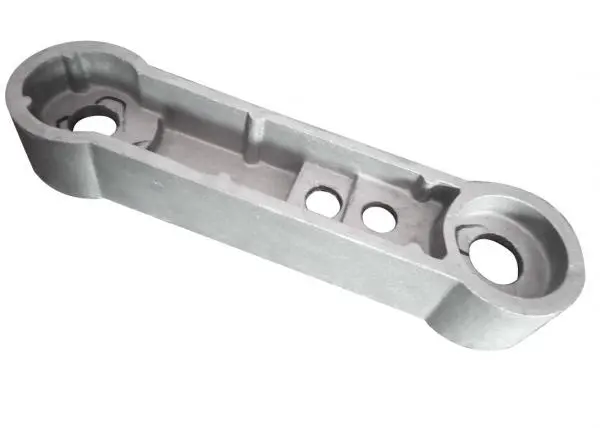
Understanding Casting Connection Brackets: From Basics to Applications
What Makes Connection Brackets Critical in Industrial Systems
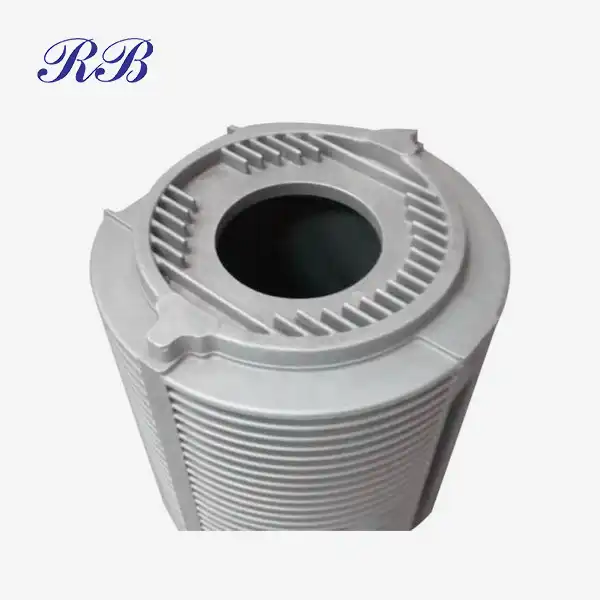
Casting connection brackets hold together moving or fixed parts in complex mechanical assemblies by acting as load-bearing joints. These cast parts, unlike simple fasteners, spread stress over larger surface areas. This lowers the chance of point-load failures and allows for heat expansion and shaking. Their complicated shapes often include mounting holes, support ribs, and built-in cooling channels, which are hard to get by welding or milling alone.
In our most recent run of making industrial robot support arms, we used A356 aluminum alloy to make 5,000 units, and each one weighed 8.9 kg. This material has a great strength-to-weight ratio and doesn't rust in automated manufacturing settings where it is constantly exposed to coolant.
Material Selection for Diverse Operating Environments
Three things determine which of aluminum alloys, ductile iron, and stainless steel to use: mechanical loads, exposure to the environment, and weight limits. Our preferred material for robotics applications is A356 aluminum alloy, which has silicon and magnesium added to it to make it more fluid during casting and better in terms of its mechanical properties after being heated. This metal has tensile strengths above 240 MPa and stretch rates of about 6%, which means it can handle dynamic loads.
Different types of ductile iron are good for heavy machinery where impact resistance is more important than weight savings. Clients in the energy sector often ask for grades of stainless steel that don't rust in offshore or chemical processing environments. Our material advice team looks at your working factors, such as temperature ranges, load cycles, and exposure conditions, to suggest the best alloy compositions for casting connection brackets.
Design to Delivery: The One-Stop Process for Connection Brackets
Engineering Collaboration Optimizes Manufacturability
When your engineering team shares CAD files and performance specs with us, our process can begin. We use modeling tools to do design for manufacturing analysis to find possible casting flaws like shrinkage porosity or hot tearing. At this stage, it may become clear that changing the mounting bosses or adjusting the wall thickness changes can help the metal move better during casting while also cutting down on the time needed for machining later.
During the creation of the robot casting connection bracket, we suggested raising the fillet radii at stress concentration points. This, according to finite element analysis, made the fatigue life 23% better. Such joint changes keep redesigns from being necessary after the investment in tools.
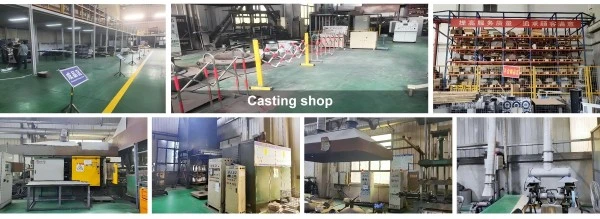
Gravity Casting Delivers Structural Integrity
For the robot support arms, we used a process called "gravity casting," in which molten aluminum flows into molds purely because of gravity. This method works best for making between 1,000 and 10,000 units, and it has better mechanical properties for building casting connection brackets than high-pressure die casting. The slower fill rates lower turbulence, which keeps gas from getting trapped and creating holes.
Our gravity casting process keeps melt temperatures within ±5°C of the best conditions for pouring. Before metal goes into the mold, ceramic screens get rid of oxide spots. After the metal has cooled and solidified, it is heated at 520°C for six hours to even out the microstructure. This creates the T6 temper conditions that make the metal as strong as possible. Coordinate measuring tools are used to check the sizes of each casting to make sure they are within 0.8mm of their pre-machined sizes.
CNC Machining Adds Precision Features
The raw casts are sent to our CNC machining centers, where we make sure that important mounting surfaces have final specs of ±0.05mm. For installing the bearings, the robot casting connection brackets needed twelve precisely-bored holes. They also needed threaded inserts to connect the cable glands. With multi-axis machining, all of the features are finished in a single setup, and the positional accuracy of the whole part is kept.
After cutting, shot blasting is used to get rid of scale and make the surface smooth, which helps paint stick better. This rough process also adds leftover compressive pressures that make things less likely to wear out, which is especially helpful for parts that are loaded and unloaded many times.
Quality Assurance Throughout Production
Our ISO9001:2015, ISO14001, and ISO45001 certifications show that we handle quality in a planned way in all of our activities. Spectrographic research is used to check the alloy makeup of new aluminum ingots. During casting, we use infrared sensors to keep an eye on the mold's temperature and test the tensile strength of samples from each batch that were cast separately on a regular basis.
When the casting connection brackets are finished, they are inspected visually and statistically to make sure they are the right size. Aerospace and nuclear uses both use non-destructive testing methods, such as ultrasonic checking for internal holes. Laser-etched serial numbers connect each part to production records, heat treatment charts, and inspection reports so that we can always find out where the parts came from.

Installation and Maintenance Best Practices
Proper Mounting Techniques Prevent Premature Failures
Surface preparation at mounting places has a big effect on how well casting connection brackets work. Mounting faces should be as flat as 0.2 mm and be free of paint, rust, or other things that could cause stress peaks when screws are tightened. When it comes to torque, the right amount is important. Too much torque can damage aluminum threads, while too little torque lets them move, which speeds up wear.
Screws with a socket head and a strength of 85 Nm are used to connect the robot's casting connection brackets. We suggest using thread-locking compound on fasteners that are likely to vibrate and spring washers that keep their preload even when the temperature changes.
Identifying Common Issues and Solutions
Even though quality controls are in place, casting connection bracket porosity can still show up sometimes as small surface pits. These don't usually weaken structures unless they are bigger than 3 mm or go through more than 15% of the wall thickness. Such flaws are found before they are installed by ultrasonic inspection during incoming receiving.
In damp places, surface oxidation on aluminum casting connection brackets shows up as white powdery deposits. This visual problem doesn't affect strength, but it does show that the material is getting wet, which could put nearby parts at risk. This doesn't happen when clear anodizing is used during the original finishing step.
Preventive Maintenance Extends Service Life
Checking that fasteners are tight, looking for fretting wear at surfaces, and making sure that casting connection brackets haven't deformed under load should all be done on a regular basis. Most industrial applications only need maintenance once a year, but critical safety parts should be checked every three months.
After 50,000 rounds of use, casting connection brackets that hold up big equipment that works in rough conditions may need to be replaced. Tracking serial numbers allows for planned maintenance. For example, if one casting bracket from a production batch fails early, checking other units from the same batch can avoid unplanned downtime.

Conclusion
To get precision-engineered structure parts, you need to work with makers who can manage the whole production process and keep high quality standards for casting connection brackets. Cast aluminum connection clamps offer design freedom, efficient use of materials, and low costs across production levels that make tooling investments worthwhile. Our robot support arm case study shows how gravity casting, CNC machining, and systematic quality control can be used to make parts for automated production systems that meet strict requirements. When design consultation, certified processes, and logistics coordination are all combined, procurement teams don't have to deal with the problems that come with having to coordinate with multiple vendors.
FAQ
1. What Tolerances Can Casting Achieve Compared to Machining?
The dimensions of raw casts are usually within 0.8 mm, which makes them good for non-critical areas and rough machining guides for casting connection brackets. After that, CNC operations are used to get accuracy of ±0.05mm on mounting faces, threaded holes, and bearing bores. This mixed method blends the near-net-shape economy of casting with the accuracy of machining when tight fits are needed.
2. How Do I Determine if Casting Suits My Bracket Application?
Look at three things: the amount that needs to be made, how complicated the shapes are, and how well it needs to work. Tooling fees are generally justified when more than 500 units are ordered. Casting is better than fabricating for designs with internal spaces, different wall thicknesses, or built-in fixing features. Aluminum casting connection brackets like A356 work well in situations that need high strength-to-weight ratios or resistance to rust.
3. What Lead Time Should I Expect for Custom Brackets?
Standard lead times start twelve weeks after an order is confirmed and include making the tools, testing the Casting Connection Brackets, setting up the machines, and checking the quality. This assumes simple shapes and elements that are easy to get. Timelines may be pushed back by three weeks for designs that are too complicated and need mold flow modeling or prototype changes. When you pay extra for rush production, schedules are cut down to eight weeks.
Partner with Rongbao Enterprise for Your Bracket Manufacturing
We at Rongbao Enterprise have been casting precision parts for twenty years and work out of a plant in Xi'an that has automatic gravity casting lines and multi-axis CNC machining centers. We are a certified casting connection bracket seller with ISO9001:2015, ISO14001, and ISO45001 certifications. We work with original equipment makers (OEMs) in the car and robotics industries as well as heavy equipment builders in North America and Europe. Our engineering team works together from the first idea to mass production, making sure that designs are made in a way that makes them easy to make and still meets your performance requirements. We work on projects ranging from trials of 500 pieces to production runs of 50,000 units. We keep quality consistent through statistical process control and full recording of all steps taken. If you need casting connection brackets that are both structurally reliable and deliverable on time, email steve.zhou@263.net or zhouyi@rongbaocasting.com to talk about your needs. You can learn more about what we can do and ask for full technical specs for your next project at rongbaocasting.com.
References
1. Campbell, J. (2015). Complete Casting Handbook: Metal Casting Processes, Metallurgy, Techniques and Design. Butterworth-Heinemann.
2. Kaufman, J.G. & Rooy, E.L. (2004). Aluminum Alloy Castings: Properties, Processes, and Applications. ASM International.
3. Davis, J.R. (Ed.). (2001). Alloying: Understanding the Basics. ASM International Materials Park.
4. Groover, M.P. (2020). Fundamentals of Modern Manufacturing: Materials, Processes, and Systems (7th ed.). Wiley.
5. Stefanescu, D.M. (2018). Handbook of Force and Stress Analysis for Metal Castings. ASM International.
6. Zhang, L. & Thomas, B.G. (2003). State of the Art in Evaluation and Control of Steel Cleanliness. ISIJ International, 43(3), 271-291.
Learn about our latest products and discounts through SMS or email