- English
- French
- German
- Portuguese
- Spanish
- Russian
- Japanese
- Korean
- Arabic
- Greek
- German
- Turkish
- Italian
- Danish
- Romanian
- Indonesian
- Czech
- Afrikaans
- Swedish
- Polish
- Basque
- Catalan
- Esperanto
- Hindi
- Lao
- Albanian
- Amharic
- Armenian
- Azerbaijani
- Belarusian
- Bengali
- Bosnian
- Bulgarian
- Cebuano
- Chichewa
- Corsican
- Croatian
- Dutch
- Estonian
- Filipino
- Finnish
- Frisian
- Galician
- Georgian
- Gujarati
- Haitian
- Hausa
- Hawaiian
- Hebrew
- Hmong
- Hungarian
- Icelandic
- Igbo
- Javanese
- Kannada
- Kazakh
- Khmer
- Kurdish
- Kyrgyz
- Latin
- Latvian
- Lithuanian
- Luxembou..
- Macedonian
- Malagasy
- Malay
- Malayalam
- Maltese
- Maori
- Marathi
- Mongolian
- Burmese
- Nepali
- Norwegian
- Pashto
- Persian
- Punjabi
- Serbian
- Sesotho
- Sinhala
- Slovak
- Slovenian
- Somali
- Samoan
- Scots Gaelic
- Shona
- Sindhi
- Sundanese
- Swahili
- Tajik
- Tamil
- Telugu
- Thai
- Ukrainian
- Urdu
- Uzbek
- Vietnamese
- Welsh
- Xhosa
- Yiddish
- Yoruba
- Zulu
ADC12 vs A356 aluminum casting material: Which one is better for power supply cover?
When choosing materials for power supply covers, the choice between ADC12 and A356 aluminum alloys has a big effect on how well the product works and how much it costs to make. After looking at both options in a number of different projects, ADC12 is the better choice for most power source cover uses. Because it is more fluid when it's being cast, thin walls can be made, extra processing can be done faster, and it's cheaper, so it can be used on a big scale. ADC12 is preferred by many companies that make aluminum gravity casting parts for enclosures that need to be stable in terms of size and cost, especially when operating temperatures stay moderate and structural loads stay within normal ranges.
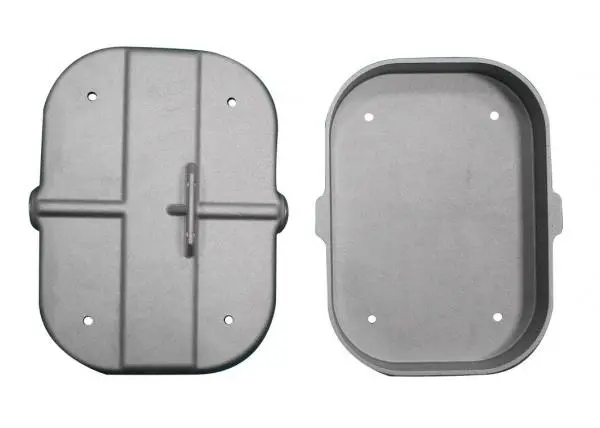
Understanding ADC12 and A356 Aluminum Casting Materials
The process of choosing materials has a big impact on how well power source covers work, how efficiently they are made, and how much they cost to own overall. ADC12 and A356 are both tried-and-true aluminum alloys in the casting industry, but their engineering goals are very different.
Chemical Composition and Material Properties
ADC12, which is also called Al-Si-Cu alloy, is made up of about 10–12% silicon, 2–3% copper, and small amounts of iron, manganese, and zinc. When the material is molten, this mixture is very fluid, which lets makers make complex shapes and thin parts as thin as 1.5 mm. The silicon makes it easier to cast, and the copper makes it harder and easier to work with. Tensile strength is usually between 240 and 280 MPa, and stretch is between 2 and 3%. This means that it can be used for barriers that don't have to deal with a lot of mechanical stress.
A356 alloy is made up of 6.5-7.5% silicon and 0.25-0.45% magnesium. Copper is not included on purpose to make the metal more resistant to rust. After being heated, this mixture has better mechanical properties, with tensile strengths of 280–320 MPa and elongation rates of 8–10%. The magnesium part makes it possible for precipitation hardening to happen during T6 treatment, which greatly increases the yield strength. However, these benefits come at the cost of being less castable than ADC12, especially in complicated thin-wall applications. For aluminum gravity casting parts, this trade-off is particularly relevant, as the slower filling rates of gravity casting demand higher fluidity than A356 can always provide, making process design and gating optimization essential to avoid cold shuts and misruns.
Typical Applications Across Industries
ADC12 is the best material for applications that need precise measurements, a smooth surface, and low cost. ADC12 is often used in electronic enclosures, gearbox housings for cars, and market goods cases. Because the metal responds so well to die-casting methods, it's perfect for making more than 5,000 pieces a month. Power supply makers like how well ADC12 works in temperatures below 150°C, where its thermal conductivity of 96 W/m·K effectively gets rid of heat without needing more expensive materials.
A356 is used in aerospace parts that need to be strong, high-performance auto parts, and structural elements that need to have better mechanical properties. Because it doesn't rust, it's useful for marine uses and housings for outdoor tools. When power supply covers need to handle heavy mechanical loads, temperature changes above 200°C, or corrosive conditions, A356 is worth the extra cost because it lasts longer and fails less often.
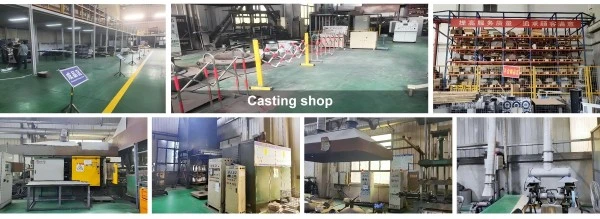
Aluminum Gravity Casting Process and Its Influence on ADC12 vs A356 Performance
Knowing how the casting method affects the end properties of a part helps sourcing teams and engineers choose the best materials and set the best design parameters. The way the power supply cover is made has a direct effect on the porosity levels, grain structure, and consistency of dimensions. These are all important factors in how well the cover works.
Process Overview and Alloy-Specific Considerations
For gravity casting, melted aluminum is poured into fixed metal molds, and the mold is left empty so that gravity can fill the space without any help from outside pressure. The controlled method makes parts with a better surface finish than sand casting, with Ra values below 3.2μm that don't need any extra finishing. The method works well for medium to high volume production, and it's still easy to make changes to the design by adjusting the mold.
Because it has a low melting point (580°C) and is very fluid, ADC12 works very well in gravity casting. The alloy fully fills in complex mold details, reducing cold shut flaws and maintaining wall thickness across complex shapes. When the right gating and riser design practices are used, the material solidifies quickly and has few shrinkage holes. When we use ADC12 for gravity casting at Rongbao Enterprise, we regularly get dimensional limits of ±0.15mm for power supply covers that weigh 0.24 kg, which meets strict OEM requirements.
When gravity casting A356, the process needs to be more carefully controlled. Because it melts at a higher temperature (615°C) and is less fluid, it needs to be poured at the right temperature and molded before it can be used. Controlled cooling rates and the subsequent T6 heat treatment are very good for the alloy because they break up magnesium-silicon precipitates before aging to get the best mechanical properties. The A356 gravity casting process makes good parts, but it takes more technical know-how and more time than the ADC12 process. For aluminum gravity casting parts, this additional process complexity is a worthwhile trade-off when the application demands superior fatigue resistance and pressure-tight integrity, whereas ADC12 remains the faster, lower-cost alternative for non-critical components.
Design Considerations and Manufacturability
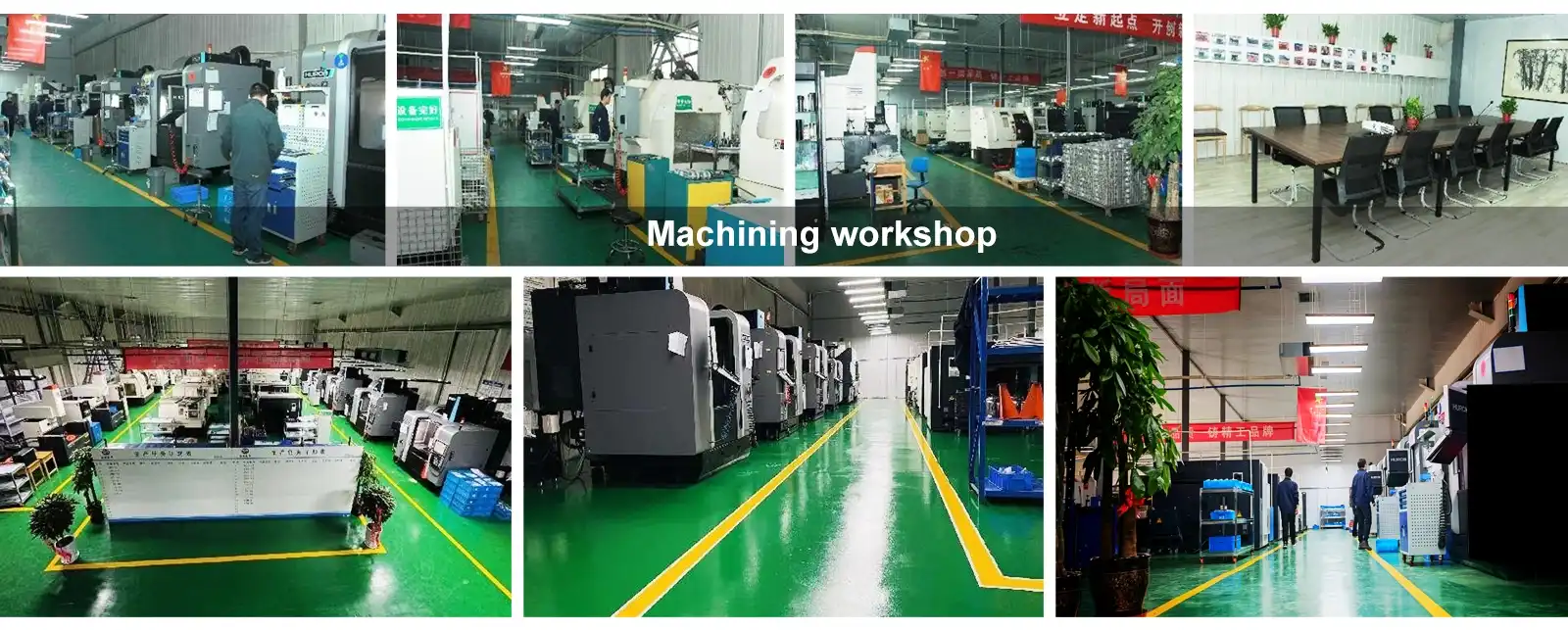
Wall thickness uniformity has a big impact on the quality of casting, no matter what alloy is used. ADC12 lets power supply covers have minimum wall sections of 2.0 mm, which gives them enough strength while cutting down on material use and part weight. Because the metal is so easy to machine, CNC cutting can be used to make mounting holes, ventilation slots, and connector cuts without wearing out the tools too quickly. When you use shot blasting to treat the surface, you get a uniform matte finish and get rid of small surface flaws. This gets the parts ready for powder coating or anodizing if you need extra rust protection.
A356 usually needs walls that are at least 2.5 to 3 mm thick to make sure that the mold is filled completely and that the mechanical properties are good after heat treatment. Designers have to take into account that the alloy is less fluid when they are defining deep ribs or complex interior features. However, A356's higher strength-to-weight ratio can make up for thicker sections in situations where structural loads are higher than what ADC12 can handle. The material works well with CNC machining, but the cutting settings and tool choices need to be changed so that the material doesn't get too hard during heavy cuts.

Comparing ADC12 vs A356 for Power Supply Covers: Performance and Cost Analysis
By measuring differences in performance and costs, data-driven material selection can be done that meets the needs of the application and stays within the budget. This study looks at what actually happened in the real world when power source covers were made in different quantities and with different performance requirements.
Mechanical Performance and Thermal Behavior
Mechanical testing shows that ADC12 is strong enough for most power supply cases, keeping the electronics inside safe from physical damage and holding the mounting hardware. With a tensile strength of about 260 MPa and a Brinell hardness of 75 to 85 HB, ADC12 covers can handle normal handling during assembly and installation in the field. The material stays the same size at temperatures ranging from -40°C to 120°C, which is hot enough to meet most industrial power source thermal profiles.
When covers need to hold heavy parts or withstand higher impact forces, A356 T6 is better from a mechanical point of view. The risk of brittle failure under shock loading is lower when the tensile strength is more than 300 MPa and the extension rate is three times higher than ADC12. This ability to bend is useful in transportation where vibration and contact loads build up over long periods of time. The better resistance to corrosion makes the product last longer in harsh environments, but this feature doesn't help most indoor power supply installations much.
In power supply cover applications, there aren't big differences in how different alloys handle heat. The thermal conductivity of ADC12 makes it easy for heat to move from inside the device to the outside of the enclosure. There, convection and radiation move the heat to the air around the device. At 150 W/m·K, A356 has slightly better thermal conductivity, but for most power source thermal loads below 100W, this 56% gain doesn't make up for the extra cost.
Cost Structure and Economic Considerations
The price of raw materials strongly favors ADC12; in present markets, they cost 15-20% less per kilogram than A356. This difference gets bigger when you look at output numbers. For example, if you need 5,000 0.24 kg covers a year, choosing ADC12 will save you more than $2,000 a year in material costs. Manufacturing efficiency increases economic benefits even more, as ADC12's better castability lowers scrap rates by 30–40% compared to A356 in complicated shapes.
Processing prices show more benefits of the ADC12. Since the alloy doesn't need to be heated after it's been made, it saves 8–12 hours of heating time and energy use per batch. Because ADC12 is so easy to machine, CNC operations go 25% faster, which saves money on labor and shortens lead times. The ADC12's working speed becomes more valuable when clients ask for customized features that need more drilling, tapping, or milling processes. For aluminum gravity casting parts, this machinability advantage is especially pronounced, as the as-cast surface finish already reduces preliminary cutting requirements. Aside from material and processing costs, supply chain issues affect the total landed costs. ADC12 parts are easier to get from more suppliers and have faster lead times—usually 4 to 6 weeks from order to delivery, compared to 6 to 8 weeks for A356 parts that need to be heat treated. Many sellers will accept groups of 1,000 pieces of ADC12, while the minimum order quantity for heat-treated A356 parts is usually 2,500 pieces. These things help buying teams that handle multiple product lines make better use of their working capital and lower the costs of keeping goods on hand.
Best Practices and Recommendations: Selecting Between ADC12 and A356 for Power Supply Covers
When choosing materials strategically, you have to think about performance needs, cost constraints, and the supply chain. Clear choice factors make it easier to come up with specifications and evaluate suppliers.
Application-Specific Selection Guidelines
The ADC12 is the best choice when power supply covers are mostly used for physical protection and mounting structures that don't have to handle heavy mechanical loads. The ADC12 is cost-effective and easy to make, which makes it good for applications that work in temperatures below 120°C and are hit occasionally. The material works well for high-volume production, where lowering unit costs directly helps the company's position in the market. ADC12 is usually a good choice for power supplies for consumer electronics, industrial controls, and commercial lighting.
A356's high price is justified in situations where better mechanical qualities or higher corrosion protection are needed. The fact that A356 doesn't contain copper makes it better for outdoor projects that are subject to water, salt spray, or industrial atmospheres. The ductility and fatigue strength of A356 are well used in heavy-duty power supplies that have to hold heavy components or are exposed to vibrations during shipping. When power supply covers do more than just protect the enclosure, like adding structural mounting functions, the A356 mechanical advantages often pay for themselves through longer service life and fewer warranty claims.
Design Optimization Strategies
Early on in the development process, when design engineers and manufacturing specialists work together, costly redesigns are avoided and time to market is sped up. By reviewing designs for manufacturability, you can find changes to the shape that make the casting better without affecting how it works. Making changes to the wall thickness transitions, moving ribs away from important areas, and finding the best gate locations can lower the risk of porosity and make sure that the dimensions are the same from one production run to the next.
Before investing in production tools, prototyping checks that design ideas are correct. Rapid prototype casting through temporary molds confirms fill patterns, finds possible flaws, and lets you try functionality in real-world settings. This check lowers the risks of starting production and boosts trust in choices about which materials to use. At Rongbao Enterprise, we help customers develop prototypes and deliver them quickly (within two to three weeks), which lets them go through design iteration cycles more quickly.
Conclusion
Choosing between ADC12 and A356 as a material for power supply covers depends on how well performance needs are balanced with cost and manufacturing efficiency. Additionally, ADC12 is a great deal for most uses because it is easier to cast, machine, and save money, and it has good enough mechanical qualities for most common uses. A356 is used in specific situations where extra strength, ductility, and corrosion resistance are needed. However, because of these benefits, it costs more and takes longer to get. For aluminum gravity casting parts, A356 is often the preferred choice when structural integrity and pressure tightness are critical, while ADC12 remains the economical option for less demanding geometries. To do buying right, you need to make clear specifications, carefully evaluate suppliers, and get help from engineers who can work together. Working with certified makers who keep their quality systems strong guarantees consistent part quality and dependable delivery performance throughout the duration of a product.

FAQ
1. What are the main differences between ADC12 and A356 aluminum alloys?
The higher silicon and copper percentage in ADC12 makes it more fluid and easier to machine at a lower cost. When magnesium is used instead of copper in A356, the metal has better functional qualities after being heated and is less likely to rust. ADC12 is good for high-volume production that needs to be cost-effective, while A356 is better for demanding uses that need to be strong.
2. Can ADC12 handle outdoor power supply applications?
The ADC12 works well in outdoor installations that are protected and have the right surface treatment. After shot blasting, powder coating or anodizing protects against rust well enough for most outdoor settings. A356 is naturally resistant to rust, which makes it a good choice for seaside sites or industrial settings with a lot of corrosive chemicals.
3. How does casting method affect power supply cover quality?
Gravity casting gives better surface finish and more accurate measurements than sand casting, but it's still cheaper for middle quantities. When the right process controls are kept in place, the permanent mold process makes sure that the wall thickness stays the same and porosity is kept to a minimum. Even more density can be achieved with pressure casting, but it costs more to buy the tools needed for larger production runs.
Partner with Rongbao Enterprise for Superior Aluminum Casting Solutions
When you choose a dependable provider for aluminum gravity casting parts, the choices you make about materials can become competitive advantages thanks to consistent quality and quick service. Rongbao Enterprise has been making things for 20 years and has a wide range of skills, including pressure casting, CNC machining, and shot blasting for surface treatment. The ISO9001:2015, ISO14001, and ISO45001 certifications we have show that we use systematic quality management to keep your production schedules and product reputations safe. We are experts at making custom power supply covers for enclosures weighing 0.24 kg or more. Each month, we can make up to 5,000 pieces, and our minimum order quantities are flexible enough to allow for both prototype development and mass production. Our center is in Xi'an, China, and we ship all over the world using protected wooden boxes to make sure the packages arrive undamaged. During the planning process, our tech team works together to make sure that the product can be made easily and cheaply. Get in touch with Steve Zhou at steve.zhou@263.net or zhouyi@rongbaocasting.com to talk about your power supply cover needs and find out how our capabilities as an aluminum gravity casting parts manufacturer offer unbeatable value and dependability.
References
1. Davis, J.R. (2001). Aluminum and Aluminum Alloys. ASM International Handbook Committee.
2. Campbell, J. (2015). Complete Casting Handbook: Metal Casting Processes, Metallurgy, Techniques and Design. Butterworth-Heinemann.
3. Kaufman, J.G. and Rooy, E.L. (2004). Aluminum Alloy Castings: Properties, Processes, and Applications. ASM International.
4. Totten, G.E. and MacKenzie, D.S. (2003). Handbook of Aluminum: Physical Metallurgy and Processes. Marcel Dekker.
5. Beeley, P.R. (2001). Foundry Technology. Butterworth-Heinemann, Second Edition.
6. American Foundry Society (2018). Metalcasting Industry Research: Aluminum Casting Alloys and Their Applications. AFS Technical Publications.
Learn about our latest products and discounts through SMS or email