- English
- French
- German
- Portuguese
- Spanish
- Russian
- Japanese
- Korean
- Arabic
- Greek
- German
- Turkish
- Italian
- Danish
- Romanian
- Indonesian
- Czech
- Afrikaans
- Swedish
- Polish
- Basque
- Catalan
- Esperanto
- Hindi
- Lao
- Albanian
- Amharic
- Armenian
- Azerbaijani
- Belarusian
- Bengali
- Bosnian
- Bulgarian
- Cebuano
- Chichewa
- Corsican
- Croatian
- Dutch
- Estonian
- Filipino
- Finnish
- Frisian
- Galician
- Georgian
- Gujarati
- Haitian
- Hausa
- Hawaiian
- Hebrew
- Hmong
- Hungarian
- Icelandic
- Igbo
- Javanese
- Kannada
- Kazakh
- Khmer
- Kurdish
- Kyrgyz
- Latin
- Latvian
- Lithuanian
- Luxembou..
- Macedonian
- Malagasy
- Malay
- Malayalam
- Maltese
- Maori
- Marathi
- Mongolian
- Burmese
- Nepali
- Norwegian
- Pashto
- Persian
- Punjabi
- Serbian
- Sesotho
- Sinhala
- Slovak
- Slovenian
- Somali
- Samoan
- Scots Gaelic
- Shona
- Sindhi
- Sundanese
- Swahili
- Tajik
- Tamil
- Telugu
- Thai
- Ukrainian
- Urdu
- Uzbek
- Vietnamese
- Welsh
- Xhosa
- Yiddish
- Yoruba
- Zulu
OEM/ODM Custom Aluminum Cast Coupling Flange Manufacturing Explained: From Design to Delivery
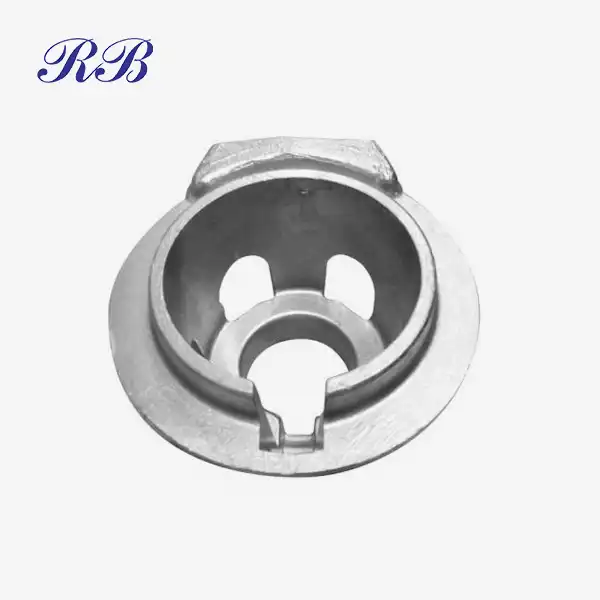
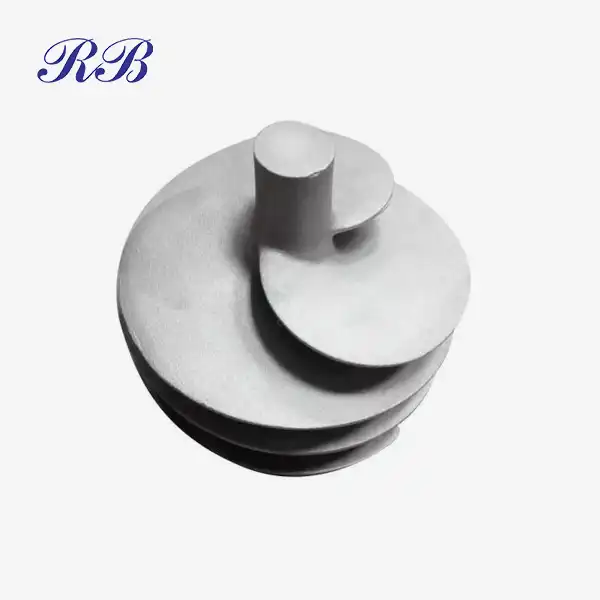
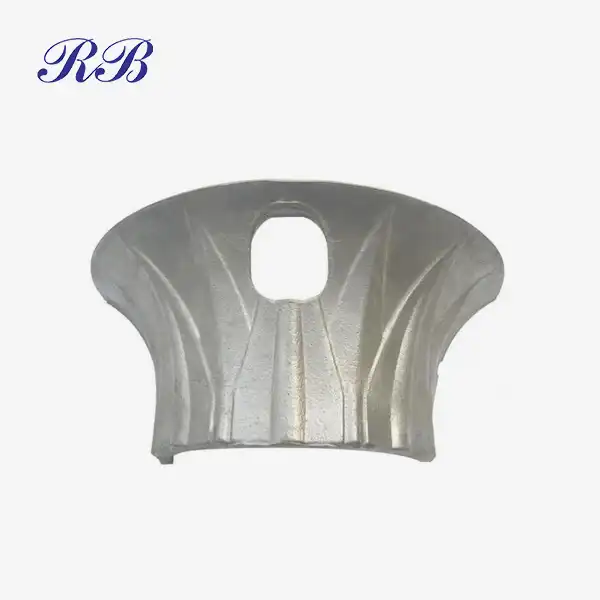
Industrial connection components define the reliability of mechanical and fluid transfer systems. Among widely‑used parts, custom aluminum cast coupling flange delivers lightweight strength and stable sealing performance for fire pump equipment, general industrial machinery and power transmission assemblies. OEM and ODM manufacturing turns raw aluminum ingots into finished parts matched to unique project requirements. This article walks through the full production workflow, covering material selection, design collaboration, quality control and final delivery for global procurement teams.

Core OEM and ODM Services for Custom Aluminum Cast Coupling Flange Projects
Many overseas buyers confuse OEM and ODM boundaries when sourcing metal casting components. Clear understanding of these two service modes helps you pick the right cooperation model for your casting orders. Rongbao Enterprise draws on 20 years of casting experience to support both cooperation types for energy equipment, construction machinery and automotive‑related customers. Whether you come with finished drawings or only functional concepts, our team can adapt to your project reality for custom aluminum cast coupling flange.
How OEM Works for Your Casting Project
OEM service fits buyers who hold complete drawings and fixed product specifications. You provide finished design files, material standards and performance targets. Our production team strictly follows your requirements to produce every unit. We take charge of mold making, casting, CNC machining and surface finishing without changing your established product structure. This model suits mature mass‑production projects. Procurement teams keep full control over part dimensions and technical indexes. Our factory executes every production step according to your documentation. We also conduct full‑range quality checks to make sure batch outputs match your sample standards. For custom aluminum cast coupling flange, OEM keeps your original design unchanged while realizing stable large‑batch output.
Key Values of ODM Collaboration on Casting Development
ODM brings engineering collaboration into your product development cycle. If you have functional goals but lack finalized drawings, our technical team joins early‑stage product iteration. We run DFM analysis to adjust part geometry for better castability. Many flange parts suffer from shrinkage, porosity and deformation during gravity casting. Our engineers modify wall thickness and transition structures to avoid typical casting defects. ODM work includes prototype validation before mass manufacturing. This process lowers your risk of costly redesign after tooling completion. You gain optimized component performance while keeping total project costs under control. When developing this type of connection hardware, ODM greatly reduces trial‑and‑error costs for custom aluminum cast coupling flange.
Selecting OEM or ODM depends on your internal resources. Ready‑made drawings point toward OEM support. Concept‑stage projects benefit most from ODM technical input. After confirming your cooperation pattern, we move forward to our end‑to‑end manufacturing workflow.

Complete Manufacturing and Quality Control for Custom Aluminum Cast Coupling Flange
Gravity casting acts as our primary production route for these connection parts. Our Xi’an production site equips dedicated gravity casting machines, CNC workshops and independent quality inspection laboratories. Each finished piece goes through standardized steps from raw material intake to finished‑part packaging. Quality checks run through every phase to maintain stable dimensional accuracy and internal material integrity. Buyers focus heavily on consistency, especially for custom aluminum cast coupling flange used on fluid transfer hardware.
Material Selection and Gravity Casting Execution
A356 aluminum alloy serves as our base material for most casting orders. This grade offers good fluidity during casting, high mechanical strength and decent corrosion resistance. It balances weight and durability for fire pump and industrial connection scenarios. We also supply alternative alloys such as A380 and A383 upon special client requests. Before casting starts, our lab verifies material chemical composition. Gravity casting fills molds under natural gravity flow. Slow and steady filling reduces air entrapment inside cast workpieces. Controlled cooling cycles further minimize internal defects like shrinkage cavities. Each raw casting piece weighs roughly 0.3 kilogram in common specifications. Proper material handling directly determines the service life of custom aluminum cast coupling flange.
Precision Machining and Surface Treatment
As‑cast workpieces cannot meet sealing and assembly demands directly. Every casting receives CNC machining after casting. Our equipment holds tolerances down to ±0.1 mm for critical connection faces. Machining removes extra material and flattens sealing surfaces. Surface treatment follows machining work. Shot blasting cleans surface scale and improves coating adhesion. Clients can add anodizing or other protective coatings if working environments require stronger anti‑corrosion performance. Laser marking or cast‑in identification marks are available for part traceability needs. Good post processing guarantees assembly reliability for custom aluminum cast coupling flange.
Multi‑Layer Quality Assurance System
Our factory holds ISO 9001:2015, ISO 14001 and ISO 45001 certifications for casting production. Quality inspection covers incoming material check, first‑article inspection and batch sampling. We deploy non‑destructive testing tools including X‑ray and ultrasonic detection. These tests find hidden internal flaws without damaging finished components. We record all test data for batch traceability. Our monthly production capacity reaches up to 5000 pieces. This capacity supports small prototype batches as well as large‑volume repeat orders. Strict quality protocols prevent common failure risks for custom aluminum cast coupling flange.
When sample testing passes all indexes, we move to formal batch production and prepare for safe international delivery.

Customization Options and End‑to‑End Project Delivery
Each real‑world application sets unique requirements for industrial connection hardware. Customization covers geometry, alloy grade, surface finish and marking solutions. Our full‑cycle service keeps communication transparent from initial inquiry all the way to goods shipment. Project flexibility matters a lot when sourcing custom aluminum cast coupling flange.
Flexible Customization Dimensions
Buyers adjust multiple variables for their casting projects. Dimensional customization adapts bolt holes, outer diameter and sealing face size to match existing equipment assemblies. Some projects prioritize smooth surface finish for fluid flow. Other projects focus more on mechanical toughness. Our engineering team reviews your operating conditions. We suggest proper alloy and surface treatment combinations. Permanent part marking options help you satisfy industry traceability rules. All customized outputs follow your functional priorities without unnecessary over‑engineering. Every adjustable parameter can be fine‑tuned for custom aluminum cast coupling flange.
Project Workflow and Export‑Ready Delivery
The whole project starts with your technical inquiry. Our team collects operating condition details, performance targets and expected order volume. Next phase includes drawing review, 3D simulation and feasibility assessment. We produce physical prototypes for dimensional measurement and functional verification. Once prototypes gain approval, we finalize tooling and kick‑off mass production. Finished units get packed inside solid wooden export boxes. The packaging prevents scratches and impact damage during long‑distance transport. Seventy percent of our finished products export to Europe, America and other overseas regions. Our team completes required shipping documents to smooth up customs clearance for international customers. Complete delivery solutions simplify overseas procurement of custom aluminum cast coupling flange.
Conclusion
Reliable custom aluminum cast coupling flange directly influences the safety and stability of connected mechanical systems. OEM and ODM casting services give global purchasers flexible paths to obtain parts tailored for fire pump systems and general industrial machinery. Rongbao Enterprise leverages two decades of gravity casting experience, standardized quality management and complete post‑processing capability. We handle every link: material validation, mold development, gravity casting, CNC precision machining, surface finishing and export packaging. Strict multi‑stage inspection keeps defect rates low across batch production. Whether you need prototype validation or continuous large‑volume supply, proper manufacturing cooperation avoids common casting defects and reduces long‑term operational risk. Choosing a competent casting partner turns your component specifications into dependable real‑world hardware.
FAQs
What aluminum alloys are available for custom flange casting?
We primarily work with A356 aluminum alloy for its excellent casting characteristics and mechanical properties. Alternative alloys, including A380, A383, and specialty compositions, are available based on specific application requirements. Our metallurgy team can recommend optimal alloy selection based on your operating conditions, strength requirements, and corrosion resistance needs.
What are your minimum order quantities for custom aluminum flanges?
Minimum order quantities depend on complexity and tooling requirements, typically starting at 100 pieces for standard configurations. Prototype quantities as low as 10 pieces are available for design validation. Our production capacity of 5000 pieces monthly accommodates both small custom runs and large‑scale manufacturing programs efficiently.
How do you ensure consistent quality across production batches?
Our ISO9001:2015 certified quality system includes comprehensive inspection protocols from raw material receipt through final delivery. Statistical process control monitors critical dimensions and material properties throughout production. Non‑destructive testing capabilities verify internal soundness, while documented corrective action procedures ensure rapid response to any quality concerns.
Can you support DFM optimization for my existing flange drawings?
Yes. Our engineering team reviews incoming drawings for your casting projects. We point out structures likely to trigger casting defects. We propose feasible geometry adjustments. All suggestions aim to improve manufacturability while preserving core functional needs of your component.
Work With Rongbao Enterprise for Your Custom Aluminum Cast Coupling Flange Project
Are you searching for a trustworthy manufacturer for your casting‑based connection parts? Our team combines 20‑year gravity casting know‑how, complete in‑house processing chains and mature export experience. We serve prototype development and mass‑order demands for fire pump equipment and industrial connection assemblies. You can send us your drawings, 3D files or functional requirement descriptions. We provide free DFM feedback and formal quotation for your project. Our technical staff keep communication efficient for cross‑border cooperation. Reach out via mailto:steve.zhou@263.net and mailto:zhouyi@rongbaocasting.com. Share your project information today, and move your sourcing work forward.
References
American Society of Mechanical Engineers. "ASME B16.5 Pipe Flanges and Flanged Fittings: NPS 1/2 through NPS 24." ASME International Standards, 2020.
Aluminum Association Inc. "International Alloy Designations and Chemical Composition Limits for Wrought Aluminum and Wrought Aluminum Alloys." The Aluminum Association Technical Publication, 2019.
Campbell, John. "Complete Casting Handbook: Metal Casting Processes, Metallurgy, Techniques and Design." Butterworth‑Heinemann, 2nd Edition, 2015.
International Organization for Standardization. "ISO 9001:2015 Quality Management Systems Requirements." ISO Standards Catalogue, 2015.
American Foundry Society. "Aluminum Sand and Permanent Mold Casting Design Guidelines." AFS Technical Publications, 2021.
SAE International. "SAE J454 General Requirements for Aluminum Castings." SAE International Standards, 2022.
_1751078338779.webp)
Learn about our latest products and discounts through SMS or email