- English
- French
- German
- Portuguese
- Spanish
- Russian
- Japanese
- Korean
- Arabic
- Greek
- German
- Turkish
- Italian
- Danish
- Romanian
- Indonesian
- Czech
- Afrikaans
- Swedish
- Polish
- Basque
- Catalan
- Esperanto
- Hindi
- Lao
- Albanian
- Amharic
- Armenian
- Azerbaijani
- Belarusian
- Bengali
- Bosnian
- Bulgarian
- Cebuano
- Chichewa
- Corsican
- Croatian
- Dutch
- Estonian
- Filipino
- Finnish
- Frisian
- Galician
- Georgian
- Gujarati
- Haitian
- Hausa
- Hawaiian
- Hebrew
- Hmong
- Hungarian
- Icelandic
- Igbo
- Javanese
- Kannada
- Kazakh
- Khmer
- Kurdish
- Kyrgyz
- Latin
- Latvian
- Lithuanian
- Luxembou..
- Macedonian
- Malagasy
- Malay
- Malayalam
- Maltese
- Maori
- Marathi
- Mongolian
- Burmese
- Nepali
- Norwegian
- Pashto
- Persian
- Punjabi
- Serbian
- Sesotho
- Sinhala
- Slovak
- Slovenian
- Somali
- Samoan
- Scots Gaelic
- Shona
- Sindhi
- Sundanese
- Swahili
- Tajik
- Tamil
- Telugu
- Thai
- Ukrainian
- Urdu
- Uzbek
- Vietnamese
- Welsh
- Xhosa
- Yiddish
- Yoruba
- Zulu
How to Find Reliable OEM/ODM Casting Accessories Manufacturers in China?
Over the past decade, China has solidified its position as a core global manufacturing hub, with its complete industrial chain and cost-effective, high-quality production capacity winning worldwide recognition. The Chinese manufacturing industry serves core downstream sectors including natural gas control systems, high-voltage distribution equipment, and automotive manufacturing, boasting mature processing technology and rich production experience in producing reliable casting accessories for global clients.
For global purchasers, partnering with Chinese OEM (Original Equipment Manufacturing) and ODM (Original Design Manufacturing) suppliers brings distinct advantages, including complete supporting supply chains, mature mass-production technology, and flexible customized services for industrial metal components. However, the market features uneven supplier quality and varying technical capabilities. To avoid unqualified products, delayed delivery, and ineffective after-sales service, enterprises need to adopt standardized, systematic verification methods to screen qualified and reliable long-term cooperative manufacturers for casting accessories procurement.
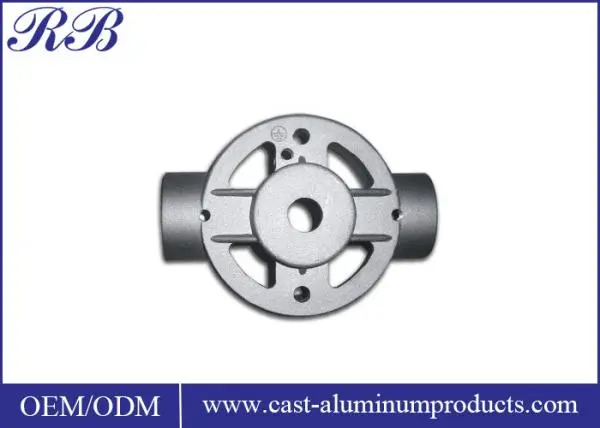
China's Casting Accessories Manufacturing Landscape
The competitiveness of China’s manufacturing industry stems from professional industrial cluster layout tailored for mass and customized metal component production. Different from scattered small workshops, standardized industrial clusters integrate raw material supply, precision processing, surface treatment, logistics distribution and supporting testing services specifically for metal casting production. This integrated ecosystem greatly shortens production cycles, optimizes operational efficiency, and reduces comprehensive procurement costs for global buyers sourcing high-performance casting accessories.
A notable industry upgrade trend is the continuous improvement of Chinese manufacturers’ ODM independent R&D capabilities, evolving from simple OEM processing to integrated services covering design, development, prototyping and mass production of high-precision metal components. Most professional casting enterprises have built independent technical teams, which can optimize product structure, improve processing technology and reduce production costs according to customers’ application scenarios, effectively lowering customers’ R&D and iteration costs for customized industrial components.
Leading manufacturers have fully embraced intelligent manufacturing and Industry 4.0 production standards, equipped with automated casting equipment, real-time quality monitoring systems and precision testing instruments dedicated to metal component production. The three mainstream casting processes cover diverse customer needs for customized industrial parts: high-pressure die casting is suitable for precision components with complex structures and strict tolerance requirements; investment casting delivers smooth surface finish and high dimensional consistency for sophisticated parts; sand casting provides economical solutions for large-size, low-precision components. Buyers can select the most suitable manufacturing partners based on product specifications and application scenarios.
Essential Verification Steps for Manufacturer Assessment
Verify Qualified Business Registration
Genuine manufacturing enterprises have formal government registration qualifications for producing industrial metal components. All legal Chinese manufacturing companies hold a unique 18-digit Unified Social Credit Code. Buyers can verify enterprise registration information, business scope, establishment time and operating status to confirm their legitimacy in metal casting production through the official National Enterprise Credit Information Publicity System. This step effectively filters out shell companies and intermediate trading firms without independent production capacity, avoiding inflated prices and uncontrollable quality of purchased industrial parts.
Check Valid System and Industry Certifications
Standardized quality management certification is the core guarantee of stable quality for casting accessories. ISO 9001:2015 quality management certification is the basic global certification for manufacturing enterprises engaged in metal casting production, covering full-process quality control from raw material incoming inspection to finished product delivery. Meanwhile, environmental management ISO 14001 and occupational health and safety ISO 45001 certifications reflect the standardized operation level of enterprises in this industry.
It is crucial to verify that the certification scope matches your required industrial casting products. For vertical industries, targeted certifications such as IATF 16949 (automotive industry) and AS9100 (aerospace industry) are essential for specialized metal casting parts. Buyers can confirm the authenticity and validity of certificates through official certification bodies to avoid fake and expired certifications from unqualified suppliers.
Confirm Import and Export Qualifications
Manufacturers engaged in foreign trade must hold two core qualifications to export qualified industrial casting parts: Foreign Trade Operator Filing Certificate and China Customs Registration Certificate. These official documents prove that the enterprise has legal cross-border operation qualifications and rich experience in international logistics, customs declaration and export business, ensuring smooth and compliant product export of all customized metal components. It is necessary to cross-check qualification information through official government platforms and reject manufacturers with inconsistent business scope and export qualifications.
Conduct On-site or Virtual Factory Audits
Document verification can only serve as preliminary supplier screening, and factory audits are the most intuitive way to assess actual casting accessories production capacity. Buyers can conduct on-site inspections or remote virtual tours to check production workshops, processing equipment, testing laboratories and quality control processes dedicated to industrial casting production. Professional third-party institutions including SGS, TÜV and Intertek can provide authoritative audit reports covering production environment, labor standards, equipment operation and capacity assessment, which is an important basis for long-term procurement cooperation.
Evaluate Sample Quality and Test Reports
Product samples are the most direct reflection of a manufacturer’s strength in producing high-quality industrial casting parts. Buyers can obtain samples from multiple alternative manufacturers for comparative evaluation of surface finish, dimensional accuracy and overall product quality. Reliable manufacturers can provide complete material test reports, metallurgical analysis reports and non-destructive testing certificates for their finished products. It is recommended to confirm a standard "golden sample" before mass production, and conduct pre-shipment inspection to ensure batch products are consistent with sample standards.
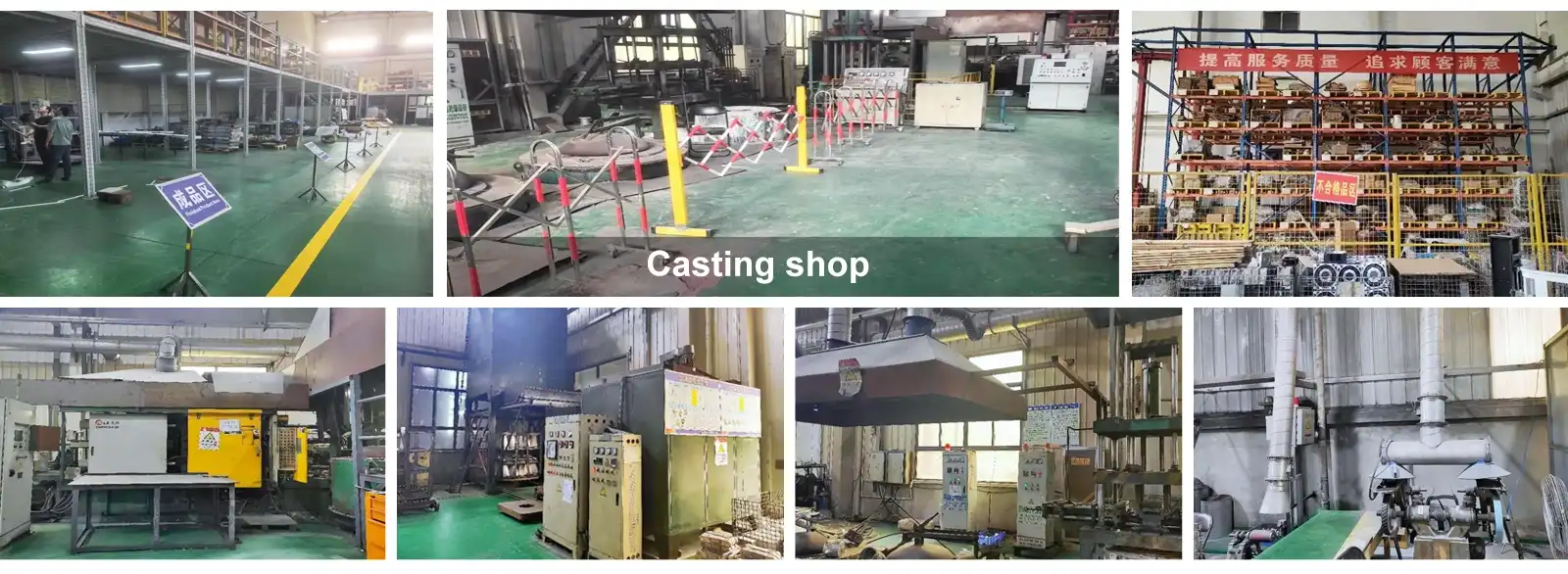
Technical Capabilities and Quality Indicators to Evaluate
Matching Production Capacity
Manufacturers with different factory scales adapt to different order demands for customized industrial metal components. Small-scale professional factories are suitable for prototype development and small-batch customized orders, while large standardized factories with complete equipment can stably undertake large-scale bulk orders. In addition to factory area and equipment configuration, buyers should focus on the enterprise’s order response efficiency for casting projects. Professional manufacturers usually complete quotation and technical docking within 24 hours, ensuring efficient project progress.
Professional Material Application Capabilities
Material quality determines the service life and operational stability of casting accessories. Mature manufacturers have rich experience in material selection for different application scenarios: A380, ADC12 and A360 aluminum alloys are widely used in lightweight industrial parts for gas control and electrical equipment, featuring good fluidity, high dimensional stability and excellent corrosion resistance; 316L stainless steel is suitable for harsh anti-corrosion working conditions; carbon steel is applied to structural parts requiring high strength. Formal manufacturers can provide complete material traceability documents and test reports for all customized products.
Complete Processing and Secondary Operation Technology
Excellent metal casting manufacturers not only master basic casting processes, but also support complete secondary operation services for finished industrial parts. After high-pressure die casting production, precision CNC machining is used to control product tolerance within ±0.05mm, solving assembly deviation problems caused by dimensional errors. Surface treatment processes such as shot blasting can remove casting scales, homogenize product surfaces, and provide good adhesion conditions for subsequent spraying and anti-corrosion treatment, meeting different industrial application and protection needs.
Sound Quality Control System
First-class casting accessories manufacturers have independent testing laboratories, equipped with coordinate measuring instruments, ultrasonic non-destructive testing equipment and metallurgical analysis equipment specially for industrial part inspection. They implement strict first-article inspection, batch sampling inspection and finished product full inspection mechanisms for every production batch. Stable on-time delivery rate (above 95%) and high customer reputation are important intuitive indicators of reliable manufacturing strength.
Professional Technical Communication Capabilities
Cross-border procurement cooperation requires efficient technical docking for customized metal casting projects. Excellent manufacturers are equipped with professional bilingual technical teams, which can accurately understand customer drawings and technical specifications, provide professional design optimization suggestions, and quickly respond to engineering change demands for bulk orders. Meanwhile, strong rapid prototyping capabilities can verify design rationality in the early stage, effectively reducing mold opening risks and project costs for customized industrial parts.
FAQs
Q1: What core certifications should a qualified casting accessories manufacturer have?
A: Basic valid certifications include ISO 9001:2015 quality management system, ISO 14001 environmental management system and ISO 45001 occupational health and safety management system, all essential for reliable metal casting production. For industry-specific projects, manufacturers need to hold corresponding vertical certifications such as IATF 16949 and AS9100 to produce specialized industrial parts. All certifications must cover the actual production scope and be verifiable through official institutions.
Q2: How to distinguish real manufacturers from trading companies for casting accessories sourcing?
A: First, check the business scope and registered information to confirm independent metal casting production qualifications. Second, request factory on-site videos, workshop photos and equipment lists dedicated to industrial casting production. Real manufacturers have professional production teams, QC testing personnel and technical R&D teams, rather than only sales staff. Factory audits and sample testing can further verify actual production capacity.
Q3: What are the common MOQ standards for casting accessories?
A: The MOQ varies by casting process for different industrial metal parts. Die casting supports stable batch production with an MOQ of about 100 pieces for customized projects; investment casting is suitable for small and medium batches of precision parts with an MOQ of 50–100 pieces; sand casting has an MOQ of 100–300 pieces for large-size components. Most professional manufacturers support small-batch trial orders and prototype customization to meet market testing needs.
Q4: What is the normal cycle of sample making and mass production for casting accessories?
A: The quotation cycle is generally 24–48 working hours. Mold development and sample making for customized metal casting parts take 15–25 working days, and formal batch production can be completed in 7–20 working days after sample confirmation. The specific cycle can be adjusted according to product complexity and order quantity, and manufacturers can provide customized delivery schedules.
Q5: Is factory audit necessary before placing formal casting accessories orders?
A: For long-term large-batch cooperative projects of metal casting parts, on-site or third-party factory audits are highly recommended to verify production capacity and quality control systems. For small trial orders and prototype projects, virtual factory tours and complete document verification can effectively reduce cooperation costs while ensuring reliability of customized industrial components.
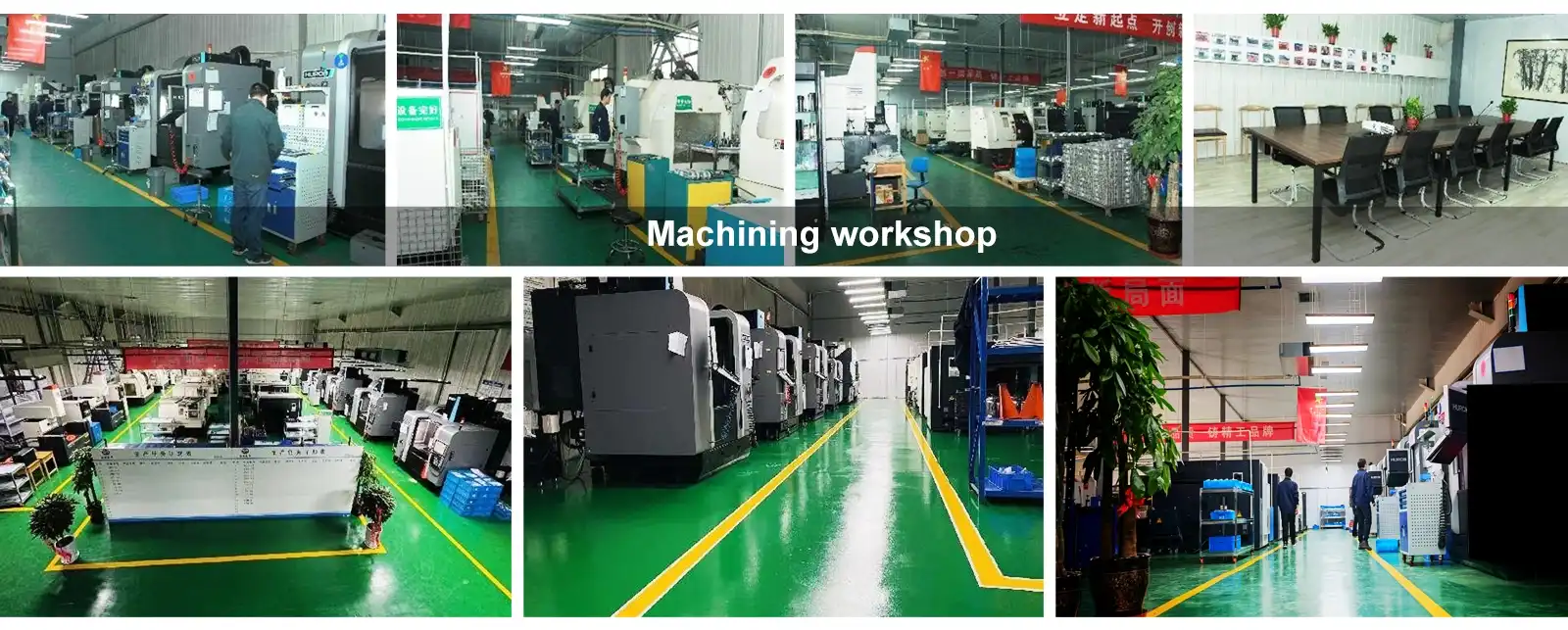
Reliable OEM/ODM Casting Accessories Supplier: Rongbao Enterprise
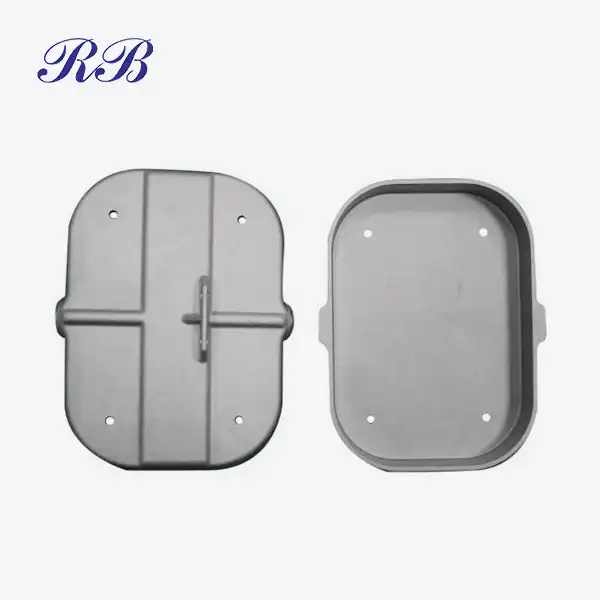
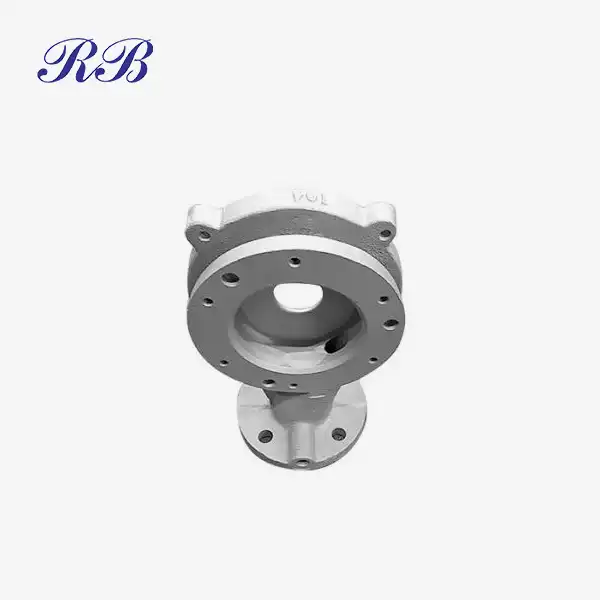
After screening and assessment according to the above standards, Rongbao Enterprise stands out as a professional and reliable manufacturer of customized casting accessories, focusing on high-precision parts for natural gas control valves and industrial supporting equipment. Founded in 2003 and based in Xi’an, China, the enterprise has focused on aluminum alloy die casting manufacturing for over 20 years, providing one-stop OEM/ODM customized solutions from mold development, casting processing, CNC precision machining to surface treatment for industrial metal parts.
The company’s core A380 aluminum alloy industrial casting parts weigh 0.8kg per piece, with excellent fluidity, mechanical strength and corrosion resistance, fully adapting to the stable operation requirements of natural gas control valve systems. Adopting high-pressure die casting technology, the products have uniform wall thickness and low porosity. After precision CNC machining (tolerance controlled within ±0.05mm) and shot blasting surface treatment, the finished parts achieve high dimensional accuracy and excellent surface finish, effectively avoiding assembly failures and equipment operation faults.
Rongbao Enterprise has passed ISO 9001:2015 quality management, ISO 14001 environmental management and ISO 45001 occupational safety management system certifications for its metal casting production, and has passed the strict SSBM audit of ABB, meeting the high-standard supplier requirements of international high-end equipment manufacturers. The enterprise owns 14 utility model patents, with a stable monthly production capacity of 5,000 pieces for standard products, supporting large-batch customized production of diverse industrial casting parts.
Adhering to flexible customized services, Rongbao supports product customization according to customers’ drawings, 3D models and technical parameters. The standard MOQ is 100 pieces for customized casting projects, covering prototype development, market testing and large-scale batch production. With mature international logistics experience, 70% of the finished products are exported to Europe, America, Japan and other regions, with stable on-time delivery rate and zero delayed delivery complaints for many years.
Our professional technical team provides whole-process engineering support for customized metal casting projects, including design optimization, process docking and production follow-up for all industrial parts. We strictly implement full-process quality inspection to ensure every batch of products meets international standards. If you have customized casting accessories procurement needs, welcome to contact our professional team for free quotation and technical consultation.
Contact Email: steve.zhou@263.net | zhouyi@rongbaocasting.com
References
1. Lansi Global. (2025). How to Verify a China Manufacturer's License and Quality Standards.
2. Accio. (2025). China Casting Parts: Top Suppliers & Custom Services.
3. MetaFuro. (2020). Our 5-Step, Comprehensive Process to Verify Chinese Manufacturers.
4. Besser Casting. (2025). Top 10 Investment Casting Manufacturers in China 2025.
5. Anebon Metal. (2025). Top 10 Die Casting Services Manufacturers in China.
Learn about our latest products and discounts through SMS or email