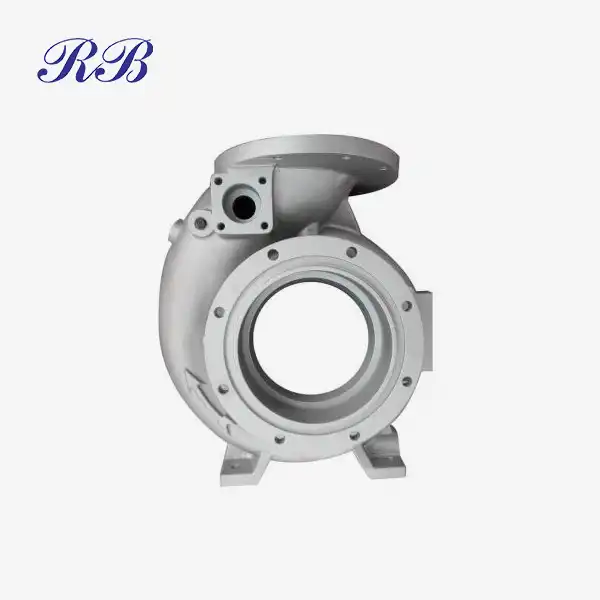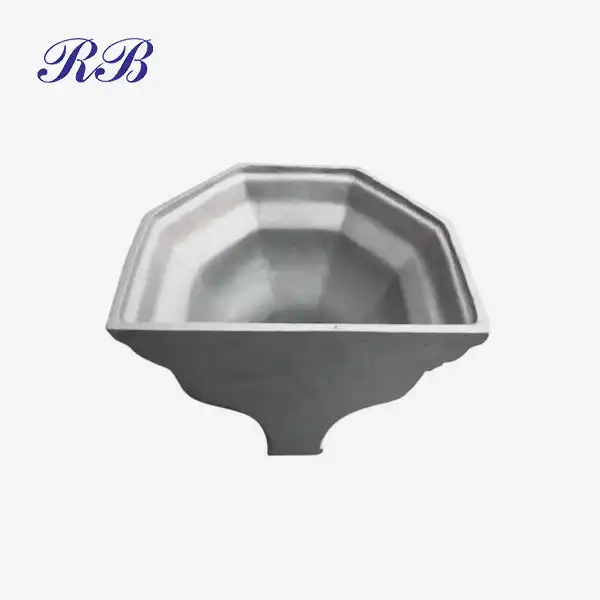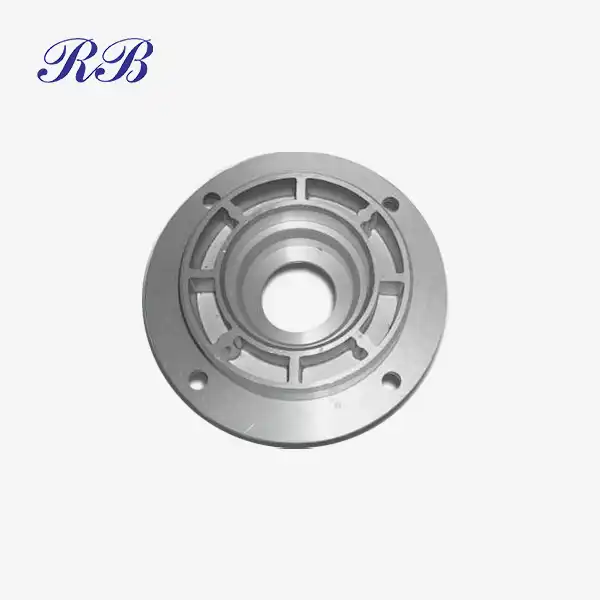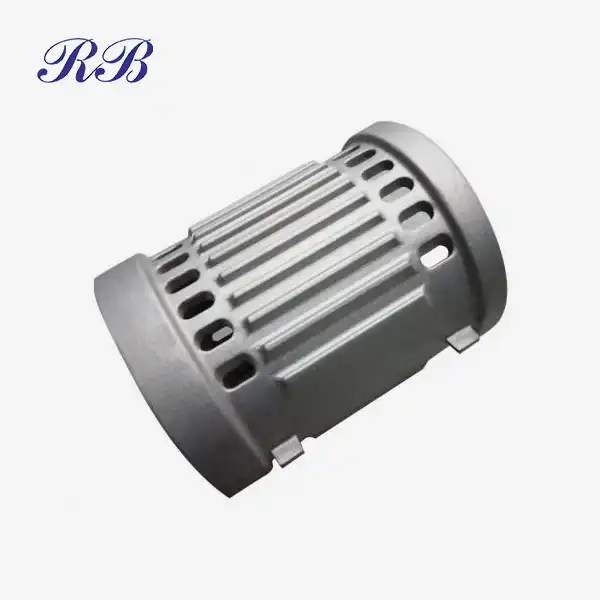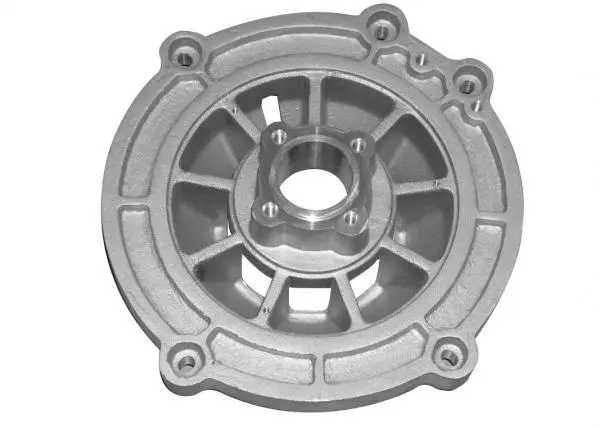
Thin Wall Capability: Pushing the Boundaries of Low-Pressure Die Casting
components with thin walls are becoming more and more in demand across many sectors, and low-pressure die casting has become known for its ability to make these components. Melt metal is injected into a mold cavity at low pressure, usually between 0.3 and 1.5 bar, in this technique. Molds with wall thicknesses as thin as 1.5 mm may be delicately filled to produce elaborate patterns.
The regulated flow of metal throughout the casting process is the secret to producing such thin walls in low pressure die casting pieces. Die casting under low pressure keeps the flow laminar, unlike high pressure, which may lead to turbulence and possible flaws. For low pressure die casting parts, this silky metal motion guarantees consistent and full filling of even the thinnest portions and most minute details.
Shrinkage porosity is a typical problem, especially in thin-walled components, but this technique may keep pressure constant during solidification, so it doesn't happen. The combination of low-pressure die casting's structural soundness and lightweight properties makes it an ideal material for many types of applications.
Application Validation: Where Thin Walls Meet Real-World Demands
The real-world applications of a manufacturing process are where it really shines. Many different types of industry have found success with low pressure die casting parts because of the thin-walled components it produces. Lightweight engine blocks, gearbox cases, and structural components have greatly increased fuel economy without sacrificing strength, thanks in large part to this method's use in the automobile industry.
Low pressure die casting has made it possible to produce low pressure die casting items, such as thin-walled components for aircraft interiors and non-structural elements, in the aerospace sector, where weight reduction is crucial. Another area where this method has proven useful is in the fabrication of medical equipment and high-performance electronics housings, because to its capacity to generate intricate geometries with uniform wall thicknesses.
The elevator sector is one area where it has been very useful. Parts for elevators may now be manufactured using low-pressure die casting thanks to Rongbao Enterprise, an expert in casting aluminum alloys. These components, which are crucial for contemporary elevator systems, are manufactured from 380 aluminum alloy and weigh only 1.8 kg. They demonstrate the process's capacity to make lightweight but robust parts.
Several other industries may also benefit from low-pressure die casting. To strike the fine balance between strength and weight reduction, this approach is being used more and more by producers of consumer electronics and industrial machines.
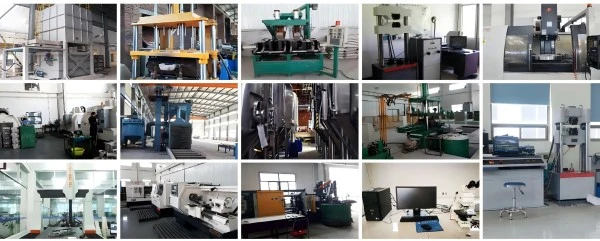
Quality Guarantee for Thin Walls: Ensuring Precision and Reliability
Quality is of the utmost importance when dealing with thin-walled components. Several benefits of low pressure die casting parts contribute to its high quality in thin wall applications:
Less Porosity: Denser castings with fewer flaws are the outcome of a regulated filling process that reduces air entrapment.
Parts with tighter tolerances are the result of improved dimensional accuracy made possible by more precise control over the casting process made possible by lower injection pressures.
Surface Improvement: Less Post-Casting Finishing Necessary Due to the Smoother Surfaces Produced by the Mild Metal Flow.
Maintaining a Consistent Wall Thickness: This technique is vital for the proper functioning of thin-walled components because it guarantees a regular distribution of material.
Manufacturers like as Rongbao Enterprise use stringent quality control procedures to ensure the integrity of their thin-walled low pressure die casting components. Among them are:
Powerful modeling program for fine-tuning mold and casting parameters
Keeping an eye on process parameters like pressure and temperature in real time
X-ray inspection and other non-destructive testing techniques for finding hidden flaws
Extensive testing of raw materials to guarantee alloy composition is up to par
International standards such as ISO 9001:2015 for quality management, ISO 14001 for environmental management, and ISO 45001 for occupational health and safety are also followed and documented throughout the whole production process. The crucial necessity of this commitment to quality is shown by the rigorous standards of thin-walled components.

The Advantages of Low-Pressure Die Casting for Thin Wall Parts
When it comes to making parts with thin walls, low-pressure die casting has a lot of benefits:
- Reducing the need for huge runners and sprues, the technique lowers waste via controlled filling, which in turn maximizes material efficiency.
- When compared to other technologies, low-pressure die casting may be more cost-effective for medium to large production runs. This is due to the fact that it requires less finishing and uses less material overall.
- The capacity to cast complicated shapes with different wall thicknesses allows for more design flexibility.
- Mechanical qualities: Thin-walled components that are vulnerable to stress may benefit greatly from the enhanced mechanical qualities that can be achieved by the combination of directed solidification and delayed filling.
- Consistency: After the process parameters are fine-tuned, low-pressure die casting can reliably provide identical parts throughout vast production runs.
Considering these benefits, low-pressure die casting becomes a compelling choice for manufacturers looking to efficiently and affordably create thin-walled components of excellent quality.
Overcoming Challenges in Thin Wall Casting
Although there are certain difficulties, low-pressure die casting parts are a good choice for components with thin walls. In order to guarantee good manufacturing, manufacturers need to avoid numerous possible pitfalls:
exact Temperature Control: Because thin parts might harden quickly, which could cause inadequate filling, it is vital to maintain exact temperature control.
Designing molds that let enough airflow and metal to flow smoothly in tiny portions calls considerable knowledge and, often, many revisions.
To get the thin wall thickness you want, you need to choose the correct alloy with the necessary fluidity and solidification properties.
Process Settings: If you want to make thin-walled components of consistently good quality, you have to fine-tune parameters like fill rate, pressure, and cycle duration.
Modern technology, expert engineering, and constant process improvement are all necessary to overcome these obstacles. Companies like as Rongbao Enterprise dedicate significant resources to research and development in order to further the capabilities of low-pressure die casting, especially for thin wall applications.
The Future of Thin Wall Casting with Low-Pressure Technology
Production of thin wall parts using low-pressure die casting is expected to increase in the future due to the increasing need for lighter and more efficient components in many sectors. Its capabilities are being expanded by ongoing developments in process control, simulation software, and alloy development.
New developments in thin-wall components cast using low-pressure die casting techniques include:
Using 3D printing in tandem allows for the fabrication of molds and quick prototypes.
Research and development of novel aluminum alloys designed for use with very thin walls
Application of AI and ML to optimize processes in real-time
Research on hybrid casting methods that combine existing casting procedures with the advantages of low-pressure die casting
These advancements hold great promise for expanding the range of sectors that may benefit from low-pressure die casting for thin wall components.
Low-Pressure Die Casting Parts Supplier: Rongbao Enterprise
Rongbao Enterprise is by and away the best option for acquiring high-quality thin-walled components made by low-pressure die casting. Rongbao has expanded from its 2003 humble beginnings to become a market leader in precision processing and aluminum alloy casting. They are the perfect choice for companies looking for dependable thin wall components because of their contemporary manufacturing processes, dedication to quality, and competence in low-pressure die casting.
Rongbao Enterprise excels in several areas, production being only one of them. Their integrated component supply systems provide very accurate components by using their knowledge of cross-process manufacturing and multi-material compatibility. They have shown their commitment to these values with their certifications in quality management, environmental sustainability, and occupational safety (ISO 9001:2016, ISO 14001, and ISO 45001).
Ready to fulfill a range of manufacturing demands, Rongbao Enterprise has a production capacity of 5,000 pieces and can handle special requirements. Elevator components comprised of materials such as 380 aluminum alloy showcase their proficiency in producing lightweight but robust components via low-pressure die casting.
For those seeking a reliable partner in thin wall part production, Rongbao Enterprise offers a compelling combination of experience, technology, and customer-focused service. To learn more about their low-pressure die casting capabilities or to discuss your specific project requirements, reach out to their team at steve.zhou@263.net or zhouyi@rongbaocasting.com. With Rongbao Enterprise, you're not just getting a supplier; you're gaining a collaborative partner committed to elevating your product's quality and performance through advanced thin wall casting solutions.
FAQ
1. What is the minimum wall thickness achievable with low-pressure die casting?
While the exact minimum wall thickness can vary depending on factors such as the alloy used and part geometry, low-pressure die casting can typically achieve wall thicknesses as thin as 1.5 to 2 mm. In some cases, with careful process control and optimal alloy selection, even thinner walls may be possible. However, it's important to consult with experienced manufacturers like Rongbao Enterprise to determine the feasibility for specific applications.
2. How does low-pressure die casting compare to high-pressure die casting for thin wall parts?
Low-pressure die casting generally offers better control over the filling process, resulting in less turbulence and potentially fewer defects in thin-walled sections. It also allows for more uniform wall thicknesses and can be more suitable for parts with varying cross-sections. High-pressure die casting, while capable of producing thin walls, may face challenges with air entrapment and inconsistent filling in very thin sections. The choice between the two often depends on factors such as part complexity, production volume, and specific quality requirements.
3. Can low-pressure die casting be used for materials other than aluminum?
Yes, while aluminum alloys are commonly used in low-pressure die casting, the process can also be applied to other materials such as magnesium alloys, zinc alloys, and even some copper-based alloys. The choice of material depends on the specific requirements of the part, including strength, weight, conductivity, and cost considerations. Rongbao Enterprise specializes in aluminum alloy casting but can provide guidance on material selection for various applications.
4. What are the key factors to consider when designing thin wall parts for low-pressure die casting?
Several factors are crucial when designing thin wall parts for low-pressure die casting: 1. Uniform wall thickness to ensure even cooling and reduce the risk of defects 2. Proper draft angles to facilitate part removal from the mold 3. Strategic placement of gating and venting to ensure complete mold filling 4. Consideration of shrinkage rates and allowances 5. Design of reinforcing ribs or other features to maintain structural integrity 6. Selection of appropriate alloy for the desired wall thickness and part performance Consulting with experienced manufacturers early in the design process can help optimize parts for successful casting.
5. How does Rongbao Enterprise ensure the quality of thin-walled parts produced through low-pressure die casting?
Rongbao Enterprise employs a comprehensive quality assurance approach for thin-walled parts: 1. Advanced simulation software for mold design and process optimization 2. Strict control of process parameters including temperature, pressure, and fill rate 3. Regular material testing to ensure alloy composition meets specifications 4. Non-destructive testing methods such as X-ray inspection for internal defects 5. Dimensional checks using precision measurement equipment 6. Adherence to international quality standards (ISO 9001:2015, ISO 14001, ISO 45001) 7. Continuous training of personnel in the latest casting technologies and quality control methods This multi-faceted approach ensures that thin-walled parts meet or exceed customer specifications consistently.
References
1. Campbell, J. (2015). Complete Casting Handbook: Metal Casting Processes, Metallurgy, Techniques and Design. Butterworth-Heinemann.
2. Zolotorevsky, V. S., Belov, N. A., & Glazoff, M. V. (2018). Casting Aluminum Alloys. Elsevier.
3. International Journal of Metalcasting. (2020). Special Issue on Low Pressure and Gravity Die Casting, 14(3).
4. ASM International. (2008). ASM Handbook, Volume 15: Casting. ASM International.
5. Lumley, R. (2018). Fundamentals of Aluminium Metallurgy: Recent Advances. Woodhead Publishing.