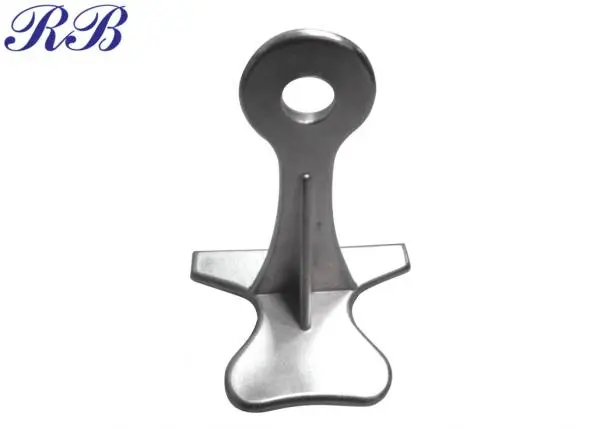
The Art and Science of Custom Casting Bracket Design
There must be careful consideration of both aesthetics and practicality when designing bespoke casting brackets. In their pursuit of efficiency and effectiveness, engineers must take into account aspects like load-bearing capability, material characteristics, and environmental variables. As a general rule, throughout the design phase:
- Virtual testing of building stability using three-dimensional models
- Material selection that takes into account the unique needs of each application
- Reducing weight without sacrificing strength via optimization
- The incorporation of attachment points and interface characteristics
Advanced software tools like SOLIDWORKS and Autodesk Inventor enable designers to create complex geometries and perform stress analysis, ensuring that custom casting brackets meet or exceed industry standards. The iterative design process often involves collaboration between engineers, metallurgists, and manufacturing specialists to refine the bracket's features for optimal producibility.
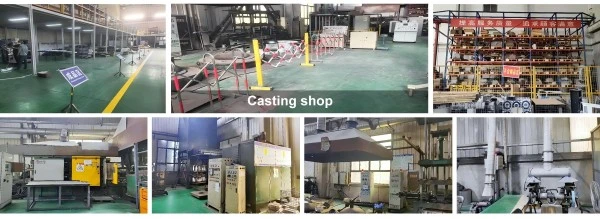
Prototyping: Bridging Concept to Reality
The process of fabricating a bespoke casting bracket relies heavily on prototyping. Manufacturers may use it to test designs, find problems, and fix them before mass production starts. Some of the methods used in modern prototyping are:
- Using 3D printing, physical models may be quickly created.
- numerical control machining for working models
- Silicone molds for pilot projects
- Investment casting for samples that are almost ready for production
Time, money, and level of accuracy are a few of the considerations that should be considered while deciding which of the many prototyping methods to use. As an example, whereas 3D printing enables rapid iterations, investment casting prototypes provide a more precise depiction of the mechanical characteristics of the finished product.
Precision Manufacturing: Bringing Designs to Life
The manufacturing stage is where custom casting brackets truly come to life. Ensuring that every bracket fulfills precise requirements and maintains consistent quality throughout production runs is the goal of precision manufacturing processes. The following are examples of typical production processes for custom casting brackets:
- Large, intricate patterns sculpted in sand
- A process for mass manufacture using die casting
- Casting in investment for flawless surfaces and elaborate embellishments
- Using lost foam casting to create lightweight, airy buildings
The production volume, material needs, and dimensional tolerances are some of the elements that frequently determine which process is chosen, since each has its own strengths. Because of its adaptability to a variety of alloys, sand casting is well-suited for short to medium production runs, while die casting is better suited for large-volume manufacturing of smaller, more complex components.
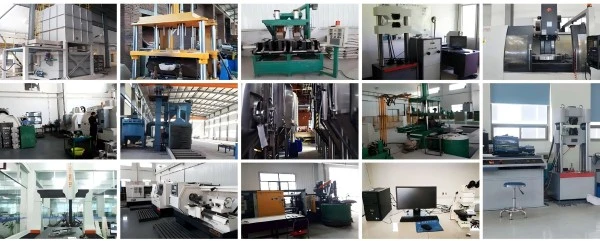
Strict Quality Control: Ensuring Excellence
The generation of custom casting brackets depends intensely on exacting quality control measures. We apply thorough forms all through the generation prepare to guarantee that each bracket meets or surpasses the indicated determinations. Imperative steps to ensure quality incorporate:
- Verifying alloy properties using material composition analysis
- Ultrasonic and X-ray imaging are examples of non-invasive imaging methods.
- Verification of coordinate measuring machine (CMM) dimensions
- Confirmation of strength and durability by mechanical testing
- Analysis of the surface's gloss to determine its lustre and corrosion resistance
Advanced quality management systems, such as those certified under ISO 9001:2015, offer the groundwork for continuous improvement, ensuring that custom casting brackets continually meet customer needs. One typical feature of these systems is statistical process control (SPC), which enables the optimization of production parameters in real-time.
Custom Casting Bracket Applications: A Closer Look
All sorts of different businesses need custom casting brackets, and they all have their own specific needs. For example, in order to improve fuel economy without sacrificing safety, lightweight aluminum alloy brackets are essential in the car industry. Aerospace uses high-strength titanium brackets because they can endure high pressure and high temperatures.
It is worth noting that the radar mounting bracket is one particular application. Designed to endure environmental conditions including vibration, temperature variations, and corrosive substances, these sophisticated custom casting brackets firmly hold radar equipment in place. Now we'll have a look at the specifications of a common radar mounting bracket:
- Construction: ZL101A aluminum alloy
- Debut weight: 21 kg
- Manufacturing Method: Sand Forming
- The last step is CNC machining, which ensures accuracy.
- Treatment of the Surface: Shot blasting to provide a better finish
- Personalized service: Original Equipment Manufacturer and Direct Manufacturer options
- Maximum Unit Production: One Thousand
- Three certifications: ISO9001:2015, ISO14001, and ISO 45001
This case study exemplifies the meticulousness and accuracy needed for fabricating bespoke casting brackets, particularly for mission-critical equipment like as radar systems. These brackets are built to withstand tough situations with ease thanks to high-tech materials, exacting production processes, and stringent quality control.

Emerging Trends in Custom Casting Bracket Fabrication
Innovations in technology and shifts in business demand are the primary forces shaping the dynamic landscape of custom casting bracket manufacturing. A few new tendencies are:
- Rapid prototyping and additive manufacturing for complicated geometries
- Utilization of modern composites for uses requiring low weight and high strength
- Smart sensor integration for continuous performance tracking
- Green production methods to save waste and protect the environmentThese advancements are revolutionizing the field of custom casting bracket design and manufacture, resulting in components that are more adaptable, durable, and lightweight than before.
FAQ
1. What are the main advantages of custom casting brackets over off-the-shelf solutions?
Custom casting brackets offer several advantages over standard, off-the-shelf solutions. They can be tailored to specific application requirements, optimized for weight and strength, and designed to integrate seamlessly with existing systems. This customization often results in improved performance, longer service life, and potentially lower overall costs due to better efficiency and reduced maintenance needs.
2. How long does the custom casting bracket fabrication process typically take?
The timeline for custom casting bracket fabrication can vary significantly depending on the complexity of the design, the chosen manufacturing method, and the required production volume. Generally, the process from initial design to final production can take anywhere from a few weeks to several months. Prototyping usually takes 1-3 weeks, while setting up for full production might take 4-8 weeks. Once production begins, lead times can range from a few days to several weeks, depending on the quantity and complexity of the brackets.
3. What materials are commonly used in custom casting bracket fabrication?
The choice of material depends on the specific application requirements. Common materials include:
- Aluminum alloys (e.g., ZL101A) for lightweight, corrosion-resistant applications
- Steel alloys for high-strength requirements
- Titanium for aerospace and high-temperature applications
- Magnesium alloys for ultra-lightweight components
- Specialty alloys for specific performance characteristics
The material selection is crucial as it directly impacts the bracket's performance, durability, and cost.
Custom Casting Bracket Supplier: Rongbao Enterprise
Among the many manufacturers of custom casting brackets, Rongbao Enterprise is head and shoulders above the competition. Rongbao provides end-to-end solutions for aluminum alloy casting and precise processing; the company has been around since 2003. Rongbao provides comprehensive component supply solutions to equipment manufacturers throughout the globe, using modern production capabilities such as high-pressure die casting, low-pressure die casting, and gravity casting.
Rongbao has certifications for quality administration (ISO 9001:2016), natural administration (ISO 14001), and word related wellbeing and security (ISO 45001), all of which illustrate their devotion to quality. Clients can be certain that the items they get will be of the greatest quality thanks to their extensive knowledge of custom casting bracket fabrication, especially for uses such as radar mounting brackets.
For inquiries about custom casting brackets or to discuss your specific requirements, please contact Rongbao Enterprise at steve.zhou@263.net or zhouyi@rongbaocasting.com. With a production capacity of up to 1000 pieces and a track record of exporting 70% of their products to markets in the United States, Europe, and Japan, Rongbao is well-equipped to handle your custom casting bracket needs, no matter how complex or specialized.