- English
- French
- German
- Portuguese
- Spanish
- Russian
- Japanese
- Korean
- Arabic
- Greek
- German
- Turkish
- Italian
- Danish
- Romanian
- Indonesian
- Czech
- Afrikaans
- Swedish
- Polish
- Basque
- Catalan
- Esperanto
- Hindi
- Lao
- Albanian
- Amharic
- Armenian
- Azerbaijani
- Belarusian
- Bengali
- Bosnian
- Bulgarian
- Cebuano
- Chichewa
- Corsican
- Croatian
- Dutch
- Estonian
- Filipino
- Finnish
- Frisian
- Galician
- Georgian
- Gujarati
- Haitian
- Hausa
- Hawaiian
- Hebrew
- Hmong
- Hungarian
- Icelandic
- Igbo
- Javanese
- Kannada
- Kazakh
- Khmer
- Kurdish
- Kyrgyz
- Latin
- Latvian
- Lithuanian
- Luxembou..
- Macedonian
- Malagasy
- Malay
- Malayalam
- Maltese
- Maori
- Marathi
- Mongolian
- Burmese
- Nepali
- Norwegian
- Pashto
- Persian
- Punjabi
- Serbian
- Sesotho
- Sinhala
- Slovak
- Slovenian
- Somali
- Samoan
- Scots Gaelic
- Shona
- Sindhi
- Sundanese
- Swahili
- Tajik
- Tamil
- Telugu
- Thai
- Ukrainian
- Urdu
- Uzbek
- Vietnamese
- Welsh
- Xhosa
- Yiddish
- Yoruba
- Zulu
Is CNC part of mechanical engineering?
In the realm of manufacturing and engineering, few technologies have revolutionized production processes as profoundly as Computer Numerical Control (CNC). Yet, a common question persists: Is CNC part of mechanical engineering? To answer this, we must explore the definitions, historical evolution, and practical intersections of both fields.
Defining the Boundaries: Mechanical Engineering and CNC
Mechanical engineering, one of the oldest and broadest engineering disciplines, focuses on the design, analysis, manufacturing, and maintenance of mechanical systems. It encompasses principles from physics, materials science, and mathematics to develop solutions for energy conversion, motion control, and product development (Britannica, 2023). From simple levers to complex robotics, mechanical engineering is centered on transforming theoretical concepts into functional, tangible systems.
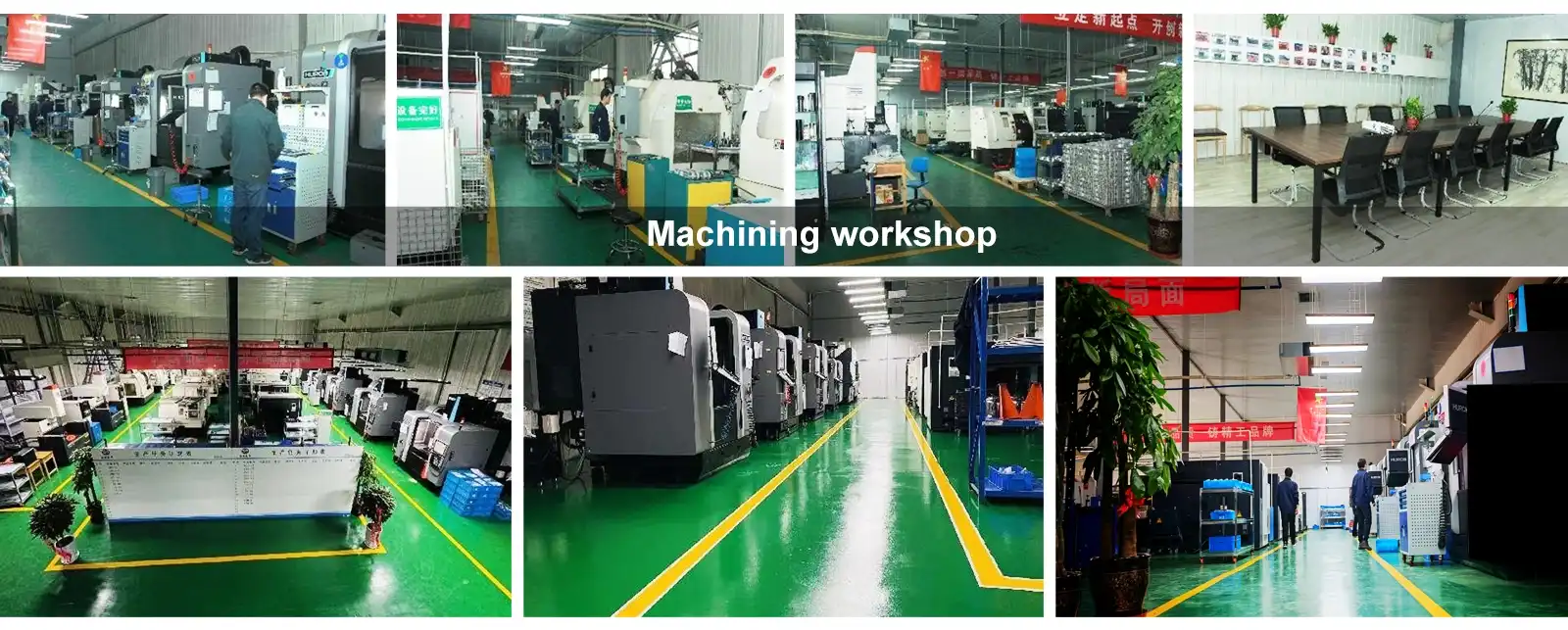
The automation of machine tools through pre-programmed computer software is referred to as CNC machining, or Computer Numerical Control. Mills, lathes, routers, and grinders are among the instruments that execute precision cutting, shaping, and forming operations in accordance with digital blueprints. Unlike manual machining, which relies on human skill for accuracy, CNC systems use coded instructions (typically G-code or M-code) to control parameters like speed, feed rate, and tool path, ensuring repeatability and precision to tolerances as tight as ±0.001 mm (Society of Manufacturing Engineers [SME], 2022).
Historical Intersection: How CNC Evolved from Mechanical Engineering
The origins of CNC are deeply intertwined with advancements in mechanical engineering. In the 1940s and 1950s, as aerospace and automotive industries demanded higher precision in part manufacturing, mechanical engineers collaborated with computer scientists to automate machining processes. The first CNC machine, developed at the Massachusetts Institute of Technology (MIT) in 1952, was a response to the mechanical machining challenge of producing complex aircraft components with consistent accuracy (MIT Museum, 2021).
This innovation was not a departure from mechanical engineering but an extension of it. Early CNC systems relied on mechanical engineering principles such as kinematics (to model tool movement), material science (to select cutting tools and optimize feeds/speeds), and thermodynamics (to manage heat generation during machining). Even today, CNC machine technology evolves hand-in-hand with mechanical engineering research, for example, in the development of high-speed spindles or adaptive control systems that adjust parameters based on real-time feedback from cutting forces (Journal of Manufacturing Science and Engineering, 2020).
CNC as a Core Application of Mechanical Engineering Principles
CNC technology is best understood as a practical application of key mechanical engineering concepts. Consider the following:
- Design and Drafting: CNC programs begin with 3D models or 2D technical drawings, created using Computer-Aided Design (CAD) software—a staple of mechanical engineering. Translating these designs into machine-readable code (via Computer-Aided Manufacturing, or CAM, software) requires expertise in geometric dimensioning, tolerancing, and manufacturing feasibility, all core mechanical machining skills (ASME, 2022).
- Materials Engineering: Selecting the right cutting tool material (e.g., carbide, high-speed steel) and setting optimal cutting parameters depends on understanding material properties like hardness, thermal conductivity, and ductility. Mechanical engineers specializing in manufacturing processes are trained to match materials with machining strategies to minimize tool wear and maximize part quality, critical in CNC operations (Callister & Rethwisch, 2021).
- Mechanics of Machines: CNC machines are complex mechanical systems with moving parts (screws, bearings, spindles) that must be designed to minimize vibration, ensure rigidity, and transmit motion efficiently. Mechanical machining analyzes these systems using principles of statics and dynamics to optimize performance and prevent failures (Shigley & Mischke, 2017).
- Control Systems: CNC controllers are a form of mechatronics, a hybrid of mechanical machining and electronics. Designing these systems requires knowledge of feedback loops, servo motors, and proportional-integral-derivative (PID) control algorithms, all taught in advanced mechanical engineering curricula (Nise, 2019).

Industry Applications: CNC as a Mechanical Engineering Tool in Casting and Beyond
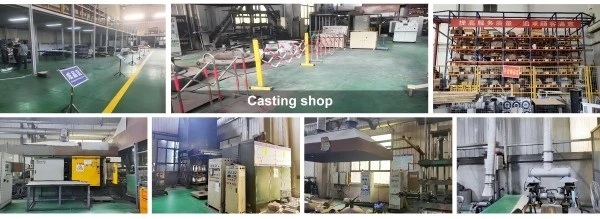
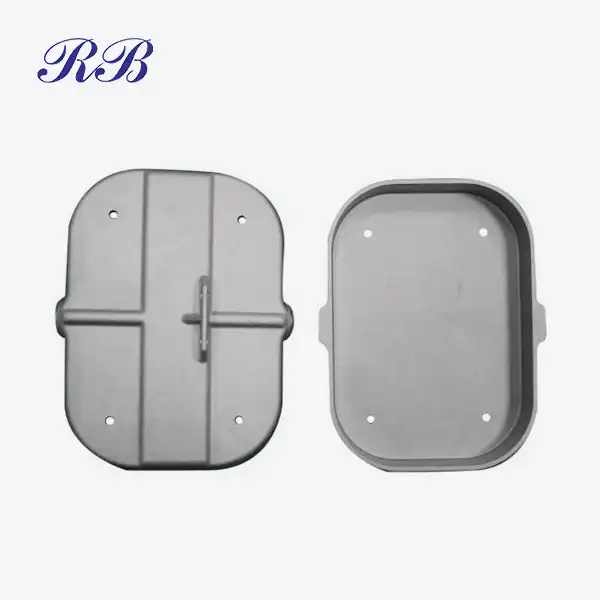
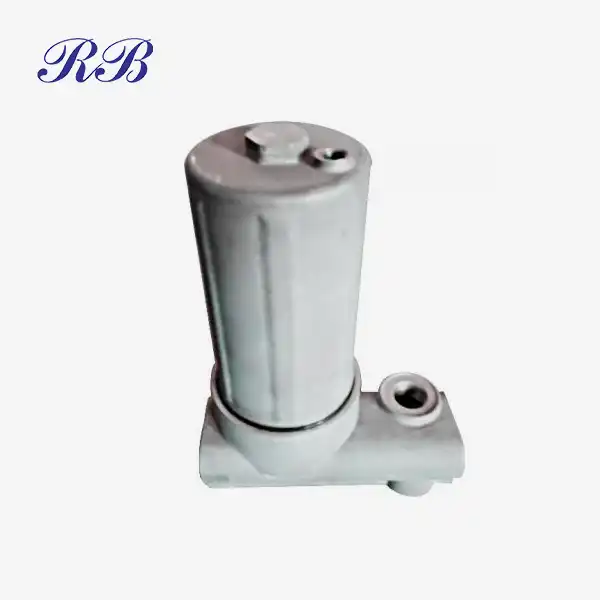
In the casting industry, a critical sector within mechanical machining, CNC plays an indispensable role. Casting processes (e.g., sand casting, die casting) produce near-net-shape parts, but these often require post-processing to achieve final dimensions and surface quality. CNC machining is the primary method for this refinement, making it a bridge between casting and finished mechanical components.
For example, automotive engine blocks are cast from aluminum or cast iron but rely on CNC boring machines to precisely machine cylinder bores and bearing surfaces—operations that demand a deep understanding of mechanical tolerances and thermal expansion (Automotive Engineering International, 2021). Similarly, aerospace castings for turbine blades undergo CNC milling to achieve aerodynamic profiles, with mechanical machining overseeing the process to ensure compliance with stringent safety standards (AIAA Journal, 2020).
Beyond casting, CNC is integral to nearly every mechanical engineering sector: from medical device manufacturing (producing precision implants) to energy systems (machining turbine components). In each case, CNC is not an external technology but a tool wielded by mechanical engineers to bring their designs to life.

Is CNC "Just" Manufacturing?
Critics may argue that CNC belongs solely to manufacturing, a field distinct from mechanical engineering. While manufacturing is a subdiscipline, it is deeply rooted in mechanical engineering principles. Mechanical engineers do not merely design parts; they design manufacturable parts, which requires mastery of processes like CNC machining.
Moreover, modern CNC systems involve advanced mechanical engineering concepts such as mechatronics, robotics, and artificial intelligence (e.g., AI-driven predictive maintenance for CNC machines). These integrations blur the line between "tool" and "discipline," positioning CNC as a dynamic area of mechanical engineering innovation (International Journal of Advanced Manufacturing Technology, 2023).
CNC technology is not an unrelated add-on to mechanical engineering but a core component shaped by its principles, advanced through its research, and taught within its curricula.
Rongbao Enterprise is available to provide assistance. We are a professional mechanical machining manufacturer, factory, and supplier in China that specialises in the provision of customised solutions that adhere to the most stringent quality and precision standards.
We send 70% of our casting, machining, and electronic assembly products to the United States, Europe, Australia, the United Kingdom, Canada, and Japan. This broad presence helps us understand and address the needs of clients from all around the world.
Don't hesitate to reach out to us for a free sample and to explore how we can provide you with customized mechanical machining solutions at competitive prices. Contact us now at steve.zhou@263.net or zhouyi@rongbaocasting.com.
References
- Automotive Engineering International. (2021). "CNC Machining in Automotive Casting Post-Processing." SAE International Journal of Materials and Manufacturing, 14(3), 456-468.
- Britannica. (2023). "Mechanical Engineering." In Encyclopedia Britannica
- Callister, W. D., & Rethwisch, D. G. (2021). Materials Science and Engineering: An Introduction (10th ed.). John Wiley & Sons.
- Institute of Electrical and Electronics Engineers (IEEE). (2020). "Adaptive Control Systems for High-Precision CNC Machining." IEEE Transactions on Industrial Electronics, 67(8), 6890-6901.


Learn about our latest products and discounts through SMS or email