What Determines the Durability of Square Pipe Fittings with Ears?
Material Selection and Mechanical Performance
When choosing a robust fitting, the base material is one of the first things to think about. Depending on the application, manufacturers may employ aluminum alloys, ductile iron, or stainless steel. The different materials provide different mechanical properties and resistance to the environment, so that the most appropriate material is picked according to the function that the component must perform.
An aluminum alloy A356 is widely used for gravity casting since it is an excellent balance between strength, castability, and relatively low weight. The silicon content helps the casting fluidity, and the magnesium component is responsible for the heat treatment response. These qualities may produce parts with practical forms and regular dimensions, provided the casting process is well controlled.
If weight is a consideration in your project, A356 aluminum alloy might be a solution. Its performance, however, is dependent on the alloy condition, the design of the component, and the actual loading conditions. A fitting for a low-weight support structure may have different demands than a fitting that is exposed to regular mechanical forces or external factors.
Careful consideration must also be given to corrosion resistance. Aluminum has a natural oxide layer but may behave differently in chloride-rich environments, when in proximity to dissimilar metals, or when moisture gets trapped around the connection. Protective coatings or other surface treatments may be appropriate depending on conditions of exposure.
Before ordering, the buyers have to verify that the required alloy, associated material documentation, dimensional standards, and other mechanical properties needed for the application are achieved. Such information is a more reliable basis for making an assessment of durability than such general descriptions as great strength or long life.
How Casting Quality Affects Service Life
The correct material doesn’t always produce a durable item. "The production process must also lead to a sound casting with the required geometry and surface finish."
Gravity casting is a possible way of producing aluminum pieces of very intricate shape. Gravity feeds the molten metal into a mold. This enables the manufacturer to develop the main body and mounting features in a controlled manner. The final quality is a function of the mold design, the temperature of the metal, the filling behavior, and the solidification conditions.
If casting is not controlled properly, there may be difficulties like porosity, inclusions, or incomplete filling. The location and size of such flaws might cause a decrease in the load-bearing capabilities of the part or problems during machining and installation.
In a well-controlled manufacturing process, such risks are avoided by the use of correct process parameters and inspection techniques. For sensitive applications, the buyer may ask whether the supplier conducts visual inspections, dimensional checks, or other testing based on the product requirements.
Casting may be finished by CNC machining of mounting surfaces, holes, and other critical features. Accurate machining means the fitting will fit properly with the pieces it attaches to and removes any installation issues from size variations.
What are the controls for casting flaws? What are the dimensions tested? Do you have the inspection documents of the goods you bought? When assessing a supplier. The questions are to determine whether the manufacturing process can reliably meet the project’s requirements.

Surface Treatment and Environmental Resistance
Why Surface Finishing Matters
Surface cleaning of square pipe fittings with ears may enhance their look, cleanliness, and environmental friendliness. The necessary treatment depends on the base material, the projected exposure, and the finish sought by the client.
Shot blasting is one way of eliminating surface contaminants and preparing cast parts for future finishing. When correctly chosen and regulated, the technique may provide a more homogeneous surface and aid increase coating adherence. Shot blasting, however, does not always offer corrosion protection and does not necessarily enhance fatigue life in all components.
Where the fitting is to be exposed to rain, humidity, industrial pollutants, or other corrosive circumstances, customers should consult with the manufacturer for the proper protective treatment. Coating type, preparation technique, thickness, and inspection criteria should be consistent with the desired operating environment.
Details of the installation matter too. Water trapped between mating parts, poor coatings, and direct contact with incompatible metals may all lead to premature degradation. Proper drainage, proper fasteners, and appropriate isolation materials may assist in lessening these dangers.
So a fitting is durable if the material is acceptable, the surface is properly prepared, a suitable protective treatment is used, and it is correctly installed. A broad corrosion-resistant claim is not as useful as choosing a finish depending on the particular environment.
Testing and Quality Checks Before Installation
Inspection gives tangible proof that a fitting is suitable for its purpose. The right checks depend on what it’s designed for and used for.
Dimensional inspection checks important dimensions such as mounting-hole locations, connection geometry, and overall dimensions. These tests make sure that the component fits into the assembly without needing too much change.
Visual examination might detect surface imperfections, damaged coatings or anomalies that need additional assessment. Where the application requires further assurance, producers may conduct appropriate nondestructive testing or mechanical tests in accordance with the approved requirements.
The buyer may additionally request appropriate coating or corrosion test data for outdoor or corrosive situations. For example, salt spray testing may be used to assess the performance of coatings under controlled laboratory circumstances, but will not immediately predict the precise life of a component in all environments.
Pressure testing should only be necessary if it is pertinent to the design and intended function of the fitting. A mounting or support fitting should not, by default, be considered as a pressure containment component.
Quality management certifications may give you further insight into a manufacturer's production and management methods. ISO 9001 is for quality management, ISO 14001 is for environmental management, and ISO 45001 is for occupational health and safety management. These certifications do not by themselves determine the load capacity or service life of a specific fitting. Product-specific specifications and inspection evidence remain relevant.

How to Choose a Durable Fitting for Your Project
When choosing a fitting, engineers and procurement teams should examine the environment in which the fitting will be placed and utilized.
Specify the mechanical demands. Decide what loads the part will see, what direction the predicted force is, and whether there will be vibration or recurrent loading. Ensure that the design and material are suitable for these circumstances.
Check measurements and mounting specifics. Check the measurements of the square pipe fittings with ears part, the ears, the holes, and how it needs to attach. Accurate measurements minimize alignment difficulties and extra labor during installation.
Assess the operational environment. Consider moisture, temperature fluctuations, exposure to the outdoors, chemical contact, and probable galvanic corrosion. These circumstances affect not just the choice of material but also the critical surface polish.
Check inspection requirements. State the dimensions and material attributes of concern for your project. If the application is demanding, ask the provider what inspection procedures and what supporting documents are available.
Check out manufacturing and delivery capacities. Repeat orders need consistent specifications and recorded quality assessments. Buyers should also check on minimum order quantities, availability of samples, lead times, packaging, and the procedure for handling nonconforming items.
These measures prior to purchase make it easy to compare providers and limit the risk of obtaining components that do not meet the installation criteria.
Rongbao Enterprise: A Supplier of Square Pipe Fittings with Ears
Rongbao Enterprise makes industrial cast components and aluminum alloy parts. Founded in 2003, the firm produces components via gravity casting and CNC machining in accordance with the needs of the product and the client.
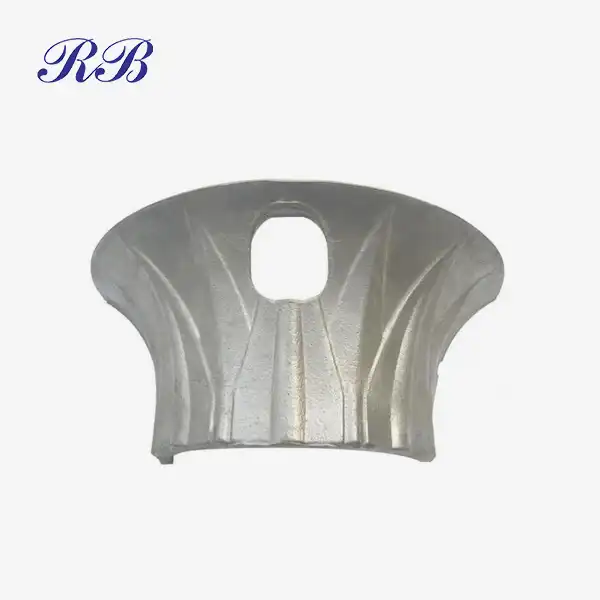
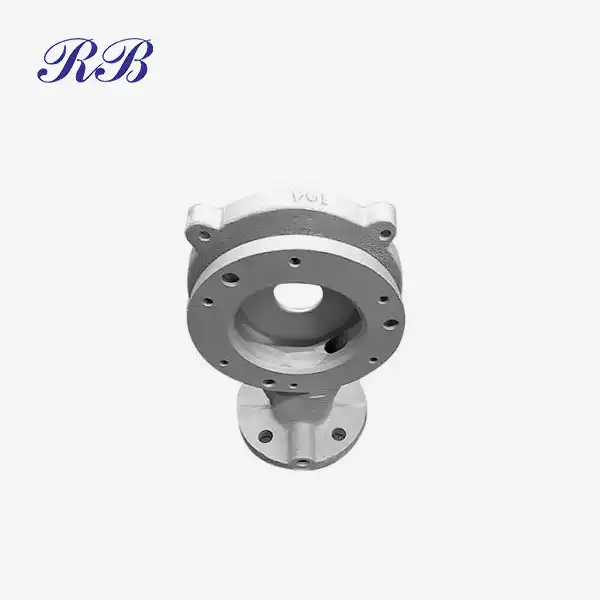
The ears of square pipe fittings of Rongbao are manufactured from A356 aluminum alloy. Its weight is around 0.3 kg/piece. The primary shape of the component is manufactured using gravity casting and CNC machining to finalize essential specifications. Shot-blasting is also employed as a surface treatment.
The reported material and production information provide a basis for potential purchasers of these fittings to assess appropriateness. The final decision should also take into consideration the necessary dimensions, loading circumstances, surface finish, and installation environment.
Rongbao’s manufacturing capacity is 5,000 units. Buyers considering bigger or repeat orders should check the current lead times, order quantities, and relevant capacity for the specification chosen.
When obtaining a quote, please provide a design or sample where possible, the needed material, crucial dimension tolerances, surface treatment preferences, approximate order volume, and destination. The supplier may use this information to analyze the feasibility of manufacturing and to get to know the needs before production starts.
Conclusion
Square pipe fittings with ears may give reliable service if the material, the quality of manufacture, the surface treatment, and the installation circumstances are correct for the application. A356 aluminum alloy provides a reasonable compromise of castability and relatively low weight. Controlled gravity casting and precise CNC machining help achieve the desired shape and fit.
However, the durability should be tested based on the exact needs of the project and not presumed from the names of the materials or generic promises of excellence. When reviewing dimensional requirements, inspection records, environmental exposure, and mounting circumstances, purchasers have a more reasoned foundation for making a selection.
If you are sourcing square pipe fittings with ears for industrial, structural applications, contact Rongbao Enterprise to discuss your designs, material requirements, surface treatment, and order quantity. If you get a quote and check the essential technical requirements before manufacturing, you will be certain that the fitting you pick is the correct one for your application.
FAQ
1. How long can I expect a square pipe fitting with ears to last?
The lifespan of a square pipe fitting with ears can vary depending on factors such as material quality, installation method, and environmental conditions. However, high-quality fittings made from durable materials like A356 aluminum alloy and manufactured using advanced processes can typically last for several decades with proper maintenance.
2. Are square pipe fittings with ears suitable for outdoor use?
Yes, square pipe fittings with ears can be suitable for outdoor use, especially when they've undergone appropriate surface treatments like shot blasting and protective coatings. However, it's essential to choose fittings specifically designed for outdoor applications and to consider factors such as UV exposure and temperature fluctuations in your specific environment.
3. How do I ensure I'm getting a durable square pipe fitting with ears?
To ensure you're getting a durable fitting, look for reputable manufacturers like Rongbao Enterprise that adhere to quality standards such as ISO 9001:2015. Check the material specifications (e.g., A356 aluminum alloy), ask about the manufacturing process, and inquire about any surface treatments or testing procedures the fittings undergo. Additionally, consider the manufacturer's track record and customer reviews.