- English
- French
- German
- Portuguese
- Spanish
- Russian
- Japanese
- Korean
- Arabic
- Greek
- German
- Turkish
- Italian
- Danish
- Romanian
- Indonesian
- Czech
- Afrikaans
- Swedish
- Polish
- Basque
- Catalan
- Esperanto
- Hindi
- Lao
- Albanian
- Amharic
- Armenian
- Azerbaijani
- Belarusian
- Bengali
- Bosnian
- Bulgarian
- Cebuano
- Chichewa
- Corsican
- Croatian
- Dutch
- Estonian
- Filipino
- Finnish
- Frisian
- Galician
- Georgian
- Gujarati
- Haitian
- Hausa
- Hawaiian
- Hebrew
- Hmong
- Hungarian
- Icelandic
- Igbo
- Javanese
- Kannada
- Kazakh
- Khmer
- Kurdish
- Kyrgyz
- Latin
- Latvian
- Lithuanian
- Luxembou..
- Macedonian
- Malagasy
- Malay
- Malayalam
- Maltese
- Maori
- Marathi
- Mongolian
- Burmese
- Nepali
- Norwegian
- Pashto
- Persian
- Punjabi
- Serbian
- Sesotho
- Sinhala
- Slovak
- Slovenian
- Somali
- Samoan
- Scots Gaelic
- Shona
- Sindhi
- Sundanese
- Swahili
- Tajik
- Tamil
- Telugu
- Thai
- Ukrainian
- Urdu
- Uzbek
- Vietnamese
- Welsh
- Xhosa
- Yiddish
- Yoruba
- Zulu
Investment Casting vs. Sand Casting: Which Process is Right for Your Project?
The choice between investment casting and sand casting depends on the part shape, the yearly volume and the tolerance called for in the design. Sand casting employs a bonded sand mold, which is torn away after cooling. Investment casting uses a ceramic shell that is created around a wax design, which is melted off before pouring. Usually the decision is made before the first sample is cut.
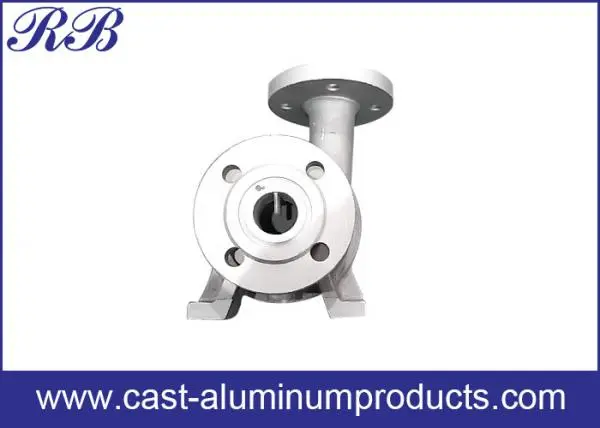
Core Differences Between Casting Processes
The two approaches differ from the first operation in pattern material, mold material and dimensional behavior. Investment casting is the process of forming a wax design, dipping it in a ceramic slurry and refractory stucco, then pouring into a fired shell that breaks apart after cooling. Sand casting involves packing sand bound by chemical or clay bond around a reusable pattern and hardening the mold before pouring into a hollow destroyed in shakeout. The first is single use at pattern stage, the second at mold stage and that is where most of the cost difference comes in.
Pattern and Mould Materials
Investment casting involves wax patterns poured into aluminum dies such that the design has tool steel precision of 0.02 to 0.05 mm before any ceramic coating is applied. The shell is built up in layers of silica or zircon slip and refractory stucco and then burned at around 1,000 deg C. The alternative employs wood, plastic or metal designs put into a flask. The mold is compacted silica sand, bentonite clay and water for green sand, or a chemically bonded combination for resin bound work. Now the shakeout blows each mold apart.
Tolerance and Surface Behaviour Out of the Mould
Parts produced by investment casting exit the shell at ISO 8062-3:2023 grade CT 4 to CT 6 with surface roughness of 1.6 to 3.2 micrometers Ra. Sand cast portions are being removed from the flask from CT 7 to CT 9 with a roughness of 6.3 to 25 micrometers Ra. The narrower band justifies greater ceramic tooling cost. The broader band makes this approach competitive for heavier parts and short lead time. If the design requires a finer accuracy than CT 7 then the mold must leave machining stock to absorb the as cast variance.
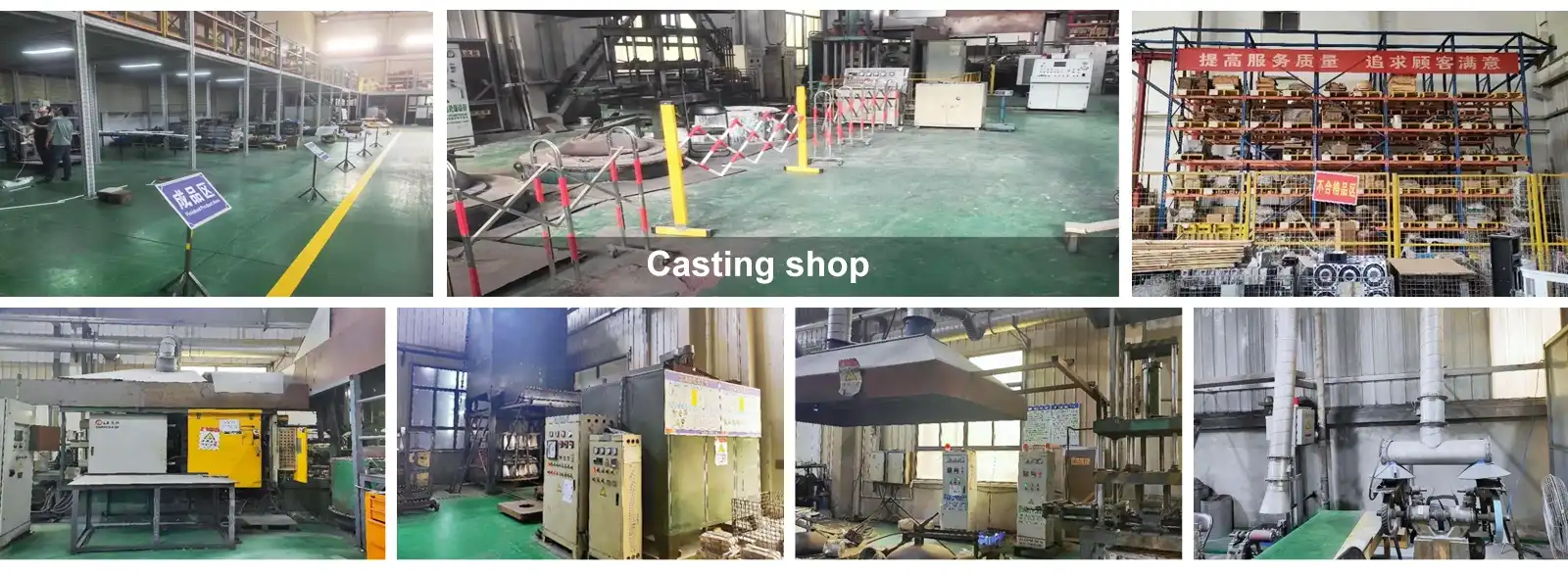
Precision and Surface Quality Analysis
Tolerance and surface roughness are the first figures that a buyer often compares and they are the values most commonly offered without the standard to back them up. ISO 8062-3:2023 specifies the general dimensions and geometrical tolerance grades and the machining stock for each of these grades. ASTM B26/B26M-18 defines the property floor for sand cast aluminum. General and pressure containment work with steel investment castings is covered by ASTM A732/A732M-20 and ASTM A985/A985M-21. The most typical argument is to quote a tolerance without a grade.
Nondestructive Method Matched to Defect Type
Different sorts of defects need different nondestructive methods:
- Liquid penetrant in accordance with ASTM E165/E165M for surface breaking flaws only.
- Radiographic evaluation under ASTM E1742/E1742M against ASTM E505 reference radiographs answers interior porosity and shrinkage.
- Magnetic particle testing is capable of detecting surface and near surface flaws on ferromagnetic alloys.
- Visual and dimensional examination is always carried out.
For a low risk sand casting order the customer pays for the penetrant. Part is purchased with radiographic evaluation on a pressure contained investment casting per ASTM A985/A985M-21.
Machining Stock and Tolerance Grade Practice
ISO 8062-3:2023 grade CT 4 to CT 6 corresponds to approx. 1,0 to 2,0 mm machining stock per machined face; CT 7 to CT 9 corresponds to 2,0 to 4,5 mm. If a customer puts a tolerance of 0.1 mm on a sand cast face he is asking the foundry to leave stock that will absorb the as cast variation, the same 0.1 mm on an investment cast face is asking the foundry to hold it immediately out of the shell.
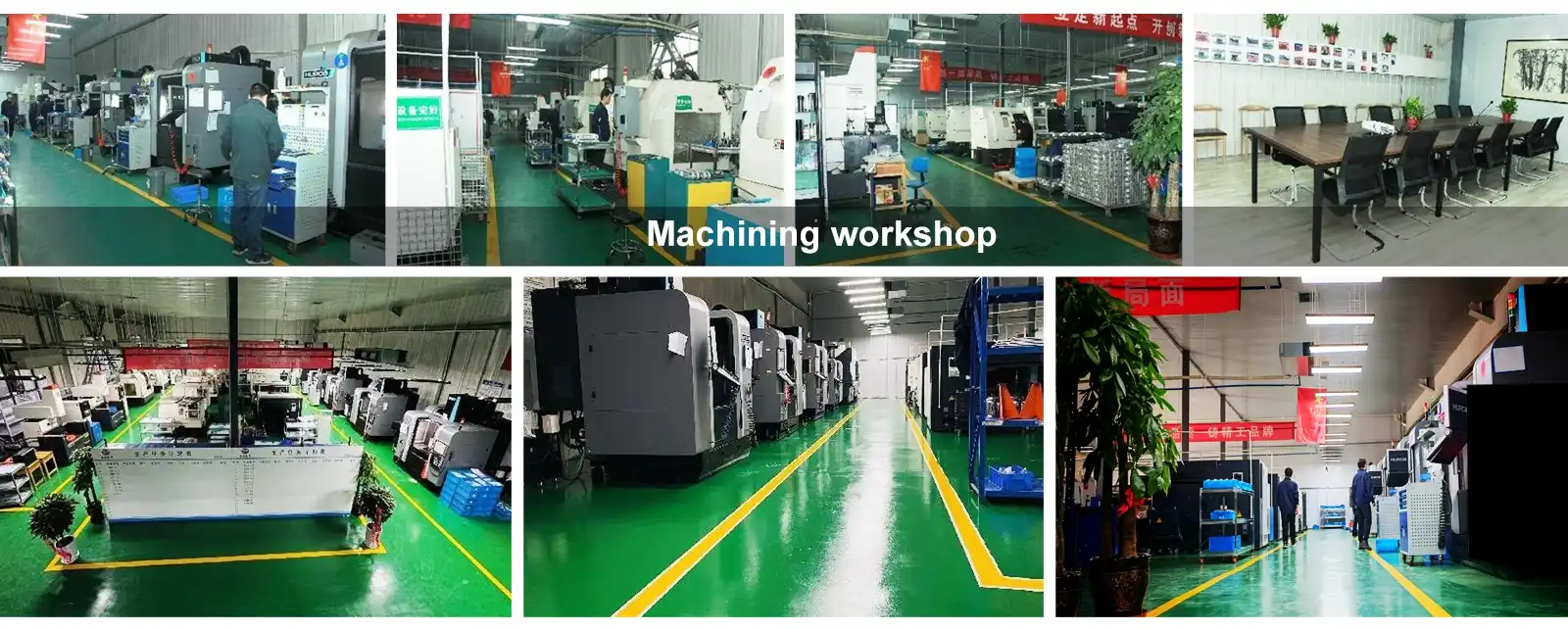
Production Volume and Economic Considerations
Tooling cost, cycle time and break even piece count determine which method wins the budget battle. Investment casting tooling is in the $10,000 to $100,000 US range because the shell dies and wax tools are machined. Sand casting patterns fall in the $2,000 to $20,000 US range since the pattern is generally wood or plastic. Cycle time is the opposite: a sand casting flask pours in two to six hours and may shake out the same shift, but an investment casting shell requires twenty four to seventy two hours before pour. Below about 200 pieces / year the cheaper entry wins. Above about 5000 pieces / year the cycle wins on per piece cost.
The honest barrier is the break even piece count. Sand casting ceases being relevant when the part is one of fifty prototypes with a 0.05 mm callout, and investment casting stops being relevant when the item is a 3 ton base with a 25 mm wall, since the shell cannot be constructed thick enough to withstand the pour. If you sell either method to a band other than your own, you’re engineering, not selling.
Material Compatibility and Alloy Selection
The range of alloys is dictated by the pouring temperature and the temperature of the mold face. Sand casting handles aluminum, copper, iron and most carbon and low alloy steels. The mold face can withstand the whole range of ferrous and non ferrous pouring temperatures used in typical foundry operations. Investment casting can handle the same wide spectrum but can also handle reactive metals that demand a controlled environment such as titanium and cobalt based superalloys. The aluminum side of the trade is controlled by ASTM B26/B26M-18 for sand work and by ASTM B108/B108M-19 for permanent mold work.
Aluminium Alloys on Both Routes
Sand cast per ASTM B26/B26M-18 A356.0 provides a sand cast minimum of 234 MPa tensile, 165 MPa yield and 3.5 percent elongation, with typical values of around 262 MPa tensile and 5 to 8 percent elongation after T6. The identical alloy in a permanent mold under ASTM B108/B108M-19 comes out higher, as the metal die chills the grain. The home turf is iron and steel. Pump housings, valve bodies and equipment bases ranging from 50kg to several tons virtually entirely run in green sand or resin bonded work.
Steel and Reactive Alloys
Carbon and low alloy steel investment castings are made to ASTM A732/A732M-20, pressure containing steel investment castings are made to ASTM A985/A985M-21. The pressure standard defines the radiographic acceptability level, the placement of the test bar and the paperwork pack, which is why pressure rated valve and pump bodies default to investment casting. Reactive metals and superalloys are on that side because the ceramic shell regulates the environment and the wax pattern catches small internal channels that a sand core cannot contain.
Application-Specific Advantages Across Industries
Generally the option of industry. Sand Casting for structural and large volume work. Investment casting for thin walls, fine surface and pressure containing parts. The table below compares the two methods to the questions that a buyer asks on a fresh design and shows the border where each is the incorrect response.
|
Decision criterion |
Sand casting |
Investment casting |
|
Tooling cost pattern |
2,000 to 20,000 USD per pattern; reusable pattern, single use mould |
10,000 to 100,000 USD per wax and shell die set |
|
Minimum and economic piece count |
Feasible from 1 piece; economic above roughly 200 per year |
Feasible from about 20 pieces; economic above roughly 5,000 per year |
|
As cast tolerance and surface |
CT 7 to CT 9 per ISO 8062-3:2023; 6.3 to 25 micrometres Ra |
CT 4 to CT 6 per ISO 8062-3:2023; 1.6 to 3.2 micrometres Ra |
|
Typical wall thickness capability |
5 to 8 mm comfortable; 4 mm possible with cold box cores |
1.5 to 3 mm comfortable in thin sections |
|
Alloy range covered by named standard |
Aluminium, copper, iron, carbon and low alloy steel under ASTM B26/B26M-18 |
Same range plus reactive metals and superalloys under ASTM A732/A732M-20 and ASTM A985/A985M-21 |
|
Lead time driver |
Pattern lead time dominates first article; cycles are short thereafter |
Shell build and firing dominate first article and every cycle |
|
Where this process is the wrong answer |
As cast tolerance tighter than CT 7, surface tighter than 6.3 micrometres Ra, reactive alloys |
Heavy sections above 3 tonnes, walls above 25 mm, low volume below 200 per year |
Sand casting is the wrong answer for an as cast tolerance tighter than CT 7 or a surface roughness tighter than 6.3 micrometres Ra. Investment casting is the wrong answer when the part is a 3 tonne base with a 25 mm wall.
Conclusion
Heavy parts produced in large volumes with loose tolerances made from common aluminum or iron grades are best suited for Sand casting. If the design calls for a thin wall, a pressure rating, a delicate surface or a reactive alloy, investment casting is the solution. The break even piece count is a genuine quantity and mentioning it up front eliminates the most frequent cause of rework. For heavy general engineering, sand casting is the default way. Investment casting is the expert technique for those sections that require it.
FAQ
1. What annual volume makes sand casting the cheaper option?
Below 200 per year sand casting wins on pattern cost; above 5,000 it wins on cycle time. Between, the answer depends on alloy, tolerance, and machining stock.
2. When is sand casting the wrong process?
Sand casting fails when the as cast tolerance must be tighter than CT 7, the surface roughness tighter than 6.3 micrometres Ra, or the alloy is reactive such as titanium.
3. Which ASTM standard governs a sand cast aluminium part?
ASTM B26/B26M-18 governs aluminium alloy sand cast work; ASTM B108/B108M-19 is the permanent mould cousin. The drawing should also name ISO 8062-3:2023 for the tolerance.
4. Does investment casting need radiographic inspection by default?
Not by default. Pressure containing steel investment castings under ASTM A985/A985M-21 carry radiographic examination as part of the standard. Commercial work under ASTM A732/A732M-20 books penetrant.
5. How much machining stock does a sand casting carry per face?
ISO 8062-3:2023 grade CT 7 to CT 9 corresponds to roughly 2.0 to 4.5 mm of machining stock per machined face on a sand casting. CT 4 to CT 6 on investment casting corresponds to 1.0 to 2.0 mm.
Partner with Rongbao Enterprise for Superior Sand Casting Solutions
Rongbao Enterprise runs a 6,000 square metre facility on Fengwu East Road in the Fengjing Industrial Park in Xi'an, with high pressure die casting, low pressure die casting, gravity sand casting, precision CNC machining and shot blasting under one roof. The shop pours aluminium and copper alloys under ISO 9001:2015 and exports around 70 percent of output to the United States, Europe and Japan.
Send the drawing or 3D model, the annual volume, and the service environment; the reply comes back with a manufacturability review, a material and process recommendation, and a written quotation. Email zhouyi@rongbaocasting.com with your drawing and your annual volume.
References
1. ASTM International. ASTM B26/B26M-18, Standard Specification for Aluminum Alloy Sand Castings. ASTM International, 2018.
2. ASTM International. ASTM B108/B108M-19, Standard Specification for Aluminum Alloy Permanent Mold Castings. ASTM International, 2019.
3. ASTM International. ASTM A732/A732M-20, Standard Specification for Castings, Investment, Carbon and Low Alloy Steel for General Application, and Cobalt Alloy for High Strength at Elevated Temperatures. ASTM International, 2020.
4. ASTM International. ASTM A985/A985M-21, Standard Specification for Steel Investment Castings General Requirements, for Pressure Containing Parts. ASTM International, 2021.
5. International Organization for Standardization. ISO 8062-3:2023, Geometrical Product Specifications (GPS): Dimensional and Geometrical Tolerances for Moulded Parts, Part 3: General Dimensional and Geometrical Tolerances and Machining Allowances for Castings. ISO, 2023.
6. Campbell, John. Complete Casting Handbook: Metal Casting Processes, Metallurgy, Techniques and Design. Butterworth Heinemann, 2015. ISBN 978-0-444-63509-9
Learn about our latest products and discounts through SMS or email