- English
- French
- German
- Portuguese
- Spanish
- Russian
- Japanese
- Korean
- Arabic
- Greek
- German
- Turkish
- Italian
- Danish
- Romanian
- Indonesian
- Czech
- Afrikaans
- Swedish
- Polish
- Basque
- Catalan
- Esperanto
- Hindi
- Lao
- Albanian
- Amharic
- Armenian
- Azerbaijani
- Belarusian
- Bengali
- Bosnian
- Bulgarian
- Cebuano
- Chichewa
- Corsican
- Croatian
- Dutch
- Estonian
- Filipino
- Finnish
- Frisian
- Galician
- Georgian
- Gujarati
- Haitian
- Hausa
- Hawaiian
- Hebrew
- Hmong
- Hungarian
- Icelandic
- Igbo
- Javanese
- Kannada
- Kazakh
- Khmer
- Kurdish
- Kyrgyz
- Latin
- Latvian
- Lithuanian
- Luxembou..
- Macedonian
- Malagasy
- Malay
- Malayalam
- Maltese
- Maori
- Marathi
- Mongolian
- Burmese
- Nepali
- Norwegian
- Pashto
- Persian
- Punjabi
- Serbian
- Sesotho
- Sinhala
- Slovak
- Slovenian
- Somali
- Samoan
- Scots Gaelic
- Shona
- Sindhi
- Sundanese
- Swahili
- Tajik
- Tamil
- Telugu
- Thai
- Ukrainian
- Urdu
- Uzbek
- Vietnamese
- Welsh
- Xhosa
- Yiddish
- Yoruba
- Zulu
Investment Casting VS Sand Casting Comparison
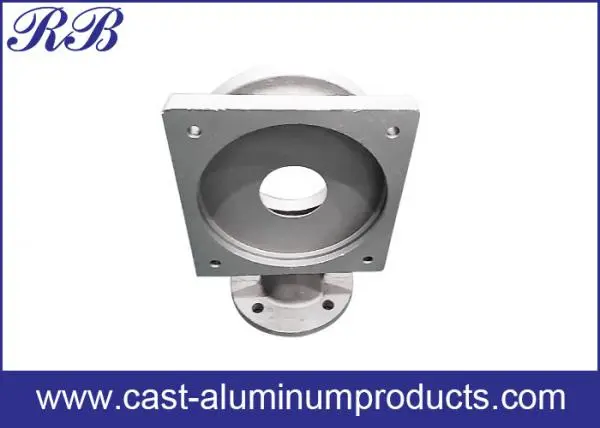
When buying managers look at investment casting and sand casting side by side, they have to make a big choice that affects the quality of the product, how much it costs, and how long it takes to make. When liquid metal is poured into disposable sand molds, it forms metal parts. Sand casting is a very flexible way to make things, and it works especially well for large production runs and complicated shapes. Alternatively, investment casting is more accurate because it uses wax patterns, but it costs more for the tools and takes longer to make.
Introduction
Metal parts are made by casting, a basic manufacturing process that shapes liquid metals in special molds. This method is used in many businesses. Making a smart choice between casting methods, especially investment casting vs. sand casting, is necessary to meet strict industrial requirements like accurate measurements, long-lasting structures, lowering costs, and being able to make more products. Procurement managers who work in complicated business-to-business supply lines need to know what makes each casting method unique in order to get the best quality results while staying within budget.
These days, factories need complex ways to make decisions that take into account many factors that affect the choice of casting. These factors include the type of material, the amount that will be made, the tolerances that must be met, the expected surface finish, and the long-term relationship with the provider. The automobile, aerospace, building machinery, and industrial equipment industries all have their own problems that affect the choice of casting method. To be successful in procurement, you need to fully understand these problems.
This in-depth study shows how choosing the right casting method is strategically important in global industrial manufacturing settings. It gives procurement workers useful information they can use to make better choices about their supply chains.
Understanding Investment Casting and Sand Casting
Investment Casting Process Overview
Investment casting, also called "lost-wax casting," is a complex process with many steps that starts with making a wax mold. These patterns are coated with a clay shell by dipping and stuccoing them over and over again. This makes strong models that can capture fine details. When high temperatures are used to remove the wax, exact holes are left that are ready for liquid metal to be added.
The process of investment casting needs special tools and a controlled environment, which raises the cost of setting but results in very accurate measurements. This method is great for making complicated shapes with thin walls, undercuts, and internal openings that would be hard to make with regular cutting.
Sand Casting Fundamentals
A simpler way to make metal parts is through sand casting, which uses disposable sand molds that are shaped around designs. The method involves making mold holes with two main parts: the cope (upper half) and the drag (lower half). The cope (upper half) holds the pattern and sets the end shape of the part. To make internal holes and hollow features in the finished casting, sand cores can be used.
Aluminum, brass, copper, and iron alloys can all be used in the sand casting process, which makes it a very useful method for making engine blocks for cars, machine parts, and big industrial equipment. This method is good for making prototypes and small amounts of products because it doesn't need a lot of complicated tools and can be used in a variety of ways.
Key Differences in Materials and Applications
Investment casting usually uses high-performance alloys that can be used in aircraft, to make precise car parts, and to make medical devices that need a very smooth surface and stable dimensions. The process works with materials like titanium, stainless steel, and superalloys that need exact control of temperature during solidification.
On the other hand, sand casting works best with traditional casting metals and bigger part needs, where the smaller tolerances can work with the limits of sand mold materials. For cost-effective component production, sand casting is frequently used by makers of heavy machinery, building equipment, and general industrial uses.
Comparative Analysis of Investment Casting VS Sand Casting
Dimensional Accuracy and Surface Finish Comparison
When it comes to accuracy, investment casting usually gets tolerances within ±0.003 inches per inch, while sand casting gets tolerances between ±0.030 and ±0.125 inches, based on the size and complexity of the part. The clay shell materials used in investment casting make the surface edges smoother, so in many cases, extra machining is not needed.
Surface roughness values show big changes between methods. For example, investment casting can get 63–125 microinch Ra, while sand casting usually gets 250–500 microinch Ra. These traits have a direct effect on purchasing choices when part specifications call for few post-casting processes or exact fitting needs.
Production Volume and Lead Time Considerations
The different output volumes of each method make them better for different types of industrial situations. While sand casting can handle both low-volume prototyping and high-volume production needs with greater economic efficiency, investment casting excels in medium-volume production runs where accuracy supports higher per-unit costs.
Taking lead time into account shows that investment casting has longer cycle times because of the need to prepare the pattern, build the shell, and keep the temperature under control. Sand casting allows for faster response times, which is especially helpful for buying managers who have to meet tight delivery deadlines or meet urgent production needs.
Cost Analysis and Economic Factors
Tooling costs are a big difference between casting methods. For example, investment casting needs big investments up front in design tools and clay shell materials. Sand casting uses cheaper pattern materials and sand media that can be used again and again. This lowers the cost of the initial project and lets the design be changed easily as it is being developed.
When you figure out the total cost of ownership, you have to include secondary processes. For example, finishing work is usually not as important for investment casting as it is for sand casting. Professionals in procurement need to think about these trade-offs in the context of their own applications and growth forecasts.

How to Choose Between Investment Casting and Sand Casting for Your Project
Project Parameter Definition Framework
The first step in choosing the right casting method is to clearly define all the project parameters, such as the required level of accuracy in measurements, the goal output volume, the material requirements, and the available budget. The F-1 Criteria Screening Approach gives you organized ways to rank casting choices based on performance metrics that are weighted and match your strategic manufacturing goals.
Some important factors that go into the evaluation process are the complexity of the part, the tolerances that must be met, the surface finish requirements, the mechanical property needs, and the production timeline. Each measure is given a score based on how well the method works. This makes it possible to make objective decisions through quantitative comparison models.
Application-Specific Recommendations
For precise parts like turbocharger housings and gearbox parts, automotive uses usually choose investment casting. On the other hand, sand casting is used for cheaper production of engine blocks and structural parts. Most of the time, aerospace makers choose investment casting for important parts that need to be very precise and have specific material qualities.
The ability of sand casting to create large, strong components affordably while retaining adequate performance qualities is advantageous to the construction and heavy machinery industries. Manufacturers of industrial tools often use both traditional and new methods in the same product lines to get the best performance and cost-effectiveness.
Quality and Compliance Considerations
Quality control methods are very different between casting methods. For example, investment casting needs special checking methods for parts with thin walls and complicated shapes. Standardized testing methods are used for sand casting quality control to check the dimensions, find holes, and confirm the mechanical properties.
Compliance standards, like ISO 9001, IATF 16949, and certifications specific to the industry, affect the choice of method based on the skills of the provider and the development of the quality system. To make sure that quality stays the same over time, procurement managers must look at both the professional skills and certifications of suppliers.
Innovations and Trends Influencing Casting Choices
Technological Advancement Impact
Both investment casting and sand casting are being changed by additive manufacturing technologies that make it easier to make patterns and molds. 3D printing lets you make quick prototypes, complicated geometry patterns, and custom sand cores, which makes the standard casting method more flexible while cutting down on wait times.
Quality control has changed for both types of casting thanks to automated checking systems, real-time process tracking, and the use of artificial intelligence. These technical advances get around problems that existed in the past and make it possible for both investment casting and sand casting to be used in more situations.

Sustainability and Environmental Considerations
Casting methods are becoming more and more chosen based on how they affect the environment. Both processes are changing to make less trash and use less energy. Reusing sand casting media and using less energy are two benefits of sand casting. New developments in investment casting are focused on reusing clay shells and making the process more efficient.
Initiatives to lower carbon emissions lead to new developments in melting technologies, waste heat recovery systems, and the use of green energy in casting processes. When reviewing casting sources and methods, procurement managers need to look at more than just performance and cost metrics. They also need to think about sustainability metrics.
Future Market Trends
As industries merge, it opens up new business possibilities for companies that can cast in a variety of ways and help with integrated supply chain solutions. Digitalization projects make it easier for suppliers to work together, see what's happening in production in real time, and plan ahead for repair needs, all of which improve the stability of the supply chain.
As the need for customization grows, casting methods that are flexible and can handle frequent design changes and small batch production needs will become more popular. This trend is especially good for sand casting because it can be changed easily and doesn't cost as much to do so than more rigid manufacturing methods.
Case Studies: Successful Applications of Investment Casting and Sand Casting
Aerospace Industry Success Stories
Investment casting is used by top aircraft companies to make rotor blades, structural brackets, and precise housings, all of which need to be light and accurate in size in order to work at their best. These uses show that investment casting can make complicated shapes out of materials that are better in every way and meet strict flight safety standards.
Quality control methods used in aircraft applications show that investment casting is a reliable way to make parts with known surface and mechanical qualities. The method's ability to include complex cooling channels and light structures gives it an edge in terms of improving performance and fuel economy.
Heavy Machinery and Construction Equipment
Sand casting is a popular method used by makers of construction equipment to make engine blocks, transmission housings, and structural parts that need to be strong mechanically and affordable. These uses show that sand casting is a good way to make big parts with enough accuracy for heavy-duty uses.
Sand casting has made it possible to reduce costs while still keeping high quality standards for industry and construction uses. The method is adaptable enough to handle changes to the design and special needs that are common in projects that make specialized machines.
Automotive Sector Applications
Automotive makers use both investment casting and sand casting in smart ways. Investment casting is used for precise parts like turbocharger housings and valve bodies, while sand casting is used for bigger structure elements and engine parts. With this hybrid method, performance qualities are optimized while production costs are kept under control.
Achieving quality consistency in car applications shows that both methods can meet strict industry standards if they are used correctly with the right quality control tools and supplier partnerships.
Conclusion
When you compare investment casting and sand casting, you can see that each has its own benefits for different types of manufacturing. Which one to use depends on the level of precision needed, the amount of output needed, the cost limits, and the performance needs of the specific application. While sand casting offers cost-effective solutions for bigger components and higher volume production needs, investment casting excels in precision applications requiring superior surface finish and complex geometries. When procurement managers look at these trade-offs, they need to think about their own operations and long-term source ties, quality consistency, and the total cost of ownership. Both ways are getting better as manufacturing changes. This is happening through new technologies, better sustainability, and better quality systems that make more uses possible while fixing problems with the old ones.
Partner with Rongbao Enterprise for Your Casting Solutions
Through our vast sand casting and precision manufacturing skills, Rongbao Enterprise offers complete casting solutions that are tailored to meet the needs of a wide range of industries. Our ISO 9001, ISO 14001, and ISO 45001-certified facilities make sure that quality standards are always met while serving makers of cars, building equipment, and industrial equipment around the world. We've been in this business for 20 years and send 70% of our products to markets in Europe, the United States, and Japan. We offer complete solutions, from improving the design to sending the finished parts.
We can do everything from high-pressure die casting to low-pressure die casting to gravity casting and precision machining. Our services are backed by automatic tools and standardized quality control systems. Get in touch with steve.zhou@263.net or zhouyi@rongbaocasting.com to find out how our experience as a sand casting company can help you get the best deals and meet your shipping needs.
FAQ
Which casting method offers superior dimensional accuracy?
Investment casting is much more accurate when it comes to size, with limits of only ±0.003 inches per inch compared to ±0.030 to ±0.125 inches for sand casting. Because it is more precise, investment casting is better for parts that need to be made with tight specs and little extra machining.
What are typical lead times for each casting process?
Investment casting usually takes 4 to 8 weeks for the first production run because of the time it takes to make the mold and the clay shell. Sand casting usually has faster turn-around times of 2 to 6 weeks, which is great for projects that need to be made quickly or for making prototypes.
How do the prices of sand casting and investment casting compare?
Because the patterns are easier to make and the sand media can be used more than once, sand casting has lower initial equipment costs than investment casting. But investment casting often lowers the cost of secondary cutting because it has a better surface finish and more exact measurements. To make a good comparison, you need to look at all of the costs involved.
References
1. Campbell, John. "Complete Casting Handbook: Metal Casting Processes, Metallurgy, Techniques and Design." Butterworth-Heinemann, 2015.
2. Brown, James R. "Foseco Foundryman's Handbook: Facts, Figures and Formulae." Elsevier Science & Technology, 2000.
3. Beeley, Peter R. "Foundry Technology." Newnes-Butterworth, 2001.
4. American Foundry Society. "Investment Casting Handbook." American Foundry Society, 1997.
5. Heine, Richard W. "Principles of Metal Casting." McGraw-Hill Education, 1967.
6. Davis, Joseph R. "ASM Specialty Handbook: Cast Irons." ASM International, 1996.
Learn about our latest products and discounts through SMS or email