- English
- French
- German
- Portuguese
- Spanish
- Russian
- Japanese
- Korean
- Arabic
- Greek
- German
- Turkish
- Italian
- Danish
- Romanian
- Indonesian
- Czech
- Afrikaans
- Swedish
- Polish
- Basque
- Catalan
- Esperanto
- Hindi
- Lao
- Albanian
- Amharic
- Armenian
- Azerbaijani
- Belarusian
- Bengali
- Bosnian
- Bulgarian
- Cebuano
- Chichewa
- Corsican
- Croatian
- Dutch
- Estonian
- Filipino
- Finnish
- Frisian
- Galician
- Georgian
- Gujarati
- Haitian
- Hausa
- Hawaiian
- Hebrew
- Hmong
- Hungarian
- Icelandic
- Igbo
- Javanese
- Kannada
- Kazakh
- Khmer
- Kurdish
- Kyrgyz
- Latin
- Latvian
- Lithuanian
- Luxembou..
- Macedonian
- Malagasy
- Malay
- Malayalam
- Maltese
- Maori
- Marathi
- Mongolian
- Burmese
- Nepali
- Norwegian
- Pashto
- Persian
- Punjabi
- Serbian
- Sesotho
- Sinhala
- Slovak
- Slovenian
- Somali
- Samoan
- Scots Gaelic
- Shona
- Sindhi
- Sundanese
- Swahili
- Tajik
- Tamil
- Telugu
- Thai
- Ukrainian
- Urdu
- Uzbek
- Vietnamese
- Welsh
- Xhosa
- Yiddish
- Yoruba
- Zulu
Industrial Robot Die Casting Components Precision Solutions
Industrial Robots need precisely produced parts to ensure positioning, repeatability, and dependable functioning during production cycles. The choice of manufacturing method is important for robot manufacturers and industrial automation integrators, not only in terms of the quality of components, but also the time taken for assembly, production cost and long-term maintenance. Custom casting robot arms offer a practical option for applications that require complex geometries, integrated mounting features, and consistent production quality. Die casting can manufacture near-net-shape metal parts with characteristics that would otherwise need many production steps. Successful outcomes, however, rely on the selection of materials, design of components, quality of tooling, and inspection throughout manufacturing. These considerations allow the engineering team to decide whether die casting is the right choice for their robot parts.
How Die Casting Supports Industrial Robot Manufacturing
Structural components of industrial robots consist of housings for joints, motor covers, mounting brackets, link connections, and protective housings. They each have different requirements for stiffness, weight, dimensional accuracy, and fit during assembly.
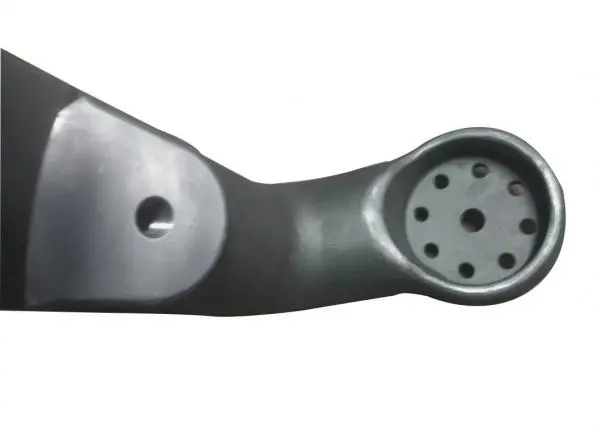
Die casting is the technique of pressing molten metal into a mold that has been carefully manufactured under pressure. It enables the producer to get repeatable designs with defined complex features. Ribs, bosses, mounting points, and other structural features may be included in a single part depending on the alloy and the design of the component.
This inclusion may facilitate assembly and reduce the number of separate parts. It could also save material loss versus machining the same form entirely.
The primary challenge with custom cast robot arms is whether the shape of the product, mechanical requirements, and projected manufacturing volume justify the expense of tooling. If the design has thin walls, deep recesses, intricate transitions, or closely spaced mounting parts, the supplier should evaluate the drawing prior to proposing a method.
Production Consistency and Repeatable Component Quality
Robot components often need to fit in with motor housings, reducers, bearings, sensors, and connection plates. Variations in key dimensions might influence the orientation of related parts and make assembly problematic.
Die casting is a repeatable manufacturing process if well controlled, regarding mold, alloy composition, process parameters, and inspection procedures. Consistent production methods and steady tooling conditions contribute to minimizing the variation from batch to batch.
But repeatability must be shown, not assumed. The manufacturer may develop inspection plans for essential dimensions, datum locations, hole positions, and mating surfaces using the design. Inspection may be performed using calipers, micrometers, height gages, coordinate measuring devices, or specific fixtures.
The volume of production also matters. Projects with big volumes might benefit from consistent tooling and shortened cycle times, but projects with low volumes need careful examination of the mold pricing, machining alternatives and expected demand.
Purchasers should, before ordering for manufacture, establish acceptable tolerances, sampling frequency, batch traceability and documentation to be given with each delivery. Such aspects provide a more tangible basis for measuring consistency of fabrication than do sweeping statements of correctness.
Material Selection and Structural Design for Robot Arms
In many applications of robotics, it is important to decrease weight, since the mass that moves has an influence on acceleration, energy consumption, and mechanical stresses. Structural members are often fabricated using aluminum alloys, which possess relatively low density and good casting characteristics.
The proper alloy is selected based on the load requirements, the geometry, the operating environment, and surface treatment of the component. Engineers should not choose a material on the basis of weight simply, but on the mechanical properties that are genuinely required.
Structure is equally as important. Smooth transitions between sections may avoid localized stress concentrations. Ribs can provide stiffness without requiring walls to be of the same thickness. The thickness of the wall should be designed based on the behavior of filling, solidification, and cooling.
Design evaluation for custom casting robot arms should include mounting interfaces, cable channels, access to fasteners, and clearance around moving components. These characteristics may influence the mold complexity and the necessity of additional machining of surfaces.
Not every robotic arm is suitable for die-casting. For massive load-bearing arms, long slender structures, and components under severe fatigue loads, other materials or manufacturing procedures may be necessary. The casting process should be compared against machining, fabrication or other procedures for the intended usage by engineers.
Dimensional Accuracy, Machining, and Surface Quality
The cast item may be able to take much of the intended shape from the mold, but not all attributes may be within final assembly tolerances without extra processing.
CNC machining is required for bearing seats, threaded holes, precision locating surfaces, and interfaces for gearboxes or motors. Good datum references help offer a foundation for properly locating these qualities to each other.
The determination of surface requirements should also be based on function. Cosmetic overlays necessitate a uniform finish, whereas mounting faces and sliding interfaces require tighter limits. Shot peening, coating, or other finishing treatments may be permissible if they are compatible with the alloy and the service environment of the part.
The inspection must check those aspects which are critical to the final assembly. This may involve dimensional measurements, visual inspection, thread verification, surface inspections, and appropriate testing for casting flaws according to the design and use.
A solid production plan decouples the dimensions of the as-cast product from the dimensions of the completed product. This distinction is of use to the client to see what procedures are covered by the estimate and reduces the chance of unexpected machining or assembly costs.
Quality Control from Tooling to Final Inspection
The quality of the component is affected by every production phase, from mold preparation to finishing. A well-developed quality plan provides for the early identification of issues and provides evidence that the delivered components meet the stated specifications.
First Article Inspection in the first manufacturing batch will check that the casting and machining process meets the requirements of the design. Radiographic or other suitable nondestructive testing may be considered for those projects where internal integrity is of high importance based on the risk and acceptance criteria of the component.
Customers may also utilize dimensional reports, material records, and batch identification to check the result of the manufacture. The method of inspection should be relevant to the feature being inspected; no single test can reveal all elements of the quality of the casting.
Buyers should ask a supplier how it controls drawing alterations, how it deals with nonconforming components, and how it offers inspection records when qualifying a supplier for custom casting robot arms. Clear acceptance criteria and documented corrective actions assist in making the supplier performance evaluation easier over time.
Custom Manufacturing for Different Robotic Applications
The robot components needed vary for vehicle assembly, electronics manufacturing, packaging, material handling, and general industrial automation. A part for a small collaborative robot will have different weight and packaging requirements than a part for a high-payload industrial system.
Therefore, the customization should begin with the application and not with a fixed cast form. Relevant inputs may include 3D CAD files, engineering drawings, alloy options, annual demand, operating conditions, surface polish, and other important factors.
An experienced manufacturing partner may review these inputs, discuss tooling, machining, finishing and inspection requirements, and pinpoint probable casting limitations before production gets underway. Then sample approval may be used to see whether the part is to the standard required before the project proceeds into a wider production run.
The quotation should clearly include tooling costs, unit pricing, minimum order, lead time, packaging, shipping conditions, and inspection documents for overseas acquisitions. This information offers a comparative platform for the engineering and purchasing teams.
Choosing the Right Partner for Precision Robot Components
Choosing a die casting supplier isn’t simply about the unit cost. Buyers should examine competence with similar geometries, tooling and machining capabilities, quality management procedures, communication during design review, and ability to maintain consistent output.
For conventional custom casting robot arms, suppliers need to have the entire technical information accessible at the bid stage. This will help them to evaluate the feasibility of the project and to find possible ways to reduce costs without compromising any of the required criteria. Drawings must show the alloy as applicable, critical tolerances, machining areas, surface treatment, and associated inspection requirements.
The optimum technique to make it is a compromise between structural performance, dimensional requirements, manufacturing volume and overall delivered cost. Die casting is a great approach for carefully designed robot parts, particularly when complex features and repeatability of manufacture are important.
Manufacturers may increase the predictability of their supply of robot components by thorough design study, appropriate process controls, and recorded inspection. This provides a more direct pathway from the initial engineering concept to production-ready goods meeting the requirements of industrial automation systems.
Conclusion
The choice of manufacturing technology for the components of industrial robots is a trade-off between structural strength, weight, dimensional accuracy, production volume, and cost. Depending on the part shape, material requirements, and the projected production quantities, die casting might be a suitable solution for custom casting robot arms. Manufacturers may generate repeatable parts that meet mandated assembly and performance standards using secondary machining and quality inspection with the correct equipment.
Robot manufacturers and automation integrators may collaborate with an experienced casting supplier during the design phase to uncover manufacturing challenges at an early stage, enhance component designs, and avoid excessive processing expenditures. Have your CAD files, technical drawings, material specifications, and estimated order quantities available for a manufacturing feasibility assessment before you start a project. This is a fantastic starting point for evaluating the level of customization, manufacturing costs, and quality standards for your next industrial robotics project.
FAQ
1. What are the main advantages of using die-cast components in industrial robots?
Die-cast components offer several key advantages for industrial robots, including high production rates, excellent repeatability, tight tolerances, smooth surfaces, and optimized structural performance. These characteristics contribute to improved efficiency, reliability, and performance in robotic systems.
2. How does die casting contribute to cost-effectiveness in robot arm manufacturing?
Die casting contributes to cost-effectiveness by enabling fast production cycles, reducing the need for secondary machining, and minimizing material waste. The ability to produce complex shapes in a single operation also helps streamline the manufacturing process, leading to overall cost savings.
3. Can custom casting robot arms be tailored for specific industry applications?
Yes, custom casting robot arms can be designed and manufactured to meet the specific requirements of various industries. Through careful material selection, optimized design, and post-processing techniques, manufacturers can create robot arms tailored for applications ranging from automotive assembly to precision electronics manufacturing.
4. What role does material selection play in custom casting robot arm performance?
Material selection is crucial in determining the performance characteristics of custom casting robot arms. Aluminum alloys, for example, offer an excellent balance of strength and weight, while other materials may be chosen for specific properties such as wear resistance or thermal conductivity. The choice of material directly impacts the robot arm's capabilities and suitability for different applications.
5. How do advancements in die casting technology impact the future of industrial robotics?
Advancements in die casting technology, such as improved process control and new alloy developments, are expanding the possibilities for custom robot arm design. These innovations allow for the creation of more complex, high-performance components that can enhance the capabilities of industrial robots, potentially leading to new applications and increased automation in various industries.
Custom Casting Robot Arm Supplier: Rongbao Enterprise
When it comes to superior, expertly crafted custom casting robot arms, no one does it better than Rongbao Enterprise. Established in 2003, Rongbao has been supplying cutting-edge solutions to many sectors, including industrial robots. Precision processing and casting aluminum alloys are two areas in which the firm excels.
For businesses in need of top-notch custom casting robot arms, Rongbao Enterprise may be the perfect collaborator due to its proficiency in a wide range of innovative manufacturing processes, including precision machining, gravity casting, low-pressure die casting, and high-pressure die casting. Their dedication to sustainability, technological advancement, and exactitude has helped them become a reliable partner in international trade.
Rongbao guarantees that each custom casting robot arm is up to par in terms of performance and dependability because of their dedication to quality management, which is supported by their ISO 9001:2016, ISO 14001, and ISO 45001 certifications. They are a great option for manufacturers that want to improve their robotic systems since their components have precise tolerances, smooth surfaces, and optimum structural qualities.
The electrical and electronic, medical equipment, aerospace, and automotive industries are just a few of the many that Rongbao serves with its bespoke casting solutions. They can satisfy the different demands of equipment manufacturers globally thanks to their ability to provide OEM/ODM services and a manufacturing capacity of 5000 units.
For those seeking a reliable partner in custom casting robot arm solutions, Rongbao Enterprise offers the expertise, quality, and innovation needed to drive your automation projects forward. To learn more about their capabilities or to discuss your specific requirements, reach out to their team at steve.zhou@263.net or zhouyi@rongbaocasting.com. Discover how Rongbao's precision-engineered components can elevate your industrial robotics applications and help you stay ahead in the competitive manufacturing landscape.
References
1. Boothroyd, G., Dewhurst, P., & Knight, W. A. (2010). Product Design for Manufacture and Assembly. CRC Press.
2. Campbell, J. (2015). Complete Casting Handbook: Metal Casting Processes, Metallurgy, Techniques and Design. Butterworth-Heinemann.
3. International Federation of Robotics. (2021). World Robotics 2021 Industrial Robots Report.
4. Kalpakjian, S., & Schmid, S. R. (2014). Manufacturing Engineering and Technology. Pearson.
5. Nof, S. Y. (Ed.). (2009). Springer Handbook of Automation. Springer Science & Business Media.
Learn about our latest products and discounts through SMS or email