- English
- French
- German
- Portuguese
- Spanish
- Russian
- Japanese
- Korean
- Arabic
- Greek
- German
- Turkish
- Italian
- Danish
- Romanian
- Indonesian
- Czech
- Afrikaans
- Swedish
- Polish
- Basque
- Catalan
- Esperanto
- Hindi
- Lao
- Albanian
- Amharic
- Armenian
- Azerbaijani
- Belarusian
- Bengali
- Bosnian
- Bulgarian
- Cebuano
- Chichewa
- Corsican
- Croatian
- Dutch
- Estonian
- Filipino
- Finnish
- Frisian
- Galician
- Georgian
- Gujarati
- Haitian
- Hausa
- Hawaiian
- Hebrew
- Hmong
- Hungarian
- Icelandic
- Igbo
- Javanese
- Kannada
- Kazakh
- Khmer
- Kurdish
- Kyrgyz
- Latin
- Latvian
- Lithuanian
- Luxembou..
- Macedonian
- Malagasy
- Malay
- Malayalam
- Maltese
- Maori
- Marathi
- Mongolian
- Burmese
- Nepali
- Norwegian
- Pashto
- Persian
- Punjabi
- Serbian
- Sesotho
- Sinhala
- Slovak
- Slovenian
- Somali
- Samoan
- Scots Gaelic
- Shona
- Sindhi
- Sundanese
- Swahili
- Tajik
- Tamil
- Telugu
- Thai
- Ukrainian
- Urdu
- Uzbek
- Vietnamese
- Welsh
- Xhosa
- Yiddish
- Yoruba
- Zulu
How does wall thickness affect the strength of low pressure robot arm?
Wall thickness is a key design factor in low-pressure-cast robot arms because it affects structural strength, stiffness, weight, and casting quality. For manufacturers developing custom casting robot arms, the challenge is to achieve sufficient load-bearing capacity without adding unnecessary material. A properly manufactured component must endure operating loads, repeated motion, and vibration, and also fulfill weight and dimension limits. When engineers grasp how wall thickness interacts with material selection, shape, and casting quality, they can produce custom casting robot arm components that perform consistently in tough situations.
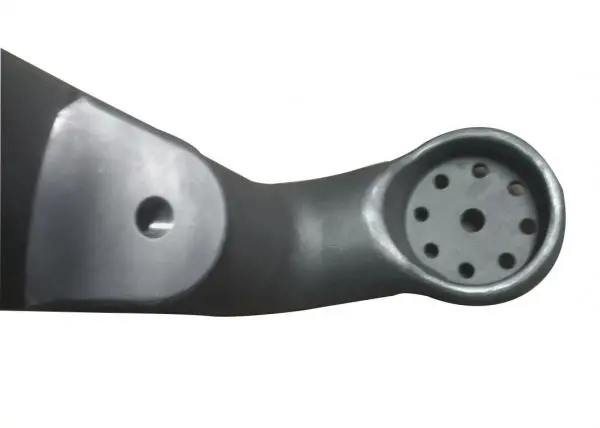
How Wall Thickness Influences Robot Arm Performance
The wall thickness influences several elements of the mechanical performance of a robot arm. Its effect relies on the form of the part, the loading, and the sites of attachment.
Structural Strength and Stiffness
In a given piece, thicker walls usually take more weight. However, not all designs have strength increasing directly in proportion to wall thickness. Whether the component will bear the design load also depends on the direction of the forces applied to the component, the stress distribution inside the component, and the component material characteristics.
Stiffness is just as crucial. Too much deflection may lead to decreased positioning accuracy, especially in robots that may need repeated motion. Therefore, engineers need to think about strength and stiffness, not just wall thickness.
Weight and Dynamic Performance
Thinner walls minimize the material utilization and weight of components, which may assist in reducing the inertia of moving custom casting robot arms. This may help to boost acceleration and minimize the energy needed to move.
But if you go too thin on the wall thickness, you might have deflection, vibration, or local stress. The objective is not to make every part as thin as feasible, but to put material where it contributes most to the structural performance.
Key Factors That Determine the Required Wall Thickness
Wall thickness should be selected as part of the overall component design rather than treated as an isolated dimension.
Material Selection and Heat Treatment
The A356 aluminum alloy is often considered a candidate for lightweight structural castings due to its castability and possible mechanical performance following appropriate heat treatment. The final qualities are determined by the alloy condition, casting quality and the processing conditions.
For example, T6 heat treatment might increase the mechanical properties of A356 components if the procedure is well regulated. Before completing the design, engineers should verify the needed material condition and appropriate mechanical property criteria.
Geometry, Ribs, and Stress Concentrations
The shape of a robot arm may be as important as its nominal wall thickness. Sharp interior corners, abrupt section changes, and poorly designed mounting interfaces may cause localized stress concentrations.
Smooth transitions and proper radii on the fillets will distribute the load better. Strategic placement of ribs may also provide stiffness without the necessity for walls of constant thickness. Such properties are especially advantageous in the area of mounting points, bearing seats, and actuator connections where loads might be concentrated.
Casting Quality and Internal Defects
Low-pressure casting may help to make intricate aluminum parts. However, the quality of the final product is dependent on the mold design, filling conditions, solidification, and process management.
Porosity, poor filling, and other defects in the casting might reduce the effective load-bearing area and the fatigue performance. Depending on the shape and the process conditions, thin sections may potentially have issues with filling and solidification.
1. The manufacturer must create inspection standards appropriate for the operation of the component. They may include dimensional inspection, visual inspection, radiographic testing, or mechanical testing as appropriate to the application.
Design Strategies for Stronger, Lighter Robot Arms
Achieving a suitable strength-to-weight ratio requires coordination between structural engineering and casting process design.
Optimize Wall Thickness Across Different Sections
It is true that a uniform wall thickness helps ease filling and cooling, yet the custom casting robot arm does not necessarily require the same thickness in all of its construction. Lightly loaded areas may be good for weight reduction. Higher load areas may need extra material.
Engineers need to study load pathways and find regions that are under bending, torsion, or point loads. This strategy enables material to be assigned according to real needs of performance, rather than thickening the whole component.
Use Simulation and Prototype Testing
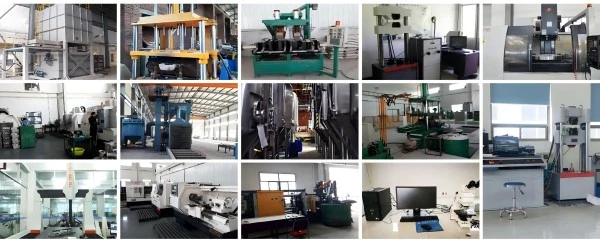
Finite element analysis (FEA) may be used to identify areas of high stress, excessive deformation, and where considerable weight reductions can be made. Further casting simulation might be useful to understand the mold filling and solidification behavior.
The results of the simulation have to be confirmed by prototype tests. Depending on the working conditions and acceptance criteria of the robot arm, static load testing, fatigue tests, and dimensional controls may be significant.
This process helps to ascertain whether the proposed wall thickness will deliver the required performance before production quantities increase.
Working With a Custom Casting Robot Arm Manufacturer
It is not just a question of choosing a company that can create a wall of a given thickness. Buyers should assess the material control, process capability, machining accuracy, inspection procedures, and knowledge of difficult aluminum castings.
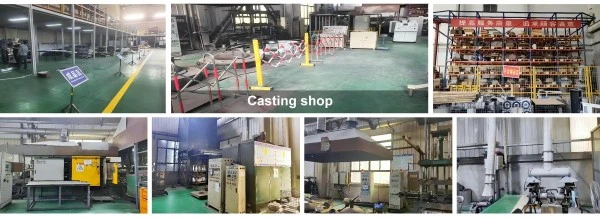
Rongbao Enterprise specializes in aluminum alloy casting, precision machining, low-pressure casting, gravity casting, and other casting technologies. These talents may be utilized to support projects that need a combination of casting and machining solutions.
Before a project begins, buyers should tell you the following:
- Technical drawings: Detail wall thickness, critical dimensions, tolerances, and mounting interfaces
- Operating requirements. Include estimated loads, movement cycle, vibration conditions, and weight constraints.
- Material specs: Specify required aluminum alloy, heat treatment condition and mechanical property targets.
- Quality Requirements: Identify the inspection methodology, acceptance criteria, and any material or inspection papers required.
- Production forecast: Prototype numbers, projected annual demand, surface treatment requirements, delivery schedules.
This information allows the engineering team to consider manufacturability and recommend potential design changes before tooling and production begin.
Conclusion
The wall thickness influences the strength, stiffness, weight, and manufacturability of low-pressure-cast custom casting robot arms, yet the optimal design is neither the thickest nor the lightest. The dependable performance must be the result of interaction between material selection, structural geometry, casting quality, and validation testing. For companies developing custom casting robot arms, a practical approach is to establish load requirements first, optimize material distribution through engineering analysis, and confirm performance through prototype testing and appropriate inspections.
FAQ
1. How thin can robot arm walls be while maintaining adequate strength?
The minimum wall thickness for robot arms depends on various factors, including material properties, design geometry, and load requirements. For aluminum alloys like A356 used in low-pressure casting, practical minimum thicknesses often range from 2.5 to 4 mm for structural sections. However, with advanced design techniques and post-processing methods, even thinner walls can be achieved without compromising strength in certain applications.
2. What are the advantages of using thin-walled components in robot arms?
Thin-walled components in robot arms offer several benefits, including reduced weight, improved energy efficiency, and enhanced dynamic response. Lighter arms can move faster and more precisely, consuming less power and potentially increasing the overall payload capacity of the robot. Additionally, thinner walls can lead to material cost savings and potentially shorter cooling times during the casting process.
3. How does the casting process affect the strength of thin-walled robot arm components?
The low-pressure casting (LPC) process used for robot arm components can significantly influence their strength, especially in thin-walled sections. LPC typically results in low porosity, which is crucial for maintaining strength in thin walls. The process allows for better control over solidification, reducing the likelihood of defects that could compromise structural integrity. However, careful process control and design considerations are necessary to ensure consistent quality in thin-walled castings.
Get a Custom Casting Solution for Your Robot Arm
Looking for a reliable manufacturing partner for low-pressure-cast robot arms? Rongbao Enterprise provides aluminum alloy casting and precision machining solutions tailored to your component design and performance requirements.
Our team can help evaluate wall thickness, structural geometry, material selection, and machining requirements to support a practical balance between strength, weight, and production cost.
Contact Rongbao Enterprise today to discuss your project. Send us your CAD drawings, preferred aluminum alloy, critical tolerances, expected load conditions, and order quantity to request a design review and customized quotation.
Let's develop a robot arm casting solution that meets your engineering specifications and production goals.
Contact Rongbao Enterprise to discuss your robot arm casting project. Share your drawings, material requirements, critical tolerances, and expected production volume to request a manufacturability review and a quotation tailored to your application.
To explore how Rongbao can elevate your robotics projects with their custom casting robot arm capabilities, reach out to their expert team at steve.zhou@263.net or zhouyi@rongbaocasting.com. With their extensive experience and state-of-the-art facilities, Rongbao is poised to be your trusted partner in creating the next generation of high-performance robot arms.
References
1. Campbell, J. (2015). Complete Casting Handbook: Metal Casting Processes, Techniques and Design. Butterworth-Heinemann.
2. Kaufman, J. G., & Rooy, E. L. (2004). Aluminum Alloy Castings: Properties, Processes, and Applications. ASM International.
3. Groover, M. P. (2020). Fundamentals of Modern Manufacturing: Materials, Processes, and Systems. John Wiley & Sons.
4. Kalpakjian, S., & Schmid, S. R. (2014). Manufacturing Engineering and Technology. Pearson.
5. ASM International. (2008). ASM Handbook, Volume 15: Casting. ASM International.
Learn about our latest products and discounts through SMS or email