- English
- French
- German
- Portuguese
- Spanish
- Russian
- Japanese
- Korean
- Arabic
- Greek
- German
- Turkish
- Italian
- Danish
- Romanian
- Indonesian
- Czech
- Afrikaans
- Swedish
- Polish
- Basque
- Catalan
- Esperanto
- Hindi
- Lao
- Albanian
- Amharic
- Armenian
- Azerbaijani
- Belarusian
- Bengali
- Bosnian
- Bulgarian
- Cebuano
- Chichewa
- Corsican
- Croatian
- Dutch
- Estonian
- Filipino
- Finnish
- Frisian
- Galician
- Georgian
- Gujarati
- Haitian
- Hausa
- Hawaiian
- Hebrew
- Hmong
- Hungarian
- Icelandic
- Igbo
- Javanese
- Kannada
- Kazakh
- Khmer
- Kurdish
- Kyrgyz
- Latin
- Latvian
- Lithuanian
- Luxembou..
- Macedonian
- Malagasy
- Malay
- Malayalam
- Maltese
- Maori
- Marathi
- Mongolian
- Burmese
- Nepali
- Norwegian
- Pashto
- Persian
- Punjabi
- Serbian
- Sesotho
- Sinhala
- Slovak
- Slovenian
- Somali
- Samoan
- Scots Gaelic
- Shona
- Sindhi
- Sundanese
- Swahili
- Tajik
- Tamil
- Telugu
- Thai
- Ukrainian
- Urdu
- Uzbek
- Vietnamese
- Welsh
- Xhosa
- Yiddish
- Yoruba
- Zulu
How to Properly Assemble and Balance Cast Impellers in Pumps and Fans?
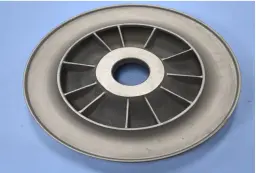
Cast impellers are the most important part of industrial pumping systems. They turn rotational energy into fluid flow with amazing efficiency. When working with these precision-engineered parts, it's important to know how to put them together, balance them, and use them correctly. Modern cast impeller technology uses modern materials like A356 aluminum alloy and complex production techniques to provide excellent hydraulic performance in a wide range of industrial settings. This complete guide looks at tried-and-true methods that make pumps work better and last longer.
Understanding Cast Impeller Fundamentals and Core Applications
In many different industries, cast impellers are quite important. Each use has its own set of technical requirements. The casting method lets manufacturers make intricate shapes that improve fluid dynamics while keeping the structure strong even when it is under a lot of stress.
In cars, cast impellers power cooling systems in big trucks and fast trains. These parts need to be able to handle very high and very low temperatures while yet being quite exact in size. The A356 aluminum alloy that is often utilized in these situations has great corrosion resistance and strength, which are both important for a long service life.
The construction and heavy machinery industries use cast impellers in the hydraulic systems of excavators and loaders. These uses need materials that can withstand wear and tear and manage abrasive fluids. Casting under low pressure makes sure that the material is spread out evenly, which gets rid of any weak spots that might cause early failure.
Energy sector applications include wind power generation systems where cast impellers contribute to cooling and hydraulic control mechanisms. The precision required in these applications necessitates advanced CNC machining capabilities following the initial casting process.
Cast impellers are used in pumps, compressors, and motors in general industrial equipment because constant performance has a direct effect on production efficiency. Engineers may change the shape of the blade to fit the flow rate and rotational speed they need since casting is flexible.
Precision Assembly Techniques for Optimal Performance
To put together cast impellers correctly, you need to pay close attention to mechanical tolerances and surface preparation. Shot blasting is a standard surface treatment for cast impellers that gets rid of casting residues and makes the surface perfect for the next assembly steps.
During installation, shaft alignment is very important since even little misalignments can cause too much vibration and make the machine less efficient. Professional assembly experts employ precise measurement tools to check for concentricity within certain tolerances. For high-performance applications, they usually keep deviations below 0.02mm.
To keep leaks from happening and to avoid over-compressing sealing parts, mechanical seal integration needs particular torque parameters. Certified facilities use standardized manufacturing techniques to make sure that the bolt patterns and mating surfaces are always the same, which makes it easier to install seals.
Housing clearances must accommodate thermal expansion while preventing contact between rotating and stationary components. Engineers calculate these clearances based on operating temperature ranges and material expansion coefficients specific to the alloy composition used in the impeller construction.
Thread engagement protocols for fastening hardware follow international standards, with thread compounds applied to prevent galvanic corrosion between dissimilar metals. This attention to detail significantly extends service intervals and reduces maintenance requirements.
Advanced Balancing Methods and Quality Control
Dynamic balancing of cast impellers eliminates vibration sources that compromise pump performance and bearing life. Professional balancing procedures follow ISO 1940 standards, achieving residual unbalance levels appropriate for specific operational speed ranges.
Static balancing addresses mass distribution irregularities that occur during the casting process. Precision machining operations remove material from predetermined locations, guided by computerized balancing equipment that calculates optimal correction masses and angular positions.
Two-plane balancing becomes necessary for impellers with significant axial length, where complex mass distributions require correction in multiple planes. This sophisticated approach ensures smooth operation across the entire operational speed range, from startup through maximum rotational speed conditions.
Verification procedures include vibration analysis using accelerometers positioned at critical bearing locations. Acceptable vibration levels vary with pump size and operational requirements, with industrial standards specifying maximum amplitudes for different frequency ranges.
Quality documentation accompanies each balanced impeller, providing traceability and verification of compliance with specified balance grades. This documentation proves invaluable during warranty claims and maintenance planning activities.
Material Selection and Manufacturing Excellence
A356 aluminum alloy represents the preferred material choice for many cast impeller applications due to its exceptional strength-to-weight ratio and corrosion resistance properties. This alloy composition includes silicon and magnesium additions that enhance fluidity during casting while providing excellent mechanical properties after heat treatment.
The low-pressure casting process offers superior control over metal flow and solidification, resulting in improved mechanical properties compared to traditional gravity casting methods. Controlled filling rates minimize turbulence and oxide inclusion formation, producing cleaner internal structures.
Heat treatment protocols optimize material properties through precise temperature control during solution treatment and aging cycles. These thermal processes enhance tensile strength and yield strength while maintaining adequate ductility for shock load resistance.
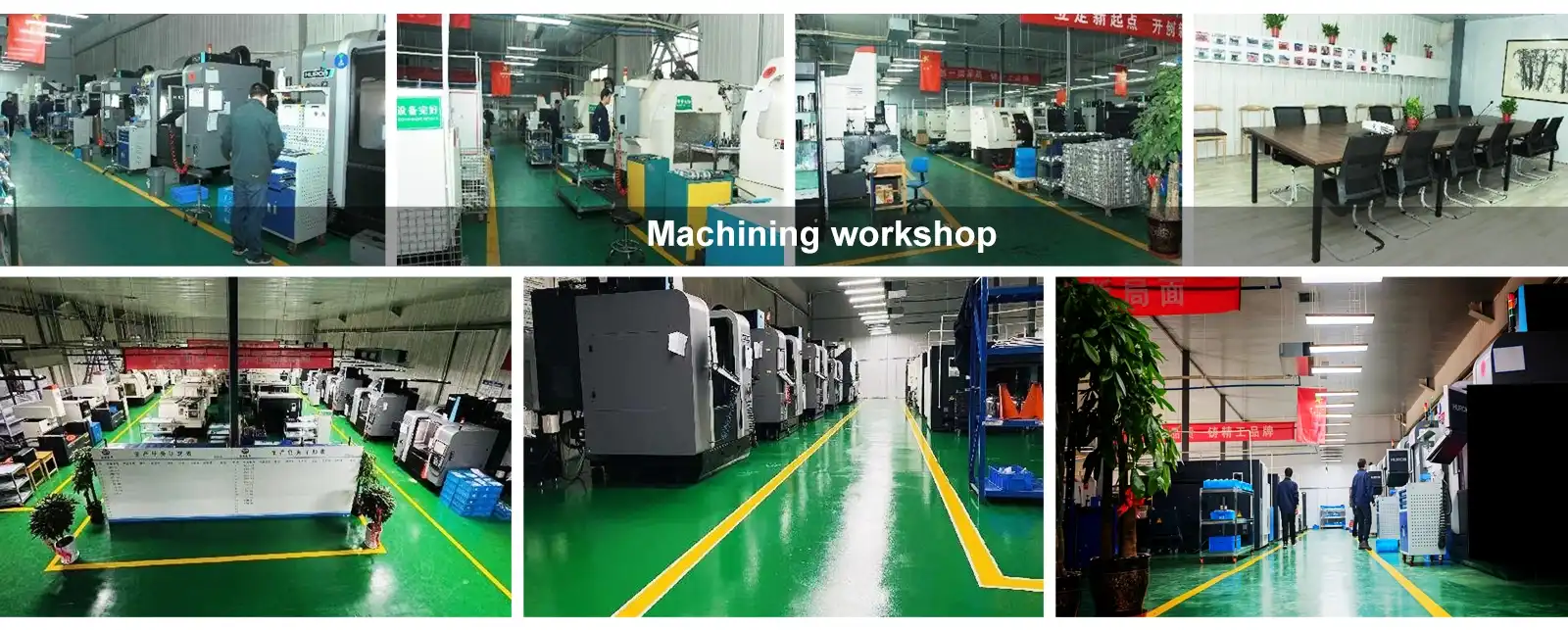
Dimensional stability remains consistent throughout the manufacturing process thanks to standardized cooling procedures that minimize residual stress formation. CNC machining operations achieve final dimensional requirements while maintaining surface finish specifications critical for hydraulic performance.
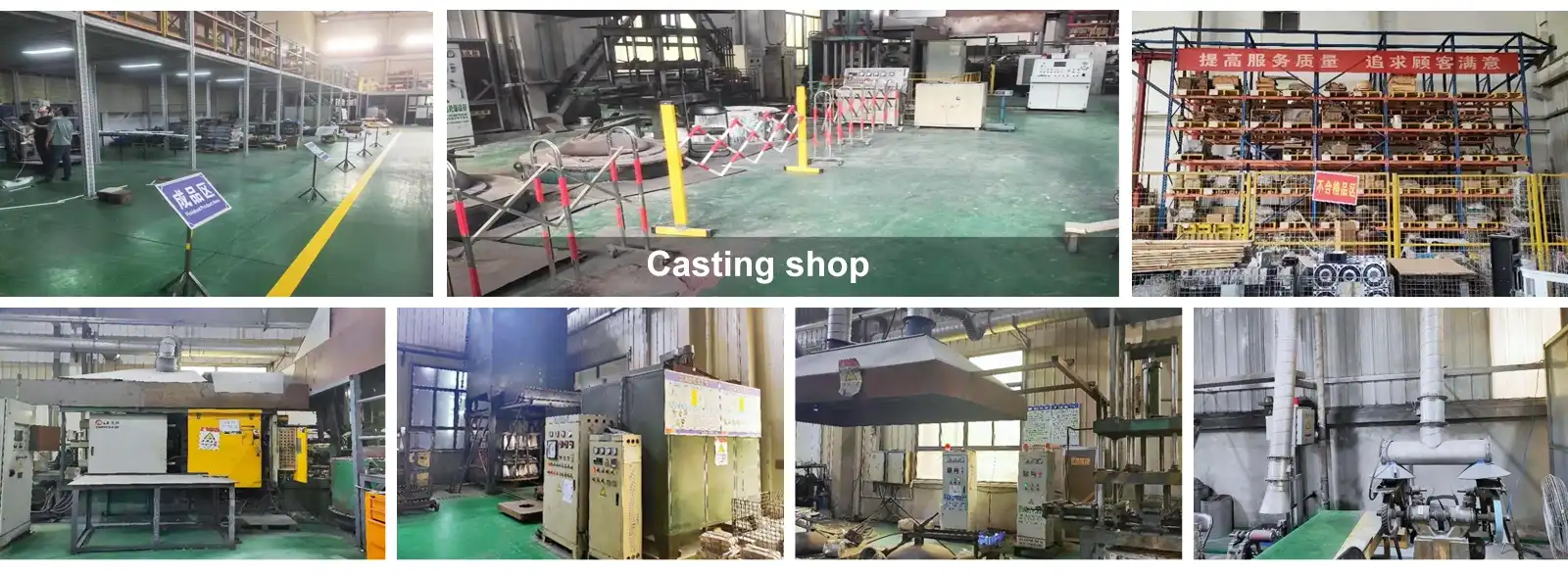
Non-destructive testing methods verify internal soundness and detect potential casting defects before final assembly. X-ray inspection and ultrasonic testing capabilities ensure only defect-free components proceed to final machining operations.
Installation Best Practices and Troubleshooting
Successful cast impeller installation requires systematic preparation and adherence to manufacturer specifications. Pre-installation inspection verifies component condition and identifies any shipping damage that could affect performance or safety.
Bearing housing preparation includes thorough cleaning and lubrication system verification. Proper lubricant selection considers operating temperature ranges and compatibility with seal materials used in the mechanical seal assembly.
Coupling alignment procedures utilize precision instruments to achieve specified tolerances between driving equipment and pump assemblies. Laser alignment systems provide accurate measurements that minimize shaft stress and extend bearing life expectancy.
Start-up procedures follow graduated steps that allow system components to reach thermal equilibrium gradually. Initial operation at reduced speed permits detection of abnormal conditions before reaching full operational parameters.
Performance monitoring during commissioning includes flow rate measurement, pressure differential analysis, and vibration spectrum analysis. These baseline measurements establish reference points for future maintenance planning and performance optimization activities.
Cavitation Prevention and Hydraulic Optimization
Cavitation prevention requires careful attention to suction conditions and impeller design characteristics. Adequate net positive suction head (NPSH) availability prevents vapor bubble formation that leads to erosion damage and performance degradation.
Impeller design considerations include blade angle optimization for specific operational points. The casting process allows creation of complex three-dimensional blade geometries that maximize efficiency while minimizing cavitation potential across the operational flow range.
Surface finish requirements become critical in cavitation-prone applications, where rough surfaces provide nucleation sites for bubble formation. Shot blasting surface treatment creates uniform surface textures that resist cavitation initiation while facilitating cleaning during maintenance activities.
System design modifications may include inducer installation or suction piping optimization to improve NPSH conditions. These modifications prove more cost-effective than frequent impeller replacement in challenging applications.
Monitoring techniques detect early cavitation onset through acoustic signature analysis and vibration pattern recognition. Early detection enables corrective action before significant damage occurs to impeller surfaces.
Maintenance Strategies and Lifecycle Management
Preventive maintenance programs maximize cast impeller service life while minimizing unexpected downtime. Regular inspection intervals depend on application severity and operational demands but typically range from quarterly to annual schedules.
Condition monitoring technologies include vibration analysis, thermal imaging, and performance trending that identify degradation patterns before failure occurs. These predictive maintenance approaches optimize maintenance timing while avoiding unnecessary interventions.
Rebuild procedures restore impeller performance through precision machining and surface refinishing operations. Qualified rebuild facilities maintain dimensional drawings and manufacturing specifications that ensure restored components meet original performance standards.
Inventory management strategies balance component availability with carrying costs, considering lead times for replacement parts and seasonal demand variations. Strategic partnerships with qualified suppliers ensure reliable component availability when needed.
Performance documentation throughout the service lifecycle provides valuable data for future design improvements and application optimization. This historical data guides material selection and design modifications for similar applications.
Partner with Rongbao Enterprise for Superior Cast Impeller Solutions
Rongbao Enterprise delivers exceptional cast impeller manufacturing capabilities backed by ISO9001:2015 certification and 20 years of industry expertise. Our comprehensive production capacity of 5,000 pieces annually ensures reliable supply for your critical applications. With 70% of our products exported to Europe, America, and Japan, we understand global quality standards and delivery requirements. Our Xi'an facility combines advanced low-pressure casting technology with precision CNC machining to deliver customized solutions that meet your exact specifications. Ready to discuss your cast impeller manufacturing needs? Contact us at steve.zhou@263.net and zhouyi@rongbaocasting.com today.
Conclusion
Successful cast impeller implementation requires comprehensive understanding of assembly techniques, balancing procedures, and material properties. Modern manufacturing capabilities enable production of high-precision components that deliver exceptional hydraulic performance across diverse industrial applications. Proper installation and maintenance practices maximize service life while ensuring reliable operation in demanding environments. The combination of advanced casting techniques, precision machining, and quality certification provides confidence in component performance and durability. Strategic partnerships with qualified manufacturers ensure access to technical expertise and reliable supply chains that support long-term operational success.
FAQs
Q1: What factors determine the optimal material selection for cast impellers?
A: Material selection depends on fluid compatibility, operating temperature, corrosion environment, and mechanical stress levels. A356 aluminum alloy provides excellent performance for most applications, offering superior corrosion resistance and strength-to-weight ratio. Applications involving aggressive chemicals may require specialized alloys with enhanced chemical resistance properties.
Q2: How does impeller balance quality affect pump performance and reliability?
A: Proper balance minimizes vibration levels that cause premature bearing failure and mechanical seal damage. Unbalanced impellers generate dynamic forces that stress pump components and reduce efficiency through energy losses. Professional balancing to ISO standards extends equipment life significantly while improving operational smoothness.
Q3: What manufacturing certifications ensure consistent quality in cast impeller production?
A: ISO9001:2015 certification guarantees standardized quality management systems throughout manufacturing processes. Additional certifications like ISO14001 and ISO45001 demonstrate environmental responsibility and workplace safety commitment. These certifications provide confidence in supplier capabilities and product consistency.
References
- Karassik, I. J., Messina, J. P., Cooper, P., & Heald, C. C. (2008). Pump Handbook, Fourth Edition. McGraw-Hill Professional.
- Gülich, J. F. (2014). Centrifugal Pumps, Third Edition. Springer-Verlag Berlin Heidelberg.
- Brennen, C. E. (2011). Hydrodynamics of Pumps. Cambridge University Press.
- Stepanoff, A. J. (1957). Centrifugal and Axial Flow Pumps: Theory, Design, and Application. John Wiley & Sons.
- Lobanoff, V. S., & Ross, R. R. (2013). Centrifugal Pumps: Design and Application, Second Edition. Gulf Professional Publishing.
- Anderson, H. H. (1980). Centrifugal Pumps and Allied Machinery. Elsevier Applied Science Publishers.
Learn about our latest products and discounts through SMS or email