- English
- French
- German
- Portuguese
- Spanish
- Russian
- Japanese
- Korean
- Arabic
- Greek
- German
- Turkish
- Italian
- Danish
- Romanian
- Indonesian
- Czech
- Afrikaans
- Swedish
- Polish
- Basque
- Catalan
- Esperanto
- Hindi
- Lao
- Albanian
- Amharic
- Armenian
- Azerbaijani
- Belarusian
- Bengali
- Bosnian
- Bulgarian
- Cebuano
- Chichewa
- Corsican
- Croatian
- Dutch
- Estonian
- Filipino
- Finnish
- Frisian
- Galician
- Georgian
- Gujarati
- Haitian
- Hausa
- Hawaiian
- Hebrew
- Hmong
- Hungarian
- Icelandic
- Igbo
- Javanese
- Kannada
- Kazakh
- Khmer
- Kurdish
- Kyrgyz
- Latin
- Latvian
- Lithuanian
- Luxembou..
- Macedonian
- Malagasy
- Malay
- Malayalam
- Maltese
- Maori
- Marathi
- Mongolian
- Burmese
- Nepali
- Norwegian
- Pashto
- Persian
- Punjabi
- Serbian
- Sesotho
- Sinhala
- Slovak
- Slovenian
- Somali
- Samoan
- Scots Gaelic
- Shona
- Sindhi
- Sundanese
- Swahili
- Tajik
- Tamil
- Telugu
- Thai
- Ukrainian
- Urdu
- Uzbek
- Vietnamese
- Welsh
- Xhosa
- Yiddish
- Yoruba
- Zulu
How to measure the house rainwater pipe plug size?
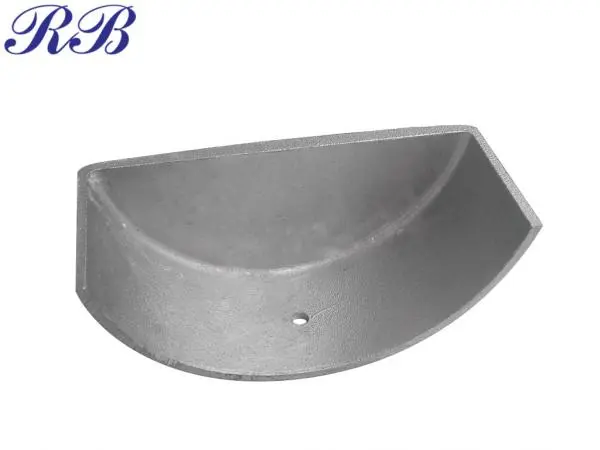
Proper measurement of rainwater pipe plug dimensions remains a fundamental yet frequently overlooked aspect of building maintenance and renovation projects. When rainwater systems are constructed incorrectly, the consequences extend beyond minor inconveniences. Costly repairs, structural degradation, and water damage are often the results. Three separate but related characteristics must be considered throughout the measuring process itself. These factors together decide whether a plug, including the cast half circle, will perform as expected or cause issues.
Manufacturing techniques have evolved significantly in recent years, with high pressure casting emerging as a preferred method for producing components such as the cast half circle design used in rainwater management systems. These precision-manufactured plugs, typically produced from ADC12 aluminum alloy, offer consistent dimensional accuracy when compared to traditional manufacturing approaches. However, even the most precisely manufactured component proves ineffective when installed without proper measurement of the existing pipe system.
Inner Diameter (ID) – Critical for Pipe Fit
The inner diameter represents the most consequential measurement when selecting a rainwater pipe plug. This dimension determines whether the plug seats properly within the pipe opening or creates gaps that compromise the seal. Professional installers accord this parameter top priority since even a two-millimeter measuring mistake might cause water leaks during periods of intense rainfall.
Measuring the inner diameter requires inserting a caliper tool directly into the pipe opening. Digital calipers provide readings accurate to 0.01mm, though traditional vernier calipers remain adequate for most residential applications. The measurement should be taken at multiple points around the circumference because pipes often develop slight oval distortions over time, particularly in older buildings where thermal cycling and structural settling have affected the original geometry. Recording the smallest measurement ensures the selected plug will fit throughout the entire circumference rather than binding at one point while leaving gaps elsewhere.
Manufacturers typically produce cast half circle plugs in standardized size increments, commonly ranging from 50mm to 150mm in diameter. These standards originated from historical pipe sizing conventions, yet contemporary construction occasionally employs non-standard dimensions. When the measured inner diameter falls between standard sizes, selecting the next size up and using appropriate sealing materials provides better results than forcing an oversized plug into an undersized opening. The material properties of ADC12 aluminum, while offering excellent corrosion resistance and strength characteristics, do not permit significant compression without risk of permanent deformation.
Installation depth must also be considered in conjunction with inner diameter. Some cast half circle designs feature stepped profiles that require specific insertion depths to achieve proper sealing. The plug should sit flush with or slightly recessed from the pipe opening, depending on the architectural requirements and whether the installation location receives foot traffic or other mechanical stresses. Measuring from the outer edge of the pipe to the desired seating position establishes this critical dimension, which interacts with both the inner diameter and the plug's geometric design.
Outer Diameter (OD) – For Space & Aesthetics
While the inner diameter governs functional fit, the outer diameter addresses spatial constraints and visual integration. When many pipes end in close proximity to one another or when architectural elements restrict the amount of space available for plug placement, this dimension becomes very important. Cast components produced through high-pressure casting methods achieve tight tolerances on outer dimensions, typically within ±0.3mm of specification, which allows architects and builders to plan installations with confidence.
Measuring outer diameter requires positioning caliper jaws across the widest point of the existing plug or the intended replacement component. For cast half circle designs, this measurement typically exceeds the inner diameter by twice the wall thickness plus any additional material in flanges or decorative features. The relationship between these dimensions is not arbitrary but rather reflects structural requirements calculated during the design phase. A plug with insufficient wall thickness relative to its diameter may fail under mechanical stress, while excessive material adds unnecessary weight and cost without corresponding performance benefits.
Aesthetic considerations influence outer diameter selection in ways that purely functional analysis might overlook. Visible pipe terminations on building facades or in landscaped areas benefit from plugs whose outer dimensions create visual balance with surrounding architectural elements. A 100mm inner diameter pipe might accommodate plugs with outer diameters ranging from 110mm to 130mm, depending on design preferences. Shot blasting and powder coating are two surface treatments that may be used on the ADC12 aluminum material to further improve appearance while preserving dimensional stability.
Clearance requirements deserve attention when measuring for outer diameter compatibility. Building codes in many jurisdictions specify minimum distances between pipe terminations and adjacent structures, electrical conduits, or other utilities. These regulations exist to prevent interference during maintenance activities and to ensure proper drainage function. Measuring not only the plug's outer diameter but also the clear space available in all directions helps avoid installations that technically fit but create practical difficulties during inspection or replacement procedures.

Thickness – For Durability
Wall thickness determines a plug's resistance to mechanical damage, corrosion, and long-term environmental exposure. This parameter is calculated rather than directly measured in most installation scenarios, deriving from the difference between outer and inner diameter measurements. However, understanding thickness requirements informs proper component selection and helps identify counterfeit or substandard products that may appear dimensionally correct while lacking adequate structural integrity.
Standard cast half circle plugs manufactured through high pressure casting processes typically feature wall thicknesses between 3mm and 8mm, with specific values depending on the overall plug diameter and intended application environment. Components serving purely decorative functions may employ thinner walls, while plugs in locations subject to physical impact or extreme temperature variations require greater thickness. The manufacturing process itself influences achievable thickness ranges, as high pressure casting produces uniform wall sections that resist the porosity and weakness sometimes observed in alternative production methods.
Material properties interact with thickness to determine overall performance characteristics. ADC12 aluminum alloy exhibits excellent strength-to-weight ratios, which permits thinner wall sections compared to materials with lower mechanical properties. Certification standards such as ISO9001:2015 ensure manufacturing consistency, but physical inspection remains valuable when accepting delivered components. A simple method involves weighing the plug and comparing actual mass against the specified 0.19kg weight for standard cast half circle designs. Significant deviations suggest either dimensional variations or material substitutions that warrant further investigation.
Long-term durability extends beyond initial thickness measurements to encompass corrosion allowances and wear patterns. Rainwater systems experience cyclic wetting and drying, exposure to atmospheric pollutants, and occasional mechanical disturbances from maintenance activities or wildlife interactions. Cast components with inadequate thickness may appear satisfactory during initial installation but develop perforations or cracks within several years of service. Selecting plugs with appropriate thickness margins, typically at least 4mm for residential applications and 6mm or greater for commercial installations, provides reasonable service life expectations exceeding twenty years under normal conditions.
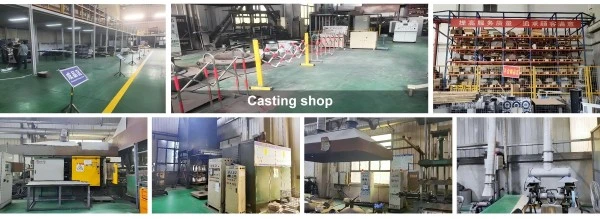
Rongbao Enterprise manufactures cast half circle plugs through high pressure casting processes, utilizing ADC12 aluminum alloy with CNC machining and shot blasting surface treatment. Production capacity reaches 5000 pieces, with customizable specifications to meet project requirements. ISO9001:2015, ISO14001, and ISO45001 certifications ensure quality and environmental management standards. Components are packaged in wooden boxes and shipped from Xi'an, China.
Contact: For technical specifications, custom orders, or project consultations, reach our team at steve.zhou@263.net or zhouyi@rongbaocasting.com
References
- American Society for Testing and Materials. (2023). Standard Specification for Aluminum-Alloy Die Castings. ASTM B85-23.
- International Organization for Standardization. (2022). Rainwater harvesting systems — Part 1: Planning, installation, operation and maintenance. ISO 23056-1:2022.
- Building Research Establishment. (2021). Drainage and water supply systems: Installation and maintenance guidance. BRE Digest 365.
- North American Die Casting Association. (2023). Product Specification Standards for Die Castings (6th ed.). NADCA Publication.
- Chartered Institution of Building Services Engineers. (2022). CIBSE Guide H: Building Control Systems, Section 6: Rainwater drainage systems.
Learn about our latest products and discounts through SMS or email