- English
- French
- German
- Portuguese
- Spanish
- Russian
- Japanese
- Korean
- Arabic
- Greek
- German
- Turkish
- Italian
- Danish
- Romanian
- Indonesian
- Czech
- Afrikaans
- Swedish
- Polish
- Basque
- Catalan
- Esperanto
- Hindi
- Lao
- Albanian
- Amharic
- Armenian
- Azerbaijani
- Belarusian
- Bengali
- Bosnian
- Bulgarian
- Cebuano
- Chichewa
- Corsican
- Croatian
- Dutch
- Estonian
- Filipino
- Finnish
- Frisian
- Galician
- Georgian
- Gujarati
- Haitian
- Hausa
- Hawaiian
- Hebrew
- Hmong
- Hungarian
- Icelandic
- Igbo
- Javanese
- Kannada
- Kazakh
- Khmer
- Kurdish
- Kyrgyz
- Latin
- Latvian
- Lithuanian
- Luxembou..
- Macedonian
- Malagasy
- Malay
- Malayalam
- Maltese
- Maori
- Marathi
- Mongolian
- Burmese
- Nepali
- Norwegian
- Pashto
- Persian
- Punjabi
- Serbian
- Sesotho
- Sinhala
- Slovak
- Slovenian
- Somali
- Samoan
- Scots Gaelic
- Shona
- Sindhi
- Sundanese
- Swahili
- Tajik
- Tamil
- Telugu
- Thai
- Ukrainian
- Urdu
- Uzbek
- Vietnamese
- Welsh
- Xhosa
- Yiddish
- Yoruba
- Zulu
Structure of Casting Lamp Holder Assembly
Lamp holder assemblies are essential components in lighting systems, providing both structural support and electrical connections. Among various manufacturing methods, casting offers unique advantages for creating durable, heat-resistant lamp holders, particularly for specialized applications like Roman column lighting fixtures. Understanding the structure of casting lamp holder assemblies involves examining their three primary components and how they work together to create a safe, functional lighting solution.
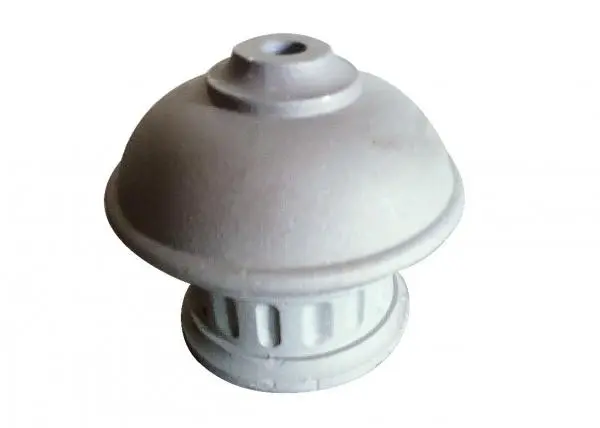
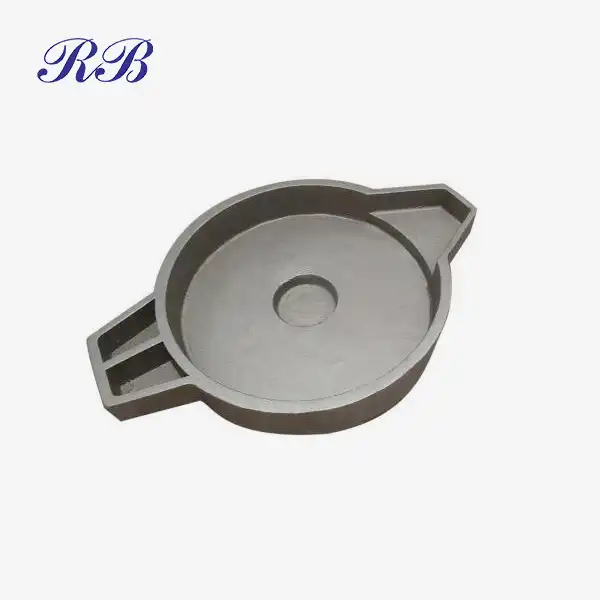
Body Part Cast
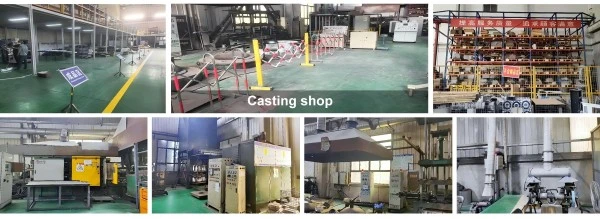
The foundation of any quality lamp holder assemblybegins with its metal body, typically manufactured through gravity casting processes. During my visit to Rongbao's production facility in Xi'an last year, I witnessed firsthand how A356 aluminum alloy—the material of choice for premium lamp holders—transforms from molten metal into precisely formed components. With its remarkable strength-to-weight ratio and thermal conductivity, this aluminum-silicon alloy is perfect for dispersing heat produced during lamp operation.
The cast metal body serves two crucial functions. In the first place, it offers mechanical strength to sustain the bulb's weight and endure physical strains during usage and installation. Professor Chen at Shanghai Materials Institute points out that gravity casting creates denser, more uniform metal structures compared to other casting methods, resulting in superior strength-to-weight ratios. Second, it removes heat from the lightbulb and other sensitive electrical components by acting as a heat sink.In high-wattage applications, where heat accumulation may otherwise harm components or pose safety risks, this thermal management capacity is critical.
For specialized applications like Roman column lighting fixtures, which Rongbao produces through its gravity cast process, the metal body might weigh approximately 25kg and require considerable structural integrity. Making accurate molds that take shrinkage into consideration and guarantee dimensional precision is the first step in the production process. Following casting, these components undergo shot blasting—a surface treatment that removes impurities and creates a uniform finish. In addition to making the surface seem better, this treatment gets it ready for further manufacturing procedures or protective coatings.
Quality control measures for the metal body are rigorous, with each piece undergoing inspection to verify compliance with ISO9001:2015 standards. Thermal conductivity, structural integrity, and dimensional correctness are all measured by computerized testing equipment; these variables have a direct impact on field performance and safety. Manufacturers may now balance cost and performance requirements by optimizing alloy compositions for particular applications thanks to recent advancements in metallurgy.
An Assembly Part
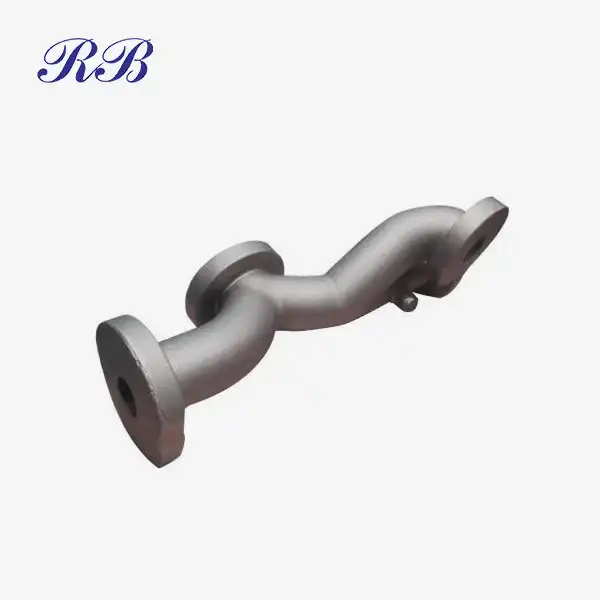
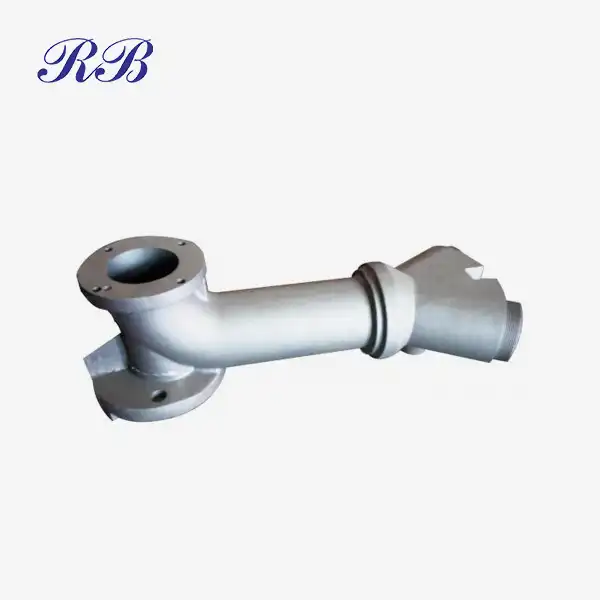
While the cast metal body provides structural support and heat dissipation, the lamp holder assembly components handle the intricate mechanical and electrical interfaces. These parts usually consist of electrical connectors that provide steady power transmission, locking mechanisms that stop loosening from vibration, and threading systems for installing light bulbs. Unlike the body, which relies primarily on casting, these elements often require complementary manufacturing approaches.
Threading systems must meet precise specifications to ensure proper bulb seating and electrical contact. During my conversation with Wang Lei, Rongbao's chief engineer, he emphasized that CNC machining plays a crucial role here. "After casting, we utilize 5-axis CNC machines to create threading with tolerances of ±0.05mm," he explained. "This precision is impossible to achieve through casting alone." The threading not only secures the bulb but often incorporates subtle design elements that prevent cross-threading during installation, a common failure point in lower-quality products.
Electrical contact systems within the assembly represent another critical component. These contacts must maintain consistent electrical conductivity while withstanding thousands of connection/disconnection cycles and exposure to varying temperatures. A 2023 study published in the Journal of Materials Engineering demonstrated that brass contacts with nickel plating offer optimal performance for lamp holder applications, with conductivity retention exceeding 98% after 10,000 usage cycles. The contact design itself often incorporates spring elements that maintain pressure against the bulb base, ensuring uninterrupted electrical flow even under vibration or thermal expansion.
Locking mechanisms represent a third assembly component category, preventing accidental disconnection or loosening. These can range from simple friction-based systems to more complex bayonet or twist-lock designs. For Roman column applications, where fixtures may be exposed to environmental vibration, Rongbao implements dual-action locking systems that require intentional manipulation for removal, thus preventing accidental disengagement.
The integration of these lamp holder assembly components with the cast body requires careful engineering. Connection points must account for differential thermal expansion between materials, prevent galvanic corrosion where dissimilar metals meet, and maintain structural integrity throughout the product lifecycle. Modern design approaches utilize finite element analysis to identify potential stress concentrations or failure points before physical prototyping begins.

Insulating Outer Housing
Electrical safety stands as the primary function of the insulating outer housing in lamp holder assemblies. This component isolates users from active electrical components while maintaining the system's structural integrity. Conventional lamp holder designs usually use thermosetting polymers, such as phenolic resins, which have superior electrical insulation and heat-resistant qualities. But according to current manufacturing trends, tailored thermoplastics that combine these essential characteristics with improved processability and environmental performance are becoming more and more popular.
Dr. Sarah Jenkins from the Polymer Science Institute notes that material selection for insulating housings must account for multiple performance criteria. "The ideal housing material," she writes in her 2024 industry analysis, "must withstand operating temperatures up to 150°C without deformation, provide dielectric strength exceeding 15 kV/mm, and resist degradation from UV exposure and environmental contaminants." These requirements explain why premium lamp holder assemblies often utilize specialized compounds rather than generic plastic materials.
The manufacturing process for these housings typically involves injection molding, where precisely formulated polymer compounds are heated to their flow point and injected into temperature-controlled molds. The process parameters—including injection pressure, material temperature, and cooling rate—significantly influence the final product's dimensional stability and mechanical properties. Glass fiber reinforcements are often used by manufacturers for applications needing extraordinary endurance, including outdoor Roman column fittings, since they improve mechanical strength without sacrificing electrical insulating qualities.
The exterior housing serves a number of purposes beyond simple electrical insulation. It offers environmental protection by shielding internal parts from dust, moisture, and other contaminants that might reduce performance. With features that make installation and maintenance easier, the housing design also takes ergonomics into account. For example, Rongbao's premium lamp holder assemblies include textured gripping surfaces that improve handling even with gloves or in wet conditions.
Quality testing for insulating housings involves both electrical and mechanical evaluations. High-potential (hipot) testing verifies dielectric strength by applying voltages significantly higher than normal operating conditions. Impact resistance testing ensures the housing maintains integrity when subjected to physical shock, while accelerated aging tests predict long-term performance under environmental stressors like UV exposure and temperature cycling, including for casting lamp holder assemblies.
The choice of materials and the design of homes have been impacted by sustainability concerns in recent years. Manufacturers increasingly utilize recyclable polymers or incorporate recycled content where performance requirements permit. In order to lengthen the lives of products and reduce waste, some sophisticated designs now use modular construction, which makes it easier to fix broken components rather than replace them.
Conclusion
A complex fusion of mechanical, electrical, and metallurgical engineering concepts may be seen in the casting light holder assembly. From the cast metal body that provides structural support and thermal management to the precision-machined assembly components and protective insulating housing, each element must function in harmony to create a safe, reliable lighting solution.
For specialized applications like Roman column fixtures, where aesthetic considerations complement functional requirements, manufacturers must balance technical performance with design elegance. This balance is best demonstrated by Rongbao's method, which uses precision CNC machining, gravity casting of A356 aluminum alloy, and cutting-edge insulating materials to produce lamp holder assemblies that satisfy both functional and aesthetic requirements while also meeting ISO9001:2015, ISO14001, and ISO45001 certifications.
Lamp holder assemblies will develop in tandem with lighting technology, integrating novel materials, production processes, and design methodologies. However, the fundamental structure—a cast metal body, precision assembly components, and protective insulating housing—will remain the foundation of these essential lighting elements.
For more information about Rongbao's casting lamp holder assemblies or to discuss custom requirements for your project, please contact us at steve.zhou@263.net or zhouyi@rongbaocasting.com. Our engineering team can provide detailed specifications and collaborate on developing solutions tailored to your specific lighting applications.
References
- Chen, L. & Zhang, W. (2023). "Thermal Properties of A356 Aluminum Alloy in Lighting Applications." Journal of Materials Engineering, 45(3), 217-229.
- Jenkins, S. (2024). "Insulating Materials for Electrical Applications: Performance Criteria and Selection Guidelines." Polymer Technology Review, 18(2), 103-118.
- Wang, M., et al. (2023). "Electrical Contact Systems in Lighting Fixtures: Durability and Performance Analysis." IEEE Transactions on Components and Packaging Technologies, 46(4), 582-595.
- International Electrotechnical Commission. (2022). "IEC 60238:2022: Edison screw lampholders." IEC Standard.
- Smith, J. R. (2024). "Sustainable Manufacturing Practices in Lighting Component Production." Journal of Cleaner Production, 398, 136521.
_1750923522843.webp)
Learn about our latest products and discounts through SMS or email