- English
- French
- German
- Portuguese
- Spanish
- Russian
- Japanese
- Korean
- Arabic
- Greek
- German
- Turkish
- Italian
- Danish
- Romanian
- Indonesian
- Czech
- Afrikaans
- Swedish
- Polish
- Basque
- Catalan
- Esperanto
- Hindi
- Lao
- Albanian
- Amharic
- Armenian
- Azerbaijani
- Belarusian
- Bengali
- Bosnian
- Bulgarian
- Cebuano
- Chichewa
- Corsican
- Croatian
- Dutch
- Estonian
- Filipino
- Finnish
- Frisian
- Galician
- Georgian
- Gujarati
- Haitian
- Hausa
- Hawaiian
- Hebrew
- Hmong
- Hungarian
- Icelandic
- Igbo
- Javanese
- Kannada
- Kazakh
- Khmer
- Kurdish
- Kyrgyz
- Latin
- Latvian
- Lithuanian
- Luxembou..
- Macedonian
- Malagasy
- Malay
- Malayalam
- Maltese
- Maori
- Marathi
- Mongolian
- Burmese
- Nepali
- Norwegian
- Pashto
- Persian
- Punjabi
- Serbian
- Sesotho
- Sinhala
- Slovak
- Slovenian
- Somali
- Samoan
- Scots Gaelic
- Shona
- Sindhi
- Sundanese
- Swahili
- Tajik
- Tamil
- Telugu
- Thai
- Ukrainian
- Urdu
- Uzbek
- Vietnamese
- Welsh
- Xhosa
- Yiddish
- Yoruba
- Zulu
How to make a custom casting bracket?
Before you can make a cast bracket that fits your exact needs, you need to know that custom casting brackets are engineered metal parts that are made using precise molten metal methods. Your design needs are turned into CAD models, which are then used to make the molds, pour the metal in a controlled way, and finish the job with CNC cutting and shot blasting. If you need a fixed bracket made of 0.8 kg of stainless steel 304 for an auto assembly line or structural supports for space uses, the casting method can make complicated shapes that machining alone can't do cost-effectively.
For many different types of industries, these custom parts are the only way to go when off-the-shelf options don't meet load or size standards. We've seen how automakers use cast brackets for chassis systems and heat management parts, and how medical device makers need surfaces that are safe for surgical tool assemblies. Being able to change the makeup of a material, how its weight is distributed, and how it looks on the outside all lead to better performance, lower costs, and longer service life. This guide will show you every step of the bracket-making process. This will help procurement workers make smart buying choices that balance quality with budget and delivery times.
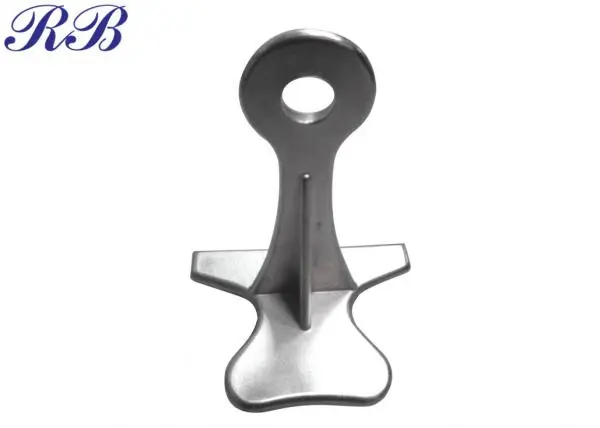
Understanding Custom Casting Brackets
Custom casting brackets are specialized support parts that are made by pouring molten alloy into molds that have already been prepared. This makes parts that are intended to hold weight and be mounted on industrial equipment. The basic step is to heat the metal past its melting point and direct the liquid into holes that are made exactly how your design says they should be. When it cools and solidifies, it leaves behind a nearly net-shaped part that doesn't need much post-processing.
Types and Functional Roles
Heavy machinery frames are held together by structural brackets, which spread loads across multiple connection places and keep their shape when they are under stress. Mounting clamps hold pumps, motors, and electrical housings in place on flat surfaces. They need precise hole patterns and limits for flatness. Reinforcing brackets make joints in welded parts stronger. This is especially important in car body structures where crash performance depends on how the loads are distributed strategically. Each type solves a different technical problem, such as isolating vibrations in flight uses or controlling thermal growth in industrial furnaces.
Material Selection Considerations
Stainless steel 304 is resistant to rust and has a middling level of strength. This makes it perfect for medical devices and food processing equipment that needs to be very clean. Aluminum alloys like A356 are 60% lighter than steel, which is very important for aircraft parts where every gram counts when it comes to fuel economy. For machinery frames that are subject to shifting loads, gray iron is the best material for damping. The material you choose affects not only its functional qualities, but also how easy it is to machine, how well it welds, and how much it costs over its entire life. When choosing a 0.8 kg bracket, the mass of the material directly affects the volume, which in turn affects the complexity of the mold.
Industrial Applications and Challenges
Automotive tier-one suppliers use cast bolts in steering columns and engine mounts. To meet IATF16949 standards, the number of defects must be less than 50 parts per million. For aerospace uses, AS9100D tracking is needed. Each bracket has a unique record that connects to the chemistry of the raw materials and the conditions of the heat treatment. Electronic communication equipment relies on brackets that are accurate to within 0.05 mm to make sure that the heat interface contacts in 5G base stations work properly. Industrial machinery workers need brackets that can work in pump housings and valve controllers at temperatures of up to 200°C all the time. Because of these different needs, uniform parts don't always meet performance standards without breaking the design or making costs go up by being too specific.

The Process of Making Custom Casting Brackets
To make a precision-cast bracket, you need to organize work processes that combine technical knowledge with manufacturing skill. From idea to finished part, the process usually takes 6 to 8 weeks. However, skilled suppliers can speed up pressing orders by improving the process. Custom casting bracket production efficiency depends on these coordinated workflows.
Design and Engineering Phase
CAD modeling turns your practical needs into three-dimensional shapes, including draft angles to help the mold release, fillet radii to reduce stress concentrations, and gating system paths to make sure metal flows evenly. Using computational fluid dynamics software, engineers model filling patterns to find flaws like porosity or cold shuts before spending money on tools. This is where dimensional accuracy starts; for cast surfaces, tolerances smaller than ±0.3mm often need extra CNC machining limits. When engineers work together at the same time, suppliers can offer changes to the design that make it easier to cast without affecting its function. This can cut manufacturing costs by 15 to 25 percent.
Pattern Making and Mold Preparation
Precision casting uses disposable wax models covered by ceramic shells to make surfaces that look better than sand molds and allow for complex internal pathways. The pattern exactly copies the shape of your final bracket, even with the mill stock, which is usually 1-2 mm on important areas. The shell becomes strong enough to handle molten metal forces after being dipped in ceramic slurry and dried several times. When you dewax in an autoclave, the holes are empty and ready to be filled with wax. This investment casting method works for production runs of 50 to 5,000 pieces, meeting the needs of a wide range of businesses.
Casting, Cooling, and Solidification
The filling temperature of stainless steel 304 is about 1,450°C, and the atmosphere needs to be controlled to keep the alloy's chemistry and stop it from oxidizing. The warmed mold is filled by gravity as molten metal pushes air out of holes. The fill rates are set so that there is no turbulence, which can cause gas porosity. Directional solidification makes sure that the metal freezes gradually from thin layers to denser masses, letting liquid metal flow into areas where it will shrink. The rate of cooling affects the structure of the grains and the mechanical properties of the material. For example, if the cooling rate is slower in thick parts, they may need a solution heat treatment to get their rust resistance back. The whole heating cycle, from pouring to shaking out, takes between 4 and 8 hours, based on the weight of the bracket and how complicated its shape is.
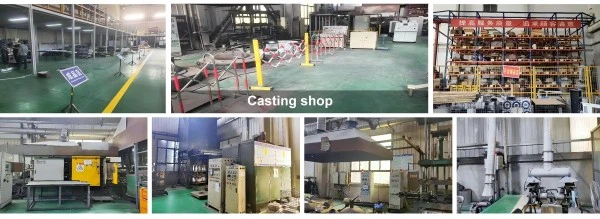
Finishing and Quality Assurance
Shot blasting gets rid of any leftover ceramic shell material and makes the surface smooth, which gets the braces ready for the next steps in CNC cutting. Computer-controlled tools make mounting holes that are accurate to within 0.05 mm and make sure that important mounting pads are flat to within 0.02 mm. Before the surface treatment, dimensional checking with coordinate measuring tools makes sure that the product meets the requirements of the blueprint. Certification to ISO9001:2015, ISO14001, and ISO45001 standards makes sure that everything can be tracked, from certificates for raw materials to records of the final review. This meets the audit requirements of customers in the car and aircraft industries. Finished clamps are shipped internationally in wooden boxes that protect them and keep the surface intact until they are installed.
Key Factors in Choosing Custom Casting Brackets for Your Business
Choosing the best way to make your brackets and working with the right provider will determine whether they become reliable assets or upkeep liabilities. The framework for making decisions strikes a mix between technology needs and business limitations. Selecting high-quality custom casting brackets is essential for maintaining operational stability.
Comparing Manufacturing Methods
When complexity and production numbers meet, casting works best. For example, a bracket with mounting bosses, lighting pockets, and angled connection planes might take 12 hours to machine from solid bar stock, but only minutes to come out of a mold. Forging allows for better grain flow in high-stress areas like suspension parts, but it limits geometric freedom and needs pricey dies. Welded fabrications are flexible, but they leave behind lingering stresses and heat-affected areas that need to be relieved. Sheet metal pressing works well for thin-section frames but can't make three-dimensional shapes or changes in wall thickness that casting can. Precision casting usually has the lowest cost per unit after the first 500 pieces. This is because it can make 0.8 kg of material into complicated shapes over 5,000 pieces.
Supplier Evaluation Criteria
Portfolios of certifications show a lot about how mature a business is. If a company is registered with ISO9001:2015, it means that it has recorded process controls and corrective action methods. As supply chain sustainability checks get tougher, ISO14001 shows that you can control the environment, which is becoming more and more important. ISO45001 approval shows safety rules for the workplace that are related to the industry field. In addition to certificates, you should ask for client references from people who work in the same industry as you. Aerospace sellers know how to meet the AS9100D documentation standards that other job shops might find hard. When going beyond prototypes, production capacity is important. Facilities that make 5,000 pieces per month have backup tools and schedule systems that keep deliveries on time. Lead time dependability is what separates capable providers from ones that are too busy; consistent 6-week delivery performance across multiple orders shows that planning is going well.

Design Optimization for Durability
The fatigue life is directly affected by the thickness of the material in stress zones. Finite element analysis can show which areas need strengthening and which can handle weight loss. When sections change, generous fillet curves spread out the loads more evenly, which increases service life by 40 to 60 percent compared to sharp corners. Corrosion allowances are important in harsh settings. For example, selecting 304 stainless steel gives you basic protection, but marine uses may need to upgrade to 316 alloy. Surface processes like passivation or electropolishing make things even more resistant to rust and make them easier to clean for sanitary uses. Long-term costs are affected by how easy it is to do maintenance. Brackets that are made to be bolted on reduce downtime compared to soldered installs that need to be cut and re-fitted. Iterative design development based on data from field performance creates rounds of improvement that keep getting better. This is especially helpful when setting up long-term supply relationships.
Conclusion
Integrated knowledge in metals, mold engineering, temperature management, and quality processes is needed to make precision-cast brackets. This guide has looked at how design choices affect how well something can be made, how choosing the right material affects how well it works over its entire life, and how the ability of the seller affects how reliable delivery is. The process turns liquid stainless steel 304 into 0.8 kg designed parts with dimensions accurate to within ±0.05 mm that are safely packed for shipping around the world. Certification to ISO9001:2015, ISO14001, and ISO45001 standards proves that every step of the production process is controlled in a planned way. If procurement professionals understand these basics, they can balance technical needs with business realities when choosing manufacturing partners who can deliver quality, reliability, and value over long-term partnerships, whether they are specifying custom casting brackets for automotive powertrain mounts, aerospace structural assemblies, or industrial pump housings.
FAQ
What kind of lead times can we expect for jobs that need custom-cast brackets?
From the time the buy order is approved until the product is delivered, production usually takes 6 to 8 weeks. This time includes making patterns, preparing molds, casting, CNC cutting, and quality checks. When suppliers keep old tools for repeat orders, it cuts down on the time it takes to make new ones, to three to four weeks. Through targeted resource distribution, expedited schedules can cut timelines down to 4 weeks, but they may come with extra costs. Custom casting brackets lead times are significantly reduced with existing patterns.
How are cast brackets different from brackets that are made or welded?
Casting works best for making complicated three-dimensional shapes in medium to large quantities; it usually stops being cost-effective after 500 pieces. The method can handle complicated features like internal tunnels and built-in fastening bosses that would take a long time to machine from solid stock. Welded fabrications give you more design options, but they also add heat-affected zones and leftover pressures. The best choice relies on how complicated the design is, how many are needed for production, and how well they need to work.
Can companies send samples of frames before committing to full production?
Reputable makers offer sample production runs of 5–10 pieces, which lets you check the sizes, look over the material certification, and make sure the parts work before using the same tools for bigger quantities. This part of approval costs between $500 and $2,000, but it reduces the risks of design mismatches or misunderstandings of specifications, which is very helpful for important uses.
Partner with a Proven Custom Casting Bracket Manufacturer
Precision-casting services from Rongbao Enterprise are backed by 20 years of excellent manufacturing and full ISO9001:2015, ISO14001, and ISO45001 certifications. Our Xi'an factory makes up to 5,000 handmade stainless steel 304 clamps every month. They do this by using gravity and precision casting, as well as CNC machining and shot blasting to treat the surfaces. We work with top providers to the auto industry, contractors working on spacecraft, and companies that make industrial tools in 70% of the countries we send to, such as North America, Europe, and Japan.
During the early stages of planning, our technical team works together to make sure that the shapes are optimized for casting while still meeting your performance requirements. We offer OEM/ODM customization, safe wooden box packing, and reliable global logistics for everything from 0.8 kg product fixed brackets to complicated multi-feature parts. Get in touch with steve.zhou@263.net or zhouyi@rongbaocasting.com right away to talk about your custom casting brackets needs, ask for engineering help, or set up a sample production to show that we can be your strategic source.
References
1. Campbell, John. Complete Casting Handbook: Metal Casting Processes, Metallurgy, Techniques and Design. Butterworth-Heinemann, 2015.
2. American Foundry Society. Casting Design and Performance. Des Plaines: AFS Publications, 2018.
3. ASM International Handbook Committee. ASM Handbook Volume 15: Casting. Materials Park: ASM International, 2008.
4. Brown, John R. Foseco Ferrous Foundryman's Handbook. Oxford: Butterworth-Heinemann, 2000.
5. Beeley, Peter R. Foundry Technology. Oxford: Butterworth-Heinemann, 2001.
6. Davis, Joseph R. ASM Specialty Handbook: Cast Irons. Materials Park: ASM International, 1996.
Learn about our latest products and discounts through SMS or email