- English
- French
- German
- Portuguese
- Spanish
- Russian
- Japanese
- Korean
- Arabic
- Greek
- German
- Turkish
- Italian
- Danish
- Romanian
- Indonesian
- Czech
- Afrikaans
- Swedish
- Polish
- Basque
- Catalan
- Esperanto
- Hindi
- Lao
- Albanian
- Amharic
- Armenian
- Azerbaijani
- Belarusian
- Bengali
- Bosnian
- Bulgarian
- Cebuano
- Chichewa
- Corsican
- Croatian
- Dutch
- Estonian
- Filipino
- Finnish
- Frisian
- Galician
- Georgian
- Gujarati
- Haitian
- Hausa
- Hawaiian
- Hebrew
- Hmong
- Hungarian
- Icelandic
- Igbo
- Javanese
- Kannada
- Kazakh
- Khmer
- Kurdish
- Kyrgyz
- Latin
- Latvian
- Lithuanian
- Luxembou..
- Macedonian
- Malagasy
- Malay
- Malayalam
- Maltese
- Maori
- Marathi
- Mongolian
- Burmese
- Nepali
- Norwegian
- Pashto
- Persian
- Punjabi
- Serbian
- Sesotho
- Sinhala
- Slovak
- Slovenian
- Somali
- Samoan
- Scots Gaelic
- Shona
- Sindhi
- Sundanese
- Swahili
- Tajik
- Tamil
- Telugu
- Thai
- Ukrainian
- Urdu
- Uzbek
- Vietnamese
- Welsh
- Xhosa
- Yiddish
- Yoruba
- Zulu
How to ensure dimensional accuracy when customizing a pull rod joint?
Dimensional accuracy is a fundamental requirement when manufacturing pull rod joints for high-voltage distribution accessories and other mechanical assemblies. These components must match the specified dimensions, connection interfaces, and assembly requirements to ensure that they fit correctly within the intended system. Even a relatively small dimensional deviation can cause installation difficulties, uneven contact, alignment problems, or additional adjustment during assembly. The actual impact depends on the joint design, its function, and the tolerances specified by the engineering team. For engineers and procurement professionals, customizing pull rod joints involves more than selecting a material and sending a drawing to a manufacturer. The entire process, from design review and raw material preparation to forging, CNC machining, inspection, and packaging, can influence the final dimensions. A reliable manufacturing process must therefore establish clear acceptance criteria before production begins and verify that the finished components meet those requirements. Rongbao Enterprise provides customized metal components for industrial applications, including pull rod joints manufactured according to customer specifications. Understanding how dimensional accuracy is controlled at each production stage helps buyers evaluate suppliers more effectively, reduce avoidable rework, and establish a more consistent basis for product acceptance.
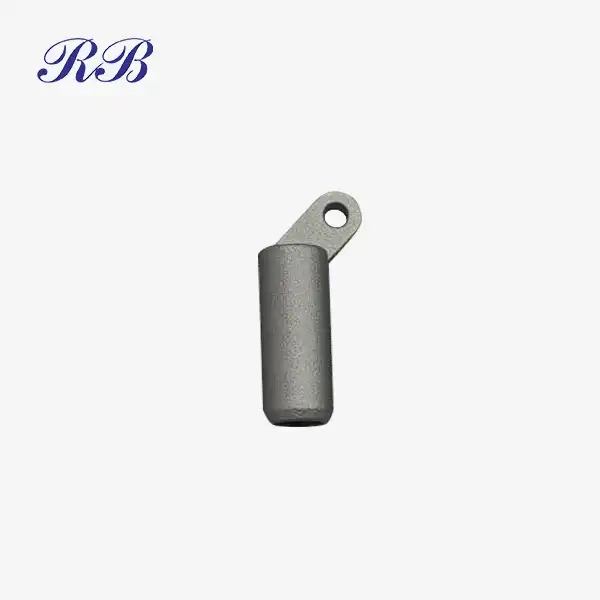
Define Critical Dimensions Before Manufacturing Begins
Translate the engineering drawing into measurable requirements.
The first step to dimensional accuracy is to determine exactly what the finished part should be and how it will fit in the larger assembly. The manufacturing drawing will specify the dimensions, tolerances, geometric relationships, material requirements, and surface conditions that affect the operation of the component.
Pull rod joints are characterized by critical requirements such as overall length, hole diameter, hole spacing, connection shape, thread dimensions, mounting surfaces, and placement of mating features. Not all characteristics are to be tolerated equally. There may be some dimensions that directly affect the assembly fit that may demand tighter tolerances than external surfaces that have no effect on the installation or performance.
Engineers shall also identify the datums that are used to measure the part. A datum is a repeatable base on which to measure the location and orientation of other things. If you don't have good stated references, you can measure a part and find it dimensionally OK, but it will not fit with its mating part.
Where applicable, geometric dimensioning and tolerancing can help to express these relationships. For example, a design may show the placement tolerance of mounting holes relative to a reference surface, rather than treating each hole separately with independent coordinate dimensions. Your design and assembly demands will determine the right option.
Any unclear dimensions, missing tolerances, contradicting specifications, or vague revision information should be checked by the manufacturer and customer before production. It is easier to rectify tooling or machining errors early rather than after a batch of manufacturing has been completed.
Establish tolerances according to the application.
While tighter tolerances could improve fit and repeatability, they can also increase machining time, inspection requirements, and manufacturing costs. It is not necessary that every feature be produced to unreasonably tight tolerances so as to automatically improve the performance of the final assembly.
The tolerances shall be set in accordance with the purpose of the pull rod joint, the properties of the mating parts, the assembly process, and the environment of use. For electrical distribution equipment, engineers may also have to consider alignment, mechanical loading, installation clearances, and the dimensional restrictions imposed by the total assembly.
For example, a tolerance of 0.1 mm may be acceptable for one non-critical feature but undesirable for a tightly fitted interface. That amount alone doesn't tell us if a part will work or not. The relevance is based on the specified tolerance and the relation of the characteristic to neighboring portions.
A practical tolerance evaluation must discriminate between the dimensions that need to be tightly controlled and those that can be made within a larger range. This provides the supplier with a reasonable basis for calculating forging allowances, machining techniques, fittings, and measuring equipment.
Select Materials and Forging Methods with Dimensional Stability in Mind
Check the raw material before production.
The choice of material influences the behavior of a pull rod joint during forging, machining, and further processing. Aluminum alloys are used extensively in applications where strength and resistance to corrosion are required along with light weight. However, different alloy grades and material conditions can have distinct mechanical characteristics and respond differently to the manufacturing processes.
Material specifications are to be agreed upon prior to manufacture. The information required depends on the project but may include alloy identification, required mechanical properties, material condition, and inspection paperwork applicable to the project.
Also, material traceability is important. If there are a lot of components with unanticipated dimensions variation, then the records of production may be utilized to establish whether the fault lies in raw material, the forging process, machining conditions, or some other step of manufacture.
The suppliers shall examine the arriving pull rod joints' material against agreed requirements and retain necessary records where required. Material certificates and inspection reports may be crucial evidence, but a check should be made as to what they cover, rather than assuming that they cover all the features of the finished component.
Control the forging process and machining allowance.
For the manufacturing of the pull rod joint by aluminum die forging, the component shape is approximately formed in the forging step prior to the final machining. The size of the forged blank will rely upon the quality of the die, the regularity of the forming process, and the condition of the material.
Individual parts may vary due to die wear, uneven distribution of the material, temperature during the operation, and variations in the forming conditions. These alterations may affect the amount of material available to be machined and the position of critical features for following operations.
Therefore, the forging method must be designed to suit the approved part design. The maker must create correct forging allowances, consider any distortion, and identify regions requiring additional material for subsequent machining. Potential issues can be identified through process simulation and trial forgings prior to full-scale manufacturing when component geometry or production numbers justify it.
The forged blank must also be checked to the required project specifications. These inspections can cover main exterior dimensions, visible surface defects, and other features important to the next production phase, depending on the component.
Precision machining cannot be replaced by the precision you can by forging. Instead, a uniform forging process provides a more predictable starting point, which helps reduce excessive removal of material and makes the final machining operations easier to control.
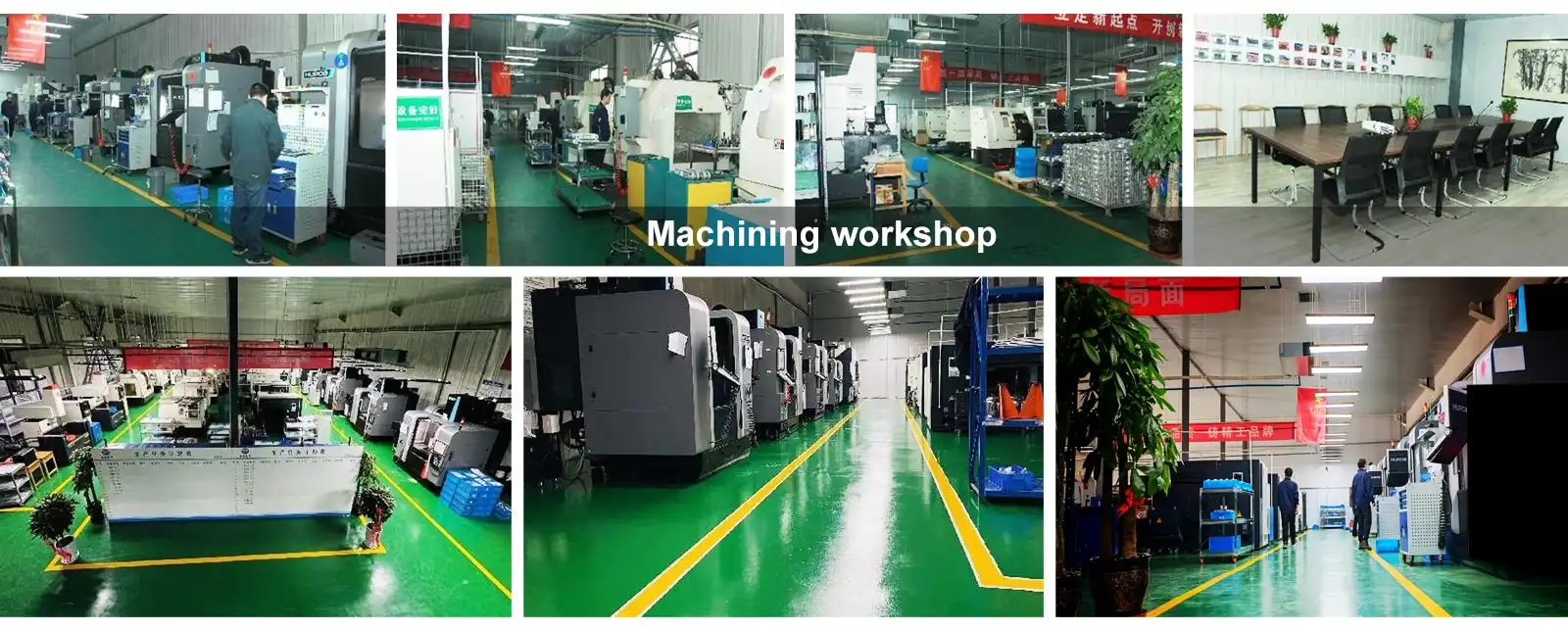
Maintain CNC Machining Accuracy Throughout Production
Convert the approved drawing into a verified machining process.
Custom pull rod joints often have holes, threads, mounting surfaces, and other exact features made using CNC machining. Factors other than the nominal precision of the equipment influence the quality of the result. It relies on the position of the component, the toolpath programming, and the management of the machining sequence.
The CAD model, engineering drawing, and CAM program shall have the same approved design revision. If the drawing is modified but not the machining program or inspection plan, the production team could create a part in-house that is consistent with the drawing but no longer meets the client.
Prior to machining, the manufacturer should verify the program, work offsets, tool selection, fixture arrangement, and setup settings as appropriate. A first article check or test run may discover programming errors or setup differences before they influence a larger lot.
The relationship between the attributes should also take into account the order of the machining procedure. If it is required to align a large number of holes or mating surfaces to one another, the production sequence and the reference system have to be set so that the accumulation of positioning errors is limited.
A documented setup approach for complex pull rod joints ensures operators can locate the component in a reliable manner. Repeatability is not only based on the nominal specifications of the tools but also on the control of the real production process.
Manage tool wear, thermal effects, and workholding.
Dimensional variance is possible in the production even with the right machining software. The cutting tools are worn out slowly, the fixtures can be relocated, and the machine and the workpiece can be exposed to temperature fluctuations. Aluminum's relatively high coefficient of thermal expansion means that temperature is very critical when machining or measuring features with near tolerances.
The monitoring of tool wear should be based on the cutting conditions, tool material, volume of production, and observed dimensional trends. If a component is rejected on inspection, you could be replacing a tool unnecessarily and creating waste in the form of scrap and rework. A more regulated approach is a preventive tool management strategy.
Workholding is just as important. Movement might occur during cutting due to inadequate clamping. Over or uneven clamping force might cause distortion of the components. Support of the workpiece is of significant importance for thin sections and nonregular forms.
The fixtures chosen by the machining team must grip the part firmly, yet not distort it unduly. If many procedures are needed, the team must assess if the component can remain in one reference arrangement to ensure consistency, or if several setups introduce an alignment risk.
If the tolerance is really tight, temperature control is something to consider as well. The temperature of the part measured immediately after machining may not be the same as the reference parameters for acceptance. The homogeneity of inspection results can be improved by allowing the part and measuring equipment to settle.
Controls like this are particularly important in the production of large numbers of custom-made pull rod joints, because little alterations to the process can become much more significant when repeated over a full production run.
Verify Dimensional Accuracy with Appropriate Inspection Methods
Inspect the first article before approving mass production.
The first piece made is inspected to see if it is within the limits of the drawing and inspection allowable. This enables the detection of errors in forging allowance, machining setup, feature position, or measuring method before scaling up production.
The inspection plan for specific pull rod joints should indicate which measurements are to be measured directly, which geometrical features are to be checked, and which material or surface requirements are to be documented separately.
Certain of the outside dimensions and diameters are perfect for calipers and micrometers, and certain inside features are made for bore gauges. Coordinate measuring equipment can be beneficial in the analysis of the location and relation of various features. Optical measuring instruments can be helpful for checking profiles or fine details where contact measurement is inconvenient.
The method of measuring shall be acceptable for the feature being measured and tolerances. Measurement accuracy is not dictated by the instrument resolution alone. The dependability of the result as an indicator of conformity is dependent on a number of criteria. These are calibration, fixture alignment, operator technique, ambient circumstances, and measurement uncertainty.
Checking the hole diameters alone will not verify that the hole pattern is appropriately located if a positional tolerance is included on the drawing. It doesn’t establish that all mounting surfaces are parallel or aligned properly in the same way that measuring the whole length does.
Therefore, the initial article report for pull rod joints must show the measured results compared with the drawing requirements. Where permission is required, the client or authorized representative shall examine and deal with any non-conforming feature prior to approval of production.
Monitor production consistency with a risk-based inspection plan.
First article approval verifies the first installation but doesn't promise that all subsequent parts will be within tolerance. The dimensions during manufacture might be altered by tool wear, fixture changes, material variation, and process drift.
A risk-based inspection strategy should be able to identify key dimensions and adequate checking intervals. Certain features that directly influence the assembly fit or safety standards may need to be monitored more often than non-critical characteristics. The frequency of real inspection should be determined by production volume, process stability, customer requirements, and the consequences of dimensional failure.
Statistical process control can help producers spot patterns before a dimension is out of specification. If there is enough accurate data, control charts are used to establish whether a process is in control or in need of investigation. Process capability indices are also useful if data and statistical assumptions allow.
But a capability statistic should not be considered a substitute for product adoption. It should be based on a well-defined data set and a defined measuring process. Even a process in statistical control can produce nonconforming parts if the average or variation is beyond the prescribed tolerance.
A routine inspection plan for pull rod joints of complex geometry could be designed using routine measurements and periodic comprehensive dimensional investigations. The manufacturer shall maintain suitable records and state the action to be taken if a result is beyond permissible limits. This may include stopping production, quarantining affected product, evaluating recent batches, altering the process, and validating the corrective measure.
The idea is not to measure every feature indiscriminately. This is to make sure that the most critical characteristics are kept in control during the production run.

Conclusion
To ensure pull rod joints are manufactured with dimensional accuracy as per customer specifications, it is required to regulate and coordinate design requirements, material selection, forging, CNC machining, inspection, finishing and packing. An ambiguous drawing or inconsistent production process cannot be replaced by any single equipment or inspection device. The best way is to define important dimensions before manufacturing, prove out initial setup, measure critical attributes during production, and record final acceptance to approved specifications.
The supplier selection for engineering and procurement teams should be based on verifiable process controls, suitable measuring methodologies, traceable records and transparent communications. This enables clients to minimize re-work, boost assembly uniformity and develop a more reliable supply process for custom pull rod joints by determining these requirements before beginning mass production.
Whether you’re preparing a new transmission line installation or upgrading legacy infrastructure, we invite you to consult with our engineering team about your dimensional accuracy concerns. Start your inquiry today by reaching out to: steve.zhou@263.net or zhouyi@rongbaocasting.com. Let us help you make accuracy a given — not a gamble.
FAQ
1: What is the acceptable tolerance range for a pull rod joint in a high-voltage project?
It depends on the customer’s project requirements, but typically, tolerances within ±0.01 mm are considered standard for electrical applications. We use CNC and laser scanning technology to ensure compliance with these tight metrics.
2: How does CNC machining enhance the precision of customized pull rod joint parts?
CNC machining allows exact control over cutting paths, tool pressure, and feed rates, which are critical for machining aluminum. When the machine is calibrated correctly and monitored, it delivers highly consistent results, even over long production runs.
3: Is shot blasting purely aesthetic, or does it affect part performance?
Shot blasting goes beyond aesthetics. It improves fatigue resistance by removing micro-cracks, enhances bonding for coatings, and provides a uniform finish that’s ideal for high-voltage component performance.
References
1. ISO Organization. (2015). ISO9001:2015 Quality Management Systems Requirements.
2. National Institute of Standards and Technology (NIST) – Dimensional Metrology.
3. Manufacturing Engineering Journal – CNC Precision and Forging Accuracy Studies.
4. Engineering Toolbox – Aluminum Properties.
5. High Voltage Engineering Fundamentals – E. Kuffel W.S. Zaengl, J. Kuffel. (Elsevier Academic Press). Available via science libraries.
Learn about our latest products and discounts through SMS or email