- English
- French
- German
- Portuguese
- Spanish
- Russian
- Japanese
- Korean
- Arabic
- Greek
- German
- Turkish
- Italian
- Danish
- Romanian
- Indonesian
- Czech
- Afrikaans
- Swedish
- Polish
- Basque
- Catalan
- Esperanto
- Hindi
- Lao
- Albanian
- Amharic
- Armenian
- Azerbaijani
- Belarusian
- Bengali
- Bosnian
- Bulgarian
- Cebuano
- Chichewa
- Corsican
- Croatian
- Dutch
- Estonian
- Filipino
- Finnish
- Frisian
- Galician
- Georgian
- Gujarati
- Haitian
- Hausa
- Hawaiian
- Hebrew
- Hmong
- Hungarian
- Icelandic
- Igbo
- Javanese
- Kannada
- Kazakh
- Khmer
- Kurdish
- Kyrgyz
- Latin
- Latvian
- Lithuanian
- Luxembou..
- Macedonian
- Malagasy
- Malay
- Malayalam
- Maltese
- Maori
- Marathi
- Mongolian
- Burmese
- Nepali
- Norwegian
- Pashto
- Persian
- Punjabi
- Serbian
- Sesotho
- Sinhala
- Slovak
- Slovenian
- Somali
- Samoan
- Scots Gaelic
- Shona
- Sindhi
- Sundanese
- Swahili
- Tajik
- Tamil
- Telugu
- Thai
- Ukrainian
- Urdu
- Uzbek
- Vietnamese
- Welsh
- Xhosa
- Yiddish
- Yoruba
- Zulu
Automobile gearbox housing market
The car gearbox housing market is directly related to vehicle production, transmission design, material selection, and manufacturing technologies. The gearbox housing is much more than a container for the gears and shafts. It offers structural support for bearings, holds rotating components in place, and provides mounting points for connection to other vehicle elements. With changing transmission designs come changing requirements on the housing. Different layouts, cooling solutions and mounting structures are possible for conventional cars, hybrid systems and electric drive units. This makes sourcing gearbox housing an engineering issue as well as a financial factor for manufacturers and buying teams. A suitable gearbox housing must therefore balance material properties, casting quality, machining accuracy, production volume, and application requirements.
What Is Shaping the Gearbox Housing Market?
There are numerous key developments in the car sector that push demand for gearbox housings. Vehicle manufacturing remains a significant driver, with changes in transmission design producing new needs for suppliers.
Traditional automatic, manual, AMT, CVT, and DCT systems may have differing internal layouts. The housing must have gears, shafts, bearings, seals, mounting points, and occasionally lubrication or cooling elements. Any change to these parts may alter the housing design.
The market is also impacted by expansion of hybrid and electric automobiles. Some electric drive-trains employ single-speed reduction units rather than the traditional multi-speed gearbox. This does not imply that housings are not needed. Instead, it affects the internal arrangement. It may also modify the needs for motor mounting and reduction gears, cooling, and cable or connection positions.
The key trend for suppliers is not only creating more housings. It’s the capacity to produce a variety of designs consistently as vehicle platforms develop.
Lightweighting Is Changing Material Choices
Weight reduction is still an essential design factor for vehicle components. Hence, aluminum alloys are used extensively for transmission and gearbox housings where low mass and appropriate heat conductivity are beneficial.
A380 is one of the aluminum alloys used in die casting and other applications. However, the right material should be chosen according to the actual casting technique, mechanical requirements, heat conditions, corrosion exposure, and machining demands.
However, for applications where minimal weight is less important than stiffness, damping, durability, or other material qualities, cast iron still has a role.
The material selection must be taken in conjunction with the production process. A material that appears good on a spec sheet may not be the most inexpensive option when you consider tooling, machining, manufacturing volume, and inspection needs.
How Manufacturing Technology Is Evolving
The gearbox housing market is not driven only by material development. Improvements in design software, casting processes, machining, and inspection are also changing how suppliers approach production.
Casting for Complex Housing Geometries
Gearbox housings often include irregular exterior forms, internal chambers, mounting bosses, ribs, and other characteristics which make manufacturing a whole component from solid material problematic.
Much of this geometry may be cast close to its final shape, leaving CNC machining for areas requiring finer dimensional control.
Sand casting may be suitable for certain housing designs when component size, geometry, material constraints, or manufacturing volume dictate. Look at the design and the amount necessary and see what the end procedure will be. Don’t think that a casting technique is suited for all housings.
Pattern design is very essential. Prior to manufacturing, the supplier has to take into consideration shrinkage, parting lines, draft, wall thickness, cores, and machining tolerances.
CAD and FEA Improve Design Reviews
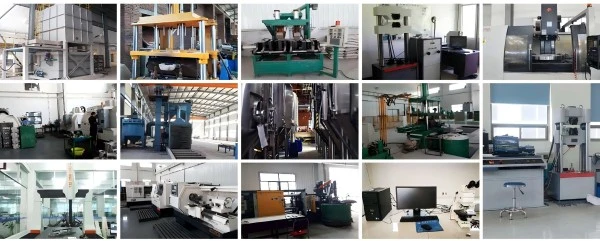
Modern gearbox housing creation frequently begins with a 3D CAD model. Before tooling is developed, engineers may check wall thickness, mounting areas, internal clearances, and machining access.
FEA may also be used to study deformation and stress under given loading conditions. This is beneficial for the housing having thin parts, mounting bosses, bearing supports, or other regions where local deformation might impact assembly.
Simulation should augment, but not replace, prototype and production validation. The quality of the analysis relies on material data, load circumstances, limitations, and assumptions employed in the model.
Machining Accuracy Is Critical to the Final Assembly
A cast housing may give the basic form but numerous details are often machined before the component can be integrated.
The bores of bearings are especially essential since they dictate where the bearings are placed and hence affect the alignment of shafts. Controlled machining may also be necessary on mounting faces, bolt holes, seal seats, locating surfaces and other functional elements.
These dimensions should also be looked at in connection to each other and not in isolation, as a provider.
The assembly difficulty may be an improper location of the bearing bore relative to the mounting datum, yet the diameter is correct. That is why it is vital to specify the positioning tolerances, concentricity, flatness, parallelism, and other geometric constraints on the design where they are functionally significant.
Inspection Should Follow the Drawing
A useful quality plan focuses on the dimensions that affect assembly and performance.
Depending on the housing, inspection may include:
- Material verification
- Overall casting dimensions
- Wall thickness where specified
- Bearing-bore dimensions
- Mounting-face flatness
- Hole position
- Surface condition
- Machined dimensions
- Visual inspection for casting defects
The required inspection documents should be agreed upon before production. For OEM projects, customers may also require first-article inspection, material certificates, dimensional reports, or other traceability documents.
Regional Competition Is Becoming More Technical
The gearbox housing manufacturing is spread throughout all main automobile manufacturing locations such as China, Europe, Japan, India, Mexico, and other established supplier bases.
Cost is still an essential aspect, but not the sole concern. Automotive buyers look at things like engineering communication, quality consistency, tooling capacity, machining resources, delivery dependability, and the supplier’s ability to handle design modifications.
China offers a big manufacturing ecosystem, spanning casting, CNC machining, tooling, surface treatment and logistics. This opens up chances for Chinese suppliers to serve worldwide consumers, especially if they can provide reasonable production prices and established quality methods.
European and Japanese suppliers continue to compete on technical competence, process control, automation and existing car maker ties. Other manufacturing locations are also increasing their skills as car supply chains grow more regionally varied.
For purchasers, the most meaningful comparison is thus not only supplier pricing. You have to take into account the whole risk of procurement and the whole production path.

What Automotive Buyers Should Ask a Gearbox Housing Supplier
The buying and engineering teams have to have the authority to provide sufficient information to the supplier for the component to be appropriately evaluated prior to an order being placed.
Typical RFQ package may consist of:
- Manufacturing drawing 2D
- 3D CAD Drafting
- Material or alloy required
- If specified, preferred technique of casting
- Final dimensions and tolerances
- Machining needs
- Critical Interfaces Between Bearings and Seals
- Requirements for surface treatment
- Prototype Number
- Production volume per year or month
- Inspection criteria
- Specification of packaging
- Delivery address
If the production process is not yet decided, the supplier may look at the design and suggest an appropriate route based on geometry, material, quantity, and machining needs.
This early engineering evaluation may reveal difficulties such as inadequate machining allowance, complex core structures, overly tight tolerances, or inaccessible machining surfaces before any tooling investment is made.
Rongbao Enterprise as a Gearbox Housing Supplier
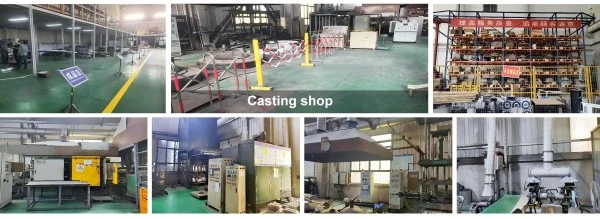
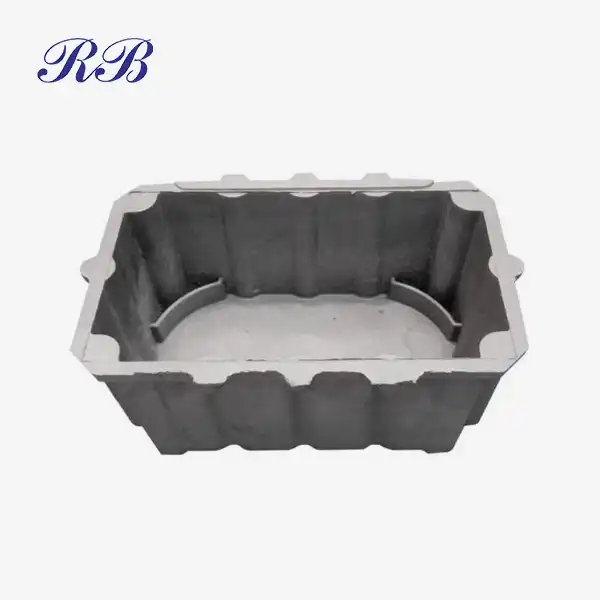
Rongbao Enterprise is a Xi’an, China-based manufacturer of bespoke gearbox housings for automotive-related and other industrial applications. The corporate information provided states that the substance of the gearbox housing product is A380 aluminum alloy and the production method is sand casting + CNC machining.
The sample gearbox housing, the business claims, weighs only 14.8 kg. Buyers should not use this number as a general standard, but should check the final weight according to the necessary housing design, material, wall thickness, and machining tolerances.
Bearing bores and mounting surfaces are functional regions that are produced via CNC machining. Dimensional control on these surfaces is tighter than that on standard cast surfaces, since they have a direct effect on assembly.
Rongbao adds that its management systems are also ISO 9001:2015, ISO 14001 and ISO 45001 certified. These certifications give information on the company’s quality, environmental, and occupational health and safety management systems and should be examined independently of product-specific inspection and performance standards.
Custom Manufacturing for Different Housing Designs
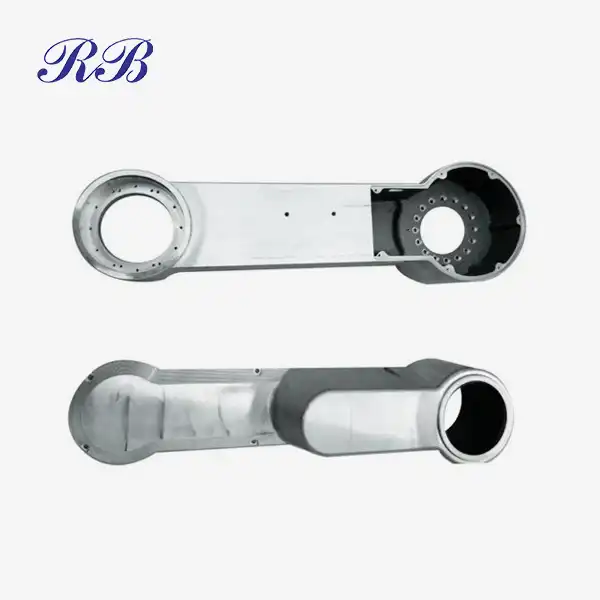
Gearbox housings are not often a one-size-fits-all geometry. Mounting locations, bearing arrangements, wall sections, interior cavities, and connecting interfaces depend on the transmission or reduction system.
Rongbao offers OEM/ODM customisation and may be manufactured according to client requirements. The full design and application requirements when a customer is constructing a new housing provide the manufacturer an opportunity to assess the casting feasibility and machining needs prior to manufacturing.
The firm also has a manufacturing capability of 5,000 units a year. Buyers should validate the validity of this capacity for the particular gearbox housing design, manufacturing schedule, and needed process route at the time of receiving a quote.
Packaging and Documentation Also Matter
Machined surfaces and mounting features must be adequately protected to prevent damage to a gearbox housing during international shipping. Packaging is not an afterthought but should be part of the supply strategy.
Packaging for overseas transportation is via a hardwood box, Rongbao points out. Buyers must verify packaging dimensions, number per package, machining surface protection, labeling, and shipping needs for each project.
Documentation also factors in recurrent OEM purchases. Depending on the quality system of the client, documentation may include material information, dimensional inspection findings, manufacturing records, and other approved quality reports.
Where the Market Is Heading
The future of the automotive gearbox housing industry will depend on drivetrain design rather than on any specific production method.
Traditional gearboxes will still need properly machined housings, but hybrid and electric platforms will generate various packaging and mounting needs. Lightweight materials will continue to be significant in applications where lowering vehicle mass is a goal, but cast iron and other materials will continue to meet applications with distinct structural and operational requirements.
Manufacturers will increasingly find their competitive edge in being able to move swiftly from design review to casting, machining, inspection, and delivery. Suppliers who can accommodate bespoke designs and uniform manufacturing quality will be better positioned to handle changing vehicle platforms.
Conclusion
The car gearbox housing market is directly related to changes in vehicle production, transmission design, material selection and manufacturing technologies. “Lightweight aluminum solutions are getting attention, but the right material and casting process still depend on the specific application.”
It’s not only the advertized material or unit pricing that’s relevant to the car customer. The ultimate procurement result is influenced by casting feasibility, machining precision, bearing alignment, inspection requirements, manufacturing capacity, packaging, and engineering assistance.
Customized Gearbox Housing Manufacturing: Based on the customer’s design and specifications, Rongbao Enterprise is a professional manufacturer of gearbox housings. We supply casting, CNC machining, inspection, and packing services. For a new gearbox housing project, supplying the 2D drawing, 3D model, material requirements, critical tolerances, expected quantity, and inspection requirements gives the manufacturer a solid basis for technical review and quotation.
Contact our experienced team today:
Email Steve Zhou: steve.zhou@263.net
Email Zhou Yi: zhouyi@rongbaocasting.com
References
1. Allied Market Research. (2023). Automotive Gearbox Housing Market by Material Type, Application, and Region: Global Opportunity Analysis and Industry Forecast, 2023-2030.
2. Frost & Sullivan. (2024). Global Automotive Transmission Components Market Analysis. Industry intelligence on market trends, competitive positioning, and emerging opportunities in gearbox housing segments.
3. Campbell, J. (2015). Complete Casting Handbook: Metal Casting Processes, Techniques and Design (2nd ed.). Butterworth-Heinemann. Provides technical details on sand casting processes for gearbox housing production.
4. Kaufman, J. G., & Rooy, E. L. (2004). Aluminum Alloy Castings: Properties, Processes, and Applications. ASM International. Technical reference for A380 aluminum alloy specifications, properties, and automotive applications.
5. International Organization for Standardization. (2015). ISO 9001:2015 Quality Management Systems. International quality standards documentation and certification requirements.
Learn about our latest products and discounts through SMS or email