- English
- French
- German
- Portuguese
- Spanish
- Russian
- Japanese
- Korean
- Arabic
- Greek
- German
- Turkish
- Italian
- Danish
- Romanian
- Indonesian
- Czech
- Afrikaans
- Swedish
- Polish
- Basque
- Catalan
- Esperanto
- Hindi
- Lao
- Albanian
- Amharic
- Armenian
- Azerbaijani
- Belarusian
- Bengali
- Bosnian
- Bulgarian
- Cebuano
- Chichewa
- Corsican
- Croatian
- Dutch
- Estonian
- Filipino
- Finnish
- Frisian
- Galician
- Georgian
- Gujarati
- Haitian
- Hausa
- Hawaiian
- Hebrew
- Hmong
- Hungarian
- Icelandic
- Igbo
- Javanese
- Kannada
- Kazakh
- Khmer
- Kurdish
- Kyrgyz
- Latin
- Latvian
- Lithuanian
- Luxembou..
- Macedonian
- Malagasy
- Malay
- Malayalam
- Maltese
- Maori
- Marathi
- Mongolian
- Burmese
- Nepali
- Norwegian
- Pashto
- Persian
- Punjabi
- Serbian
- Sesotho
- Sinhala
- Slovak
- Slovenian
- Somali
- Samoan
- Scots Gaelic
- Shona
- Sindhi
- Sundanese
- Swahili
- Tajik
- Tamil
- Telugu
- Thai
- Ukrainian
- Urdu
- Uzbek
- Vietnamese
- Welsh
- Xhosa
- Yiddish
- Yoruba
- Zulu
How to design robotic arm brackets?
In the fast-changing world of automation and robotics, the design of low pressure casting robotic arm brackets is very important for making sure they work well, are accurate, and last a long time. If you work in the automotive, aerospace, medical, or electrical and electronic manufacturing fields, you need to know how to build robotic arm brackets.
Define Functional Requirements
The first step in designing low pressure casting robotic arm brackets is to clearly define the functional requirements. This involves a thorough analysis of the intended application and the specific needs of the robotic system. Here are some key considerations:
- Load Capacity: Determine the maximum weight the bracket needs to support, including the robotic arm itself and any additional payload it may carry.
- Range of Motion: Define the required degrees of freedom and the extent of movement the bracket should allow for optimal operation.
- Precision and Repeatability: Establish the level of accuracy needed for the robotic arm's movements and positioning.
- Environmental Factors: Consider the operating environment, including temperature, humidity, and potential exposure to chemicals or other harsh conditions.
- Integration Requirements: Identify how the bracket will interface with other components of the robotic system and any existing infrastructure.
Engineers may build a strong base for the design process by clearly outlining these functional criteria. This stage is very important to make sure that the final product works well in the environment it was made for and fits the demands of the application.
Structural Design
Once the functional requirements are established, the next phase involves the structural design of the low pressure casting robotic arm bracket. At this point, the goal is to come up with a design that matches the performance requirements while also taking into account things like weight, strength, and ease of manufacturing. Some important parts of structural design are:
- Material Selection: Choose materials that offer the right balance of strength, weight, and cost. For example, aluminum alloys like ZL101A are popular choices due to their excellent strength-to-weight ratio and corrosion resistance.
- Geometry Optimization: Utilize computer-aided design (CAD) tools to create and refine the bracket's shape, ensuring it can withstand expected loads while minimizing material usage.
- Stress Analysis: Employ finite element analysis (FEA) to simulate various load conditions and identify potential stress concentrations or weak points in the design.
- Vibration and Fatigue Considerations: Assess the bracket's ability to withstand repetitive motions and vibrations over its intended lifespan.
- Thermal Management: If applicable, incorporate features to dissipate heat generated by the robotic arm's motors or other components.
We at Rongbao Enterprise develop and make low pressure casting robotic arm brackets that fulfill these strict structural standards. Our team of professionals uses powerful CAD and simulation technologies to make designs that are the best possible mix of performance, weight, and cost.
Manufacturing Process Compatibility
The final crucial aspect of designing robotic arm brackets is ensuring compatibility with the chosen manufacturing process. In the case of Rongbao Enterprise, we primarily use low pressure casting, a process that offers several advantages for producing high-quality robotic arm brackets. Here are some key considerations for manufacturing process compatibility:
- Design for Manufacturability (DFM): Adapt the design to suit the low pressure casting process, considering factors such as draft angles, wall thicknesses, and parting lines.
- Tooling Design: Collaborate with tooling engineers to ensure the design can be effectively produced using low pressure casting molds.
- Post-Processing Requirements: Plan for any necessary post-casting operations, such as CNC machining or surface treatments like spraying.
- Quality Control: Implement appropriate quality control measures to ensure consistency and adherence to specifications across production runs.
- Production Scalability: Consider how the design can be scaled to meet varying production demands, from prototypes to high-volume production.
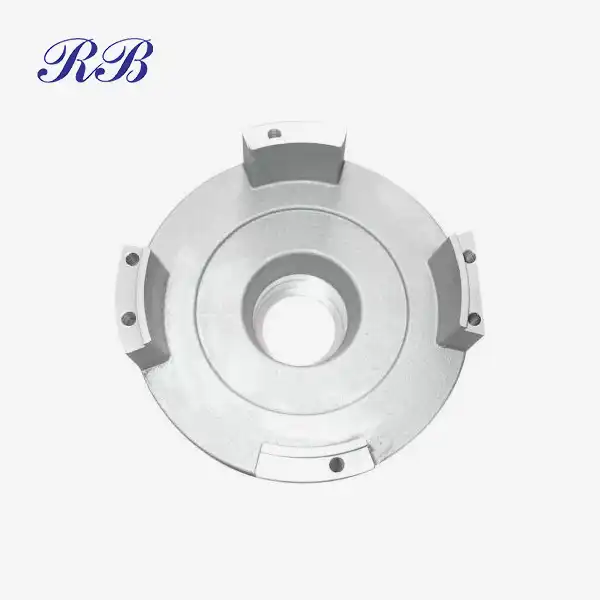
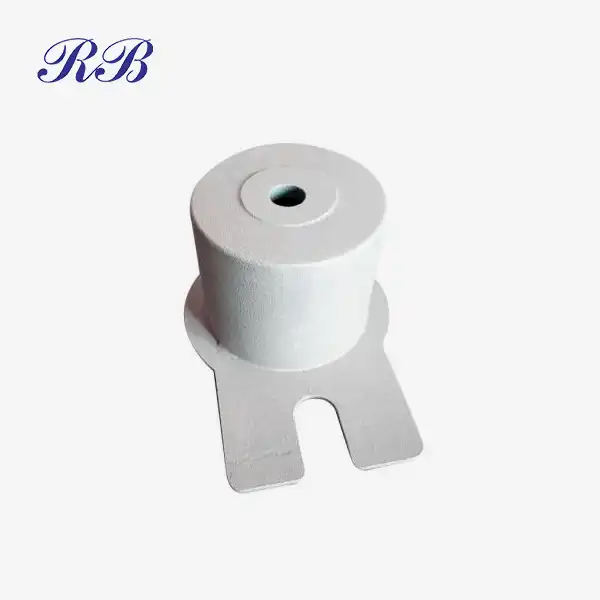
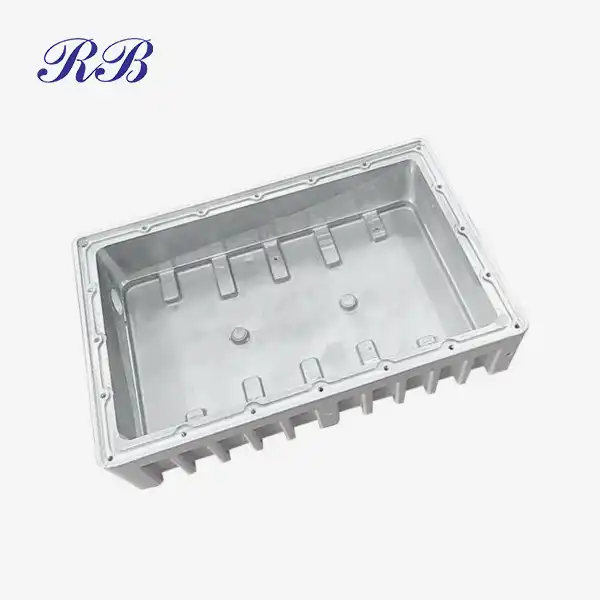
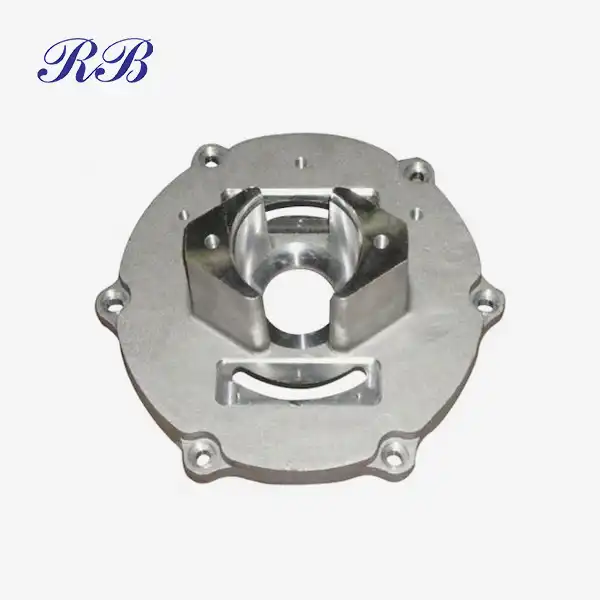
Rongbao Enterprise's low pressure casting robotic arm brackets exemplify this manufacturing process compatibility. Our brackets are produced using ZL101A aluminum alloy, with a typical weight of 1.5kg per piece. We have the capacity to produce up to 5000 pieces, ensuring we can meet the demands of various industries and applications.
Our manufacturing process includes CNC machining for precise dimensional control and surface spraying for enhanced aesthetics and protection. All our products are certified to ISO9001:2015, ISO14001, and ISO45001 standards, guaranteeing quality and reliability.

Contact Rongbao Enterprise
Are you in search of a cutting-edge, high-precision robotic arm bracket that combines durability, efficiency, and customization? Look no further than Rongbao, your premier choice for low pressure casting solutions!
Why Choose Rongbao?
1. Expertise and Experience: Rongbao has been a leader in the low pressure casting industry for years. Our expertise in both low pressure casting and robotic solutions ensures that you receive the highest quality products and services.
2. Superior Product Quality: Our low pressure casting robotic arm bracket is engineered to perfection. Made from the premium ZL101A alloy, this bracket is designed to withstand the rigors of industrial use while maintaining a lightweight profile at just 1.5kg. This material choice ensures not only durability but also optimal performance in demanding environments.
3. Precision Manufacturing: Our manufacturing process is second to none. Utilizing state-of-the-art low pressure casting technology, we ensure that each bracket is produced with the utmost precision. Our CNC machining capabilities guarantee that every component meets exact specifications, while our spraying surface treatment provides a durable and aesthetically pleasing finish.
4. Quality Certifications: Trust in our commitment to quality with certifications such as ISO9001:2015, ISO14001, and ISO45001.
Take the Next Step with Rongbao
Don't let your operations fall behind. Equip your facility with the best low-pressure casting robotic arm bracket available on the market. Contact us today at zhouyi@rongbaocasting.com or steve.zhou@263.net to discuss your requirements, place an order, or learn more about our extensive range of services.
References
- Siciliano, B., & Khatib, O. (Eds.). (2016). Springer handbook of robotics. Springer.
- Groover, M. P. (2020). Fundamentals of modern manufacturing: materials, processes, and systems. John Wiley & Sons.
- Campbell, J. (2015). Complete casting handbook: metal casting processes, metallurgy, techniques and design. Butterworth-Heinemann.
- Pham, D. T., & Dimov, S. S. (2012). Rapid manufacturing: the technologies and applications of rapid prototyping and rapid tooling. Springer Science & Business Media.
- Nee, A. Y. C., Ong, S. K., Chryssolouris, G., & Mourtzis, D. (2012). Handbook of manufacturing engineering and technology. Springer London.
Learn about our latest products and discounts through SMS or email