- English
- French
- German
- Portuguese
- Spanish
- Russian
- Japanese
- Korean
- Arabic
- Greek
- German
- Turkish
- Italian
- Danish
- Romanian
- Indonesian
- Czech
- Afrikaans
- Swedish
- Polish
- Basque
- Catalan
- Esperanto
- Hindi
- Lao
- Albanian
- Amharic
- Armenian
- Azerbaijani
- Belarusian
- Bengali
- Bosnian
- Bulgarian
- Cebuano
- Chichewa
- Corsican
- Croatian
- Dutch
- Estonian
- Filipino
- Finnish
- Frisian
- Galician
- Georgian
- Gujarati
- Haitian
- Hausa
- Hawaiian
- Hebrew
- Hmong
- Hungarian
- Icelandic
- Igbo
- Javanese
- Kannada
- Kazakh
- Khmer
- Kurdish
- Kyrgyz
- Latin
- Latvian
- Lithuanian
- Luxembou..
- Macedonian
- Malagasy
- Malay
- Malayalam
- Maltese
- Maori
- Marathi
- Mongolian
- Burmese
- Nepali
- Norwegian
- Pashto
- Persian
- Punjabi
- Serbian
- Sesotho
- Sinhala
- Slovak
- Slovenian
- Somali
- Samoan
- Scots Gaelic
- Shona
- Sindhi
- Sundanese
- Swahili
- Tajik
- Tamil
- Telugu
- Thai
- Ukrainian
- Urdu
- Uzbek
- Vietnamese
- Welsh
- Xhosa
- Yiddish
- Yoruba
- Zulu
What is cnc precision machining?
In the modern manufacturing landscape, CNC precision machining stands as a cornerstone technology, particularly within the casting industry. This advanced manufacturing process combines computerized control systems with high-precision machinery to transform raw materials, including cast metal components, into intricate, dimensionally accurate parts. Unlike manual machining, which relies on human operators to guide tools, CNC (Computer Numerical Control) machining uses pre-programmed software to dictate tool movements, ensuring consistent quality, repeatability, and efficiency across large production runs or complex custom components.
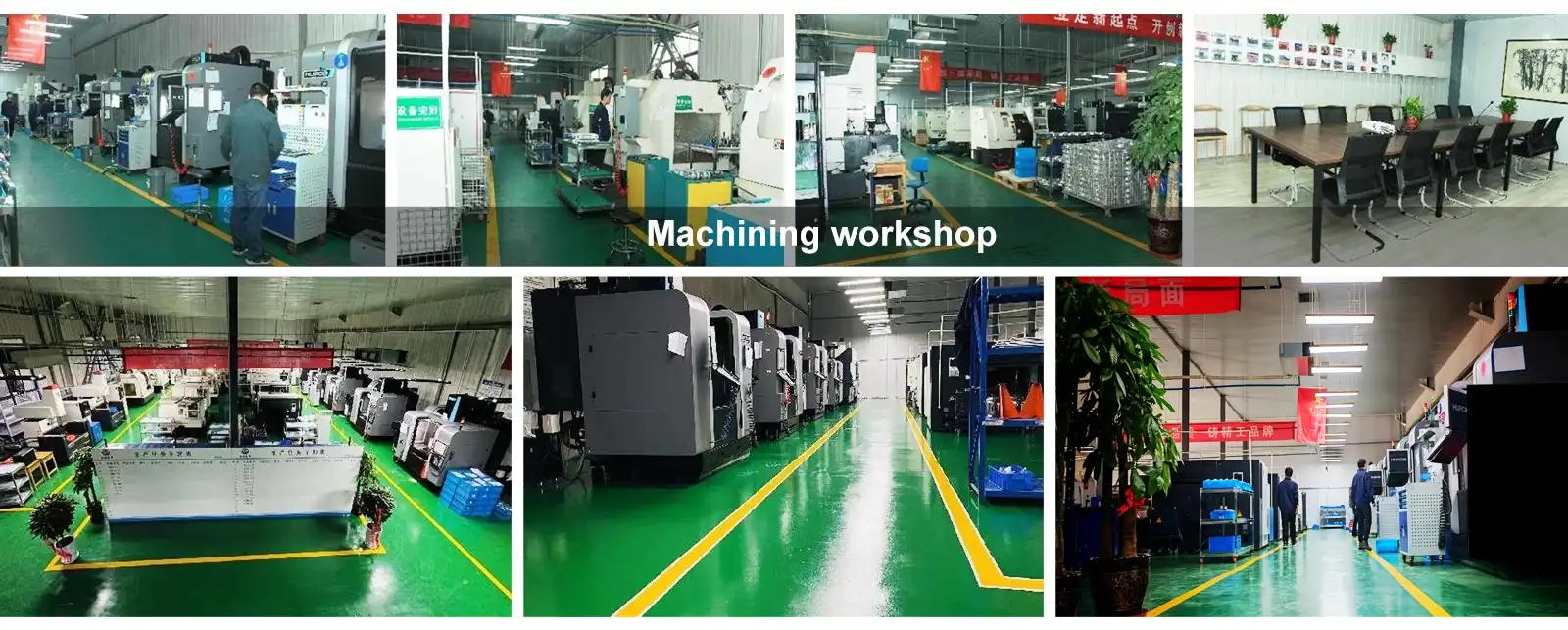
Defining CNC Precision Machining
CNC precision machining refers to the automated process of removing material from a workpiece (often a casting) using cutting tools controlled by a computer. The "precision" in its name emphasizes the technology's ability to achieve tight tolerances, typically ranging from ±0.001 mm to ±0.01 mm, making it indispensable for industries where dimensional accuracy directly impacts performance, safety, and functionality. In the casting sector, this process is often the critical final step: castings, while near-net-shape, require CNC machining to refine surfaces, add intricate features (e.g., holes, threads, or grooves), and meet exact specifications that casting alone cannot achieve.
How CNC Precision Machining Differs from Traditional Machining
Traditional machining relies on manual operation, where skilled workers guide lathes, mills, or grinders. This method is prone to human error, limited by operator skill, and inefficient for complex or high-volume parts. CNC machining, by contrast, offers:
- Automation: Pre-programmed G-code (a numerical control programming language) directs toolpaths, reducing human intervention.
- Consistency: Identical parts are produced across batches, critical for interchangeability in assemblies.
- Complexity: Ability to machine intricate geometries (e.g., 3D contours, undercuts) that are impractical with manual methods.
- Speed: Faster cycle times for high-volume production, with minimal downtime for reprogramming.

Key Technologies in CNC Precision Machining for Castings
The casting industry leverages specific CNC technologies to address the unique challenges of machining cast components, which often have uneven surfaces, internal stresses, or varying material densities. These include:
1. Multi-Axis Machining Centers
CNC mills and lathes with 3, 4, or 5 axes enable simultaneous cutting from multiple angles, eliminating the need for repeated part repositioning. For example, a 5-axis machine can machine a complex cast aluminum automotive component (e.g., a cylinder head) in a single setup, reducing errors from re-clamping and improving accuracy.
2. High-Speed Spindles
Spindles operating at 10,000–60,000 RPM allow faster material removal rates while maintaining precision. This is crucial for machining brittle cast materials like gray iron or magnesium alloys, where slow speeds can cause surface damage.
3. Advanced Cutting Tools
Carbide, ceramic, or cubic boron nitride (CBN) tools are designed to withstand the abrasiveness of cast metals. For instance, CBN tools excel at machining hardened cast steels, achieving surface finishes as smooth as Ra 0.8 μm.
4. In-Process Metrology
Integrated sensors and probing systems (e.g., Renishaw probes) measure dimensions during machining, automatically compensating for tool wear or material variations. This ensures castings meet tolerances even as conditions change.
5. CAD/CAM Integration
Computer-Aided Design (CAD) software creates 3D models of the desired part, while Computer-Aided Manufacturing (CAM) software converts these models into machine-readable G-code. This seamless workflow is vital for translating casting designs into machined parts with minimal errors.

Applications in the Casting Industry
CNC precision machining is integral to transforming castings into functional components across sectors:
- Aerospace: Machining cast titanium or nickel-alloy components (e.g., turbine blades, engine casings) to meet strict aerospace tolerances (±0.0005 mm) and fatigue resistance requirements.
- Automotive: Finishing cast iron engine blocks, aluminum wheel hubs, and magnesium transmission cases to ensure proper fit with other components and optimize performance.
- Medical: Machining stainless steel or titanium castings for surgical instruments and implants (e.g., hip stems) with biocompatible surface finishes.
- Energy: Refining cast steel valve bodies and pump housings for oil, gas, and power generation systems, where leak-proof seals depend on precise dimensional control.
Benefits of CNC Precision Machining for Casting Manufacturers
For companies producing cast components, investing in CNC precision machining yields tangible advantages:
- Reduced Scrap Rates: Precision machining corrects minor casting imperfections (e.g., shrinkage, warpage), salvaging parts that would otherwise be discarded.
- Enhanced Part Performance: Tight tolerances ensure components fit and function as designed, reducing assembly issues and warranty claims.
- Flexibility: CNC programs can be quickly modified to accommodate design changes, making it easier to adapt to market demands or customer requirements.
- Cost Efficiency: While initial setup costs are higher, automated machining reduces labor expenses and material waste over time, lowering per-unit production costs for high-volume runs.
Future Trends in CNC Precision Machining for Castings
The field is evolving with advancements like AI-driven predictive maintenance (to minimize downtime), IoT connectivity (for real-time production monitoring), and hybrid machining systems (combining additive manufacturing with CNC subtractive processes). These innovations will further improve precision, efficiency, and sustainability—critical for the casting industry as it faces pressure to reduce carbon footprints and meet stricter global standards.
CNC precision machining is more than a manufacturing process; it is a catalyst for quality and innovation in the casting industry. By bridging the gap between near-net-shape castings and final, functional parts, it enables the production of components that power everything from cars to aircraft. As technology advances, its role in delivering precision, efficiency, and reliability will only grow, solidifying its position as an indispensable tool for modern manufacturers.
Are you looking for the best mechanical machining services? Rongbao Enterprise is the place to go. We have been a top aluminium alloy casting and precision processing company since 2003. We are experts in offering custom mechanical machining services at prices that are hard to beat. We can make high-quality items that meet your exact needs, whether you need medical rehabilitation robots or titanium alloy machined parts.
We send 70% of our casting, machining, and electronic assembly products to places including the US, Europe, Australia, the UK, Canada, and Japan, showing how dedicated we are to quality and how well we can meet the needs of customers all across the world.
For a free sample and to learn more about how we can support your business, contact us now at steve.zhou@263.net or zhouyi@rongbaocasting.com.
References
- ASME (2020). Standards for CNC Machining Tolerances. American Society of Mechanical Engineers.
- Smith, J. et al. (2019). "Precision Machining of Cast Aluminum Alloys: A Review." Journal of Materials Processing Technology, 267, 11-24.
- Manufacturing Technology Insights (2022). "5-Axis Machining: Transforming the Casting Industry." Retrieved from ISO 2768-1:2017. General Tolerances for Linear and Angular Dimensions Without Individual Tolerance Indications.
Learn about our latest products and discounts through SMS or email