- English
- French
- German
- Portuguese
- Spanish
- Russian
- Japanese
- Korean
- Arabic
- Greek
- German
- Turkish
- Italian
- Danish
- Romanian
- Indonesian
- Czech
- Afrikaans
- Swedish
- Polish
- Basque
- Catalan
- Esperanto
- Hindi
- Lao
- Albanian
- Amharic
- Armenian
- Azerbaijani
- Belarusian
- Bengali
- Bosnian
- Bulgarian
- Cebuano
- Chichewa
- Corsican
- Croatian
- Dutch
- Estonian
- Filipino
- Finnish
- Frisian
- Galician
- Georgian
- Gujarati
- Haitian
- Hausa
- Hawaiian
- Hebrew
- Hmong
- Hungarian
- Icelandic
- Igbo
- Javanese
- Kannada
- Kazakh
- Khmer
- Kurdish
- Kyrgyz
- Latin
- Latvian
- Lithuanian
- Luxembou..
- Macedonian
- Malagasy
- Malay
- Malayalam
- Maltese
- Maori
- Marathi
- Mongolian
- Burmese
- Nepali
- Norwegian
- Pashto
- Persian
- Punjabi
- Serbian
- Sesotho
- Sinhala
- Slovak
- Slovenian
- Somali
- Samoan
- Scots Gaelic
- Shona
- Sindhi
- Sundanese
- Swahili
- Tajik
- Tamil
- Telugu
- Thai
- Ukrainian
- Urdu
- Uzbek
- Vietnamese
- Welsh
- Xhosa
- Yiddish
- Yoruba
- Zulu
High Pressure Die Casting Process
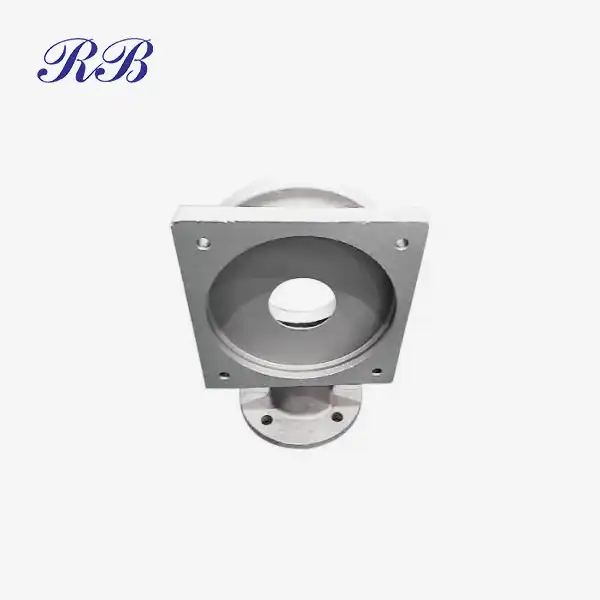
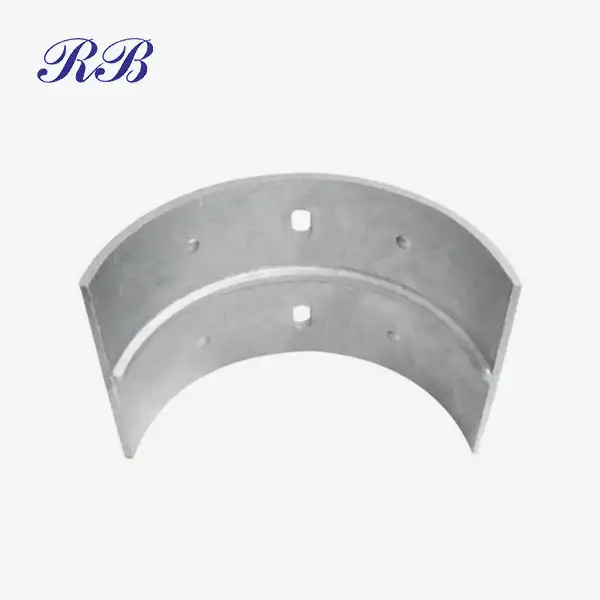
High pressure die casting (HPDC) is a sophisticated manufacturing process widely used in the automotive, aerospace, medical, and electrical industries. This method allows for the production of complex, high-quality metal components with excellent dimensional accuracy and surface finish. At Rongbao Enterprise, we specialize in aluminum alloy casting and precision processing, offering integrated component supply solutions through advanced production methods like HPDC.
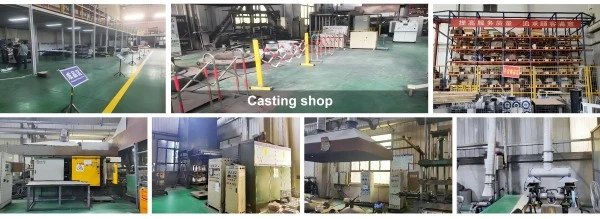
Die Design & Preparation - Metal Melting & Preparation
The journey of a high pressure die cast part begins long before any metal is melted. The first crucial step is die design and preparation. This phase is critical as it directly impacts the quality, efficiency, and cost-effectiveness of the entire casting process.
Die design involves creating a 3D model of the part to be cast, considering factors such as material flow, cooling rates, and ejection mechanisms. Advanced computer-aided design (CAD) and simulation software are used to optimize the die design, ensuring proper filling and minimizing defects. The die typically consists of two halves: a fixed die half and a movable die half, which come together to form the cavity where molten metal will be injected.
Once the design is finalized, the die is manufactured using high-quality tool steel. This material is chosen for its ability to withstand the high temperatures and pressures involved in the HPDC process. The die surfaces are carefully machined and polished to ensure smooth metal flow and high-quality surface finish on the final part.
Concurrent with die preparation, the metal preparation process begins. For aluminum alloy casting, which is our specialty at Rongbao Enterprise, this involves melting the aluminum and any alloying elements in a furnace. The temperature and composition of the melt are carefully controlled to achieve the desired properties in the final casting.
The molten metal is then treated to remove impurities and gases that could lead to defects in the final part. This may involve processes such as degassing, where inert gases are bubbled through the melt to remove dissolved hydrogen, and flux treatment to remove oxides and other impurities.
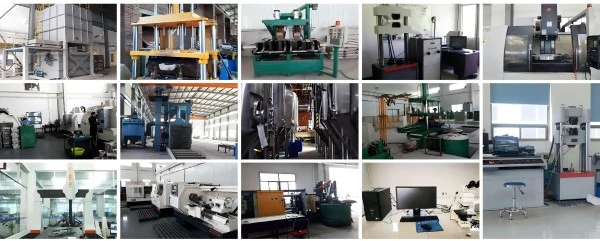
Injection (Metal Pouring & Pressurization) - Cooling & Solidification
With the die prepared and the metal melted and treated, we move to the heart of the high pressure die casting process: injection. This phase is characterized by its speed and precision, key factors that contribute to the high quality of HPDC parts.
The injection process begins with the die closing. The two halves of the die come together, creating a sealed cavity in the shape of the desired part. A measured amount of molten metal is then poured into a shot sleeve, a cylinder that leads to the die cavity.
Next comes the pressurization stage, where a hydraulic piston rapidly pushes the molten metal into the die cavity. This occurs at extremely high speeds, typically filling the entire cavity in a fraction of a second. The high speed and pressure (which can exceed 1000 bar) ensure that the metal fills even the finest details of the die before it begins to solidify.
As soon as the cavity is filled, the cooling and solidification process begins. While it may seem instantaneous, this stage is carefully controlled to ensure optimal part quality. The die is typically water-cooled, allowing for rapid and uniform cooling of the casting. The cooling rate affects the microstructure of the metal, which in turn influences the mechanical properties of the final part.
During solidification, the metal contracts slightly. To compensate for this and prevent defects, additional molten metal is forced into the die under high pressure. This process, known as intensification, continues until the gate (the entrance to the die cavity) solidifies.
The careful control of injection speed, pressure, and cooling rate is crucial for producing high-quality castings. At Rongbao Enterprise, we leverage our experience and advanced equipment to optimize these parameters for each unique part we produce.

Ejection - Post-Processing & Quality Control
Once the part has solidified sufficiently, the die opens and the casting is ejected. This process must be carefully timed and executed to prevent damage to the part. Ejector pins built into the die push the part out, and it's typically removed by a robotic arm or a human operator.
After ejection, the part enters the post-processing phase. Despite the precision of the HPDC process, some additional steps are usually required to produce the final product. These may include:
- Trimming: Removing excess material, such as the sprue (the main channel through which the molten metal entered the die) and any flash (thin projections of metal where the die halves meet).
- Heat treatment: For some alloys and applications, heat treatment can improve mechanical properties.
- Surface finishing: Depending on the application, parts may be polished, painted, or receive other surface treatments.
- Machining: Some features may require additional precision that can only be achieved through machining operations.
Throughout the entire process, from die design to post-processing, quality control measures are implemented to ensure that parts meet the required specifications. This includes:
- Dimensional inspection: Using precision measurement tools to verify that parts meet dimensional tolerances.
- Visual inspection: Checking for surface defects or inconsistencies.
- Non-destructive testing: Methods such as X-ray inspection or dye penetrant testing may be used to detect internal defects.
- Mechanical testing: Sample parts may undergo strength or hardness testing to verify mechanical properties.
At Rongbao Enterprise, we maintain rigorous quality control standards throughout our high pressure die casting process. Our ISO 9001:2016 certified Quality Management System ensures that we consistently deliver high-quality parts that meet or exceed our customers' expectations.

Contact Information
High-pressure casting is a complex yet highly efficient process for producing high-quality metal parts. From the initial die design to the final quality control checks, each step requires expertise and precision. At Rongbao Enterprise, we leverage our years of experience and advanced technologies to deliver superior aluminum alloy components through HPDC and other casting methods.
Whether you're in the automotive, aerospace, medical, or electrical industry, our team is ready to support your manufacturing needs. For more information about our high pressure die casting capabilities or to discuss your specific requirements, please contact us at zhouyi@rongbaocasting.com or steve.zhou@263.net.
References
- Vinarcik, E. J. (2003). High Integrity Die Casting Processes. John Wiley & Sons.
- Street, A. (2016). The Diecasting Book. Lulu Press, Inc.
- Andresen, B. (2005). Die Casting Engineering: A Hydraulic, Thermal, and Mechanical Process. CRC Press.
- ASM International. (2008). ASM Handbook, Volume 15: Casting. ASM International.
- NADCA. (2018). NADCA Product Specification Standards for Die Castings. North American Die Casting Association.
Learn about our latest products and discounts through SMS or email